Wine Bottle
CN → US| HS Code | Tariff Rate | Origin | Destination | Doc |
|---|---|---|---|---|
| 2204215035 | 0.0% | CN | US | Official Doc |
| 3923300010 | 38.0% | CN | US | Official Doc |
| 7010905025 | 35.0% | CN | US | Official Doc |
| 7010905029 | 35.0% | CN | US | Official Doc |
| 3923300090 | 38.0% | CN | US | Official Doc |
| 2204215040 | 0.0% | CN | US | Official Doc |
Product Images
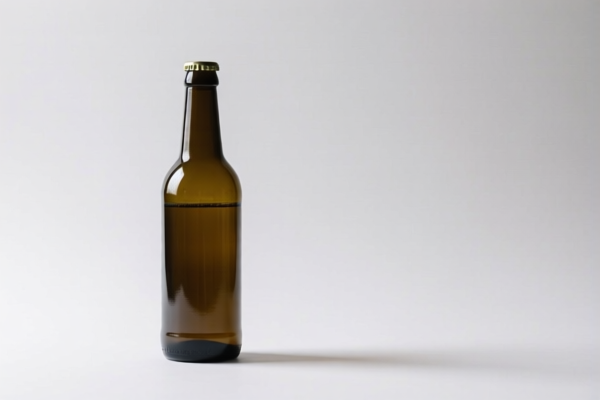
AI Analysis
🍷 Wine Bottle: HS Code Classification & Customs Clearance Strategy (2026)
🌐 HS Code Reference & Customs Guide | 2026 Latest Tariff Analysis | Professional-Level Clearance Strategy
📌 I. Product Definition & Classification: Do You Really Know "Wine Bottle"?
"Wine Bottle" is a broad term that can refer to two distinct categories in international trade:
1. The Product Itself: Bottled Red Wine (the consumable liquid).
2. The Packaging: Empty bottles (glass or plastic) used to contain or transport the wine.
⚠️ Key Distinction Point:
- If the item is filled with red wine, it is classified based on the beverage (HS 2204).
- If the item is an empty container, it is classified based on the material (Glass: HS 7010, Plastic: HS 3923).
- Never mix these two categories in a single declaration line. The tax implications differ drastically.
📦 II. HS Code Classification Details (2026 Latest Tariff Authority Comparison)
Below are the specific HS Codes derived from the provided data, categorized by product type.
| HS Code | Product Description | Application Scenario | Material/State |
|---|---|---|---|
2204.21.50.35 |
Bottled Red Wine (Capacity ≤ 2L) | Ready-to-consume red wine in bottles | Filled Liquid |
3923.30.00.10 |
Plastic or Glass Bottles (For Red Wine Packaging) | Empty bottles made of plastic or glass | Empty Container |
7010.90.50.25 |
Glass Containers (For Holding Red Wine) | Empty glass jars/bottles | Empty Container (Glass) |
7010.90.50.29 |
Glass Bottles (For Red Wine) | Empty glass bottles matching wine bottle morphology | Empty Container (Glass) |
3923.30.00.90 |
Other Bottles (Usually Plastic) | Empty bottles for wine packaging/transport | Empty Container (Plastic/Other) |
🔍 Key Reminder:
- Filled Wine (2204) is taxed as a beverage.
- Empty Bottles (7010or3923) are taxed as packaging materials.
- Even if the empty bottle is intended for wine, if it is empty at the time of import, it must be classified as packaging (7010/3923), NOT as wine (2204).
💰 III. 2026 Latest Tariff Rate Details (Including Surcharges & Policy Add-ons)
✅ Applicable Country: United States (US)
✅ Origin: China (CN)
✅ Effective Date: Includes imports from November 10, 2025 onwards
🎯 1. 2204.21.50.35 —— Bottled Red Wine (≤ 2 Liters)
| Item | Content |
|---|---|
| Base Tariff | 6.3¢/liter (Specific Duty) |
| Section 301 Surcharge | +25.0% (Ad Valorem) |
| Section 122 Surcharge | +10.0% (Ad Valorem) |
| Total Effective Tax | Base + 35% surcharge (Calculated on CIF value for ad valorem parts) |
| Tax Calculation | 6.3¢ per liter + (CIF Value × 35%) |
| De Minimis Eligibility | ❌ No (High-risk category for de minimis exemption) |
| Legal Basis Path | Section 301: 25% → Section 122: 10% → USITC: 2204.21.50.35 |
📌 Explanation:
- "Base Tariff 6.3¢/liter": A specific duty applied per liter of wine.
- "35% Total Surcharge": Composed of the 25% Section 301 tariff and 10% Section 122 tariff.
- Total Cost Impact: You pay a per-liter fee PLUS 35% of the total value. This is a very high effective tax rate for bulk imports.
🎯 2. 3923.30.00.10 & 3923.30.00.90 —— Plastic/Other Bottles (Empty)
| Item | Content |
|---|---|
| Base Tariff | 3.0% |
| Section 301 Surcharge | +25.0% |
| Section 122 Surcharge | +10.0% |
| Total Tariff Rate | 38.0% |
| Tax Calculation | CIF Value × 38% |
| De Minimis Eligibility | ❌ No |
| Legal Basis Path | IEEPA: 10% → Section 301: 25% → USITC: 3923.30.xx.xx |
📌 Note:
- Whether the bottle is for red wine or not, if it is plastic or "other material," it falls under HS 3923.
- The base rate is slightly higher (3%) than glass, leading to a 38% total rate.
🎯 3. 7010.90.50.25 & 7010.90.50.29 —— Glass Bottles/Containers (Empty)
| Item | Content |
|---|---|
| Base Tariff | 0.0% |
| Section 301 Surcharge | +25.0% |
| Section 122 Surcharge | +10.0% |
| Total Tariff Rate | 35.0% |
| Tax Calculation | CIF Value × 35% |
| De Minimis Eligibility | ❌ No |
| Legal Basis Path | IEEPA: 10% → Section 301: 25% → USITC: 7010.90.50.xx |
📌 Note:
- Glass bottles have a 0% base tariff, but the 35% surcharge makes them nearly as expensive as plastic ones in total duty.
- HS 7010.90.50.25 and .29 are specific sub-categories for glass containers/bottles. Choose the one that best matches your bottle's specific shape/use if required by customs, otherwise, they share the same 35% rate.
🛠️ IV. Customs Clearance Practical Advice (Battle-Tested Pitfall Guide)
✅ 1. Documentation Checklist (None Are Optional)
| Document | Required | Description |
|---|---|---|
| ✅ Product Specification | ✔️ | Specify: Filled vs. Empty. If empty, state material (Glass/Plastic). |
| ✅ Commercial Invoice | ✔️ | Clearly state "Empty Glass Bottles for Wine Packaging" OR "Red Wine, Bottled, 750ml". |
| ✅ Packing List | ✔️ | Detail net weight, gross weight, and volume (liters for wine). |
| ✅ Declaration of Content | ✔️ | CRITICAL: If empty, declare "EMPTY." If filled, declare "WINE." Misdeclaration leads to heavy fines. |
| ✅ Certificate of Origin | ✔️ | Proof of Chinese origin triggers the 35-38% surcharges. |
| ✅ TAA Compliance (If Applicable) | N/A | Glass/plastic bottles generally do not qualify for TAA exemptions from China. |
✅ 2. Declaration Tips (Key Mantra)
🔥 “Empty is Packaging, Filled is Beverage; Name it Right, Tax is Light (or Heavy, depending on category)!”
| Scenario | Correct Declaration | Incorrect Practice | Consequence of Error |
|---|---|---|---|
| Empty Glass Bottles | HS 7010.90.50.25/29Desc: "Empty Glass Wine Bottles" |
Declare as HS 2204 (Wine) |
Severe Penalty: Underpayment of tax + Fraud investigation. |
| Filled Red Wine | HS 2204.21.50.35Desc: "Red Wine, Bottled, ≤2L" |
Declare as HS 7010 (Bottle) |
Severe Penalty: Misclassification, loss of specific duty exemption, plus penalties. |
| Plastic Bottles | HS 3923.30.00.10 or .90Desc: "Plastic Bottles for Packaging" |
Declare as generic "Containers" | Delay in clearance, request for further evidence. |
| Mixed Shipment | Split Lines: One line for Wine, one for Empty Bottles | Combine into one line | Customs will reject the mixed declaration; whole shipment held. |
✅ 3. Special Handling
| Scenario | Handling Advice |
|---|---|
| Bottles with Wine Residue | If empty bottles still contain liquid residue, US Customs may classify them as filled wine (2204). Ensure bottles are completely clean and dry. |
| Bottle Caps/Corks | If shipped with bottles, they are usually absorbed into the main item. Declare separately if high value to avoid valuation disputes. |
| De Minimis (Section 321) | ❌ Not Eligible. Goods with HS Codes 2204, 7010, 3923 from China cannot use the $800 de minimis exemption due to Section 301/122 exclusions. |
| Valuation | Ensure CIF value includes freight and insurance. The 35-38% ad valorem tax applies to the CIF value. |
🌍 V. Global Market Clearance Comparison (2026 Latest)
| Country/Region | Recommended HS Code | Tariff (China Origin) | Certification/Notes |
|---|---|---|---|
| 🇺🇸 United States | 2204.21.50.35 (Wine)7010/3923 (Empty) |
Wine: 6.3¢/L + 35% Empty: 35-38% |
No De Minimis. High scrutiny on "Empty" vs. "Filled". |
| 🇨🇳 China | 2204.21 |
~14% | Import duties for wine. |
| 🇪🇺 European Union | 2204.21 |
~27% (Wine) 0-4.7% (Empty) |
VAT applies. Empty bottles may have lower duties. |
| 🇬🇧 United Kingdom | 2204.21 |
~27% (Wine) | Post-Brexit rules apply. |
📌 Conclusion:
- The US is the most complex market due to the combination of specific duties (per liter) and high ad valorem surcharges (35-38%).
- Empty glass bottles (35%) are cheaper than plastic bottles (38%) in total duty, but both are expensive compared to other global markets.
- De Minimis (Section 321) is off the table for all these items from China. You must prepare for full formal entry and bond requirements.
📌 VI. Common Errors & Pitfall Guide (Lessons Learned)
❌ Error 1: Declaring empty bottles as wine to avoid packaging duties.
👉 Consequence: Customs inspectors will detect no liquid volume/weight mismatch. Fines for misdeclaration + potential seizure.
❌ Error 2: Assuming small shipments of empty bottles qualify for De Minimis ($800).
👉 Consequence: HS 7010/3923/2204 are excluded from De Minimis for China. Shipments will be held, and you will owe back taxes + storage fees.
❌ Error 3: Using Generic Descriptions like "Glass Jars" without specifying "For Wine".
👉 Consequence: Customs may assign a higher default duty rate or request a classification ruling, delaying shipment by weeks.
❌ Error 4: Forgetting the Specific Duty (6.3¢/liter) on wine.
👉 Consequence: Underpayment of 35% and the per-liter fee. The USCBP calculates this automatically, so your system must be set up correctly.
✅ Correct Action:
"Empty Glass Wine Bottles, Clean, For Packaging Use" (HS 7010.90.50.25)
"Red Wine, Bottled, 750ml, Alcohol Content XX%" (HS 2204.21.50.35)
🎯 VII. Conclusion: Professional Declaration Saves Money!
🎯 Remember the Mantra:
🔹 "Empty = Packaging (35-38%), Filled = Beverage (6.3¢/L + 35%)."
🔹 "No De Minimis for China!"
🔹 "Specify 'Empty' clearly to avoid fraud allegations!"
📌 Pro Tip:
If you are importing filled wine, ensure your alcohol by volume (ABV) and bottle size are explicitly stated, as these affect the 6.3¢/liter specific duty calculation.
For empty bottles, provide high-res photos of the label and shape to prove they are "containers" and not "filled goods."
📣 Immediate Action:
📞 Consult a licensed US Customs Broker before shipping.
📄 Prepare a Precise Commercial Invoice distinguishing between product and packaging.
🚀 Clear Customs Smoothly, Avoid Penalties, Protect Your Profit Margins!
✨ Professional Customs Clearance Starts with Accurate Classification!
💼 Every Percent of Tax Matters in the Wine Industry!
Customer Reviews
About HS Code Classification
The Harmonized System (HS) is an internationally standardized nomenclature developed by the World Customs Organization (WCO) to classify traded products. Over 200 countries use the HS system as the basis for customs tariffs, trade statistics, and import/export regulations.
Each HS code follows a hierarchical structure:
- Chapter (2 digits) — Broad category of goods (e.g., Chapter 84: Machinery and Mechanical Appliances)
- Heading (4 digits) — More specific grouping within the chapter
- Subheading (6 digits) — Internationally standardized breakdown, used by all WCO member countries
- National subdivisions (8-10 digits) — Country-specific extensions for further classification, such as US HTSUS 10-digit codes
Correct HS code classification is essential for smooth customs clearance, accurate duty payment, and compliance with trade regulations. Misclassification can lead to customs delays, overpayment of duties, or penalties.
When importing from CN to US, the applicable tariff rates may include:
- Most-Favored-Nation (MFN) rate — The standard duty rate applied to WTO members
- General rate — Applied to countries without trade agreements
- Trade remedy duties — Additional tariffs such as Section 301 (anti-dumping), Section 232 (national security), or countervailing duties
The information provided on this page is for reference purposes only. For official classification, please consult with your local customs authority or a licensed customs broker.