Wire bound Notebook
CN → US| HS编码 | 关税税率 | 原产国 | 目的国 | 文档 |
|---|---|---|---|---|
| 7326903500 | 92.8% | CN | US | 官方文档 |
| 7326200090 | 88.9% | CN | US | 官方文档 |
| 4820102060 | 35.0% | CN | US | 官方文档 |
| 4820300040 | 35.0% | CN | US | 官方文档 |
| 4202999000 | 55.0% | CN | US | 官方文档 |
商品图片

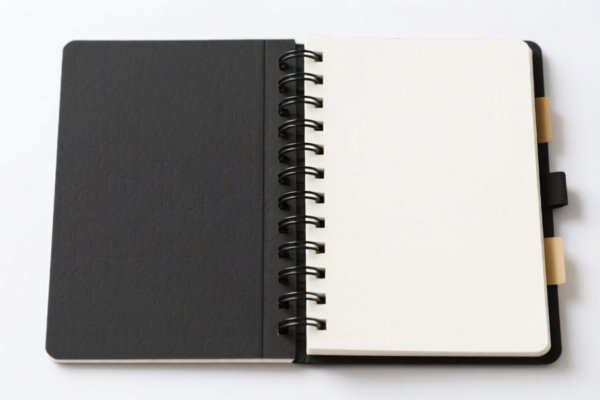


AI分析
📓 Wire Bound Notebooks: HS Code Classification & Customs Clearance Guide (2026)
🌐 HS Code Reference & Customs Clearance Guide | Latest 2026 Tariff Analysis | Professional Strategy for Steel-Ring & Wire-Bound Notebooks
📌 I. Product Definition & Classification: What Exactly is a "Wire Bound Notebook"?
A Wire Bound Notebook (also known as Spiral Notebook or Coil Notebook) is a stationery item consisting of paper pages bound together by a wire or plastic spiral mechanism. In international trade, the classification heavily depends on whether customs authorities view the product primarily as a paper product (stationery) or a steel/iron article (metal hardware/consumer good).
Key Distinction Points: * Paper-Centric View: If the notebook is primarily for writing/drawing and the binding is incidental to its function as a document holder, it falls under Chapter 48 (Paper and Paperboard). * Metal-Centric View: If the product is viewed as a container or storage device made of steel/iron, or if the binding mechanism dominates the material value/identity, it may fall under Chapter 73 (Articles of Iron or Steel). * Leather/Textile Alternative: For thread-bound (sewn) notebooks, it may fall under Chapter 42 (Articles of Leather).
📦 II. HS Code Classification Details (2026 Latest Tariff Schedule)
Based on the provided data, here are the four potential HS Codes for Wire Bound/Thread Bound Notebooks, ranging from paper-based to metal-based classifications.
| HS Code | Product Description | Summary & Logic | Total Tax Rate (China to US) |
|---|---|---|---|
| 4820.10.20.60 | Bound Notebooks | Core carrier is paper. Classified under paper products. | 35.0% |
| 4820.30.00.40 | Other Folders/File Covers | Classified under Stationery. Core carrier is paper. Fits "folder/file cover" category. | 35.0% |
| 4202.99.90.00 | Other Containers/Bags | Specific to Thread-Bound/Leather-like. Paper/cardboard material. Classified as "Other containers/bags." | 55.0% |
| 7326.20.00.90 | Other Iron/Steel Articles | Classified as Iron/Steel article. No conflict in material/usage. Viewed as a metal product. | 88.9% |
| 7326.90.35.00 | Other Steel Articles | Specific to Steel-Ring Notebooks. Material is steel. Form is container/storage. | 92.8% |
🔍 Key Insight:
- The lowest risk/cost classification is Chapter 48 (Paper), with a total tax of 35%.
- The highest risk/cost classification is Chapter 73 (Steel), with taxes reaching 92.8%.
- The choice depends on how the product is described, marketed, and the proportion of steel vs. paper in the final product.
💰 III. 2026 Latest Tariff Rate Breakdown (Including Surtaxes)
✅ Applicable Country: United States (US)
✅ Origin: China (CN)
✅ Effective Date: 2025-11-10 onwards (including subsequent imports)
🎯 1. 4820.10.20.60 — Bound Notebooks (Paper-Based)
Recommended for standard writing notebooks where paper is the primary material.
| Item | Content |
|---|---|
| Base Tariff | 0.0% |
| Section 301 Surtax | +25.0% |
| Section 122 Tariff | +10.0% |
| Total Tax Rate | 35.0% |
| Tax Calculation | CIF Value × 35% |
| De Minimis Eligibility | ❌ No (Not eligible for de minimis) |
| Legal Basis Path | IEEPA:9903.01.25 → USITC:4820.10.20.60 |
📌 Explanation:
- Base 0%: Paper products generally have low base duties.
- 25% Surtax: From USITC Footnote under Section 301 (China-specific).
- 10% Section 122: Specific tariff on certain Chinese goods.
- Total 35%: This is the most favorable rate for standard notebooks.
🎯 2. 4820.30.00.40 — Other Folders/File Covers (Stationery)
Applicable if the notebook is classified as a "file cover" or stationery accessory.
| Item | Content |
|---|---|
| Base Tariff | 0.0% |
| Section 301 Surtax | +25.0% |
| Section 122 Tariff | +10.0% |
| Total Tax Rate | 35.0% |
| Tax Calculation | CIF Value × 35% |
| De Minimis Eligibility | ❌ No |
| Legal Basis Path | IEEPA:9903.01.25 → USITC:4820.30.00.40 |
📌 Note:
- Same tax rate as 4820.10.20.60.
- Use this if the product is marketed more as a "folder" or "file organizer" than a "notebook."
🎯 3. 4202.99.90.00 — Thread-Bound Notebooks (Container/Bag Category)
Applicable specifically to Thread-Bound (sewn) notebooks, viewed as containers.
| Item | Content |
|---|---|
| Base Tariff | 20.0% |
| Section 301 Surtax | +25.0% |
| Section 122 Tariff | +10.0% |
| Total Tax Rate | 55.0% |
| Tax Calculation | CIF Value × 55% |
| De Minimis Eligibility | ❌ No |
| Legal Basis Path | IEEPA:9903.01.25 → USITC:4202.99.90.00 |
📌 Explanation:
- Base 20%: Higher base duty for Chapter 42 (Leather/Textile-like goods).
- Total 55%: Significantly higher than paper-based notebooks. Only use if the product is structurally a "bag/container" or made of non-paper materials mimicking leather.
🎯 4. 7326.20.00.90 — Other Iron/Steel Articles (Metal-Based)
Applicable if customs classifies the notebook as a steel product due to dominant steel binding.
| Item | Content |
|---|---|
| Base Tariff | 3.9% |
| Section 301 Surtax | +25.0% |
| Section 122 Tariff | +10.0% |
| Total Tax Rate | 88.9% |
| Tax Calculation | CIF Value × 88.9% |
| De Minimis Eligibility | ❌ No |
| Legal Basis Path | IEEPA:9903.01.25 → USITC:7326.20.00.90 |
📌 Warning:
- High base duty (3.9%) combined with surtaxes leads to a nearly 89% tax rate.
- Only use this classification if the product is marketed as a "steel storage item" or if the paper content is negligible.
🎯 5. 7326.90.35.00 — Steel-Ring Notebooks (Specific Steel Container)
Most likely for notebooks where the steel ring is the defining feature, classified as a steel container.
| Item | Content |
|---|---|
| Base Tariff | 7.8% |
| Section 301 Surtax | +25.0% |
| Section 122 Tariff | +10.0% |
| Steel/Aluminum/Copper Surtax | +50.0% |
| Total Tax Rate | 92.8% |
| Tax Calculation | CIF Value × 92.8% |
| De Minimis Eligibility | ❌ No |
| Legal Basis Path | IEEPA:9903.01.25 → USITC:7326.90.35.00 |
📌 Critical Alert:
- Total 92.8%: The highest possible rate.
- Includes a specific 50% surtax for steel products under certain trade rules.
- Avoid this classification unless the product is purely a steel ring holder with no significant paper component.
🛠️ IV. Customs Clearance Practical Advice (Avoid Pitfalls)
✅ 1. Document Checklist (Non-Negotiable)
| Document | Required | Purpose |
|---|---|---|
| ✅ Product Specification Sheet | ✔️ | Details paper weight, binding type (wire/steel/thread), dimensions. |
| ✅ Product Photos (Label & Whole) | ✔️ | Shows "Wire Bound" or "Thread Bound" clearly. |
| ✅ Commercial Invoice | ✔️ | Crucial: Describe as "Paper Notebook with Wire Binding" NOT "Steel Container." |
| ✅ Packing List | ✔️ | Item weight, quantity, packaging details. |
| ✅ Certificate of Origin (CO) | ✔️ | If non-China origin, may qualify for exemptions. |
| ✅ Third-Party Test Report | ✔️ | Non-wired notebooks may not need FCC, but if electronic components exist, include. |
✅ 2. Declaration Strategy (Key Mantras)
🔥 "Describe as Paper, Not Steel! Bindings are Incidental!"
| Scenario | Correct Declaration | Incorrect Declaration |
|---|---|---|
| Standard Writing Notebook | "Paper Notebook, Wire Bound, 80gsm Paper, A5 Size" | "Steel Ring Notebook Holder" |
| Steel-Ring Notebook | "Notebook, Paper Pages, Steel Wire Binding" | "Steel Container with Paper" |
| Thread-Bound Notebook | "Sewn Notebook, Paper Pages, Cloth Cover" | "Leather Bag/Container" |
| Mixed Paper/Metal | Emphasize Paper as primary material | Emphasize Steel as primary material |
⚠️ Consequence of Misclassification:
- Declaring as Steel (7326) → 92.8% Tax
- Declaring as Paper (4820) → 35.0% Tax
- Savings: 57.8% of CIF value!
✅ 3. Special Cases
| Situation | Handling Advice |
|---|---|
| OEM Custom Notebooks | Provide design specs showing paper volume >> steel ring volume. |
| Notebooks with Metal Pens Attached | Declare separately or as set? Usually, the notebook dominates. Keep them separate to avoid misclassification. |
| Notebooks with Electronic Components | If it has a pen with electronics, the notebook part still classifies under 4820. |
| Non-China Origin | If sourced from Vietnam/Thailand, check for IEEPA Exemptions (may reduce or eliminate surtaxes). |
🌍 V. Global Market Comparison (2026)
| Country/Region | Recommended HS Code | Tax Rate (China) | Certification | Notes |
|---|---|---|---|---|
| 🇺🇸 USA | 4820.10.20.60 |
35% | None usually | Avoid 7326 codes! |
| 🇨🇳 China | 4820.10.20.60 |
5-10% | None | Low import duty |
| 🇪🇺 EU | 4820.10.00.00 |
0-3% | CE (if applicable) | No Section 301 taxes |
| 🇬🇧 UK | 4820.10.00.00 |
0-5% | UKCA | Post-Brexit rules |
| 🇦🇺 Australia | 4820.10.00.00 |
5% | None | No special surtaxes |
📌 Conclusion:
- USA is the most challenging market due to Section 301 and Section 122 taxes.
- Paper classification (4820) is the only viable option for cost-effective clearance into the US.
- Steel classification (7326) leads to prohibitive taxes (88-92%).
📌 VI. Common Errors & Pitfalls (Lessons Learned)
❌ Error 1: Describing the product as "Steel Notebook Holder"
👉 Result: Customs classifies as 7326 → 92.8% Tax.
❌ Error 2: Ignoring the Section 122 Tariff
👉 Result: Underpayment of 10% → Fines + Delays.
❌ Error 3: Using "Wire Bound" without specifying "Paper Pages"
👉 Result: Ambiguity → Risk of reclassification.
❌ Error 4: Declaring as "Bag/Container" (4202) for standard notebooks
👉 Result: 55% Tax vs. 35% → Unnecessary cost.
✅ Correct Approach:
"Paper Notebook, A5, 100 Sheets, 80gsm White Paper, Wire Bound Cover, Model XYZ, Made in China"
🎯 VII. Conclusion: Professional Declaration, Cost Saving, Risk Reduction!
🎯 Remember the Mantra:
🔹 "Paper First, Steel Second. 35% vs 92% is the Key!"
🔹 "Classify as Paper (4820), Avoid Steel (7326), Save Half Your Costs!"
📌 Pro Tip:
If your notebooks are originally from Vietnam, Mexico, or Thailand, you may qualify for IEEPA Exemptions, reducing the tax to 0-5%.
Consider applying for an Advance Ruling from US Customs (CBP) to lock in the 4820 classification and avoid disputes.
📣 Immediate Action:
📞 Consult a professional customs broker.
📄 Provide product images and specifications.
🚀 Ensure smooth clearance, reduce costs, and maximize profits!
✨ Professional Clearance Starts with Accurate Classification!
💼 Every cent saved counts in international trade!
用户评价
关于 HS 编码归类
协调制度(HS)是由世界海关组织(WCO)制定的国际贸易商品分类标准。全球 200 多个国家采用 HS 系统作为海关关税、贸易统计和进出口监管的基础。
每个 HS 编码遵循以下层级结构:
- 章(2 位)——商品大类(例如:第 84 章:机器和机械设备)
- 品目(4 位)——章内的更具体分类
- 子目(6 位)——国际通用细分,所有 WCO 成员国统一使用
- 本国细分(8-10 位)——各国自行扩展的细分编码,如美国 HTSUS 10 位编码
正确的 HS 编码归类对于顺利通关、准确缴纳关税和遵守贸易法规至关重要。错误归类可能导致海关延误、多缴关税或罚款。
从CN进口到US时,适用的关税税率可能包括:
- 最惠国(MFN)税率——适用于 WTO 成员国的标准关税税率
- 普通税率——适用于无贸易协定国家
- 贸易救济关税——附加关税,如 301 条款(反倾销)、232 条款(国家安全)或反补贴税
本页内容仅供参考。如需正式归类,请咨询当地海关或持牌报关代理。