Wire bound Notebook
CN → US| HS Code | Tariff Rate | Origin | Destination | Doc |
|---|---|---|---|---|
| 7326903500 | 92.8% | CN | US | Official Doc |
| 7326200090 | 88.9% | CN | US | Official Doc |
| 4820102060 | 35.0% | CN | US | Official Doc |
| 4820300040 | 35.0% | CN | US | Official Doc |
| 4202999000 | 55.0% | CN | US | Official Doc |
Product Images

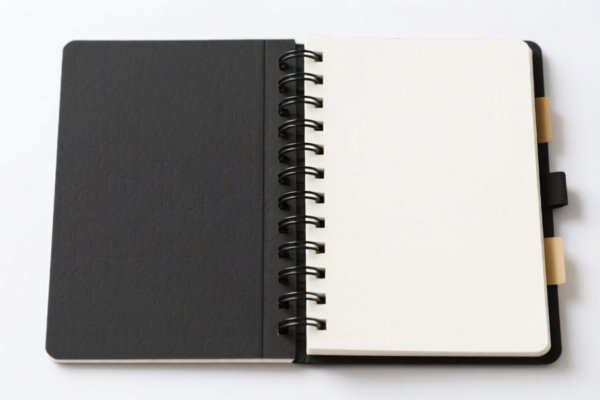


AI Analysis
📓 Wire Bound Notebooks: HS Code Classification & Customs Clearance Guide (2026)
🌐 HS Code Reference & Customs Clearance Guide | Latest 2026 Tariff Analysis | Professional Strategy for Steel-Ring & Wire-Bound Notebooks
📌 I. Product Definition & Classification: What Exactly is a "Wire Bound Notebook"?
A Wire Bound Notebook (also known as Spiral Notebook or Coil Notebook) is a stationery item consisting of paper pages bound together by a wire or plastic spiral mechanism. In international trade, the classification heavily depends on whether customs authorities view the product primarily as a paper product (stationery) or a steel/iron article (metal hardware/consumer good).
Key Distinction Points: * Paper-Centric View: If the notebook is primarily for writing/drawing and the binding is incidental to its function as a document holder, it falls under Chapter 48 (Paper and Paperboard). * Metal-Centric View: If the product is viewed as a container or storage device made of steel/iron, or if the binding mechanism dominates the material value/identity, it may fall under Chapter 73 (Articles of Iron or Steel). * Leather/Textile Alternative: For thread-bound (sewn) notebooks, it may fall under Chapter 42 (Articles of Leather).
📦 II. HS Code Classification Details (2026 Latest Tariff Schedule)
Based on the provided data, here are the four potential HS Codes for Wire Bound/Thread Bound Notebooks, ranging from paper-based to metal-based classifications.
| HS Code | Product Description | Summary & Logic | Total Tax Rate (China to US) |
|---|---|---|---|
| 4820.10.20.60 | Bound Notebooks | Core carrier is paper. Classified under paper products. | 35.0% |
| 4820.30.00.40 | Other Folders/File Covers | Classified under Stationery. Core carrier is paper. Fits "folder/file cover" category. | 35.0% |
| 4202.99.90.00 | Other Containers/Bags | Specific to Thread-Bound/Leather-like. Paper/cardboard material. Classified as "Other containers/bags." | 55.0% |
| 7326.20.00.90 | Other Iron/Steel Articles | Classified as Iron/Steel article. No conflict in material/usage. Viewed as a metal product. | 88.9% |
| 7326.90.35.00 | Other Steel Articles | Specific to Steel-Ring Notebooks. Material is steel. Form is container/storage. | 92.8% |
🔍 Key Insight:
- The lowest risk/cost classification is Chapter 48 (Paper), with a total tax of 35%.
- The highest risk/cost classification is Chapter 73 (Steel), with taxes reaching 92.8%.
- The choice depends on how the product is described, marketed, and the proportion of steel vs. paper in the final product.
💰 III. 2026 Latest Tariff Rate Breakdown (Including Surtaxes)
✅ Applicable Country: United States (US)
✅ Origin: China (CN)
✅ Effective Date: 2025-11-10 onwards (including subsequent imports)
🎯 1. 4820.10.20.60 — Bound Notebooks (Paper-Based)
Recommended for standard writing notebooks where paper is the primary material.
| Item | Content |
|---|---|
| Base Tariff | 0.0% |
| Section 301 Surtax | +25.0% |
| Section 122 Tariff | +10.0% |
| Total Tax Rate | 35.0% |
| Tax Calculation | CIF Value × 35% |
| De Minimis Eligibility | ❌ No (Not eligible for de minimis) |
| Legal Basis Path | IEEPA:9903.01.25 → USITC:4820.10.20.60 |
📌 Explanation:
- Base 0%: Paper products generally have low base duties.
- 25% Surtax: From USITC Footnote under Section 301 (China-specific).
- 10% Section 122: Specific tariff on certain Chinese goods.
- Total 35%: This is the most favorable rate for standard notebooks.
🎯 2. 4820.30.00.40 — Other Folders/File Covers (Stationery)
Applicable if the notebook is classified as a "file cover" or stationery accessory.
| Item | Content |
|---|---|
| Base Tariff | 0.0% |
| Section 301 Surtax | +25.0% |
| Section 122 Tariff | +10.0% |
| Total Tax Rate | 35.0% |
| Tax Calculation | CIF Value × 35% |
| De Minimis Eligibility | ❌ No |
| Legal Basis Path | IEEPA:9903.01.25 → USITC:4820.30.00.40 |
📌 Note:
- Same tax rate as 4820.10.20.60.
- Use this if the product is marketed more as a "folder" or "file organizer" than a "notebook."
🎯 3. 4202.99.90.00 — Thread-Bound Notebooks (Container/Bag Category)
Applicable specifically to Thread-Bound (sewn) notebooks, viewed as containers.
| Item | Content |
|---|---|
| Base Tariff | 20.0% |
| Section 301 Surtax | +25.0% |
| Section 122 Tariff | +10.0% |
| Total Tax Rate | 55.0% |
| Tax Calculation | CIF Value × 55% |
| De Minimis Eligibility | ❌ No |
| Legal Basis Path | IEEPA:9903.01.25 → USITC:4202.99.90.00 |
📌 Explanation:
- Base 20%: Higher base duty for Chapter 42 (Leather/Textile-like goods).
- Total 55%: Significantly higher than paper-based notebooks. Only use if the product is structurally a "bag/container" or made of non-paper materials mimicking leather.
🎯 4. 7326.20.00.90 — Other Iron/Steel Articles (Metal-Based)
Applicable if customs classifies the notebook as a steel product due to dominant steel binding.
| Item | Content |
|---|---|
| Base Tariff | 3.9% |
| Section 301 Surtax | +25.0% |
| Section 122 Tariff | +10.0% |
| Total Tax Rate | 88.9% |
| Tax Calculation | CIF Value × 88.9% |
| De Minimis Eligibility | ❌ No |
| Legal Basis Path | IEEPA:9903.01.25 → USITC:7326.20.00.90 |
📌 Warning:
- High base duty (3.9%) combined with surtaxes leads to a nearly 89% tax rate.
- Only use this classification if the product is marketed as a "steel storage item" or if the paper content is negligible.
🎯 5. 7326.90.35.00 — Steel-Ring Notebooks (Specific Steel Container)
Most likely for notebooks where the steel ring is the defining feature, classified as a steel container.
| Item | Content |
|---|---|
| Base Tariff | 7.8% |
| Section 301 Surtax | +25.0% |
| Section 122 Tariff | +10.0% |
| Steel/Aluminum/Copper Surtax | +50.0% |
| Total Tax Rate | 92.8% |
| Tax Calculation | CIF Value × 92.8% |
| De Minimis Eligibility | ❌ No |
| Legal Basis Path | IEEPA:9903.01.25 → USITC:7326.90.35.00 |
📌 Critical Alert:
- Total 92.8%: The highest possible rate.
- Includes a specific 50% surtax for steel products under certain trade rules.
- Avoid this classification unless the product is purely a steel ring holder with no significant paper component.
🛠️ IV. Customs Clearance Practical Advice (Avoid Pitfalls)
✅ 1. Document Checklist (Non-Negotiable)
| Document | Required | Purpose |
|---|---|---|
| ✅ Product Specification Sheet | ✔️ | Details paper weight, binding type (wire/steel/thread), dimensions. |
| ✅ Product Photos (Label & Whole) | ✔️ | Shows "Wire Bound" or "Thread Bound" clearly. |
| ✅ Commercial Invoice | ✔️ | Crucial: Describe as "Paper Notebook with Wire Binding" NOT "Steel Container." |
| ✅ Packing List | ✔️ | Item weight, quantity, packaging details. |
| ✅ Certificate of Origin (CO) | ✔️ | If non-China origin, may qualify for exemptions. |
| ✅ Third-Party Test Report | ✔️ | Non-wired notebooks may not need FCC, but if electronic components exist, include. |
✅ 2. Declaration Strategy (Key Mantras)
🔥 "Describe as Paper, Not Steel! Bindings are Incidental!"
| Scenario | Correct Declaration | Incorrect Declaration |
|---|---|---|
| Standard Writing Notebook | "Paper Notebook, Wire Bound, 80gsm Paper, A5 Size" | "Steel Ring Notebook Holder" |
| Steel-Ring Notebook | "Notebook, Paper Pages, Steel Wire Binding" | "Steel Container with Paper" |
| Thread-Bound Notebook | "Sewn Notebook, Paper Pages, Cloth Cover" | "Leather Bag/Container" |
| Mixed Paper/Metal | Emphasize Paper as primary material | Emphasize Steel as primary material |
⚠️ Consequence of Misclassification:
- Declaring as Steel (7326) → 92.8% Tax
- Declaring as Paper (4820) → 35.0% Tax
- Savings: 57.8% of CIF value!
✅ 3. Special Cases
| Situation | Handling Advice |
|---|---|
| OEM Custom Notebooks | Provide design specs showing paper volume >> steel ring volume. |
| Notebooks with Metal Pens Attached | Declare separately or as set? Usually, the notebook dominates. Keep them separate to avoid misclassification. |
| Notebooks with Electronic Components | If it has a pen with electronics, the notebook part still classifies under 4820. |
| Non-China Origin | If sourced from Vietnam/Thailand, check for IEEPA Exemptions (may reduce or eliminate surtaxes). |
🌍 V. Global Market Comparison (2026)
| Country/Region | Recommended HS Code | Tax Rate (China) | Certification | Notes |
|---|---|---|---|---|
| 🇺🇸 USA | 4820.10.20.60 |
35% | None usually | Avoid 7326 codes! |
| 🇨🇳 China | 4820.10.20.60 |
5-10% | None | Low import duty |
| 🇪🇺 EU | 4820.10.00.00 |
0-3% | CE (if applicable) | No Section 301 taxes |
| 🇬🇧 UK | 4820.10.00.00 |
0-5% | UKCA | Post-Brexit rules |
| 🇦🇺 Australia | 4820.10.00.00 |
5% | None | No special surtaxes |
📌 Conclusion:
- USA is the most challenging market due to Section 301 and Section 122 taxes.
- Paper classification (4820) is the only viable option for cost-effective clearance into the US.
- Steel classification (7326) leads to prohibitive taxes (88-92%).
📌 VI. Common Errors & Pitfalls (Lessons Learned)
❌ Error 1: Describing the product as "Steel Notebook Holder"
👉 Result: Customs classifies as 7326 → 92.8% Tax.
❌ Error 2: Ignoring the Section 122 Tariff
👉 Result: Underpayment of 10% → Fines + Delays.
❌ Error 3: Using "Wire Bound" without specifying "Paper Pages"
👉 Result: Ambiguity → Risk of reclassification.
❌ Error 4: Declaring as "Bag/Container" (4202) for standard notebooks
👉 Result: 55% Tax vs. 35% → Unnecessary cost.
✅ Correct Approach:
"Paper Notebook, A5, 100 Sheets, 80gsm White Paper, Wire Bound Cover, Model XYZ, Made in China"
🎯 VII. Conclusion: Professional Declaration, Cost Saving, Risk Reduction!
🎯 Remember the Mantra:
🔹 "Paper First, Steel Second. 35% vs 92% is the Key!"
🔹 "Classify as Paper (4820), Avoid Steel (7326), Save Half Your Costs!"
📌 Pro Tip:
If your notebooks are originally from Vietnam, Mexico, or Thailand, you may qualify for IEEPA Exemptions, reducing the tax to 0-5%.
Consider applying for an Advance Ruling from US Customs (CBP) to lock in the 4820 classification and avoid disputes.
📣 Immediate Action:
📞 Consult a professional customs broker.
📄 Provide product images and specifications.
🚀 Ensure smooth clearance, reduce costs, and maximize profits!
✨ Professional Clearance Starts with Accurate Classification!
💼 Every cent saved counts in international trade!
Customer Reviews
About HS Code Classification
The Harmonized System (HS) is an internationally standardized nomenclature developed by the World Customs Organization (WCO) to classify traded products. Over 200 countries use the HS system as the basis for customs tariffs, trade statistics, and import/export regulations.
Each HS code follows a hierarchical structure:
- Chapter (2 digits) — Broad category of goods (e.g., Chapter 84: Machinery and Mechanical Appliances)
- Heading (4 digits) — More specific grouping within the chapter
- Subheading (6 digits) — Internationally standardized breakdown, used by all WCO member countries
- National subdivisions (8-10 digits) — Country-specific extensions for further classification, such as US HTSUS 10-digit codes
Correct HS code classification is essential for smooth customs clearance, accurate duty payment, and compliance with trade regulations. Misclassification can lead to customs delays, overpayment of duties, or penalties.
When importing from CN to US, the applicable tariff rates may include:
- Most-Favored-Nation (MFN) rate — The standard duty rate applied to WTO members
- General rate — Applied to countries without trade agreements
- Trade remedy duties — Additional tariffs such as Section 301 (anti-dumping), Section 232 (national security), or countervailing duties
The information provided on this page is for reference purposes only. For official classification, please consult with your local customs authority or a licensed customs broker.