Wired Power Bank
CN → US| HS编码 | 关税税率 | 原产国 | 目的国 | 文档 |
|---|---|---|---|---|
| 8504409510 | 35.0% | CN | US | 官方文档 |
| 8507808200 | 38.4% | CN | US | 官方文档 |
| 8504409520 | 35.0% | CN | US | 官方文档 |
| 8544429010 | 87.6% | CN | US | 官方文档 |
商品图片
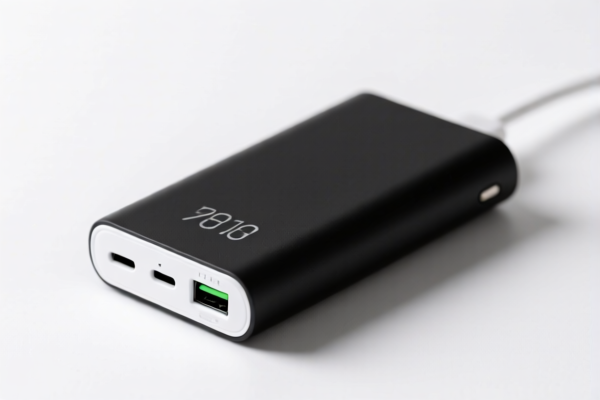
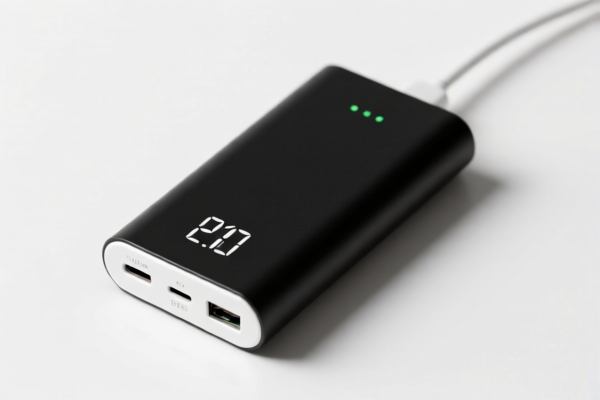
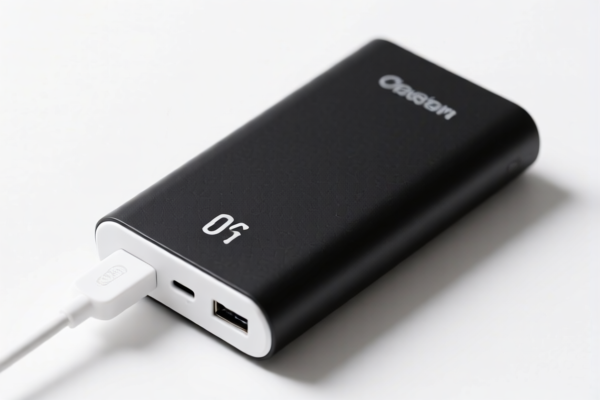
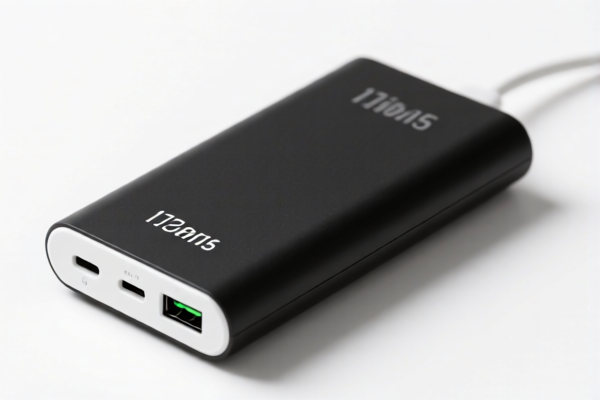
AI分析
🔋 Wired Power Bank (Portable Charger) – US Customs Classification & Tax Strategy
🌐 HS Code Reference & Customs Clearance Guide | 2026 Latest Tariff Breakdown | Expert-Level Clearance Strategy
📌 I. Product Definition & Classification: Do You Really Understand a "Wired Power Bank"?
A Wired Power Bank is a portable energy storage device used to charge electronic devices (smartphones, tablets, etc.) on the go. In international trade, its classification depends on whether it is viewed as a power supply unit (converter) or a battery cell.
There are two primary competing classifications for power banks in US Customs jurisprudence:
1. Static Converter (Power Supply): If the device is viewed primarily as a device that converts electrical energy (often including built-in charging circuits that regulate voltage/current), it falls under Chapter 85 as a static converter or rectifier.
2. Rechargeable Battery: If the device is viewed primarily as a storage medium for electrical energy (the battery cells themselves, even if enclosed in a housing), it falls under Chapter 85 as an electric accumulator (battery).
⚠️ Key Distinction Point:
- If the focus is on the conversion/charging function (e.g., USB output regulation) → 8504.40.95.x0
- If the focus is on the energy storage capacity (Li-ion/Li-Pol cells) → 8507.80.82.00
- Note: US Customs often scrutinizes this. Arguments must be made based on the "essential character" of the good.
📦 II. HS Code Classification Details (2026 Latest Tariff Authority Match)
| HS Code | Product Description | Applicable Scenario | Key Feature |
|---|---|---|---|
8504.40.95.10 |
Static Converters; Power Supplies | Output power < 50W. Classified as a general power supply unit. | Focus on Conversion Function |
8507.80.82.00 |
Electric Accumulators (Rechargeable Batteries) | Classified as a portable battery pack. | Focus on Energy Storage |
8504.40.95.20 |
Static Converters; Rectifiers | Output power 50W – 150W. Higher power output devices. | Focus on High-Power Conversion |
8544.42.90.10 |
Electric Conductors with Connectors | Specifically refers to the Charging Cable included or sold with the unit, defined as an extension cord/conductor with plugs. | Focus on Conductor/Cable |
🔍 Critical Reminder:
- Power Banks are frequently misclassified. If declared as a "Battery," you get8507.80.82.00. If declared as a "Charger/Adapter," you may get8504.40.95.x0.
- Cables are often declared separately or bundled. If bundled, customs may split the value, potentially applying the high tariff cable rate to the whole shipment if not handled carefully.
- DO NOT mix classifications in a single line item unless explicitly allowed by specific packing lists, as it triggers scrutiny.
💰 III. 2026 Latest Tariff Rate Breakdown (Including Surtaxes & Policy Add-ons)
✅ Applicable Country: United States (US)
✅ Origin: China (CN)
✅ Effective Date: Post-November 2025 (Includes Section 301 & IEEPA add-ons)
🎯 1. 8504.40.95.10 – Static Converter / Power Supply (< 50W)
| Item | Content |
|---|---|
| Base Tariff | 0% (ad valorem) |
| Section 301 Surcharge | +25.0% |
| Section 122 (IEEPA) Add-on | +10.0% |
| Total Effective Rate | 35.0% |
| Tax Calculation | CIF Value × 35.0% |
| De Minimis Exemption? | ❌ NO (deny_de_minimis) |
| Legal Authority Path | Base: 8504.40 → Section 301: Footnote 9903.88.01 → IEEPA: 9903.01.25 |
📌 Explanation:
- This code is often used for power banks with lower wattage outputs.
- While the base duty is 0%, the 35% total duty is significant.
- Warning: If your power bank is >50W, this code is incorrect.
🎯 2. 8507.80.82.00 – Rechargeable Battery (Electric Accumulator)
| Item | Content |
|---|---|
| Base Tariff | 3.4% |
| Section 301 Surcharge | +25.0% |
| Section 122 (IEEPA) Add-on | +10.0% |
| Total Effective Rate | 38.4% |
| Tax Calculation | CIF Value × 38.4% |
| De Minimis Exemption? | ❌ NO (deny_de_minimis) |
| Legal Authority Path | Base: 8507.80 → Section 301: Footnote 9903.88.01 → IEEPA: 9903.01.25 |
📌 Explanation:
- This is the most common classification for "Power Banks" viewed as batteries.
- It is 3.4% higher than the <50W converter code.
- Strategic Tip: If you can prove the "essential character" is the charging circuit (converter) rather than just the battery,8504.40.95.10might save you 3.4% on the duty base. However, customs may dispute this.
🎯 3. 8504.40.95.20 – Static Converter / Rectifier (50W–150W)
| Item | Content |
|---|---|
| Base Tariff | 0% |
| Section 301 Surcharge | +25.0% |
| Section 122 (IEEPA) Add-on | +10.0% |
| Total Effective Rate | 35.0% |
| Tax Calculation | CIF Value × 35.0% |
| De Minimis Exemption? | ❌ NO (deny_de_minimis) |
| Legal Authority Path | Base: 8504.40 → Section 301: Footnote 9903.88.01 → IEEPA: 9903.01.25 |
📌 Explanation:
- For high-power power banks (e.g., laptop chargers, fast-charging hubs >50W).
- Same tax structure as the <50W converter, but critical to ensure the wattage declaration is accurate to avoid misclassification penalties.
🎯 4. 8544.42.90.10 – Electric Conductors with Connectors (Charging Cables)
| Item | Content |
|---|---|
| Base Tariff | 2.6% |
| Section 301 Surcharge | +25.0% |
| Section 122 (IEEPA) Add-on | +10.0% |
| Steel/Aluminum/Copper Surcharge | +50.0% (Specific metal content tariffs) |
| Total Effective Rate | Up to 87.6% |
| Tax Calculation | CIF Value × 87.6% (Maximum scenario) |
| De Minimis Exemption? | ❌ NO (deny_de_minimis) |
| Legal Authority Path | Base: 8544.42 → Section 301 → IEEPA → Metal Tariff Add-ons |
📌 Explanation:
- High Risk Item. If you declare the charging cable separately, or if customs values the cable component heavily, the tax rate can explode to 87.6%.
- Strategy: Ideally, include cables as accessories within the main product declaration if possible, or ensure the value allocated to the cable is minimal and justified. Do NOT over-declare the cable value.
🛠️ IV. Customs Clearance Operational Advice (Practical Pitfall Avoidance)
✅ 1. Documentation Checklist (Non-Negotiable)
| Document | Required? | Description |
|---|---|---|
| ✅ Product Specification Sheet | ✔️ | Must clearly state: Input/Output Voltage, Max Wattage, Battery Capacity (mAh/Wh), Number of Cells. |
| ✅ Internal Structure Diagram | ✔️ | Shows if the unit is primarily a battery pack or a converter unit. Crucial for 8504 vs 8507 argument. |
| ✅ Product Photos | ✔️ | Clear images of ports, labels, and any "Power Supply" markings. |
| ✅ Commercial Invoice | ✔️ | Item description must be precise. E.g., "Portable Rechargeable Battery Pack" vs "Static Power Converter". |
| ✅ Packing List | ✔️ | Clearly separate units from accessories. Avoid lumping cables into the unit value if possible to avoid the 87.6% rate on the whole batch. |
| ✅ Battery Transport Certificate | ✔️ | UN 38.3 test summary is mandatory for lithium batteries to prove safety. |
✅ 2. Declaration Strategy (Key Mnemonics)
🔥 "Power Defines Code, Battery Defines Tax, Cables Are Traps!"
| Scenario | Correct Declaration Strategy | Incorrect Practice |
|---|---|---|
| Power Bank < 50W | Declare as 8504.40.95.10 (Converter) to aim for 0% base. Argue "Essential Character is Conversion." |
Declaring as 8507 (3.4% base) if conversion argument is strong. |
| Power Bank > 50W | Declare as 8504.40.95.20. Provide wattage proof. |
Claiming <50W falsely → Customs audit & penalty. |
| Power Bank (Standard) | Declare as 8507.80.82.00 if focusing on storage. Accept 3.4% base. |
Mixing codes in one line item. |
| Included Cables | Value cables separately on invoice if possible, or minimize their declared value. | Bundling high-value cables into the power bank price → Risk of 87.6% tax on entire value. |
| Battery Cells Only | If selling cells, not packs. | Declaring cells as "Power Banks" to avoid specific battery tariffs. |
✅ 3. Special Situations Handling
| Situation | Handling Advice |
|---|---|
| OEM/ODM Custom Power Banks | Provide end-customer specs. Ensure the description matches the technical function (Converter vs Battery). |
| Power Banks with Built-in AC Plug | May still be classified as 8504 (Adapter) but ensure wattage is correct. |
| Lithium Battery Safety | Failure to provide UN 38.3 or MSDS will lead to refusal of entry regardless of HS Code. |
| Valuation of Cables | If customs values the cable at 50% of the product, you pay 87.6% on half. Keep cable value low (<5% of total). |
🌍 V. Global Market Customs Comparison (2026 Latest)
| Country/Region | Recommended HS Code | Tariff Rate (China Origin) | Certifications Required | Notes |
|---|---|---|---|---|
| 🇺🇸 USA | 8507.80.82.00 or 8504.40.95.x0 |
35% - 38.4% | FCC, UN 38.3, DOE | High Surtaxes Apply. No De Minimis. |
| 🇨🇳 China | 8507.80.82.00 |
5% - 10% | CCC (if applicable) | Lower duty, but strict battery safety rules. |
| 🇪🇺 EU | 8507.60.00 / 8504.40 |
0% - 2.7% | CE, RoHS, IEC 62133 | No Section 301/IEEPA add-ons. |
| 🇬🇧 UK | 8507.60.00 |
0% | UKCA, CE | Post-Brexit rules apply. |
| 🇦🇺 Australia | 8507.60.00 |
5% | RCM, AS/NZS 62133 | Moderate duty, no surcharges. |
📌 Conclusion:
- The USA is the most expensive market for Chinese power banks due to the 35-38.4% effective duty rate.
- EU and Asia offer significantly lower duty burdens but have strict safety standards (IEC/CE).
- Duty Optimization: Consider supply chain diversification if US tariffs erode margins.
📌 VI. Common Errors & Pitfall Guide (Lessons Learned)
❌ Error 1: Declaring a 65W Power Bank under < 50W code (8504.40.95.10)
👉 Consequence: Customs reclassification + penalties + back taxes.
Fix: Always declare accurate wattage. Use 8504.40.95.20 for >50W.
❌ Error 2: Ignoring the Cable Tariff Trap (8544.42.90.10)
👉 Consequence: If the cable is valued high, the effective tax on the shipment skyrockets to 87.6%.
Fix: Keep the declared value of included cables to a minimum (e.g., $1-$2 per unit) and justify it as a minor accessory.
❌ Error 3: Missing UN 38.3 Documentation
👉 Consequence: Cargo held at port, returned, or destroyed.
Fix: Ensure the supplier provides the UN 38.3 test summary for all lithium battery shipments.
❌ Error 4: Confusing "Converter" vs "Battery"
👉 Consequence: Customs may audit the "essential character." If you claim converter (8504) but it's clearly just a battery case, you may face penalties.
Fix: Choose the classification that best matches the dominant function. If it has complex charging ICs, argue 8504. If it's just a battery pack, use 8507.
✅ Correct Declaration Example:
"Portable Rechargeable Lithium-ion Battery Pack, 10000mAh, Output 5V/2A (10W), Model XYZ, FCC ID: ABC123, UN 38.3 Certified"
🎯 VII. Conclusion: Professional Declaration Saves Money
🎯 Remember the Key Takeaways:
🔹 "Check Wattage: <50W vs >50W dictates the sub-code."
🔹 "Battery vs Converter: Choose wisely, both are taxed ~35-38%."
🔹 "Cables are Danger: Low value declaration, or suffer 87.6% tax."
🔹 "No De Minimis: $800 rule does NOT apply to China-origin electronics."
📌 Pro Tip:
If you are shipping to the USA, calculate the total landed cost including the 35-38% duty immediately.
Consider Advance Ruling (Ruling Letter) from CBP if your product structure is complex, to lock in the HS Code and avoid post-entry audits.
📣 Immediate Action:
📞 Verify UN 38.3 with supplier.
📊 Calculate duty using 35.0% (for <50W) or 38.4% (for Battery) or 87.6% (if cable value is high).
🚀 Optimize invoice values for accessories.
✨ Smart Customs Clearance, From Accurate Classification!
💼 Your Profit Margin Depends on This Detail!
用户评价
关于 HS 编码归类
协调制度(HS)是由世界海关组织(WCO)制定的国际贸易商品分类标准。全球 200 多个国家采用 HS 系统作为海关关税、贸易统计和进出口监管的基础。
每个 HS 编码遵循以下层级结构:
- 章(2 位)——商品大类(例如:第 84 章:机器和机械设备)
- 品目(4 位)——章内的更具体分类
- 子目(6 位)——国际通用细分,所有 WCO 成员国统一使用
- 本国细分(8-10 位)——各国自行扩展的细分编码,如美国 HTSUS 10 位编码
正确的 HS 编码归类对于顺利通关、准确缴纳关税和遵守贸易法规至关重要。错误归类可能导致海关延误、多缴关税或罚款。
从CN进口到US时,适用的关税税率可能包括:
- 最惠国(MFN)税率——适用于 WTO 成员国的标准关税税率
- 普通税率——适用于无贸易协定国家
- 贸易救济关税——附加关税,如 301 条款(反倾销)、232 条款(国家安全)或反补贴税
本页内容仅供参考。如需正式归类,请咨询当地海关或持牌报关代理。