Wired Power Bank
CN → US| HS Code | Tariff Rate | Origin | Destination | Doc |
|---|---|---|---|---|
| 8504409510 | 35.0% | CN | US | Official Doc |
| 8507808200 | 38.4% | CN | US | Official Doc |
| 8504409520 | 35.0% | CN | US | Official Doc |
| 8544429010 | 87.6% | CN | US | Official Doc |
Product Images
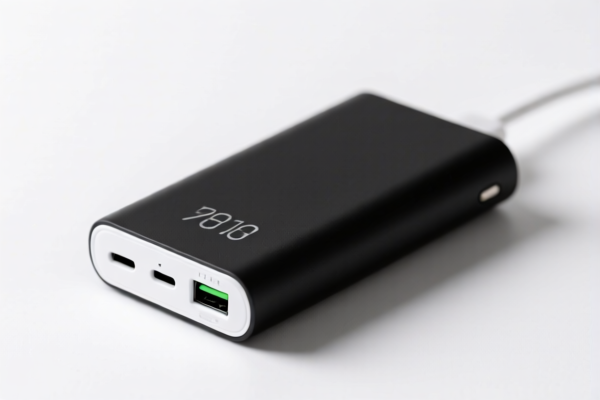
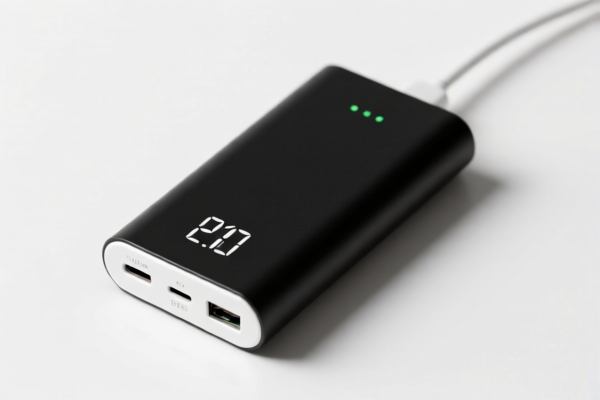
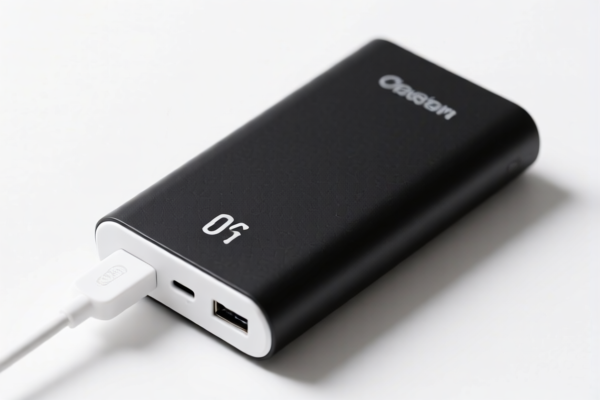
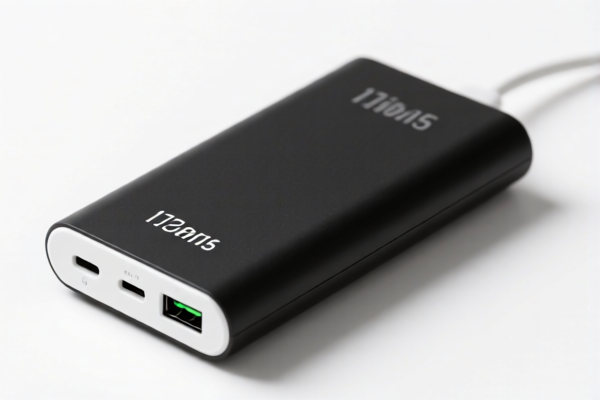
AI Analysis
🔋 Wired Power Bank (Portable Battery Charger)
🌐 HS Code Reference & Customs Clearance Guide | 2026 Latest Tariff Analysis | Professional Clearance Strategy
📌 I. Product Definition & Classification: What Exactly is a "Wired Power Bank"?
A Wired Power Bank is essentially a portable energy storage device used to charge electronic devices on the go. In international trade, its classification is controversial because it serves two functions simultaneously: 1. Energy Storage: It contains batteries (Lithium-ion/Polymer). 2. Power Conversion: It converts stored DC power to output DC/USB power for charging (acting as a static converter/power supply).
This dual nature leads to two primary HS Code classifications, with significant tariff differences depending on whether customs views it as a Battery or a Power Supply.
⚠️ Key Distinction Point:
- If classified as a Static Converter (Power Supply) → Falls under 8504 (Lower Base Duty, but high additional duties).
- If classified as a Battery → Falls under 8507 (Slightly higher Base Duty, but same additional duties).
- Note: It is not a simple cable; even if it has integrated cables, the core function is power conversion/storage, not just conduction.
📦 II. HS Code Classification Details (2026 Latest Tariff Authority Cross-Reference)
Based on the provided data, here are the valid classifications for Wired Power Banks:
| HS Code | Product Description | Function Logic | Output Power Range |
|---|---|---|---|
8504.40.95.10 |
Static Converter (Power Supply) | Functions as a power converter; output typically < 50W. Matches the feature of stationary converters used for power conversion. | < 50W |
8507.80.82.00 |
Electric Accumulator (Battery) | Core function is portable energy storage; matches the material and usage characteristics of electric accumulators without conflict with other battery categories. | N/A (Storage focused) |
8504.40.95.20 |
Static Converter (Rectifier) | Functions as a power converter; output typically 50W – 150W. Matches the feature of static converters/rectifiers. | 50W – 150W |
8544.42.90.10 |
Electric Conductors (Cables) | Incorrect for main unit. Only applies if declared strictly as a "charging cable" or "extension cord" with connectors. Avoid this for Power Banks. | N/A |
🔍 Critical Reminder:
- Do NOT classify a Power Bank as8544.42.90.10(Cable). While some have built-in wires, the primary function is power conversion/storage. Misclassification here leads to massive penalties (87.6% tax).
- The choice between 8504 (Converter) and 8507 (Battery) depends on how the device is engineered and declared. If it has complex voltage regulation circuits, 8504 is often preferred. If it is viewed primarily as a replaceable battery pack, 8507 applies.
💰 III. 2026 Latest Tariff Rate Detailed Breakdown (Including Surcharges & Policies)
✅ Applicable Country: USA (US)
✅ Origin: China (CN)
✅ Effective Time: Current tariffs apply (Section 301 + 122 Clauses)
🎯 1. 8504.40.95.10 & 8504.40.95.20 —— Static Converters / Power Supplies
These codes apply to power banks that are functionally classified as power conversion equipment.
| Item | Content |
|---|---|
| Base Tariff | 0.0% (Ad Valorem) |
| Section 301 Surcharge | +25.0% (USITC Footnote 9903.88.01) |
| Section 122 Tariff | +10.0% (Specific China trade remedy) |
| Total Effective Rate | 35.0% |
| Tax Calculation | CIF Value × 35% |
| De Minimis Exemption | ❌ Denied (deny_de_minimis) |
| Legal Basis Path | USITC:8504.40.95.10 → SECTION_301:9903.88.01 + SECTION_122 |
📌 Explanation:
- 0% Base Duty: Power supplies often have low base duties.
- 25% Section 301: Standard tariff on Chinese electronics.
- 10% Section 122: Additional penalty for certain Chinese goods.
- Total 35%: This is the most common rate for high-power or standard power banks classified as converters.
🎯 2. 8507.80.82.00 —— Electric Accumulators (Batteries)
This code applies if the customs authority determines the primary identity of the product is a battery, not a converter.
| Item | Content |
|---|---|
| Base Tariff | 3.4% (Ad Valorem) |
| Section 301 Surcharge | +25.0% (USITC Footnote 9903.88.01) |
| Section 122 Tariff | +10.0% (Specific China trade remedy) |
| Total Effective Rate | 38.4% |
| Tax Calculation | CIF Value × 38.4% |
| De Minimis Exemption | ❌ Denied (deny_de_minimis) |
| Legal Basis Path | USITC:8507.80.82.00 → SECTION_301:9903.88.01 + SECTION_122 |
📌 Note:
- The base duty is slightly higher (3.4% vs 0%), leading to a total rate of 38.4%.
- Even though the difference seems small (3.4%), it adds up on high-volume shipments.
- Both 8504 and 8507 classifications are subject to all surcharges.
🚫 3. 8544.42.90.10 —— Electric Conductors (Cables)
(Only for the charging cable if sold separately or misclassified)
| Item | Content |
|---|---|
| Base Tariff | 2.6% |
| Section 301 Surcharge | +25.0% |
| Section 122 Tariff | +10.0% |
| Steel/Aluminum/Copper Surcharge | +50.0% (If applicable to conductors) |
| Total Effective Rate | 87.6% |
| Tax Calculation | CIF Value × 87.6% |
⚠️ Warning:
- Do NOT declare a Power Bank as a "Cable" (8544.42.90.10) to save money. This is incorrect classification.
- If caught, you face 87.6% tax + penalties + shipment seizure.
- This rate applies only to actual extension cords/cables, not power banks.
🛠️ IV. Customs Clearance Practical Advice (Battle-Tested Pitfall Guide)
✅ 1. Preparation Checklist (Non-Negotiable)
| Document | Required? | Description |
|---|---|---|
| ✅ Product Spec Sheet | ✔️ | Must include: Capacity (mAh/Wh), Input/Output Voltage/Current, Total Power (W). |
| ✅ Circuit Diagram/Structure | ✔️ | To prove if it’s a "Converter" (8504) or "Battery" (8507). |
| ✅ Product Photos (Labeled) | ✔️ | Show ports, buttons, labels with ratings. |
| ✅ Third-Party Test Reports | ✔️ | FCC, UL, UN38.3 (Critical for Lithium Batteries), CE. |
| ✅ Commercial Invoice | ✔️ | Clear description: "Portable Power Bank, Lithium-ion, 20,000mAh, 22.5W Output". |
| ✅ Packaging List | ✔️ | Separate line items if cables are sold individually. |
✅ 2. Declaration Strategies (Key Mantras)
🔥 "Classify by Function, Not Just Form. Converter vs. Battery determines the 3.4% gap!"
| Scenario | Correct HS Code | Incorrect HS Code | Risk |
|---|---|---|---|
| Standard Power Bank (High conversion circuitry) | 8504.40.95.10 (20W) or 8504.40.95.20 (50W+) |
8507.80.82.00 |
Pay 3.4% extra unnecessarily. |
| Power Bank (Simple battery pack with basic output) | 8507.80.82.00 |
8544.42.90.10 |
87.6% Tax + Penalty! |
| Charging Cable Only (No battery, no converter) | 8544.42.90.10 |
8504.40.95.10 |
Over-declaring complex duty. |
| Power Bank + Cable Kit | Declare Power Bank as 8504/8507, Cable as 8544 if separate |
Combine into one line | Risk of misclassification. |
✅ 3. Special Cases Handling
| Situation | Handling Advice |
|---|---|
| Built-in Cables | Still classify as Power Bank (8504 or 8507). The cable is an accessory. Do NOT declare as 8544. |
| High Power (>150W) | Ensure it falls under correct 8504 subheading or consider if it’s a "Portable Charger Station" (may change classification). |
| Lithium Battery Safety | UN38.3 Certificate is mandatory. Without it, shipment will be rejected by airlines/carriers and customs. |
| Pre-Ruling | If unsure between 8504 and 8507, apply for an Advance Ruling from CBP to lock in the 35% rate vs 38.4% rate. |
🌍 V. Global Market Clearance Comparison (2026)
| Country/Region | Recommended HS Code | Tariff (China Origin) | Key Certification | Notes |
|---|---|---|---|---|
| 🇺🇸 USA | 8504.40.95.10 / 8507.80.82.00 |
35.0% / 38.4% | FCC, UL, UN38.3 | Highest tariff burden. Avoid 8544 (87.6%). |
| 🇨🇳 China | 8504.40.95.10 / 8507.80.82.00 |
~5-10% | CCC | No Section 301/122 surcharges. |
| 🇪🇺 EU | 8504.40 / 8507.80 |
~0-4% | CE, RoHS, REACH | No major surcharges, but strict battery waste rules. |
| 🇬🇧 UK | 8504.40 / 8507.80 |
~0-4% | UKCA | Post-Brexit rules apply. |
| 🇯🇵 Japan | 8504.40 / 8507.80 |
~0-6% | PSE | PSE mandatory for lithium batteries. |
📌 Conclusion:
- The USA is the most expensive market due to Section 301 (25%) + Section 122 (10%).
- EU/Asia have lower base tariffs but stricter safety/environmental certifications.
- Always aim for8504(35%) over8507(38.4%) if the product has significant conversion circuitry, saving 3.4% per shipment.
📌 VI. Common Mistakes & Pitfall Guide (Lessons Learned)
❌ Mistake 1: Declaring Power Bank as "Cable" (8544.42.90.10) to avoid high duties.
👉 Consequence: 87.6% Tax + Fraud Penalty + Shipment Seizure.
👉 Reality: Power banks are devices, not conductors.
❌ Mistake 2: Ignoring UN38.3 for Lithium Batteries.
👉 Consequence: Airline refusal + Customs detention.
👉 Solution: Always provide UN38.3 test summary and MSDS.
❌ Mistake 3: Confusing "Static Converter" vs "Battery".
👉 Consequence: Paying 3.4% more (38.4% vs 35%).
👉 Solution: If the device has complex voltage regulation (PD/QC fast charging chips), argue for 8504.
❌ Mistake 4: Missing Section 122 Tariff in cost calculation.
👉 Consequence: Underestimating landed cost by 10%.
👉 Solution: Always add 10% (Section 122) + 25% (Section 301) to base duty for China-origin goods to the US.
✅ Correct Declaration Example:
"Portable Power Bank, Lithium-ion Polymer, 20,000mAh (74Wh), Input 5V/3A, Output 5V/3A & 9V/2A (22.5W), Fast Charging PD Support, Model XYZ, FCC ID: ABC123"
🎯 VII. Conclusion: Precision in Classification, Savings in Taxes
🎯 Remember the Mantra:
🔹 "Converter First (8504), Battery Second (8507), Cable Never (8544)."
🔹 "25% Section 301 + 10% Section 122 = 35% or 38.4%. Plan Ahead!"
📌 Pro Tip:
If your Power Bank is manufactured in Vietnam, Malaysia, or Thailand, you may qualify for IEEPA/Section 301 exemptions or lower tariffs.
Recommend Advance Ruling with US CBP if your product has ambiguous features.
📣 Immediate Action:
📞 Consult a licensed Customs Broker + Provide UN38.3 & FCC Docs + Apply for HS Code Pre-classification.
🚀 Clear Customs Smoothly, Minimize Tariffs, Maximize Profit!
✨ Professional Clearance Starts with Accurate Classification!
💼 Every Percent of Tax Matters in Your Bottom Line!
Customer Reviews
About HS Code Classification
The Harmonized System (HS) is an internationally standardized nomenclature developed by the World Customs Organization (WCO) to classify traded products. Over 200 countries use the HS system as the basis for customs tariffs, trade statistics, and import/export regulations.
Each HS code follows a hierarchical structure:
- Chapter (2 digits) — Broad category of goods (e.g., Chapter 84: Machinery and Mechanical Appliances)
- Heading (4 digits) — More specific grouping within the chapter
- Subheading (6 digits) — Internationally standardized breakdown, used by all WCO member countries
- National subdivisions (8-10 digits) — Country-specific extensions for further classification, such as US HTSUS 10-digit codes
Correct HS code classification is essential for smooth customs clearance, accurate duty payment, and compliance with trade regulations. Misclassification can lead to customs delays, overpayment of duties, or penalties.
When importing from CN to US, the applicable tariff rates may include:
- Most-Favored-Nation (MFN) rate — The standard duty rate applied to WTO members
- General rate — Applied to countries without trade agreements
- Trade remedy duties — Additional tariffs such as Section 301 (anti-dumping), Section 232 (national security), or countervailing duties
The information provided on this page is for reference purposes only. For official classification, please consult with your local customs authority or a licensed customs broker.