Wireless Synchronous Belts
CN → US| HS编码 | 关税税率 | 原产国 | 目的国 | 文档 |
|---|---|---|---|---|
| 8483901050 | 37.8% | CN | US | 官方文档 |
| 8483908080 | 37.8% | CN | US | 官方文档 |
| 4010359000 | 38.3% | CN | US | 官方文档 |
| 4010369000 | 38.3% | CN | US | 官方文档 |
| 5910001020 | 39.0% | CN | US | 官方文档 |
商品图片
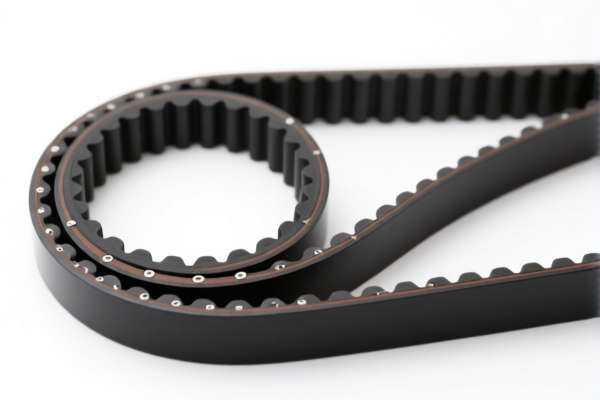
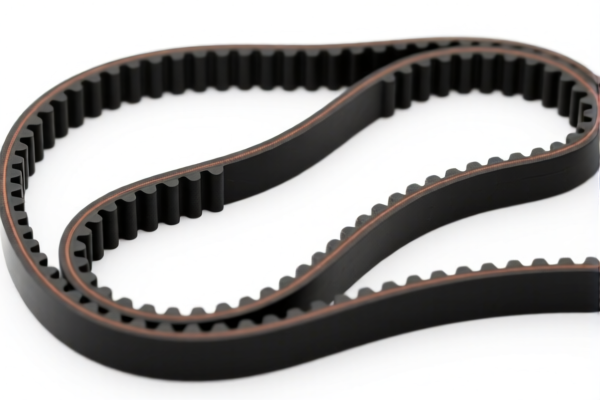
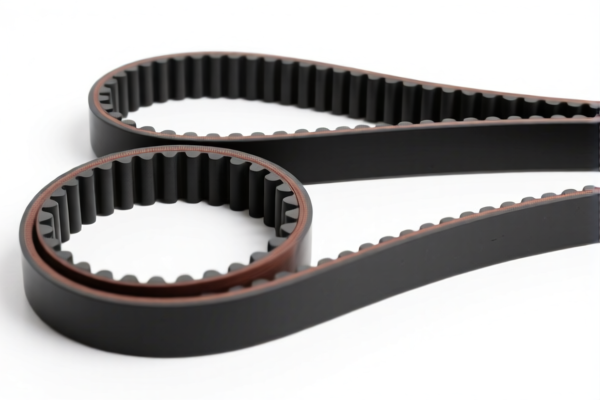
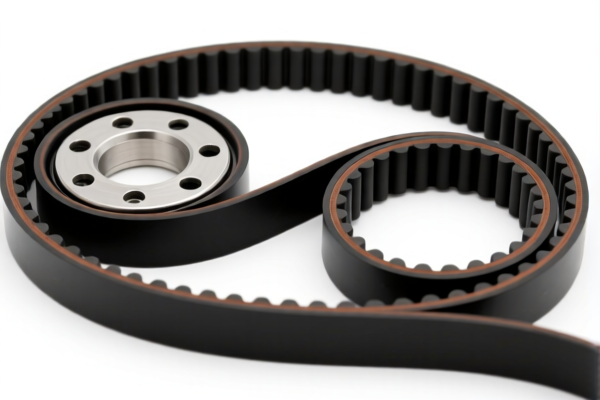
AI分析
⚙️ Wireless Synchronous Belts (Transmission Belts)
🌐 HS Code Reference & Customs Clearance Guide | 2026 Latest Tariff Analysis | Professional Clearance Strategy
📌 One, Product Definition & Classification: What is a "Wireless Synchronous Belt"?
In international trade, the term "Wireless Synchronous Belt" is technically a misnomer or a specific industry slang. Synchronous belts (also known as timing belts) are mechanical transmission components. The term "Wireless" likely refers to "Wireless" communication-enabled devices using these belts, or it is a confusion with "Wire-Rope" or simply a brand/name descriptor. However, based on the functional description "Synchronous Belt" (a toothed belt for precise motion transmission), the classification depends entirely on the material composition and structural form.
⚠️ Critical Distinction:
- If it is a rubber/polyurethane toothed belt → Classified under Chapter 40 (Rubber) or Chapter 84 (Machinery Parts).
- If it is a fabric/textile-reinforced belt → Classified under Chapter 59 (Impregnated Textiles).
- "Wireless" does not change the HS code; it is the material and use that dictate the classification.
📦 二、HS Code Classification Details (2026 Latest Tariff Authority Mapping)
| HS Code | Product Description | Material/Structure | Application Scenario |
|---|---|---|---|
8483.90.10.50 |
Other transmission elements | Metallic or composite parts not elsewhere specified | General mechanical transmission components, no material conflict |
8483.90.80.80 |
Other transmission elements & pulleys | General purpose transmission parts | Catch-all category for transmission devices, no material conflict |
4010.35.90.00 |
Synchronous belts of rubber | Rubber material, toothed shape | Rubber-based synchronous belts, standard industrial use |
4010.36.90.00 |
Synchronous belts of rubber | Rubber material, toothed shape | Rubber-based synchronous belts, alternative sub-category |
5910.00.10.20 |
Transmission belts of textile | Textile/Artificial fiber reinforced | Fabric-reinforced synchronous belts, textile base |
🔍 Key Reminder:
- Rubber Belts: If the belt is made of vulcanized rubber with fabric reinforcement, it falls under 4010.
- Mechanical Parts: If the belt is considered a general part of a machine without specific material definition in Chapter 40, it may fall under 8483.
- Textile Belts: If the primary structure is textile/canvas with rubber coating, it falls under 5910.
💰 三、2026 Latest Tariff Rate Breakdown (Including Surtaxes & Policy Add-ons)
✅ Applicable Country: United States (US)
✅ Origin: China (CN)
✅ Effective Date: 2025 November 10 onwards (for subsequent imports)
🎯 1. 8483.90.10.50 —— Other Transmission Elements (Mechanical)
| Item | Details |
|---|---|
| Base Tariff | 2.8% |
| Section 301 Surtax | +25.0% |
| Section 122 Tariff | +10.0% |
| Total Tariff Rate | 37.8% |
| Tax Calculation | CIF Value × 37.8% |
| De Minimis Exemption | ❌ Not Applicable |
| Legal Basis Path | Base Tariff 2.8% → Section 301 (+25%) → Section 122 (+10%) |
📌 Explanation:
- This classification treats the belt as a general mechanical part.
- High Tariff Alert: The combination of base tariff, Section 301, and Section 122 results in a 37.8% effective rate.
🎯 2. 8483.90.80.80 —— Other Transmission Elements (Catch-all)
| Item | Details |
|---|---|
| Base Tariff | 2.8% |
| Section 301 Surtax | +25.0% |
| Section 122 Tariff | +10.0% |
| Total Tariff Rate | 37.8% |
| Tax Calculation | CIF Value × 37.8% |
| De Minimis Exemption | ❌ Not Applicable |
| Legal Basis Path | Base Tariff 2.8% → Section 301 (+25%) → Section 122 (+10%) |
📌 Note:
- This is a "dustbin" category for transmission parts.
- Same tariff burden as8483.90.10.50. No material conflicts identified in the summary.
🎯 3. 4010.35.90.00 —— Synchronous Belts of Rubber
| Item | Details |
|---|---|
| Base Tariff | 3.3% |
| Section 301 Surtax | +25.0% |
| Section 122 Tariff | +10.0% |
| Total Tariff Rate | 38.3% |
| Tax Calculation | CIF Value × 38.3% |
| De Minimis Exemption | ❌ Not Applicable |
| Legal Basis Path | Base Tariff 3.3% → Section 301 (+25%) → Section 122 (+10%) |
📌 Explanation:
- Material Assumption: Rubber (vulcanized).
- Slightly Higher Rate: Due to a higher base rate (3.3% vs 2.8%), the total is 38.3%.
- Form Factor: Matches the toothed shape of synchronous belts.
🎯 4. 4010.36.90.00 —— Synchronous Belts of Rubber (Alternative)
| Item | Details |
|---|---|
| Base Tariff | 3.3% |
| Section 301 Surtax | +25.0% |
| Section 122 Tariff | +10.0% |
| Total Tariff Rate | 38.3% |
| Tax Calculation | CIF Value × 38.3% |
| De Minimis Exemption | ❌ Not Applicable |
| Legal Basis Path | Base Tariff 3.3% → Section 301 (+25%) → Section 122 (+10%) |
📌 Note:
- Similar to4010.35.90.00, but potentially different sub-category for specific rubber belt types.
- No other category conflicts identified.
🎯 5. 5910.00.10.20 —— Transmission Belts of Textile
| Item | Details |
|---|---|
| Base Tariff | 4.0% |
| Section 301 Surtax | +25.0% |
| Section 122 Tariff | +10.0% |
| Total Tariff Rate | 39.0% |
| Tax Calculation | CIF Value × 39.0% |
| De Minimis Exemption | ❌ Not Applicable |
| Legal Basis Path | Base Tariff 4.0% → Section 301 (+25%) → Section 122 (+10%) |
📌 Explanation:
- Material Assumption: Textile or Artificial Fiber.
- Highest Tariff: Due to the highest base rate (4.0%), this category carries a 39.0% total rate.
- Use Case: Fabric-reinforced synchronous belts.
🛠️ 四、Customs Clearance Practical Advice (Real-World Pitfall Guide)
✅ 1. Preparation Checklist (Essential Documents)
| Document | Required | Description |
|---|---|---|
| ✅ Product Specification Sheet | ✔️ | Must specify material (Rubber/Textile), dimensions, tooth profile, and tension strength. |
| ✅ Material Composition Statement | ✔️ | Crucial for distinguishing between 4010 (Rubber) and 5910 (Textile). |
| ✅ Product Photos (Clear) | ✔️ | Show teeth, inner liner, and any markings (e.g., "Rubber," "Fabric Reinforced"). |
| ✅ Commercial Invoice | ✔️ | Must accurately describe the item as "Synchronous Transmission Belt," NOT "Wireless Device." |
| ✅ Packing List | ✔️ | Detail quantity and weight. |
| ✅ Third-Party Test Report | ✔️ | Optional but helpful: Material composition analysis (e.g., % Rubber vs. Fabric). |
✅ 2. Declaration Tips (Key Mnemonic)
🔥 “Material Defines Code, ‘Wireless’ is a Trap, Be Precise, Save Tax!”
| Scenario | Correct Declaration | Wrong Action |
|---|---|---|
| Rubber Toothed Belt | 4010.35.90.00 or 4010.36.90.00 |
Misclassify as Mechanical Part (8483) → Potential under/over-valuation issues |
| Fabric-Reinforced Belt | 5910.00.10.20 |
Misclassify as Rubber → 39.0% vs 38.3% (Small diff, but accuracy matters) |
| Generic Transmission Part | 8483.90.10.50 or 8483.90.80.80 |
Avoid if material is clearly Rubber/Textile |
| Using Term "Wireless" | Never use "Wireless" in HS description | Confuses customs officers; leads to delays or reclassification |
📌 Critical Warning:
- Do NOT declare as "Wireless Belt" or "Smart Belt." These terms may trigger Chapter 85 (Electrical Machinery) scrutiny if electronics are present.
- If the belt has embedded sensors (IoT), it may be classified under 8543 or 9031, NOT as a simple transmission belt.
- If NO electronics are present, remove "Wireless" from the description and declare as "Synchronous Belt."
✅ 3. Special Circumstances Handling
| Situation | Handling Advice |
|---|---|
| Belt with Sensors (IoT) | If it has Wi-Fi/Bluetooth modules, declare as "Smart Transmission Belt" under 8543.70.00.00 or similar, NOT as a simple belt. |
| Mixed Materials | Provide a Material Bill of Lading showing % composition. Rubber > 50% → 4010. Textile Frame > 50% → 5910. |
| OEM Custom Belts | Provide customer drawings showing tooth profile and material specifications. |
| Sample Imports | Even samples are subject to full tariffs (37.8%-39.0%). No de minimis exemption. |
🌍 五、Global Market Clearance Comparison (2026 Latest)
| Country/Region | Recommended HS Code | Tariff Rate (China Origin) | Certification Requirement | Remarks |
|---|---|---|---|---|
| 🇺🇸 USA | 4010.35.90.00 |
38.3% (Base 3.3% + 301 + 122) | None specific | High tariff due to Section 301 & 122 |
| 🇨🇳 China | 4010.35.90.00 |
~5-10% | CCC (if applicable) | Lower base tariff |
| 🇪🇺 EU | 4010.35.90.00 |
0-3% (varies) | CE (if machinery) | No Section 301/122 |
| 🇬🇧 UK | 4010.35.90.00 |
0-3% | UKCA | Post-Brexit rules apply |
| 🇯🇵 Japan | 4010.35.90.00 |
0-3% | PSE (if electrical) | Generally low tariff |
📌 Conclusion:
- The USA imposes the highest burden due to Section 301 (25%) and Section 122 (10%).
- No duty-free or low-duty options exist for Chinese-origin synchronous belts in the US market.
- Diversification Strategy: Consider sourcing from Vietnam, Thailand, or Mexico to potentially avoid Section 301/122 tariffs (if rules of origin are met).
📌 六、Common Mistakes & Pitfall Guide (Lessons Learned)
❌ Mistake 1: Using the term "Wireless" in the customs declaration.
👉 Consequence: Customs may suspect electronic goods → Chapter 85 scrutiny → Delay + Additional Inspection.
❌ Mistake 2: Classifying Rubber Belts under 8483 (Mechanical Parts).
👉 Consequence: Customs may reject for misclassification → Penalty + Back Taxes.
❌ Mistake 3: Ignoring the Section 122 Tariff (10%).
👉 Consequence: Underestimation of landed cost → Profit Margin Erosion.
❌ Mistake 4: Not declaring material composition clearly.
👉 Consequence: Customs may assign the highest duty rate (39.0%) by default if material is unclear.
✅ Correct Practice:
"Synchronous Timing Belt, Rubber-Neoprene with Fabric Reinforcement, Tooth Profile HTD, Model XYZ, For Industrial Machinery, NOT Wireless/Electronic"
🎯 七、Conclusion: Precise Classification, Cost Control, Compliance
🎯 Remember the Mnemonic:
🔹 “No Wireless, Just Mechanical”
🔹 “Rubber = 4010, Textile = 5910, Parts = 8483”
🔹 “301 + 122 = 35% Add-on, Plan Ahead!”
📌 Pro Tip:
If your synchronous belts are embedded with electronics (e.g., IoT sensors for predictive maintenance), do NOT classify as a simple belt. Classify under 8543.70.00.00 (Electrical Machines) or 9031.80.00.00 (Measuring/Checking Instruments), which may have different tariff rates and exemptions.
📣 Immediate Action:
📞 Consult a Licensed Customs Broker + Provide Material Composition Report + Apply for Advance Ruling
🚀 Ensure Accurate HS Code Classification to Avoid 39% Tariff Shocks!
✨ Professional Clearance Starts with Accurate Classification!
💼 Your Cost Structure Depends on Your HS Code!
用户评价
关于 HS 编码归类
协调制度(HS)是由世界海关组织(WCO)制定的国际贸易商品分类标准。全球 200 多个国家采用 HS 系统作为海关关税、贸易统计和进出口监管的基础。
每个 HS 编码遵循以下层级结构:
- 章(2 位)——商品大类(例如:第 84 章:机器和机械设备)
- 品目(4 位)——章内的更具体分类
- 子目(6 位)——国际通用细分,所有 WCO 成员国统一使用
- 本国细分(8-10 位)——各国自行扩展的细分编码,如美国 HTSUS 10 位编码
正确的 HS 编码归类对于顺利通关、准确缴纳关税和遵守贸易法规至关重要。错误归类可能导致海关延误、多缴关税或罚款。
从CN进口到US时,适用的关税税率可能包括:
- 最惠国(MFN)税率——适用于 WTO 成员国的标准关税税率
- 普通税率——适用于无贸易协定国家
- 贸易救济关税——附加关税,如 301 条款(反倾销)、232 条款(国家安全)或反补贴税
本页内容仅供参考。如需正式归类,请咨询当地海关或持牌报关代理。