Wireless Synchronous Belts
CN → US| HS Code | Tariff Rate | Origin | Destination | Doc |
|---|---|---|---|---|
| 8483901050 | 37.8% | CN | US | Official Doc |
| 8483908080 | 37.8% | CN | US | Official Doc |
| 4010359000 | 38.3% | CN | US | Official Doc |
| 4010369000 | 38.3% | CN | US | Official Doc |
| 5910001020 | 39.0% | CN | US | Official Doc |
Product Images
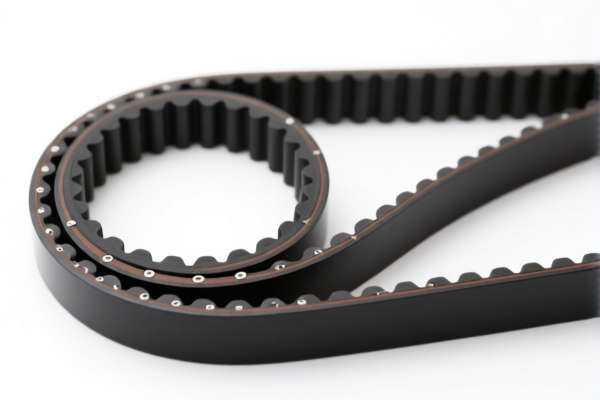
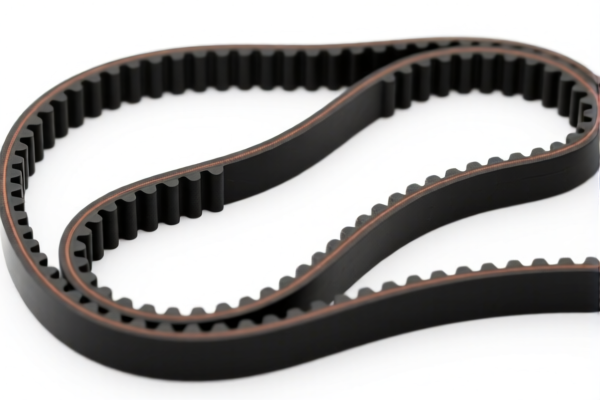
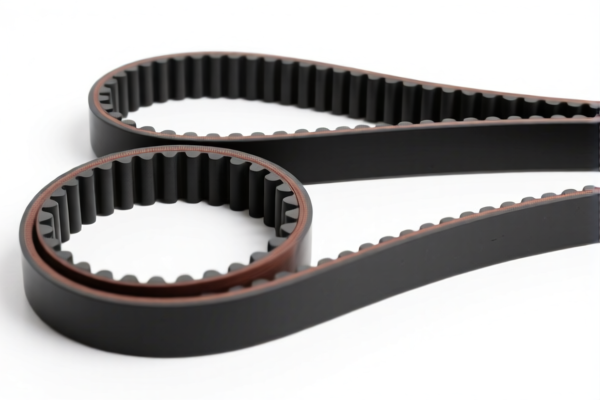
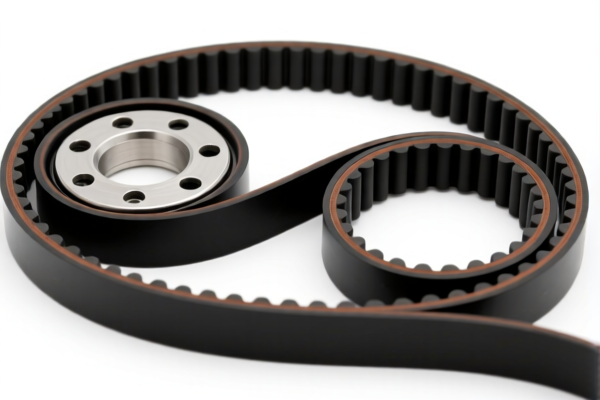
AI Analysis
⚙️ Wireless Synchronous Belts (Transmission Belts)
🌐 HS Code Reference & Customs Clearance Guide | 2026 Latest Tariff Analysis | Professional Clearance Strategy
📌 One, Product Definition & Classification: What is a "Wireless Synchronous Belt"?
In international trade, the term "Wireless Synchronous Belt" is technically a misnomer or a specific industry slang. Synchronous belts (also known as timing belts) are mechanical transmission components. The term "Wireless" likely refers to "Wireless" communication-enabled devices using these belts, or it is a confusion with "Wire-Rope" or simply a brand/name descriptor. However, based on the functional description "Synchronous Belt" (a toothed belt for precise motion transmission), the classification depends entirely on the material composition and structural form.
⚠️ Critical Distinction:
- If it is a rubber/polyurethane toothed belt → Classified under Chapter 40 (Rubber) or Chapter 84 (Machinery Parts).
- If it is a fabric/textile-reinforced belt → Classified under Chapter 59 (Impregnated Textiles).
- "Wireless" does not change the HS code; it is the material and use that dictate the classification.
📦 二、HS Code Classification Details (2026 Latest Tariff Authority Mapping)
| HS Code | Product Description | Material/Structure | Application Scenario |
|---|---|---|---|
8483.90.10.50 |
Other transmission elements | Metallic or composite parts not elsewhere specified | General mechanical transmission components, no material conflict |
8483.90.80.80 |
Other transmission elements & pulleys | General purpose transmission parts | Catch-all category for transmission devices, no material conflict |
4010.35.90.00 |
Synchronous belts of rubber | Rubber material, toothed shape | Rubber-based synchronous belts, standard industrial use |
4010.36.90.00 |
Synchronous belts of rubber | Rubber material, toothed shape | Rubber-based synchronous belts, alternative sub-category |
5910.00.10.20 |
Transmission belts of textile | Textile/Artificial fiber reinforced | Fabric-reinforced synchronous belts, textile base |
🔍 Key Reminder:
- Rubber Belts: If the belt is made of vulcanized rubber with fabric reinforcement, it falls under 4010.
- Mechanical Parts: If the belt is considered a general part of a machine without specific material definition in Chapter 40, it may fall under 8483.
- Textile Belts: If the primary structure is textile/canvas with rubber coating, it falls under 5910.
💰 三、2026 Latest Tariff Rate Breakdown (Including Surtaxes & Policy Add-ons)
✅ Applicable Country: United States (US)
✅ Origin: China (CN)
✅ Effective Date: 2025 November 10 onwards (for subsequent imports)
🎯 1. 8483.90.10.50 —— Other Transmission Elements (Mechanical)
| Item | Details |
|---|---|
| Base Tariff | 2.8% |
| Section 301 Surtax | +25.0% |
| Section 122 Tariff | +10.0% |
| Total Tariff Rate | 37.8% |
| Tax Calculation | CIF Value × 37.8% |
| De Minimis Exemption | ❌ Not Applicable |
| Legal Basis Path | Base Tariff 2.8% → Section 301 (+25%) → Section 122 (+10%) |
📌 Explanation:
- This classification treats the belt as a general mechanical part.
- High Tariff Alert: The combination of base tariff, Section 301, and Section 122 results in a 37.8% effective rate.
🎯 2. 8483.90.80.80 —— Other Transmission Elements (Catch-all)
| Item | Details |
|---|---|
| Base Tariff | 2.8% |
| Section 301 Surtax | +25.0% |
| Section 122 Tariff | +10.0% |
| Total Tariff Rate | 37.8% |
| Tax Calculation | CIF Value × 37.8% |
| De Minimis Exemption | ❌ Not Applicable |
| Legal Basis Path | Base Tariff 2.8% → Section 301 (+25%) → Section 122 (+10%) |
📌 Note:
- This is a "dustbin" category for transmission parts.
- Same tariff burden as8483.90.10.50. No material conflicts identified in the summary.
🎯 3. 4010.35.90.00 —— Synchronous Belts of Rubber
| Item | Details |
|---|---|
| Base Tariff | 3.3% |
| Section 301 Surtax | +25.0% |
| Section 122 Tariff | +10.0% |
| Total Tariff Rate | 38.3% |
| Tax Calculation | CIF Value × 38.3% |
| De Minimis Exemption | ❌ Not Applicable |
| Legal Basis Path | Base Tariff 3.3% → Section 301 (+25%) → Section 122 (+10%) |
📌 Explanation:
- Material Assumption: Rubber (vulcanized).
- Slightly Higher Rate: Due to a higher base rate (3.3% vs 2.8%), the total is 38.3%.
- Form Factor: Matches the toothed shape of synchronous belts.
🎯 4. 4010.36.90.00 —— Synchronous Belts of Rubber (Alternative)
| Item | Details |
|---|---|
| Base Tariff | 3.3% |
| Section 301 Surtax | +25.0% |
| Section 122 Tariff | +10.0% |
| Total Tariff Rate | 38.3% |
| Tax Calculation | CIF Value × 38.3% |
| De Minimis Exemption | ❌ Not Applicable |
| Legal Basis Path | Base Tariff 3.3% → Section 301 (+25%) → Section 122 (+10%) |
📌 Note:
- Similar to4010.35.90.00, but potentially different sub-category for specific rubber belt types.
- No other category conflicts identified.
🎯 5. 5910.00.10.20 —— Transmission Belts of Textile
| Item | Details |
|---|---|
| Base Tariff | 4.0% |
| Section 301 Surtax | +25.0% |
| Section 122 Tariff | +10.0% |
| Total Tariff Rate | 39.0% |
| Tax Calculation | CIF Value × 39.0% |
| De Minimis Exemption | ❌ Not Applicable |
| Legal Basis Path | Base Tariff 4.0% → Section 301 (+25%) → Section 122 (+10%) |
📌 Explanation:
- Material Assumption: Textile or Artificial Fiber.
- Highest Tariff: Due to the highest base rate (4.0%), this category carries a 39.0% total rate.
- Use Case: Fabric-reinforced synchronous belts.
🛠️ 四、Customs Clearance Practical Advice (Real-World Pitfall Guide)
✅ 1. Preparation Checklist (Essential Documents)
| Document | Required | Description |
|---|---|---|
| ✅ Product Specification Sheet | ✔️ | Must specify material (Rubber/Textile), dimensions, tooth profile, and tension strength. |
| ✅ Material Composition Statement | ✔️ | Crucial for distinguishing between 4010 (Rubber) and 5910 (Textile). |
| ✅ Product Photos (Clear) | ✔️ | Show teeth, inner liner, and any markings (e.g., "Rubber," "Fabric Reinforced"). |
| ✅ Commercial Invoice | ✔️ | Must accurately describe the item as "Synchronous Transmission Belt," NOT "Wireless Device." |
| ✅ Packing List | ✔️ | Detail quantity and weight. |
| ✅ Third-Party Test Report | ✔️ | Optional but helpful: Material composition analysis (e.g., % Rubber vs. Fabric). |
✅ 2. Declaration Tips (Key Mnemonic)
🔥 “Material Defines Code, ‘Wireless’ is a Trap, Be Precise, Save Tax!”
| Scenario | Correct Declaration | Wrong Action |
|---|---|---|
| Rubber Toothed Belt | 4010.35.90.00 or 4010.36.90.00 |
Misclassify as Mechanical Part (8483) → Potential under/over-valuation issues |
| Fabric-Reinforced Belt | 5910.00.10.20 |
Misclassify as Rubber → 39.0% vs 38.3% (Small diff, but accuracy matters) |
| Generic Transmission Part | 8483.90.10.50 or 8483.90.80.80 |
Avoid if material is clearly Rubber/Textile |
| Using Term "Wireless" | Never use "Wireless" in HS description | Confuses customs officers; leads to delays or reclassification |
📌 Critical Warning:
- Do NOT declare as "Wireless Belt" or "Smart Belt." These terms may trigger Chapter 85 (Electrical Machinery) scrutiny if electronics are present.
- If the belt has embedded sensors (IoT), it may be classified under 8543 or 9031, NOT as a simple transmission belt.
- If NO electronics are present, remove "Wireless" from the description and declare as "Synchronous Belt."
✅ 3. Special Circumstances Handling
| Situation | Handling Advice |
|---|---|
| Belt with Sensors (IoT) | If it has Wi-Fi/Bluetooth modules, declare as "Smart Transmission Belt" under 8543.70.00.00 or similar, NOT as a simple belt. |
| Mixed Materials | Provide a Material Bill of Lading showing % composition. Rubber > 50% → 4010. Textile Frame > 50% → 5910. |
| OEM Custom Belts | Provide customer drawings showing tooth profile and material specifications. |
| Sample Imports | Even samples are subject to full tariffs (37.8%-39.0%). No de minimis exemption. |
🌍 五、Global Market Clearance Comparison (2026 Latest)
| Country/Region | Recommended HS Code | Tariff Rate (China Origin) | Certification Requirement | Remarks |
|---|---|---|---|---|
| 🇺🇸 USA | 4010.35.90.00 |
38.3% (Base 3.3% + 301 + 122) | None specific | High tariff due to Section 301 & 122 |
| 🇨🇳 China | 4010.35.90.00 |
~5-10% | CCC (if applicable) | Lower base tariff |
| 🇪🇺 EU | 4010.35.90.00 |
0-3% (varies) | CE (if machinery) | No Section 301/122 |
| 🇬🇧 UK | 4010.35.90.00 |
0-3% | UKCA | Post-Brexit rules apply |
| 🇯🇵 Japan | 4010.35.90.00 |
0-3% | PSE (if electrical) | Generally low tariff |
📌 Conclusion:
- The USA imposes the highest burden due to Section 301 (25%) and Section 122 (10%).
- No duty-free or low-duty options exist for Chinese-origin synchronous belts in the US market.
- Diversification Strategy: Consider sourcing from Vietnam, Thailand, or Mexico to potentially avoid Section 301/122 tariffs (if rules of origin are met).
📌 六、Common Mistakes & Pitfall Guide (Lessons Learned)
❌ Mistake 1: Using the term "Wireless" in the customs declaration.
👉 Consequence: Customs may suspect electronic goods → Chapter 85 scrutiny → Delay + Additional Inspection.
❌ Mistake 2: Classifying Rubber Belts under 8483 (Mechanical Parts).
👉 Consequence: Customs may reject for misclassification → Penalty + Back Taxes.
❌ Mistake 3: Ignoring the Section 122 Tariff (10%).
👉 Consequence: Underestimation of landed cost → Profit Margin Erosion.
❌ Mistake 4: Not declaring material composition clearly.
👉 Consequence: Customs may assign the highest duty rate (39.0%) by default if material is unclear.
✅ Correct Practice:
"Synchronous Timing Belt, Rubber-Neoprene with Fabric Reinforcement, Tooth Profile HTD, Model XYZ, For Industrial Machinery, NOT Wireless/Electronic"
🎯 七、Conclusion: Precise Classification, Cost Control, Compliance
🎯 Remember the Mnemonic:
🔹 “No Wireless, Just Mechanical”
🔹 “Rubber = 4010, Textile = 5910, Parts = 8483”
🔹 “301 + 122 = 35% Add-on, Plan Ahead!”
📌 Pro Tip:
If your synchronous belts are embedded with electronics (e.g., IoT sensors for predictive maintenance), do NOT classify as a simple belt. Classify under 8543.70.00.00 (Electrical Machines) or 9031.80.00.00 (Measuring/Checking Instruments), which may have different tariff rates and exemptions.
📣 Immediate Action:
📞 Consult a Licensed Customs Broker + Provide Material Composition Report + Apply for Advance Ruling
🚀 Ensure Accurate HS Code Classification to Avoid 39% Tariff Shocks!
✨ Professional Clearance Starts with Accurate Classification!
💼 Your Cost Structure Depends on Your HS Code!
Customer Reviews
About HS Code Classification
The Harmonized System (HS) is an internationally standardized nomenclature developed by the World Customs Organization (WCO) to classify traded products. Over 200 countries use the HS system as the basis for customs tariffs, trade statistics, and import/export regulations.
Each HS code follows a hierarchical structure:
- Chapter (2 digits) — Broad category of goods (e.g., Chapter 84: Machinery and Mechanical Appliances)
- Heading (4 digits) — More specific grouping within the chapter
- Subheading (6 digits) — Internationally standardized breakdown, used by all WCO member countries
- National subdivisions (8-10 digits) — Country-specific extensions for further classification, such as US HTSUS 10-digit codes
Correct HS code classification is essential for smooth customs clearance, accurate duty payment, and compliance with trade regulations. Misclassification can lead to customs delays, overpayment of duties, or penalties.
When importing from CN to US, the applicable tariff rates may include:
- Most-Favored-Nation (MFN) rate — The standard duty rate applied to WTO members
- General rate — Applied to countries without trade agreements
- Trade remedy duties — Additional tariffs such as Section 301 (anti-dumping), Section 232 (national security), or countervailing duties
The information provided on this page is for reference purposes only. For official classification, please consult with your local customs authority or a licensed customs broker.