Wood Chisel
CN → US| HS编码 | 关税税率 | 原产国 | 目的国 | 文档 |
|---|---|---|---|---|
| 8205306000 | 40.0% | CN | US | 官方文档 |
| 8205303000 | 40.7% | CN | US | 官方文档 |
| 8202390070 | 35.0% | CN | US | 官方文档 |
| 8465910006 | 38.0% | CN | US | 官方文档 |
| 8465910049 | 38.0% | CN | US | 官方文档 |
| 8202990000 | 35.0% | CN | US | 官方文档 |
商品图片
AI分析
🪵 Wood Chisel (Chisels for Woodworking)
🌐 HS Code Reference & Customs Clearance Guide | 2026 Latest Tariff Analysis | Professional Clearance Strategy
📌 I. Product Definition & Classification: Do You Really Understand "Wood Chisels"?
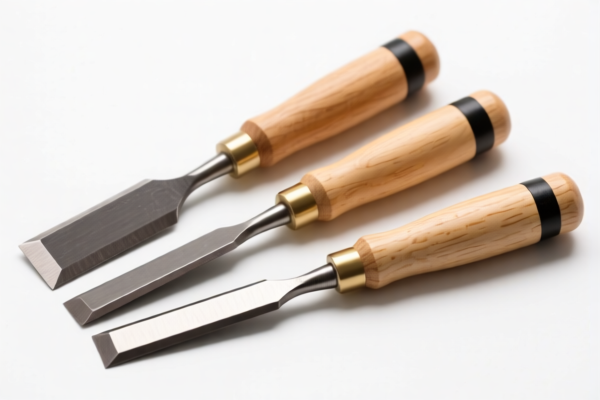
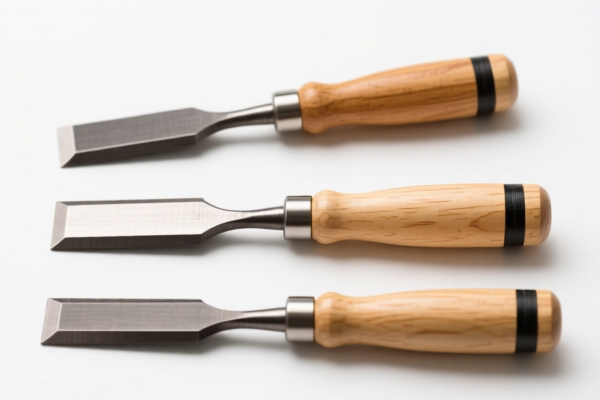
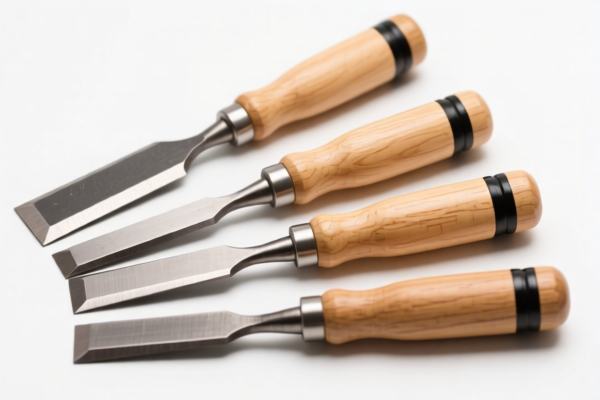
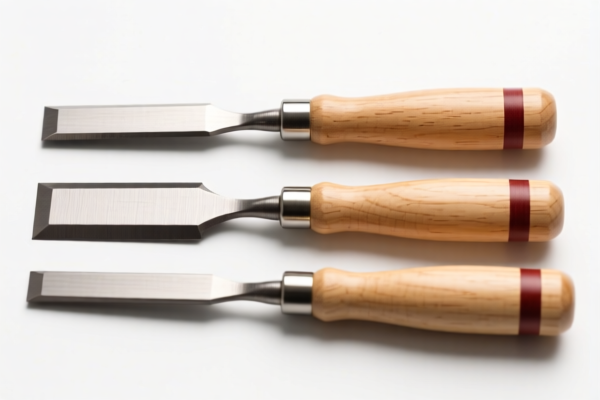
A Wood Chisel is a fundamental hand tool used for carving or cutting wood. It typically consists of a steel blade with a cutting edge, mounted on a handle. In international trade, classification depends on whether the item is classified as a simple hand tool (Chisel) or a component of a machine (Saw/Blade). The data below reflects the specific HS Codes and tax implications for these distinct interpretations.
⚠️ Key Distinction:
- Hand Tool (Chisel): Defined by its manual operation and specific form factor.归入 8205.30.60.00 or 8205.30.30.00.
- Sawing Tool/Machine Part: If classified under "Saws" or "Machinery Parts," it falls under 8202.39.00.70, 8465.91.00.06, 8465.91.00.49, or 8202.99.00.00.
- Note: The provided data includes multiple potential classifications for "Wood Chisel" due to ambiguous input, including some referring to "Wood Saws." We will explain each based on the provided logic.
📦 II. HS Code Classification Details (2026 Latest Tariff Authority Comparison)
| HS Code | Product Description | Logic/Summary from Data | Tax Category |
|---|---|---|---|
8205.30.60.00 |
Chisels (Defined Category) | "Chisels belong to a clearly defined chisel category; purpose and form are completely consistent." | 🎯 Primary Classification |
8205.30.30.00 |
Chisels (Matching Form) | "Matches purpose (chisel) and form (cutting tool); cutting part meets metal material requirements." | 🎯 Alternative Chisel Classification |
8202.39.00.70 |
Woodworking Saws (Other) | "Woodworking saws belong to saw blades/saw-type tools; fits the fallback logic for other categories." | ⚠️ Misclassification Risk |
8465.91.00.06 |
Woodworking Machinery Parts | "Matches material/object (wood) and function/purpose (sawing machine)." | ⚠️ Misclassification Risk |
8465.91.00.49 |
Woodworking Machinery Parts | "Woodworking saws belong to woodworking machinery; processing material is wood." | ⚠️ Misclassification Risk |
8202.99.00.00 |
Saw Blades & Parts | "Woodworking saws belong to saw-type tools; fits use description for various saw blades and parts; material is metal." | ⚠️ Misclassification Risk |
🔍 Critical Alert:
- The input "Wood Chisel" primarily maps to Chisels (HS 8205).
- However, the data provided also lists classifications for Woodworking Saws/Machinery. This suggests either a data ambiguity or that the user's product might be mislabeled in the source system. For a true Chisel, HS 8205 is the correct logical fit.
- Using Saw/Machinery codes (8202/8465) for a chisel could lead to customs rejection due to functional mismatch.
💰 III. 2026 Latest Tariff Rate Details (Including Surcharges & Policy Add-ons)
✅ Applicable Country: United States (US)
✅ Origin: China (CN)
✅ Effective Time: From November 10, 2025 onwards
🎯 1. 8205.30.60.00 —— Chisels (Clearly Defined Category)
| Item | Content |
|---|---|
| Base Tariff | 5.0% (Ad Valorem) |
| Section 301 Surcharge | +25.0% |
| Section 122 Tariff | +10.0% |
| Total Tax Rate | 40.0% |
| Tax Calculation | CIF Value × 40% |
| De Minimis Exemption | ❌ Not Available (deny_de_minimis) |
| Legal Basis Path | Base: 5% → 301: 25% → 122: 10% |
📌 Explanation:
- This is the most accurate classification for a physical wood chisel.
- Base Tariff: Standard MFN rate for hand tools of base metal.
- 301 Surcharge: Standard trade war tariff on Chinese hand tools.
- Section 122: Additional tariff on steel products (if applicable, as chisels are steel).
- Total: 40%. High cost, but legally defensible for chisels.
🎯 2. 8205.30.30.00 —— Chisels (Matching Form/Material)
| Item | Content |
|---|---|
| Base Tariff | 5.7% |
| Section 301 Surcharge | +25.0% |
| Section 122 Tariff | +10.0% |
| Total Tax Rate | 40.7% |
| Tax Calculation | CIF Value × 40.7% |
| De Minimis Exemption | ❌ Not Available |
| Legal Basis Path | Base: 5.7% → 301: 25% → 122: 10% |
📌 Note:
- Slightly higher base tariff (5.7% vs 5.0%) likely due to specific sub-category nuances (e.g., precision chisels).
- Still a valid classification for chisels. Difference is minimal (+0.7%).
⚠️ 3. 8202.39.00.70 / 8202.99.00.00 —— Saws/Saw Blades (Incorrect for Chisels)
| Item | Content |
|---|---|
| Base Tariff | 0.0% |
| Section 301 Surcharge | +25.0% |
| Section 122 Tariff | +10.0% |
| Total Tax Rate | 35.0% |
| Tax Calculation | CIF Value × 35.0% |
| De Minimis Exemption | ❌ Not Available |
📌 Risk Warning:
- While cheaper (35% vs 40%), this classification is for Saws, not chisels.
- Customs Risk: If you ship chisels but declare them as saw blades, customs may detain goods for misdeclaration, leading to fines, penalties, and potential blacklisting.
- Do not use unless your product is actually a saw blade.
⚠️ 4. 8465.91.00.06 / 8465.91.00.49 —— Woodworking Machinery Parts (Incorrect for Chisels)
| Item | Content |
|---|---|
| Base Tariff | 3.0% |
| Section 301 Surcharge | +25.0% |
| Section 122 Tariff | +10.0% |
| Total Tax Rate | 38.0% |
| Tax Calculation | CIF Value × 38.0% |
| De Minimis Exemption | ❌ Not Available |
📌 Risk Warning:
- These codes are for parts of woodworking machines. A hand chisel is not a machine part.
- Misclassification Risk: High. Customs officers easily distinguish between hand tools and machine components.
- Cost: 38% is better than 40%, but the legal risk is severe.
🛠️ IV. Customs Clearance Practical Advice (Real-World Pitfall Avoidance Guide)
✅ 1. Preparation Checklist (Must-Haves)
| Document | Required | Description |
|---|---|---|
| ✅ Product Specification Sheet | ✔️ | Must explicitly state "Hand Tool - Chisel," material (e.g., High-Carbon Steel), handle type (Wood/Plastic). |
| ✅ Product Photos | ✔️ | Clear images showing the cutting edge and overall form. Avoid ambiguous angles. |
| ✅ Commercial Invoice | ✔️ | Description: "Hand Chisel for Woodworking." Do NOT write "Saw Blade" or "Machine Part." |
| ✅ Material Declaration | ✔️ | Specify if it contains steel (triggering Section 122). |
| ✅ Packing List | ✔️ | Detail quantity per box. Avoid mixing with saws or machine parts. |
✅ 2. Declaration Strategy (Key Mantras)
🔥 “Describe Exactly, Don’t Save on Description, Avoid ‘Saw’ or ‘Machine’!”
| Scenario | Correct Declaration | Incorrect Declaration | Consequence |
|---|---|---|---|
| True Wood Chisel | 8205.30.60.00 (Chisel) |
8202.99.00.00 (Saw) |
Fines/Detention for misclassification. |
| Chisel with Handle | 8205.30.60.00 |
8205.30.30.00 (Acceptable) |
Minor tax difference (0.7%). |
| Saw Blade | 8202.99.00.00 |
8205.30.60.00 (Chisel) |
Rejection because it’s not a chisel. |
✅ 3. Special Handling for Steel Content
Since Section 122 tariffs (10%) apply, many metal tools are affected. - Steel Content: Confirm if the chisel is 100% steel or composite. - Documentation: Provide a Material Safety Data Sheet (MSDS) or Material Composition Report if requested. - Cost Optimization: Compare 8205.30.60.00 (40%) vs 8202.99.00.00 (35%). Do not choose the latter unless it is a saw. The 5% savings is not worth the customs risk.
🌍 V. Global Market Comparison (2026 Latest)
| Country/Region | Recommended HS Code | Tariff Rate | Certification | Notes |
|---|---|---|---|---|
| 🇺🇸 USA | 8205.30.60.00 |
40% | N/A | High tariff due to 301 + 122. |
| 🇨🇳 China | 8205.30.60.00 |
5-8% | N/A | Low duty, no surcharges. |
| 🇪🇺 EU | 8205.30.00.00 |
4-10% | CE (if applicable) | Varies by member state. |
| 🇯🇵 Japan | 8205.30.00.00 |
0-8% | JIS (if required) | Often preferential under EPA. |
📌 Conclusion:
- USA is the most expensive market for wood chisels due to layered tariffs.
- EU and Japan offer more favorable rates if proper certificates are provided.
- Strategy: For US market, ensure perfect documentation to avoid costly delays. Consider sourcing from non-China origins if possible for IEEPA exemptions (though chisels are less commonly exempted than electronics).
📌 VI. Common Mistakes & Pitfall Guide (Lessons Learned)
❌ Mistake 1: Declaring a Chisel as a Saw Blade to save 5% tax.
👉 Consequence: Customs audit reveals mismatch between HS Code description and physical product. Goods seized, fines imposed, and importer reputation damaged.
❌ Mistake 2: Omitting Material Composition.
👉 Consequence: Unable to calculate Section 122 tariff accurately. Delayed clearance.
❌ Mistake 3: Using Machinery Parts codes for Hand Tools.
👉 Consequence: 8465 codes require proof of association with a machine. A chisel has no machine. Rejection.
❌ Mistake 4: Ignoring Section 122 Steel Tariffs.
👉 Consequence: Underpayment of 10%. Back taxes + interest.
✅ Correct Approach:
"Wood Chisel, High-Carbon Steel Blade, Wooden Handle, Hand Tool for Woodworking, Model XYZ."
🎯 VII. Conclusion: Precision Classification Saves Money and Headaches
🎯 Remember:
🔹 "Chisel is Chisel, Saw is Saw. Don’t mix them!"
🔹 "40% Tax is High, but 100% Loss is Higher."
🔹 "Accurate Description > Cheap Declaration."
📌 Pro Tip:
If your chisel is made in Vietnam, Mexico, or Thailand, check for IEEPA Exemptions or FTA benefits. The US may apply 0%~5% tariffs instead of 40%.
For US-bound chisels, consider Advance Ruling from CBP to lock in the classification.
📣 Take Action:
📞 Consult a Licensed Customs Broker + Provide Product Images + Verify Material Composition
🚀 Clear Customs Smoothly, Protect Margins, Export Efficiently!
✨ Professional Clearance Starts with Accurate Classification!
💼 Every Penny Saved Counts!
用户评价
关于 HS 编码归类
协调制度(HS)是由世界海关组织(WCO)制定的国际贸易商品分类标准。全球 200 多个国家采用 HS 系统作为海关关税、贸易统计和进出口监管的基础。
每个 HS 编码遵循以下层级结构:
- 章(2 位)——商品大类(例如:第 84 章:机器和机械设备)
- 品目(4 位)——章内的更具体分类
- 子目(6 位)——国际通用细分,所有 WCO 成员国统一使用
- 本国细分(8-10 位)——各国自行扩展的细分编码,如美国 HTSUS 10 位编码
正确的 HS 编码归类对于顺利通关、准确缴纳关税和遵守贸易法规至关重要。错误归类可能导致海关延误、多缴关税或罚款。
从CN进口到US时,适用的关税税率可能包括:
- 最惠国(MFN)税率——适用于 WTO 成员国的标准关税税率
- 普通税率——适用于无贸易协定国家
- 贸易救济关税——附加关税,如 301 条款(反倾销)、232 条款(国家安全)或反补贴税
本页内容仅供参考。如需正式归类,请咨询当地海关或持牌报关代理。