Wood Chisel
CN → US| HS Code | Tariff Rate | Origin | Destination | Doc |
|---|---|---|---|---|
| 8205306000 | 40.0% | CN | US | Official Doc |
| 8205303000 | 40.7% | CN | US | Official Doc |
| 8202390070 | 35.0% | CN | US | Official Doc |
| 8465910006 | 38.0% | CN | US | Official Doc |
| 8465910049 | 38.0% | CN | US | Official Doc |
| 8202990000 | 35.0% | CN | US | Official Doc |
Product Images
AI Analysis
🪵 Wood Chisel (Chisels for Woodworking)
🌐 HS Code Reference & Customs Clearance Guide | 2026 Latest Tariff Analysis | Professional Clearance Strategy
📌 I. Product Definition & Classification: Do You Really Understand "Wood Chisels"?
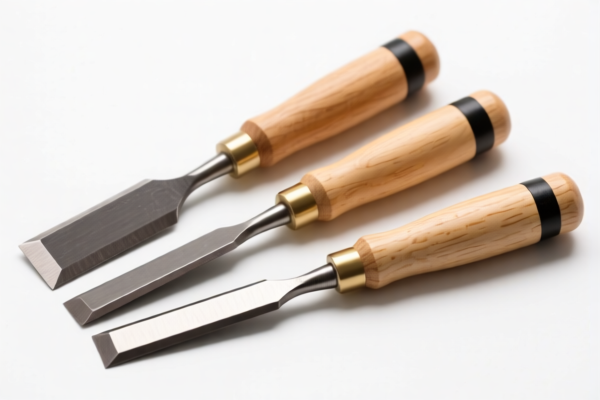
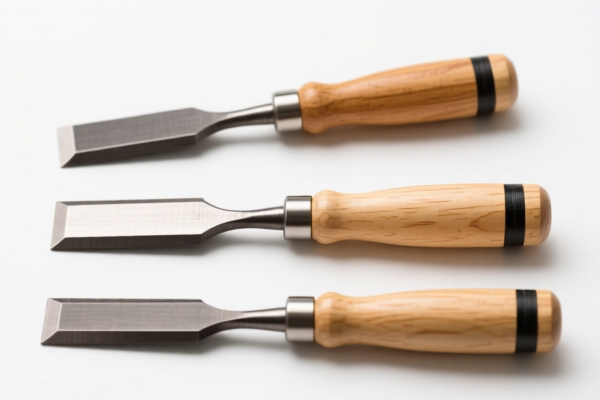
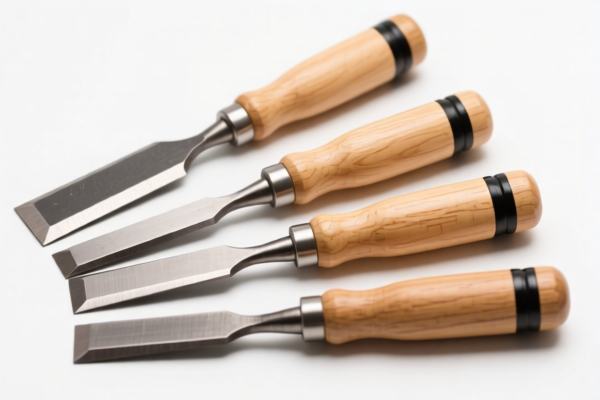
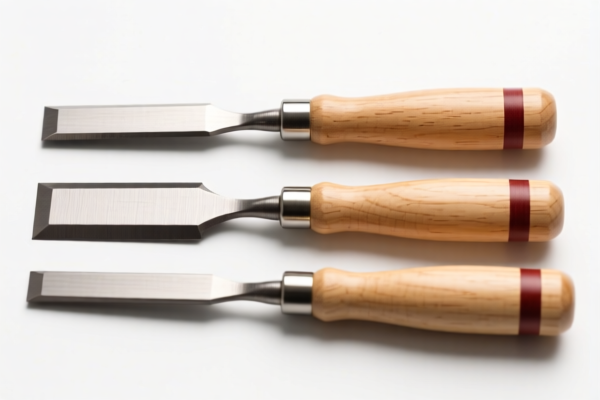
A Wood Chisel is a fundamental hand tool used for carving or cutting wood. It typically consists of a steel blade with a cutting edge, mounted on a handle. In international trade, classification depends on whether the item is classified as a simple hand tool (Chisel) or a component of a machine (Saw/Blade). The data below reflects the specific HS Codes and tax implications for these distinct interpretations.
⚠️ Key Distinction:
- Hand Tool (Chisel): Defined by its manual operation and specific form factor.归入 8205.30.60.00 or 8205.30.30.00.
- Sawing Tool/Machine Part: If classified under "Saws" or "Machinery Parts," it falls under 8202.39.00.70, 8465.91.00.06, 8465.91.00.49, or 8202.99.00.00.
- Note: The provided data includes multiple potential classifications for "Wood Chisel" due to ambiguous input, including some referring to "Wood Saws." We will explain each based on the provided logic.
📦 II. HS Code Classification Details (2026 Latest Tariff Authority Comparison)
| HS Code | Product Description | Logic/Summary from Data | Tax Category |
|---|---|---|---|
8205.30.60.00 |
Chisels (Defined Category) | "Chisels belong to a clearly defined chisel category; purpose and form are completely consistent." | 🎯 Primary Classification |
8205.30.30.00 |
Chisels (Matching Form) | "Matches purpose (chisel) and form (cutting tool); cutting part meets metal material requirements." | 🎯 Alternative Chisel Classification |
8202.39.00.70 |
Woodworking Saws (Other) | "Woodworking saws belong to saw blades/saw-type tools; fits the fallback logic for other categories." | ⚠️ Misclassification Risk |
8465.91.00.06 |
Woodworking Machinery Parts | "Matches material/object (wood) and function/purpose (sawing machine)." | ⚠️ Misclassification Risk |
8465.91.00.49 |
Woodworking Machinery Parts | "Woodworking saws belong to woodworking machinery; processing material is wood." | ⚠️ Misclassification Risk |
8202.99.00.00 |
Saw Blades & Parts | "Woodworking saws belong to saw-type tools; fits use description for various saw blades and parts; material is metal." | ⚠️ Misclassification Risk |
🔍 Critical Alert:
- The input "Wood Chisel" primarily maps to Chisels (HS 8205).
- However, the data provided also lists classifications for Woodworking Saws/Machinery. This suggests either a data ambiguity or that the user's product might be mislabeled in the source system. For a true Chisel, HS 8205 is the correct logical fit.
- Using Saw/Machinery codes (8202/8465) for a chisel could lead to customs rejection due to functional mismatch.
💰 III. 2026 Latest Tariff Rate Details (Including Surcharges & Policy Add-ons)
✅ Applicable Country: United States (US)
✅ Origin: China (CN)
✅ Effective Time: From November 10, 2025 onwards
🎯 1. 8205.30.60.00 —— Chisels (Clearly Defined Category)
| Item | Content |
|---|---|
| Base Tariff | 5.0% (Ad Valorem) |
| Section 301 Surcharge | +25.0% |
| Section 122 Tariff | +10.0% |
| Total Tax Rate | 40.0% |
| Tax Calculation | CIF Value × 40% |
| De Minimis Exemption | ❌ Not Available (deny_de_minimis) |
| Legal Basis Path | Base: 5% → 301: 25% → 122: 10% |
📌 Explanation:
- This is the most accurate classification for a physical wood chisel.
- Base Tariff: Standard MFN rate for hand tools of base metal.
- 301 Surcharge: Standard trade war tariff on Chinese hand tools.
- Section 122: Additional tariff on steel products (if applicable, as chisels are steel).
- Total: 40%. High cost, but legally defensible for chisels.
🎯 2. 8205.30.30.00 —— Chisels (Matching Form/Material)
| Item | Content |
|---|---|
| Base Tariff | 5.7% |
| Section 301 Surcharge | +25.0% |
| Section 122 Tariff | +10.0% |
| Total Tax Rate | 40.7% |
| Tax Calculation | CIF Value × 40.7% |
| De Minimis Exemption | ❌ Not Available |
| Legal Basis Path | Base: 5.7% → 301: 25% → 122: 10% |
📌 Note:
- Slightly higher base tariff (5.7% vs 5.0%) likely due to specific sub-category nuances (e.g., precision chisels).
- Still a valid classification for chisels. Difference is minimal (+0.7%).
⚠️ 3. 8202.39.00.70 / 8202.99.00.00 —— Saws/Saw Blades (Incorrect for Chisels)
| Item | Content |
|---|---|
| Base Tariff | 0.0% |
| Section 301 Surcharge | +25.0% |
| Section 122 Tariff | +10.0% |
| Total Tax Rate | 35.0% |
| Tax Calculation | CIF Value × 35.0% |
| De Minimis Exemption | ❌ Not Available |
📌 Risk Warning:
- While cheaper (35% vs 40%), this classification is for Saws, not chisels.
- Customs Risk: If you ship chisels but declare them as saw blades, customs may detain goods for misdeclaration, leading to fines, penalties, and potential blacklisting.
- Do not use unless your product is actually a saw blade.
⚠️ 4. 8465.91.00.06 / 8465.91.00.49 —— Woodworking Machinery Parts (Incorrect for Chisels)
| Item | Content |
|---|---|
| Base Tariff | 3.0% |
| Section 301 Surcharge | +25.0% |
| Section 122 Tariff | +10.0% |
| Total Tax Rate | 38.0% |
| Tax Calculation | CIF Value × 38.0% |
| De Minimis Exemption | ❌ Not Available |
📌 Risk Warning:
- These codes are for parts of woodworking machines. A hand chisel is not a machine part.
- Misclassification Risk: High. Customs officers easily distinguish between hand tools and machine components.
- Cost: 38% is better than 40%, but the legal risk is severe.
🛠️ IV. Customs Clearance Practical Advice (Real-World Pitfall Avoidance Guide)
✅ 1. Preparation Checklist (Must-Haves)
| Document | Required | Description |
|---|---|---|
| ✅ Product Specification Sheet | ✔️ | Must explicitly state "Hand Tool - Chisel," material (e.g., High-Carbon Steel), handle type (Wood/Plastic). |
| ✅ Product Photos | ✔️ | Clear images showing the cutting edge and overall form. Avoid ambiguous angles. |
| ✅ Commercial Invoice | ✔️ | Description: "Hand Chisel for Woodworking." Do NOT write "Saw Blade" or "Machine Part." |
| ✅ Material Declaration | ✔️ | Specify if it contains steel (triggering Section 122). |
| ✅ Packing List | ✔️ | Detail quantity per box. Avoid mixing with saws or machine parts. |
✅ 2. Declaration Strategy (Key Mantras)
🔥 “Describe Exactly, Don’t Save on Description, Avoid ‘Saw’ or ‘Machine’!”
| Scenario | Correct Declaration | Incorrect Declaration | Consequence |
|---|---|---|---|
| True Wood Chisel | 8205.30.60.00 (Chisel) |
8202.99.00.00 (Saw) |
Fines/Detention for misclassification. |
| Chisel with Handle | 8205.30.60.00 |
8205.30.30.00 (Acceptable) |
Minor tax difference (0.7%). |
| Saw Blade | 8202.99.00.00 |
8205.30.60.00 (Chisel) |
Rejection because it’s not a chisel. |
✅ 3. Special Handling for Steel Content
Since Section 122 tariffs (10%) apply, many metal tools are affected. - Steel Content: Confirm if the chisel is 100% steel or composite. - Documentation: Provide a Material Safety Data Sheet (MSDS) or Material Composition Report if requested. - Cost Optimization: Compare 8205.30.60.00 (40%) vs 8202.99.00.00 (35%). Do not choose the latter unless it is a saw. The 5% savings is not worth the customs risk.
🌍 V. Global Market Comparison (2026 Latest)
| Country/Region | Recommended HS Code | Tariff Rate | Certification | Notes |
|---|---|---|---|---|
| 🇺🇸 USA | 8205.30.60.00 |
40% | N/A | High tariff due to 301 + 122. |
| 🇨🇳 China | 8205.30.60.00 |
5-8% | N/A | Low duty, no surcharges. |
| 🇪🇺 EU | 8205.30.00.00 |
4-10% | CE (if applicable) | Varies by member state. |
| 🇯🇵 Japan | 8205.30.00.00 |
0-8% | JIS (if required) | Often preferential under EPA. |
📌 Conclusion:
- USA is the most expensive market for wood chisels due to layered tariffs.
- EU and Japan offer more favorable rates if proper certificates are provided.
- Strategy: For US market, ensure perfect documentation to avoid costly delays. Consider sourcing from non-China origins if possible for IEEPA exemptions (though chisels are less commonly exempted than electronics).
📌 VI. Common Mistakes & Pitfall Guide (Lessons Learned)
❌ Mistake 1: Declaring a Chisel as a Saw Blade to save 5% tax.
👉 Consequence: Customs audit reveals mismatch between HS Code description and physical product. Goods seized, fines imposed, and importer reputation damaged.
❌ Mistake 2: Omitting Material Composition.
👉 Consequence: Unable to calculate Section 122 tariff accurately. Delayed clearance.
❌ Mistake 3: Using Machinery Parts codes for Hand Tools.
👉 Consequence: 8465 codes require proof of association with a machine. A chisel has no machine. Rejection.
❌ Mistake 4: Ignoring Section 122 Steel Tariffs.
👉 Consequence: Underpayment of 10%. Back taxes + interest.
✅ Correct Approach:
"Wood Chisel, High-Carbon Steel Blade, Wooden Handle, Hand Tool for Woodworking, Model XYZ."
🎯 VII. Conclusion: Precision Classification Saves Money and Headaches
🎯 Remember:
🔹 "Chisel is Chisel, Saw is Saw. Don’t mix them!"
🔹 "40% Tax is High, but 100% Loss is Higher."
🔹 "Accurate Description > Cheap Declaration."
📌 Pro Tip:
If your chisel is made in Vietnam, Mexico, or Thailand, check for IEEPA Exemptions or FTA benefits. The US may apply 0%~5% tariffs instead of 40%.
For US-bound chisels, consider Advance Ruling from CBP to lock in the classification.
📣 Take Action:
📞 Consult a Licensed Customs Broker + Provide Product Images + Verify Material Composition
🚀 Clear Customs Smoothly, Protect Margins, Export Efficiently!
✨ Professional Clearance Starts with Accurate Classification!
💼 Every Penny Saved Counts!
Customer Reviews
About HS Code Classification
The Harmonized System (HS) is an internationally standardized nomenclature developed by the World Customs Organization (WCO) to classify traded products. Over 200 countries use the HS system as the basis for customs tariffs, trade statistics, and import/export regulations.
Each HS code follows a hierarchical structure:
- Chapter (2 digits) — Broad category of goods (e.g., Chapter 84: Machinery and Mechanical Appliances)
- Heading (4 digits) — More specific grouping within the chapter
- Subheading (6 digits) — Internationally standardized breakdown, used by all WCO member countries
- National subdivisions (8-10 digits) — Country-specific extensions for further classification, such as US HTSUS 10-digit codes
Correct HS code classification is essential for smooth customs clearance, accurate duty payment, and compliance with trade regulations. Misclassification can lead to customs delays, overpayment of duties, or penalties.
When importing from CN to US, the applicable tariff rates may include:
- Most-Favored-Nation (MFN) rate — The standard duty rate applied to WTO members
- General rate — Applied to countries without trade agreements
- Trade remedy duties — Additional tariffs such as Section 301 (anti-dumping), Section 232 (national security), or countervailing duties
The information provided on this page is for reference purposes only. For official classification, please consult with your local customs authority or a licensed customs broker.