Wood Cubic Centimeters Unveneered
CN → US| HS编码 | 关税税率 | 原产国 | 目的国 | 文档 |
|---|---|---|---|---|
| 4408900151 | 35.0% | CN | US | 官方文档 |
| 4403490200 | 35.0% | CN | US | 官方文档 |
| 4407110053 | 35.0% | CN | US | 官方文档 |
| 4408390291 | 35.0% | CN | US | 官方文档 |
| 4403990195 | 35.0% | CN | US | 官方文档 |
| 4407990295 | 35.0% | CN | US | 官方文档 |
商品图片
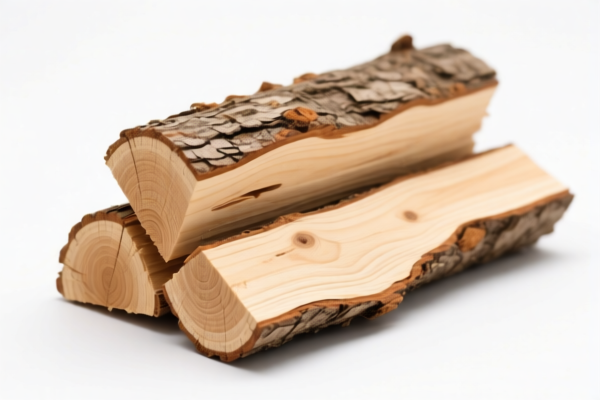
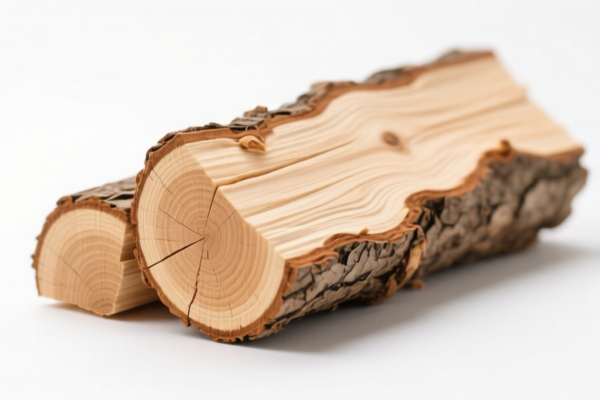
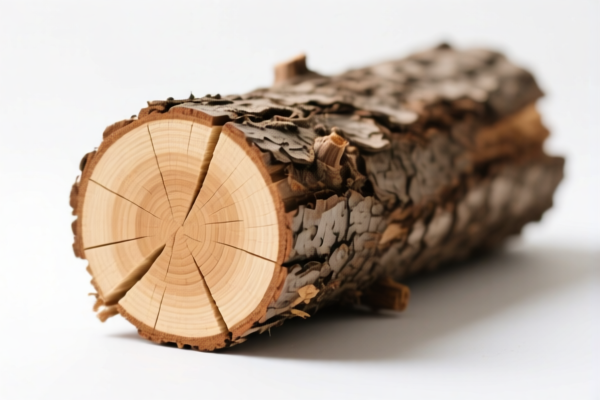

AI分析
🌳 Wood (Cubic Centimeters, Unveneered)
🌐 HS Code Reference & Customs Clearance Guide | 2026 Latest Tariff Analysis | Professional Clearance Strategy
📌 I. Product Definition & Classification: Do You Truly Understand "Wood"?
"Wood (Cubic Centimeters, Unveneered)" is a generic term often used in trade documents for raw timber materials. In international trade, these products are strictly classified based on species (coniferous vs. non-coniferous/tropical), processing level (rough vs. processed), and surface treatment (veneered vs. unveneered).
The term "Unveneered" is critical: it excludes finished furniture components or decorative veneer sheets, pointing directly to raw or semi-processed timber.
⚠️ Key Distinction Points:
- If the wood is roughly shaped/sawed and belongs to a specific species → Classified under Chapter 44 Section III (e.g., 4403, 4407).
- If the wood is a thin slice/veneer sheet but not yet applied to another surface → Classified under Chapter 44 Section IV (e.g., 4408).
- "Unveneered" means the wood has not been coated or laminated with decorative sheets. It is raw timber.
📦 II. HS Code Classification Details (2026 Latest Tariff Authority Comparison)
Based on the provided dataset, here are the specific HS Codes for unveneered wood products, categorized by their physical state and species.
| HS Code | Product Description (Summary) | Key Characteristics | Processing Level |
|---|---|---|---|
4408.90.01.51 |
Wood material, unveneered, catch-all category | Generic unveneered wood not fitting other specific sub-categories | Sliced/Thin sheets or other forms |
4403.49.02.00 |
Wood material, rough-sawn/roughed-out, primary product attribute | Roughly shaped timber (logs, poles, planks) | Primary processing (Rough) |
4407.11.00.53 |
Coniferous Pine Wood Class, untreated, unveneered | Specific species: Pine (Coniferous) | Planed/Sawn but untreated |
4408.39.02.91 |
Wood Veneer Sheets, Tropical Wood Other Category, Unveneered | Thin slices from tropical hardwoods, not yet applied | Sliced/Veneer sheets |
4403.99.01.95 |
Rough-sawn Wood Attribute, Species Unspecified, Catch-all | Generic rough wood, no specific species declared | Primary processing (Rough) |
4407.99.02.95 |
Non-Coniferous Wood, Sliced/Sawn Attribute, Other Category Inference | Hardwoods (Non-Pine), processed but not specifically listed | Planed/Sawn |
🔍 Important Reminder:
- All listed HS Codes share the same total tax rate of 35.0% due to the combination of base tariffs and specific trade restrictions. - "Unveneered" excludes these from categories meant for finished furniture (Chapter 94) or pre-applied veneer (if already glued).
💰 III. 2026 Latest Tariff Rate Breakdown (Including Surtaxes & Policy Add-ons)
✅ Applicable Country: United States (US)
✅ Origin: China (CN)
✅ Effective Time: 2025 November 10 onwards (for subsequent imports)
All HS Codes in the provided dataset (4408.90.01.51, 4403.49.02.00, 4407.11.00.53, 4408.39.02.91, 4403.99.01.95, 4407.99.02.95) have the identical tariff structure:
🎯 1. General Tariff Structure for Unveneered Wood Products
| Item | Content |
|---|---|
| Base Tariff Rate | 0.0% (Ad Valorem) |
| Section 301 Surcharge | +25.0% (Under US Trade Law Section 301) |
| Section 122 Tariff | +10.0% (Specific "122 Clause" Tariff for certain Chinese goods) |
| Total Tax Rate | 35.0% |
| Tax Calculation | CIF Value × 35% |
| De Minimis Exemption Eligible? | ❌ NO (High-risk category for small packages) |
| Legal Basis Path | Section 301: 4403/4407/4408 items → Section 122: 4403/4407/4408 items → USITC: [Specific HS Code] |
📌 Explanation:
- Base 0%: Standard MFN (Most Favored Nation) rates for many wood products are low or zero.
- 301 Tariff 25%: The bulk of the cost comes from the US-China trade war tariffs targeting Chinese timber and wood products.
- 122 Clause 10%: An additional surcharge applied to specific categories of Chinese wood imports.
- Total 35%: This is a very high landed cost. Importers must factor this into their CIF pricing.
🛠️ IV. Customs Clearance Practical Advice (Battle-Tested Pitfall Avoidance)
✅ 1. Preparation Checklist (Mandatory)
| Document | Must Provide | Description |
|---|---|---|
| ✅ Product Specification Sheet | ✔️ | Must clearly state: Species (if known), Dimensions (cm³), Moisture Content, Treatment Status (Heat Treated? Fumigated?) |
| ✅ ISPM 15 Phytosanitary Certificate | ✔️ | CRITICAL for raw wood. Proves treatment against pests. Without it, cargo will be rejected. |
| ✅ Commercial Invoice | ✔️ | Must explicitly state "UNVENEERED", "RAW TIMBER", or "SAWN WOOD". Do not use vague terms like "Wood Material". |
| ✅ Packing List | ✔️ | Detailed breakdown of cubic centimeters (volume), weight, and number of bundles/containers. |
| ✅ Species Declaration | ✔️ | If the HS Code is 4407.11 (Pine), you must prove it is Pine. Misdeclaration leads to heavy fines. |
✅ 2. Declaration Strategy (Key Mnemonic)
🔥 "Species Clear, Rough or Sliced, Unveneered Stated, Tax at 35% Accepted!"
| Scenario | Correct Declaration | Wrong Practice |
|---|---|---|
| Raw Logs/Rough Planks | 4403.49.02.00 or 4403.99.01.95 |
Declaring as "Furniture Parts" → Higher tax/Complex clearance |
| Pine Sawn Wood | 4407.11.00.53 |
Declaring as "Tropical Wood" → Penalty for misclassification |
| Thin Wood Slices (for Veneer) | 4408.39.02.91 |
Declaring as "Finished Veneer" (if already glued) → Wrong chapter |
| Generic/Unspecified Wood | 4403.99.01.95 or 4407.99.02.95 |
Using "Other Wood" without supporting docs → Customs holds shipment |
✅ 3. Special Case Handling
| Situation | Handling Advice |
|---|---|
| Heat Treated Wood (HT) | Ensure ISPM 15 mark (HT) is visible on packaging. This is mandatory for entry into the US/EU. |
| Mixed Species Shipment | If a container has both Pine and Tropical wood, split the declaration. Do not combine into one generic line item. |
| "Catch-all" Codes (e.g., 4403.99) | Use these only when species is truly unknown or mixed. Be prepared for potential Customs inspection to verify species. |
| Volume vs. Weight | Wood is often shipped by volume (cubic meters/cm). Ensure your invoice matches the physical volume declared to avoid duty discrepancies. |
🌍 V. Global Market Comparison for Unveneered Wood (2026)
| Country/Region | Recommended HS Code Range | Base Tariff | Surtaxes (China Origin) | Notes |
|---|---|---|---|---|
| 🇺🇸 USA | 4403, 4407, 4408 |
0% | +35% Total (301: 25% + 122: 10%) | Highest Cost. Strict phytosanitary rules. |
| 🇨🇳 China | 4403, 4407 |
5-10% | None | Lower entry barrier for imports into China. |
| 🇪🇺 EU | 4403, 4407 |
0-5% | None (if compliant with EUTR) | EUTR Compliance is critical. No trade war tariffs, but strict environmental checks. |
| 🇯🇵 Japan | 4403, 4407 |
0-1.5% | None | High standards for pest-free wood. |
📌 Conclusion:
- USA is the most expensive market for Chinese unveneered wood due to the 35% combined tariff.
- EU/Japan have lower tariffs but higher non-tariff barriers (Phytosanitary/Environmental).
- Strategy: If exporting to the US, ensure ISPM 15 compliance is flawless to avoid demurrage costs, which can exceed the tariff itself.
📌 VI. Common Mistakes & Pitfalls (Blood Lessons)
❌ Mistake 1: Declaring "Wood" without specifying "Unveneered"
👉 Consequence: Customs may classify it as "Veneer Sheets" or "Furniture Parts," leading to incorrect tax rates and delays.
❌ Mistake 2: Omitting "Cubic Centimeters" or Volume Details
👉 Consequence: Wood duty is often calculated on volume or weight. Missing data leads to valuation adjustments and penalties.
❌ Mistake 3: Using a "Pine" HS Code (4407.11) for Non-Pine Wood
👉 Consequence: Misdeclaration. If inspected and found to be Tropical Wood, fines apply, and the cargo may be re-exported.
❌ Mistake 4: Ignoring ISPM 15 for Raw Wood
👉 Consequence: Cargo Rejection. The US CBP and USDA aggressively inspect wood shipments. No certificate = No entry.
✅ Correct Approach:
"Coniferous Pine Sawn Wood, Unveneered, Heat Treated (HT), ISPM 15 Certified, Volume: XX,XXX cm³, Origin: China"
🎯 VII. Conclusion: Professional Declaration, Cost Control, Compliance!
🎯 Remember the Mnemonic:
🔹 "Raw Wood, Unveneered, 35% Total Tax.
🔹 Species Matters, Volume Counts, ISPM 15 is Law.
🔹 301: 25%, 122: 10%, Base: 0%.
🔹 No Certificate, No Entry!**
📌 Pro Tip:
If your wood products are heat-treated (HT), ensure the HT mark is clearly visible on every pallet/bundle.
For US imports, consider Pre-Arrival Review Service (PARS) if volumes are high, to get advance classification confirmation.
📣 Immediate Action:
📞 Contact your freight forwarder + Provide ISPM 15 Certificates + Verify HS Code Species Match.
🚀 Let your wood products pass customs smoothly, avoid penalties, and protect your margins!
✨ Professional Clearance Starts with Accurate Classification!
💼 Every cubic centimeter counts, every tax dollar matters!
用户评价
关于 HS 编码归类
协调制度(HS)是由世界海关组织(WCO)制定的国际贸易商品分类标准。全球 200 多个国家采用 HS 系统作为海关关税、贸易统计和进出口监管的基础。
每个 HS 编码遵循以下层级结构:
- 章(2 位)——商品大类(例如:第 84 章:机器和机械设备)
- 品目(4 位)——章内的更具体分类
- 子目(6 位)——国际通用细分,所有 WCO 成员国统一使用
- 本国细分(8-10 位)——各国自行扩展的细分编码,如美国 HTSUS 10 位编码
正确的 HS 编码归类对于顺利通关、准确缴纳关税和遵守贸易法规至关重要。错误归类可能导致海关延误、多缴关税或罚款。
从CN进口到US时,适用的关税税率可能包括:
- 最惠国(MFN)税率——适用于 WTO 成员国的标准关税税率
- 普通税率——适用于无贸易协定国家
- 贸易救济关税——附加关税,如 301 条款(反倾销)、232 条款(国家安全)或反补贴税
本页内容仅供参考。如需正式归类,请咨询当地海关或持牌报关代理。