Wood Cubic Centimeters Unveneered
CN → US| HS Code | Tariff Rate | Origin | Destination | Doc |
|---|---|---|---|---|
| 4408900151 | 35.0% | CN | US | Official Doc |
| 4403490200 | 35.0% | CN | US | Official Doc |
| 4407110053 | 35.0% | CN | US | Official Doc |
| 4408390291 | 35.0% | CN | US | Official Doc |
| 4403990195 | 35.0% | CN | US | Official Doc |
| 4407990295 | 35.0% | CN | US | Official Doc |
Product Images
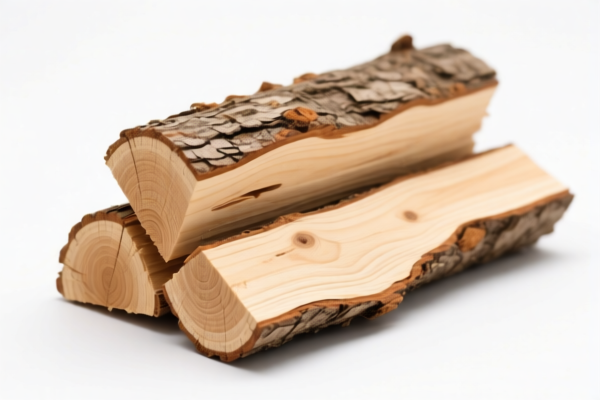
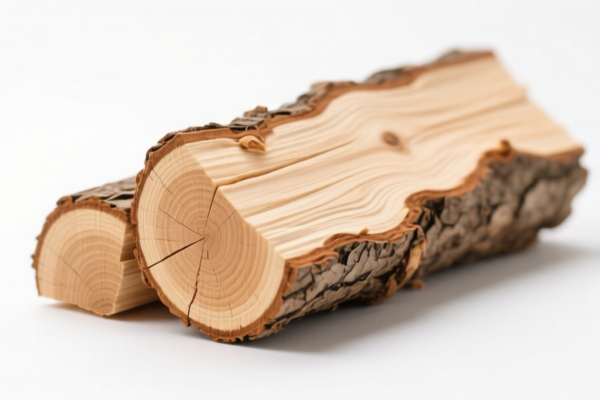
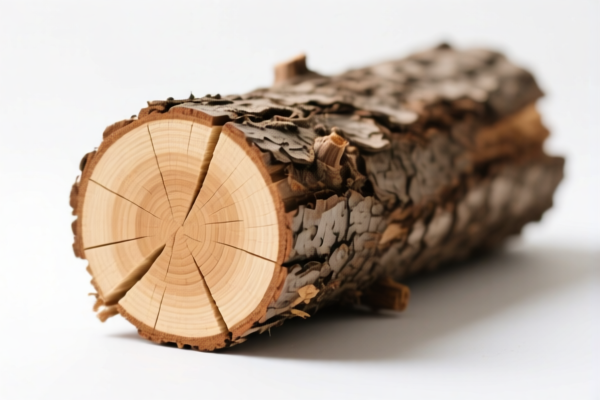

AI Analysis
🌳 Wood (Cubic Centimeters, Unveneered)
🌐 HS Code Reference & Customs Clearance Guide | 2026 Latest Tariff Analysis | Professional Clearance Strategy
📌 I. Product Definition & Classification: Do You Truly Understand "Wood"?
"Wood (Cubic Centimeters, Unveneered)" is a generic term often used in trade documents for raw timber materials. In international trade, these products are strictly classified based on species (coniferous vs. non-coniferous/tropical), processing level (rough vs. processed), and surface treatment (veneered vs. unveneered).
The term "Unveneered" is critical: it excludes finished furniture components or decorative veneer sheets, pointing directly to raw or semi-processed timber.
⚠️ Key Distinction Points:
- If the wood is roughly shaped/sawed and belongs to a specific species → Classified under Chapter 44 Section III (e.g., 4403, 4407).
- If the wood is a thin slice/veneer sheet but not yet applied to another surface → Classified under Chapter 44 Section IV (e.g., 4408).
- "Unveneered" means the wood has not been coated or laminated with decorative sheets. It is raw timber.
📦 II. HS Code Classification Details (2026 Latest Tariff Authority Comparison)
Based on the provided dataset, here are the specific HS Codes for unveneered wood products, categorized by their physical state and species.
| HS Code | Product Description (Summary) | Key Characteristics | Processing Level |
|---|---|---|---|
4408.90.01.51 |
Wood material, unveneered, catch-all category | Generic unveneered wood not fitting other specific sub-categories | Sliced/Thin sheets or other forms |
4403.49.02.00 |
Wood material, rough-sawn/roughed-out, primary product attribute | Roughly shaped timber (logs, poles, planks) | Primary processing (Rough) |
4407.11.00.53 |
Coniferous Pine Wood Class, untreated, unveneered | Specific species: Pine (Coniferous) | Planed/Sawn but untreated |
4408.39.02.91 |
Wood Veneer Sheets, Tropical Wood Other Category, Unveneered | Thin slices from tropical hardwoods, not yet applied | Sliced/Veneer sheets |
4403.99.01.95 |
Rough-sawn Wood Attribute, Species Unspecified, Catch-all | Generic rough wood, no specific species declared | Primary processing (Rough) |
4407.99.02.95 |
Non-Coniferous Wood, Sliced/Sawn Attribute, Other Category Inference | Hardwoods (Non-Pine), processed but not specifically listed | Planed/Sawn |
🔍 Important Reminder:
- All listed HS Codes share the same total tax rate of 35.0% due to the combination of base tariffs and specific trade restrictions. - "Unveneered" excludes these from categories meant for finished furniture (Chapter 94) or pre-applied veneer (if already glued).
💰 III. 2026 Latest Tariff Rate Breakdown (Including Surtaxes & Policy Add-ons)
✅ Applicable Country: United States (US)
✅ Origin: China (CN)
✅ Effective Time: 2025 November 10 onwards (for subsequent imports)
All HS Codes in the provided dataset (4408.90.01.51, 4403.49.02.00, 4407.11.00.53, 4408.39.02.91, 4403.99.01.95, 4407.99.02.95) have the identical tariff structure:
🎯 1. General Tariff Structure for Unveneered Wood Products
| Item | Content |
|---|---|
| Base Tariff Rate | 0.0% (Ad Valorem) |
| Section 301 Surcharge | +25.0% (Under US Trade Law Section 301) |
| Section 122 Tariff | +10.0% (Specific "122 Clause" Tariff for certain Chinese goods) |
| Total Tax Rate | 35.0% |
| Tax Calculation | CIF Value × 35% |
| De Minimis Exemption Eligible? | ❌ NO (High-risk category for small packages) |
| Legal Basis Path | Section 301: 4403/4407/4408 items → Section 122: 4403/4407/4408 items → USITC: [Specific HS Code] |
📌 Explanation:
- Base 0%: Standard MFN (Most Favored Nation) rates for many wood products are low or zero.
- 301 Tariff 25%: The bulk of the cost comes from the US-China trade war tariffs targeting Chinese timber and wood products.
- 122 Clause 10%: An additional surcharge applied to specific categories of Chinese wood imports.
- Total 35%: This is a very high landed cost. Importers must factor this into their CIF pricing.
🛠️ IV. Customs Clearance Practical Advice (Battle-Tested Pitfall Avoidance)
✅ 1. Preparation Checklist (Mandatory)
| Document | Must Provide | Description |
|---|---|---|
| ✅ Product Specification Sheet | ✔️ | Must clearly state: Species (if known), Dimensions (cm³), Moisture Content, Treatment Status (Heat Treated? Fumigated?) |
| ✅ ISPM 15 Phytosanitary Certificate | ✔️ | CRITICAL for raw wood. Proves treatment against pests. Without it, cargo will be rejected. |
| ✅ Commercial Invoice | ✔️ | Must explicitly state "UNVENEERED", "RAW TIMBER", or "SAWN WOOD". Do not use vague terms like "Wood Material". |
| ✅ Packing List | ✔️ | Detailed breakdown of cubic centimeters (volume), weight, and number of bundles/containers. |
| ✅ Species Declaration | ✔️ | If the HS Code is 4407.11 (Pine), you must prove it is Pine. Misdeclaration leads to heavy fines. |
✅ 2. Declaration Strategy (Key Mnemonic)
🔥 "Species Clear, Rough or Sliced, Unveneered Stated, Tax at 35% Accepted!"
| Scenario | Correct Declaration | Wrong Practice |
|---|---|---|
| Raw Logs/Rough Planks | 4403.49.02.00 or 4403.99.01.95 |
Declaring as "Furniture Parts" → Higher tax/Complex clearance |
| Pine Sawn Wood | 4407.11.00.53 |
Declaring as "Tropical Wood" → Penalty for misclassification |
| Thin Wood Slices (for Veneer) | 4408.39.02.91 |
Declaring as "Finished Veneer" (if already glued) → Wrong chapter |
| Generic/Unspecified Wood | 4403.99.01.95 or 4407.99.02.95 |
Using "Other Wood" without supporting docs → Customs holds shipment |
✅ 3. Special Case Handling
| Situation | Handling Advice |
|---|---|
| Heat Treated Wood (HT) | Ensure ISPM 15 mark (HT) is visible on packaging. This is mandatory for entry into the US/EU. |
| Mixed Species Shipment | If a container has both Pine and Tropical wood, split the declaration. Do not combine into one generic line item. |
| "Catch-all" Codes (e.g., 4403.99) | Use these only when species is truly unknown or mixed. Be prepared for potential Customs inspection to verify species. |
| Volume vs. Weight | Wood is often shipped by volume (cubic meters/cm). Ensure your invoice matches the physical volume declared to avoid duty discrepancies. |
🌍 V. Global Market Comparison for Unveneered Wood (2026)
| Country/Region | Recommended HS Code Range | Base Tariff | Surtaxes (China Origin) | Notes |
|---|---|---|---|---|
| 🇺🇸 USA | 4403, 4407, 4408 |
0% | +35% Total (301: 25% + 122: 10%) | Highest Cost. Strict phytosanitary rules. |
| 🇨🇳 China | 4403, 4407 |
5-10% | None | Lower entry barrier for imports into China. |
| 🇪🇺 EU | 4403, 4407 |
0-5% | None (if compliant with EUTR) | EUTR Compliance is critical. No trade war tariffs, but strict environmental checks. |
| 🇯🇵 Japan | 4403, 4407 |
0-1.5% | None | High standards for pest-free wood. |
📌 Conclusion:
- USA is the most expensive market for Chinese unveneered wood due to the 35% combined tariff.
- EU/Japan have lower tariffs but higher non-tariff barriers (Phytosanitary/Environmental).
- Strategy: If exporting to the US, ensure ISPM 15 compliance is flawless to avoid demurrage costs, which can exceed the tariff itself.
📌 VI. Common Mistakes & Pitfalls (Blood Lessons)
❌ Mistake 1: Declaring "Wood" without specifying "Unveneered"
👉 Consequence: Customs may classify it as "Veneer Sheets" or "Furniture Parts," leading to incorrect tax rates and delays.
❌ Mistake 2: Omitting "Cubic Centimeters" or Volume Details
👉 Consequence: Wood duty is often calculated on volume or weight. Missing data leads to valuation adjustments and penalties.
❌ Mistake 3: Using a "Pine" HS Code (4407.11) for Non-Pine Wood
👉 Consequence: Misdeclaration. If inspected and found to be Tropical Wood, fines apply, and the cargo may be re-exported.
❌ Mistake 4: Ignoring ISPM 15 for Raw Wood
👉 Consequence: Cargo Rejection. The US CBP and USDA aggressively inspect wood shipments. No certificate = No entry.
✅ Correct Approach:
"Coniferous Pine Sawn Wood, Unveneered, Heat Treated (HT), ISPM 15 Certified, Volume: XX,XXX cm³, Origin: China"
🎯 VII. Conclusion: Professional Declaration, Cost Control, Compliance!
🎯 Remember the Mnemonic:
🔹 "Raw Wood, Unveneered, 35% Total Tax.
🔹 Species Matters, Volume Counts, ISPM 15 is Law.
🔹 301: 25%, 122: 10%, Base: 0%.
🔹 No Certificate, No Entry!**
📌 Pro Tip:
If your wood products are heat-treated (HT), ensure the HT mark is clearly visible on every pallet/bundle.
For US imports, consider Pre-Arrival Review Service (PARS) if volumes are high, to get advance classification confirmation.
📣 Immediate Action:
📞 Contact your freight forwarder + Provide ISPM 15 Certificates + Verify HS Code Species Match.
🚀 Let your wood products pass customs smoothly, avoid penalties, and protect your margins!
✨ Professional Clearance Starts with Accurate Classification!
💼 Every cubic centimeter counts, every tax dollar matters!
Customer Reviews
About HS Code Classification
The Harmonized System (HS) is an internationally standardized nomenclature developed by the World Customs Organization (WCO) to classify traded products. Over 200 countries use the HS system as the basis for customs tariffs, trade statistics, and import/export regulations.
Each HS code follows a hierarchical structure:
- Chapter (2 digits) — Broad category of goods (e.g., Chapter 84: Machinery and Mechanical Appliances)
- Heading (4 digits) — More specific grouping within the chapter
- Subheading (6 digits) — Internationally standardized breakdown, used by all WCO member countries
- National subdivisions (8-10 digits) — Country-specific extensions for further classification, such as US HTSUS 10-digit codes
Correct HS code classification is essential for smooth customs clearance, accurate duty payment, and compliance with trade regulations. Misclassification can lead to customs delays, overpayment of duties, or penalties.
When importing from CN to US, the applicable tariff rates may include:
- Most-Favored-Nation (MFN) rate — The standard duty rate applied to WTO members
- General rate — Applied to countries without trade agreements
- Trade remedy duties — Additional tariffs such as Section 301 (anti-dumping), Section 232 (national security), or countervailing duties
The information provided on this page is for reference purposes only. For official classification, please consult with your local customs authority or a licensed customs broker.