Wood Shaving Fertilizer
CN → US| HS编码 | 关税税率 | 原产国 | 目的国 | 文档 |
|---|---|---|---|---|
| 4401394210 | 35.0% | CN | US | 官方文档 |
| 4401310000 | 35.0% | CN | US | 官方文档 |
| 4405000000 | 38.2% | CN | US | 官方文档 |
商品图片
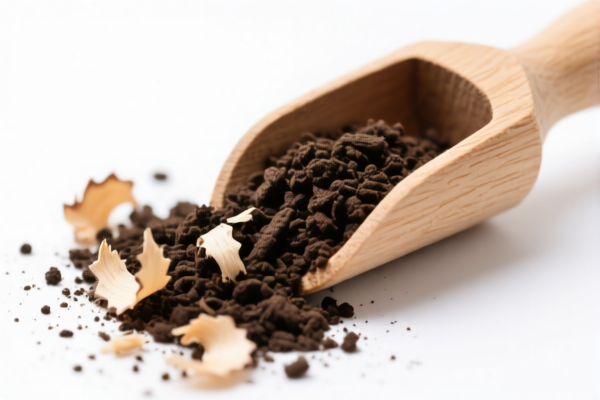
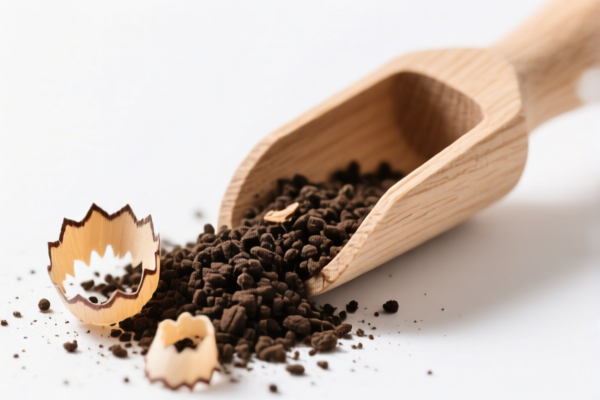
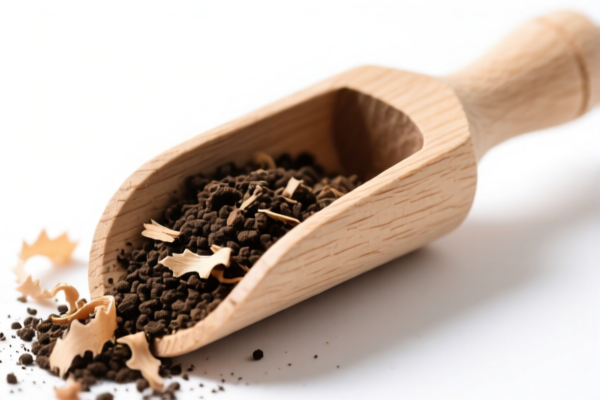

AI分析
🌲 Wood Shavings & Pellets: Fertilizer vs. Fuel | HS Code Classification & US Customs Strategy
🌐 HS Code Reference & Customs Clearance Guide | 2026 Latest Tariff Analysis | Professional Bio-Commodity Strategy
📌 I. Product Definition & Classification: Are You Shipping Fertilizer or Fuel?
"Wood Shavings" used in agriculture are a versatile bio-material. However, in the context of US Customs (CBP) and international trade, the distinction between fuel/raw material and processed product is critical. The term "Fertilizer" in the user prompt implies an agricultural intent, but the HS Code determines the tax burden, not the end-use.
Based on the provided data, these products fall into two main categories: 1. Fuel/Basic Raw Material (Wood Chips/Granules): Defined as waste forms, suitable for burning or basic industrial use. 2. Processed Wood Powder/Wool: Defined as finer, processed forms (sawdust/wood wool).
⚠️ Key Distinction:
- If the material is in the form of chips, granules, or pellets (even for soil amendment), it often aligns with 4401 (Fuel/Wood waste) due to its physical morphology.
- If it is fine powder or wood wool (processed specifically for other uses), it may align with 4405 (Wood powder/wood wool).
- ⚠️ Warning: Using "Fertilizer" as the name does not automatically grant a lower tax rate if the physical form matches "Fuel" or "Waste" classifications under HS Chapter 44.
📦 II. HS Code Classification Details (Based on Provided Data)
| HS Code | Product Description | Morphology/Material Fit | Total Tax Rate (US/CN) |
|---|---|---|---|
4401.39.42.10 |
Wood Pellets (Granules) Wood waste form, fits fuel/wood chip/pellet definition. |
✅ Fits "Wood waste form", "Pellets" Material: Wood waste |
35.0% |
4401.31.00.00 |
Wood Chips/Granules Shavings/pellets match material & morphology. |
✅ Fits "Shavings" & "Pellets" Material: Wood waste |
35.0% |
4405.00.00.00 |
Wood Powder / Wood Wool Fine wood dust or shavings. |
✅ Fits "Wood powder/wool" Material: Processed wood |
38.2% |
🔍 Critical Insight:
-4401Codes (35%): Apply to pellets, granules, and chips. Even if marketed as "organic fertilizer base," if the physical form is pellets/chips, CBP often classifies it here.
-4405Code (38.2%): Applies only if the product is fine powder or wood wool.
- Misclassification Risk: Declaring "Fertilizer" but shipping wood pellets may lead to misclassification if the product lacks specific biological amendment ingredients (e.g., NPK ratios) that would place it in Chapter 31 (Fertilizers). Note: The provided data strictly limits classification to Chapter 44, implying these are raw wood forms.
💰 III. 2026 Latest Tariff Rate Breakdown (Including Additional Taxes)
✅ Applicable Country: USA (US)
✅ Origin: China (CN)
✅ Effective Date: Current rates (Subject to 2026 policy updates)
🎯 1. 4401.39.42.10 & 4401.31.00.00 —— Wood Pellets/Chips (Fuel Form)
| Item | Content |
|---|---|
| Base Duty | 0.0% |
| Additional Duty (Section 301) | +25.0% |
| 122 Section Duty (IEEPA) | +10.0% |
| Total Tax Rate | 35.0% |
| Calculation Basis | CIF Value × 35% |
| De Minimis Exemption | ❌ Not Applicable (High-value bulk cargo) |
| Legal Basis Path | USITC:4401.31.00.00 → 301 Footnote → IEEPA:122 |
📌 Explanation:
- 0% Base Duty: Wood waste/chips generally have low base duties.
- 25% Section 301: Standard tariff on Chinese wood products.
- 10% IEEPA 122: Additional levy on specific Chinese wood/pulp products.
- Total 35%: This is a significant cost. Even if used for fertilization, the form dictates the tax.
🎯 2. 4405.00.00.00 —— Wood Powder/Wool (Processed Form)
| Item | Content |
|---|---|
| Base Duty | 3.2% |
| Additional Duty (Section 301) | +25.0% |
| 122 Section Duty (IEEPA) | +10.0% |
| Total Tax Rate | 38.2% |
| Calculation Basis | CIF Value × 38.2% |
| De Minimis Exemption | ❌ Not Applicable |
| Legal Basis Path | USITC:4405.00.00.00 → 301 Footnote → IEEPA:122 |
📌 Explanation:
- 3.2% Base Duty: Wood powder/wool has a small base duty.
- Total 38.2%: Higher than pellets! Why? Because the base duty is non-zero.
- Strategic Note: If the product is truly wood shavings/chips,4401(35%) is cheaper than4405(38.2%), despite4405having a "processed" appearance.
🛠️ IV. Customs Clearance Practical Advice (Real-World Pitfall Avoidance)
✅ 1. Documentation Checklist (Non-Negotiable)
| Document | Required? | Notes |
|---|---|---|
| Commercial Invoice | ✔️ | Must state HS Code clearly. Do not just write "Fertilizer." |
| Packing List | ✔️ | Specify form: Pellets, Chips, or Powder. |
| Product Specification | ✔️ | Include moisture content, particle size (mm), and source wood type. |
| Origin Certificate | ✔️ | If not CN origin, may avoid 301/122 taxes. |
| ISPM 15 Phytosanitary Cert | ✔️ | Crucial for wood products to prevent pest/quarantine issues. |
| Safety Data Sheet (SDS) | ✔️ | If chemical treatments are added. |
📌 Pro Tip:
- If the product is 100% pure wood shavings with no added NPK nutrients, it is NOT a chemical fertilizer (Ch 31). It is a raw wood product (Ch 44).
- If it is compost/mixed organic fertilizer, ensure it meets Chapter 31 criteria to potentially avoid wood-specific tariffs. However, per the provided data, we are classifying under Ch 44.
✅ 2. Declaration Strategy (Key Mnemonic)
🔥 "Form Dictates Code, Not Purpose. Pellets=4401, Powder=4405."
| Scenario | Correct HS Code | Incorrect Approach | Consequence |
|---|---|---|---|
| Wood Pellets (for soil mulch/fuel) | 4401.39.42.10 (35%) |
Declare as "Fertilizer" (Ch 31) | Misclassification → Penalty + Back Taxes |
| Wood Chips/Shavings | 4401.31.00.00 (35%) |
Declare as "Wood Wool" | Overpay Tax (38.2% vs 35%) or Audit Risk |
| Fine Wood Dust | 4405.00.00.00 (38.2%) |
Declare as "Pellets" | Underpay Tax → Seizure/Fine |
| Mixed Organic Fertilizer | Potentially Ch 31 | Force-fit into Ch 44 | If nutrients are added, Ch 44 is wrong → Audit |
✅ 3. Special Considerations
| Situation | Handling Advice |
|---|---|
| "Organic Fertilizer" Claim | If the product contains only wood shavings, it is not a fertilizer in the legal trade sense. It is biomass. Declare as Wood Chips/Pellets. |
| Moisture Content | High moisture may trigger ISPM 15 requirements. Ensure treatment is documented. |
| Packaging | If shipped in bulk, ensure pallets are ISPM 15 compliant (heat-treated stamped). |
| 122 Section Duty | This 10% is non-negotiable for CN-origin wood products under IEEPA. Factor into cost. |
🌍 V. Global Market Comparison (2026 Context)
| Region | Recommended HS Code | Est. Total Duty (CN Origin) | Notes |
|---|---|---|---|
| 🇺🇸 USA | 4401.31.00.00 or 4401.39.42.10 |
35.0% | High due to 301 + 122 Section. |
| 🇨🇳 China | 4401.31.00.00 |
Low (0-5%) | Domestic use often exempt or low duty. |
| 🇪🇺 EU | 4401.30.00 |
Variable (0-5%) | May have different eco-taxes. |
| 🇯🇵 Japan | 4401.30.00 |
~5-10% | Check FTAs if applicable. |
📌 Conclusion:
- The USA is the most expensive market for wood shavings/pellets from China due to dual tariffs (301 + 122).
- Cost Optimization: If possible, explore non-Chinese origin (e.g., Vietnam, Thailand) to avoid 25% + 10% additional taxes.
📌 VI. Common Mistakes & Pitfalls (Lessons Learned)
❌ Mistake 1: Declaring "Wood Shaving Fertilizer" without specifying form.
👉 Result: CBP may assume powder (4405, 38.2%) or demand clarification, causing delays.
✅ Fix: Specify "Wood Pellets" or "Wood Chips" explicitly.
❌ Mistake 2: Assuming "Fertilizer" = Chapter 31 (0-5% duty).
👉 Result: If no NPK nutrients are added, it’s raw wood → 35% duty + penalty for misdeclaration.
✅ Fix: Confirm composition. If pure wood, use Chapter 44.
❌ Mistake 3: Ignoring ISPM 15 phytosanitary requirements.
👉 Result: Shipment rejected/destroyed at port due to pest risk.
✅ Fix: Ensure all wood packaging and product is heat-treated/stamped.
🎯 VII. Conclusion: Strategic Declaration for Cost Savings
🎯 Key Takeaway:
🔹 "If it’s Pellets/Chips → HS 4401 (35%).
🔹 "If it’s Powder → HS 4405 (38.2%).
🔹 "Fertilizer" Name ≠ Lower Tax. Form is King.
📌 Action Plan:
1. Verify Composition: Is it 100% wood? → Use Ch 44.
2. Specify Form: Pellets → 4401.39.42.10. Chips → 4401.31.00.00.
3. Budget for 35%: Include 35% tariff in your landed cost calculation.
4. ISPM 15: Always certify wood origin treatment.
📣 Immediate Action:
📞 Consult a licensed customs broker for Pre-Ruling if unsure.
📄 Provide Sample Photos and Particle Size Data for accurate classification.
💡 Consider Origin Diversification: Explore non-CN sources to mitigate 35% tariff burden.
✨ Precision in Classification Saves Thousands!
💼 Your Cost Efficiency Starts with the Right HS Code!
用户评价
关于 HS 编码归类
协调制度(HS)是由世界海关组织(WCO)制定的国际贸易商品分类标准。全球 200 多个国家采用 HS 系统作为海关关税、贸易统计和进出口监管的基础。
每个 HS 编码遵循以下层级结构:
- 章(2 位)——商品大类(例如:第 84 章:机器和机械设备)
- 品目(4 位)——章内的更具体分类
- 子目(6 位)——国际通用细分,所有 WCO 成员国统一使用
- 本国细分(8-10 位)——各国自行扩展的细分编码,如美国 HTSUS 10 位编码
正确的 HS 编码归类对于顺利通关、准确缴纳关税和遵守贸易法规至关重要。错误归类可能导致海关延误、多缴关税或罚款。
从CN进口到US时,适用的关税税率可能包括:
- 最惠国(MFN)税率——适用于 WTO 成员国的标准关税税率
- 普通税率——适用于无贸易协定国家
- 贸易救济关税——附加关税,如 301 条款(反倾销)、232 条款(国家安全)或反补贴税
本页内容仅供参考。如需正式归类,请咨询当地海关或持牌报关代理。