Wood Shaving Fertilizer
CN → US| HS Code | Tariff Rate | Origin | Destination | Doc |
|---|---|---|---|---|
| 4401394210 | 35.0% | CN | US | Official Doc |
| 4401310000 | 35.0% | CN | US | Official Doc |
| 4405000000 | 38.2% | CN | US | Official Doc |
Product Images
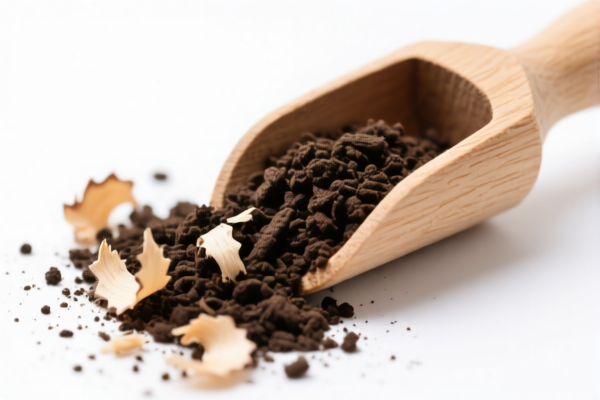
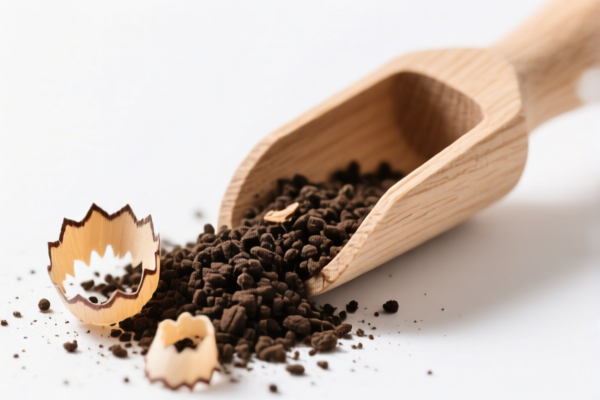
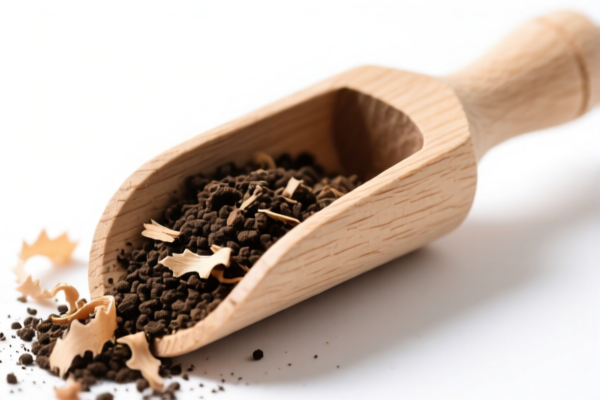

AI Analysis
🌲 Wood Shavings & Pellets: Fertilizer vs. Fuel | HS Code Classification & US Customs Strategy
🌐 HS Code Reference & Customs Clearance Guide | 2026 Latest Tariff Analysis | Professional Bio-Commodity Strategy
📌 I. Product Definition & Classification: Are You Shipping Fertilizer or Fuel?
"Wood Shavings" used in agriculture are a versatile bio-material. However, in the context of US Customs (CBP) and international trade, the distinction between fuel/raw material and processed product is critical. The term "Fertilizer" in the user prompt implies an agricultural intent, but the HS Code determines the tax burden, not the end-use.
Based on the provided data, these products fall into two main categories: 1. Fuel/Basic Raw Material (Wood Chips/Granules): Defined as waste forms, suitable for burning or basic industrial use. 2. Processed Wood Powder/Wool: Defined as finer, processed forms (sawdust/wood wool).
⚠️ Key Distinction:
- If the material is in the form of chips, granules, or pellets (even for soil amendment), it often aligns with 4401 (Fuel/Wood waste) due to its physical morphology.
- If it is fine powder or wood wool (processed specifically for other uses), it may align with 4405 (Wood powder/wood wool).
- ⚠️ Warning: Using "Fertilizer" as the name does not automatically grant a lower tax rate if the physical form matches "Fuel" or "Waste" classifications under HS Chapter 44.
📦 II. HS Code Classification Details (Based on Provided Data)
| HS Code | Product Description | Morphology/Material Fit | Total Tax Rate (US/CN) |
|---|---|---|---|
4401.39.42.10 |
Wood Pellets (Granules) Wood waste form, fits fuel/wood chip/pellet definition. |
✅ Fits "Wood waste form", "Pellets" Material: Wood waste |
35.0% |
4401.31.00.00 |
Wood Chips/Granules Shavings/pellets match material & morphology. |
✅ Fits "Shavings" & "Pellets" Material: Wood waste |
35.0% |
4405.00.00.00 |
Wood Powder / Wood Wool Fine wood dust or shavings. |
✅ Fits "Wood powder/wool" Material: Processed wood |
38.2% |
🔍 Critical Insight:
-4401Codes (35%): Apply to pellets, granules, and chips. Even if marketed as "organic fertilizer base," if the physical form is pellets/chips, CBP often classifies it here.
-4405Code (38.2%): Applies only if the product is fine powder or wood wool.
- Misclassification Risk: Declaring "Fertilizer" but shipping wood pellets may lead to misclassification if the product lacks specific biological amendment ingredients (e.g., NPK ratios) that would place it in Chapter 31 (Fertilizers). Note: The provided data strictly limits classification to Chapter 44, implying these are raw wood forms.
💰 III. 2026 Latest Tariff Rate Breakdown (Including Additional Taxes)
✅ Applicable Country: USA (US)
✅ Origin: China (CN)
✅ Effective Date: Current rates (Subject to 2026 policy updates)
🎯 1. 4401.39.42.10 & 4401.31.00.00 —— Wood Pellets/Chips (Fuel Form)
| Item | Content |
|---|---|
| Base Duty | 0.0% |
| Additional Duty (Section 301) | +25.0% |
| 122 Section Duty (IEEPA) | +10.0% |
| Total Tax Rate | 35.0% |
| Calculation Basis | CIF Value × 35% |
| De Minimis Exemption | ❌ Not Applicable (High-value bulk cargo) |
| Legal Basis Path | USITC:4401.31.00.00 → 301 Footnote → IEEPA:122 |
📌 Explanation:
- 0% Base Duty: Wood waste/chips generally have low base duties.
- 25% Section 301: Standard tariff on Chinese wood products.
- 10% IEEPA 122: Additional levy on specific Chinese wood/pulp products.
- Total 35%: This is a significant cost. Even if used for fertilization, the form dictates the tax.
🎯 2. 4405.00.00.00 —— Wood Powder/Wool (Processed Form)
| Item | Content |
|---|---|
| Base Duty | 3.2% |
| Additional Duty (Section 301) | +25.0% |
| 122 Section Duty (IEEPA) | +10.0% |
| Total Tax Rate | 38.2% |
| Calculation Basis | CIF Value × 38.2% |
| De Minimis Exemption | ❌ Not Applicable |
| Legal Basis Path | USITC:4405.00.00.00 → 301 Footnote → IEEPA:122 |
📌 Explanation:
- 3.2% Base Duty: Wood powder/wool has a small base duty.
- Total 38.2%: Higher than pellets! Why? Because the base duty is non-zero.
- Strategic Note: If the product is truly wood shavings/chips,4401(35%) is cheaper than4405(38.2%), despite4405having a "processed" appearance.
🛠️ IV. Customs Clearance Practical Advice (Real-World Pitfall Avoidance)
✅ 1. Documentation Checklist (Non-Negotiable)
| Document | Required? | Notes |
|---|---|---|
| Commercial Invoice | ✔️ | Must state HS Code clearly. Do not just write "Fertilizer." |
| Packing List | ✔️ | Specify form: Pellets, Chips, or Powder. |
| Product Specification | ✔️ | Include moisture content, particle size (mm), and source wood type. |
| Origin Certificate | ✔️ | If not CN origin, may avoid 301/122 taxes. |
| ISPM 15 Phytosanitary Cert | ✔️ | Crucial for wood products to prevent pest/quarantine issues. |
| Safety Data Sheet (SDS) | ✔️ | If chemical treatments are added. |
📌 Pro Tip:
- If the product is 100% pure wood shavings with no added NPK nutrients, it is NOT a chemical fertilizer (Ch 31). It is a raw wood product (Ch 44).
- If it is compost/mixed organic fertilizer, ensure it meets Chapter 31 criteria to potentially avoid wood-specific tariffs. However, per the provided data, we are classifying under Ch 44.
✅ 2. Declaration Strategy (Key Mnemonic)
🔥 "Form Dictates Code, Not Purpose. Pellets=4401, Powder=4405."
| Scenario | Correct HS Code | Incorrect Approach | Consequence |
|---|---|---|---|
| Wood Pellets (for soil mulch/fuel) | 4401.39.42.10 (35%) |
Declare as "Fertilizer" (Ch 31) | Misclassification → Penalty + Back Taxes |
| Wood Chips/Shavings | 4401.31.00.00 (35%) |
Declare as "Wood Wool" | Overpay Tax (38.2% vs 35%) or Audit Risk |
| Fine Wood Dust | 4405.00.00.00 (38.2%) |
Declare as "Pellets" | Underpay Tax → Seizure/Fine |
| Mixed Organic Fertilizer | Potentially Ch 31 | Force-fit into Ch 44 | If nutrients are added, Ch 44 is wrong → Audit |
✅ 3. Special Considerations
| Situation | Handling Advice |
|---|---|
| "Organic Fertilizer" Claim | If the product contains only wood shavings, it is not a fertilizer in the legal trade sense. It is biomass. Declare as Wood Chips/Pellets. |
| Moisture Content | High moisture may trigger ISPM 15 requirements. Ensure treatment is documented. |
| Packaging | If shipped in bulk, ensure pallets are ISPM 15 compliant (heat-treated stamped). |
| 122 Section Duty | This 10% is non-negotiable for CN-origin wood products under IEEPA. Factor into cost. |
🌍 V. Global Market Comparison (2026 Context)
| Region | Recommended HS Code | Est. Total Duty (CN Origin) | Notes |
|---|---|---|---|
| 🇺🇸 USA | 4401.31.00.00 or 4401.39.42.10 |
35.0% | High due to 301 + 122 Section. |
| 🇨🇳 China | 4401.31.00.00 |
Low (0-5%) | Domestic use often exempt or low duty. |
| 🇪🇺 EU | 4401.30.00 |
Variable (0-5%) | May have different eco-taxes. |
| 🇯🇵 Japan | 4401.30.00 |
~5-10% | Check FTAs if applicable. |
📌 Conclusion:
- The USA is the most expensive market for wood shavings/pellets from China due to dual tariffs (301 + 122).
- Cost Optimization: If possible, explore non-Chinese origin (e.g., Vietnam, Thailand) to avoid 25% + 10% additional taxes.
📌 VI. Common Mistakes & Pitfalls (Lessons Learned)
❌ Mistake 1: Declaring "Wood Shaving Fertilizer" without specifying form.
👉 Result: CBP may assume powder (4405, 38.2%) or demand clarification, causing delays.
✅ Fix: Specify "Wood Pellets" or "Wood Chips" explicitly.
❌ Mistake 2: Assuming "Fertilizer" = Chapter 31 (0-5% duty).
👉 Result: If no NPK nutrients are added, it’s raw wood → 35% duty + penalty for misdeclaration.
✅ Fix: Confirm composition. If pure wood, use Chapter 44.
❌ Mistake 3: Ignoring ISPM 15 phytosanitary requirements.
👉 Result: Shipment rejected/destroyed at port due to pest risk.
✅ Fix: Ensure all wood packaging and product is heat-treated/stamped.
🎯 VII. Conclusion: Strategic Declaration for Cost Savings
🎯 Key Takeaway:
🔹 "If it’s Pellets/Chips → HS 4401 (35%).
🔹 "If it’s Powder → HS 4405 (38.2%).
🔹 "Fertilizer" Name ≠ Lower Tax. Form is King.
📌 Action Plan:
1. Verify Composition: Is it 100% wood? → Use Ch 44.
2. Specify Form: Pellets → 4401.39.42.10. Chips → 4401.31.00.00.
3. Budget for 35%: Include 35% tariff in your landed cost calculation.
4. ISPM 15: Always certify wood origin treatment.
📣 Immediate Action:
📞 Consult a licensed customs broker for Pre-Ruling if unsure.
📄 Provide Sample Photos and Particle Size Data for accurate classification.
💡 Consider Origin Diversification: Explore non-CN sources to mitigate 35% tariff burden.
✨ Precision in Classification Saves Thousands!
💼 Your Cost Efficiency Starts with the Right HS Code!
Customer Reviews
About HS Code Classification
The Harmonized System (HS) is an internationally standardized nomenclature developed by the World Customs Organization (WCO) to classify traded products. Over 200 countries use the HS system as the basis for customs tariffs, trade statistics, and import/export regulations.
Each HS code follows a hierarchical structure:
- Chapter (2 digits) — Broad category of goods (e.g., Chapter 84: Machinery and Mechanical Appliances)
- Heading (4 digits) — More specific grouping within the chapter
- Subheading (6 digits) — Internationally standardized breakdown, used by all WCO member countries
- National subdivisions (8-10 digits) — Country-specific extensions for further classification, such as US HTSUS 10-digit codes
Correct HS code classification is essential for smooth customs clearance, accurate duty payment, and compliance with trade regulations. Misclassification can lead to customs delays, overpayment of duties, or penalties.
When importing from CN to US, the applicable tariff rates may include:
- Most-Favored-Nation (MFN) rate — The standard duty rate applied to WTO members
- General rate — Applied to countries without trade agreements
- Trade remedy duties — Additional tariffs such as Section 301 (anti-dumping), Section 232 (national security), or countervailing duties
The information provided on this page is for reference purposes only. For official classification, please consult with your local customs authority or a licensed customs broker.