Woven Baskets
CN → US| HS编码 | 关税税率 | 原产国 | 目的国 | 文档 |
|---|---|---|---|---|
| 4602110700 | 35.0% | CN | US | 官方文档 |
| 4602110900 | 45.0% | CN | US | 官方文档 |
| 4601920500 | 37.7% | CN | US | 官方文档 |
| 3926909989 | 22.8% | CN | US | 官方文档 |
商品图片
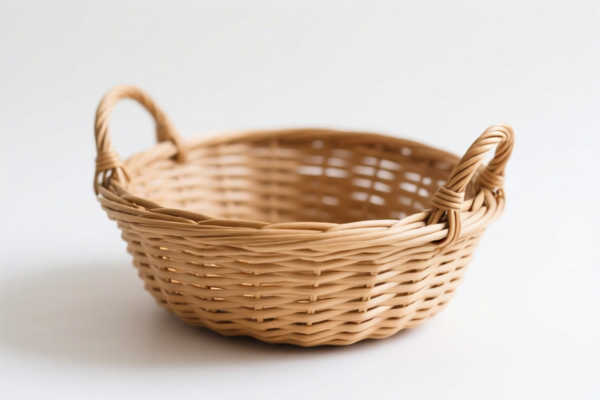
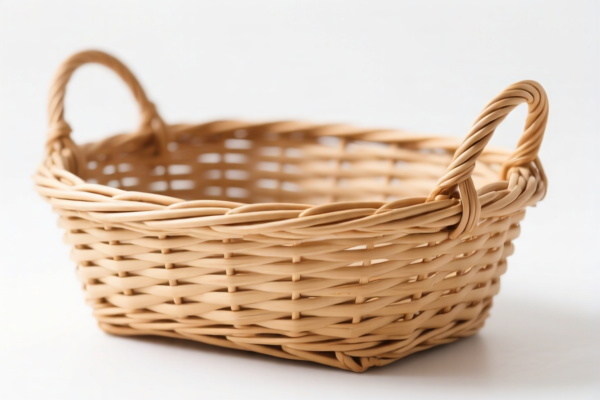
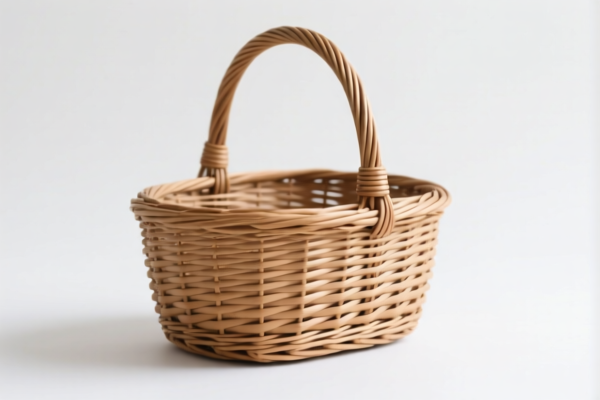
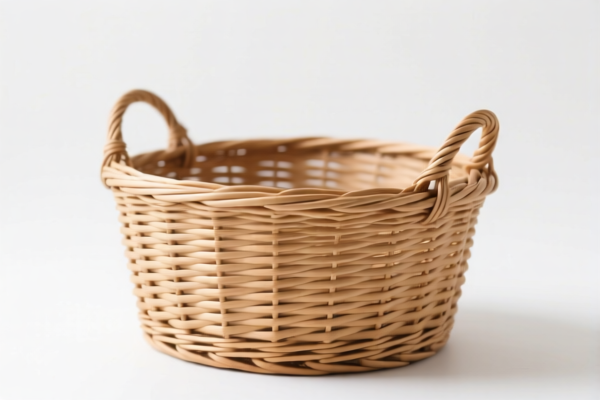
AI分析
🧺 Woven Baskets (Basketware & Floral Arrangements)
🌐 HS Code Reference & Customs Clearance Guide | 2026 Latest Tariff Analysis | Professional Entry Strategy 📌 I. Product Definition & Classification: Do You Really Know "Woven Baskets"?
Woven baskets, in international trade, are not a single unified category. They are split based on material composition and functional morphology. The distinction is critical because the tariff burden varies significantly depending on whether the item is classified as "natural fiber plant material," "plastic synthetic material," or specifically "floral arrangements."
Natural Fiber Baskets (Bamboo, Rattan, Cane): Traditional, eco-friendly, high-value tax exposure due to Section 301 & Section 122 tariffs. Plastic/Synthetic Baskets: Modern, durable, often classified under general plastics with different (sometimes lower) additional duty rates. Floral Baskets: Specific functional description that may shift the code from "containers" to "articles of basketware" or "plastic articles," altering the base rate.
⚠️ Key Distinction Point:
- If made of bamboo, rattan, willow, or other vegetable plaiting materials → Likely Chapter 46.
- If made of plastic fibers, synthetic wicker, or PVC → Likely Chapter 39.
- Does the "baskets" serve primarily as a vessel or as a decorative floral holder? This nuance affects the specific 8-digit subheading.
📦 II. HS Code Classification Details (2026 Latest Tariff Authority Comparison)
| HS Code | Product Description | Material Inference | Primary Use Case | Tax Category |
|---|---|---|---|---|
4602.11.07.00 |
Woven Baskets, shaped as baskets | Bamboo/Rattan/Vegetable Fibers | General storage, decorative baskets, picnic hampers | High Tax (China Origin) |
4602.11.09.00 |
Woven Floral Baskets | Bamboo/Rattan/Vegetable Fibers | Floral arrangements, gift baskets, premium packaging | Highest Tax (China Origin) |
4601.92.05.00 |
Woven Floral Baskets (Basketware/Plaits) | Bamboo Weaving Craft | Woven mats/plates repurposed or shaped into floral baskets | High Tax (China Origin) |
3926.90.99.89 |
Woven Floral Baskets (Plastic) | Plastic Fibers/Synthetic Materials | Synthetic wicker, plastic rattan, outdoor durable baskets | Moderate Tax (China Origin) |
🔍 Critical Reminder:
- Natural Fiber (Chapter 46): Subject to 301 Tariffs (25%) AND Section 122 Tariffs (10%).
- Plastic (Chapter 39): Subject to 301 Tariffs (7.5%) AND Section 122 Tariffs (10%).
- Misclassification Risk: Declaring plastic baskets as bamboo to avoid the 25% 301 duty is a major red flag for CBP. Always match the material truthfully.
💰 III. 2026 Latest Tariff Rate Breakdown (Including Additional Duties & Policy Surcharges)
✅ Applicable Country: United States (US)
✅ Country of Origin: China (CN)
✅ Effective Date: Current as of 2026 (Includes Section 301 & Section 122)
🎯 1. 4602.11.07.00 —— Woven Baskets (General, Bamboo/Rattan)
| Item | Detail |
|---|---|
| Base MFN Rate | 0.0% |
| Section 301 Additional Duty | +25.0% |
| Section 122 Additional Duty | +10.0% |
| Total Effective Rate | 35.0% |
| Tax Calculation | CIF Value × 35% |
| De Minimis Exemption? | ❌ No (Denied under Section 301/122) |
| Legal Authority Path | HTSUS:4602.11.07.00 → Section 301 (USITC) → Section 122 (EO 14034) |
📌 Explanation:
- Base 0%: Basketware of vegetable materials typically has a low base duty.
- 35% Total: The combination of the 25% Section 301 tariff and the 10% Section 122 tariff creates a heavy burden.
- No De Minimis: Items under $800 (Type 86/87) do not qualify for the de minimis exemption if they are subject to these sections.
🎯 2. 4602.11.09.00 —— Woven Floral Baskets (Bamboo/Rattan)
| Item | Detail |
|---|---|
| Base MFN Rate | 10.0% |
| Section 301 Additional Duty | +25.0% |
| Section 122 Additional Duty | +10.0% |
| Total Effective Rate | 45.0% |
| Tax Calculation | CIF Value × 45% |
| De Minimis Exemption? | ❌ No |
| Legal Authority Path | HTSUS:4602.11.09.00 → Section 301 (USITC) → Section 122 (EO 14034) |
📌 Note:
- This code carries a 10% base duty unlike the general basket code.
- 45% Total: This is the highest tax burden among the options.
- Usage: Specifically for floral arrangements made of natural plaiting materials. High-value gifts often fall here.
🎯 3. 4601.92.05.00 —— Woven Floral Baskets (Bamboo Craft/Woven Mats)
| Item | Detail |
|---|---|
| Base MFN Rate | 2.7% |
| Section 301 Additional Duty | +25.0% |
| Section 122 Additional Duty | +10.0% |
| Total Effective Rate | 37.7% |
| Tax Calculation | CIF Value × 37.7% |
| De Minimis Exemption? | ❌ No |
| Legal Authority Path | HTSUS:4601.92.05.00 → Section 301 (USITC) → Section 122 (EO 14034) |
📌 Analysis:
- This code is for "Plaiting materials... shaped or finished products... not being basketware of heading 4602."
- If your product is technically a "woven mat" or "braid" shaped into a basket, it might fall here.
- 37.7% Total: Slightly better than4602.11.09.00but still very high. Requires strict material verification.
🎯 4. 3926.90.99.89 —— Woven Floral Baskets (Plastic/Synthetic)
| Item | Detail |
|---|---|
| Base MFN Rate | 5.3% |
| Section 301 Additional Duty | +7.5% |
| Section 122 Additional Duty | +10.0% |
| Total Effective Rate | 22.8% |
| Tax Calculation | CIF Value × 22.8% |
| De Minimis Exemption? | ❌ No |
| Legal Authority Path | HTSUS:3926.90.99.89 → Section 301 (List 4A/B - Note: Verify List, often 7.5% or 25%. Data shows 7.5%) → Section 122 (EO 14034) |
📌 Advantage:
- Lowest Total Tax (22.8%).
- Section 301 duty on many plastics is often lower (7.5%) compared to bamboo/wood products (25%).
- Best for Cost Optimization: If the product allows for synthetic materials (e.g., PE rattan), this is the most tax-efficient classification.
🛠️ IV. Customs Clearance Operational Advice (Practical Pitfall Avoidance)
✅ 1. Required Documentation Checklist (Mandatory)
| Document | Must Provide? | Description |
|---|---|---|
| ✅ Product Specifications | ✔️ | Detailed material composition (e.g., "100% Polyethylene Wicker" vs. "Natural Bamboo"). |
| ✅ Material Declaration | ✔️ | Explicitly state if natural, synthetic, or blended. Blends require specific ratio disclosure. |
| ✅ Product Photos | ✔️ | Clear images of texture, weave, and labels to distinguish natural fiber from plastic. |
| ✅ Commercial Invoice | ✔️ | Describe as "Plastic Woven Basket" or "Bamboo Basket" accurately. Do not use vague terms like "Gift Item." |
| ✅ Packing List | ✔️ | Weight and dimensions. Heavy baskets may have different freight implications. |
| ✅ HTSUS Justification | ✔️ | Brief note explaining why HS code was chosen (e.g., "Made of synthetic PE strips, classified under Ch 39"). |
✅ 2. Declaration Tips (Key Mantras)
🔥 "Material Truth, Code Precision, Tax Reduction!"
| Scenario | Correct Declaration | Incorrect Declaration |
|---|---|---|
| Synthetic Rattan Basket | 3926.90.99.89 (Plastic) |
Misdeclared as 4602.11.07.00 (Bamboo) → Risk of Audit & Penalty |
| Natural Bamboo Basket | 4602.11.07.00 |
Misdeclared as 3926.90.99.89 (Plastic) → Underpayment of Duty (22.8% vs 35%) |
| Floral Basket (Natural) | 4602.11.09.00 |
Generic "Basket" → May be reassigned to higher base rate |
| Blended Material (50% Bamboo, 50% Plastic) | Consult Specialist | Guessing → High Risk of Seizure |
✅ 3. Special Circumstances Handling
| Situation | Handling Advice |
|---|---|
| OEM Custom Baskets | Provide design sheets showing material. If the design looks like bamboo but is plastic, prove it chemically or via supplier certs. |
| Section 122 Exclusions | Verify if the specific product type is excluded from Section 122 (unlikely for baskets, but always check). |
| De Minimis (Section 321) | Do NOT attempt to use Section 321 ($800 threshold) for these items. Section 301 and 122 explicitly deny de minimis exemptions for goods from China. |
| Wood Packaging | If baskets are packed in wooden crates, ensure IPPC Stamp is present to avoid wood pest violations. |
🌍 V. Global Market Comparison (2026 Latest)
| Country/Region | Recommended HS Code (Example) | Tariff Burden | Certification Req. | Remarks |
|---|---|---|---|---|
| 🇺🇸 USA | 4602.11.07.00 / 3926.90.99.89 |
35.0% / 22.8% | None specific for baskets | Highest Cost: 301 & 122 duties apply. |
| 🇨🇳 China | 4602.11.00 / 3926.90.90 |
0% - 5% | N/A (Import) | No Section 301/122. |
| 🇪🇺 EU | 4602.11.00 / 3926.90.98 |
0% - 5% | CE (if plastic) | No major anti-dumping on woven baskets. |
| 🇬🇧 UK | 4602.11.00 / 3926.90.98 |
0% - 5% | UKCA (if plastic) | Post-Brexit rules align with EU mostly. |
📌 Conclusion:
- The US Market is uniquely expensive for Chinese-origin woven baskets due to Section 301 and Section 122.
- Plastic alternatives (Ch 39) offer significant savings (22.8% vs 35-45%).
- No De Minimis: You cannot ship baskets via small parcels to avoid duties.
📌 VI. Common Mistakes & Pitfall Guide (Lessons Learned)
❌ Mistake 1: Declaring plastic baskets as "Bamboo" to get a lower base rate (0% vs 5.3%).
👉 Consequence: If CBP detects plastic (burn test, visual inspection), you face penalties for fraud + back duties + 25% Section 301 still applies (or even higher for misdeclaration).
❌ Mistake 2: Assuming "De Minimis" applies to baskets under $800.
👉 Consequence: CBP will seize or return the package. Section 122 and 301 explicitly exclude these from Section 321.
❌ Mistake 3: Using vague descriptions like "Home Decor Item."
👉 Consequence: CBP may assign a generic code with higher duties or require manual review, causing weeks of delay.
❌ Mistake 4: Ignoring the "Floral" vs. "General" distinction.
👉 Consequence: 4602.11.09.00 (Floral) has a 10% base duty, while 4602.11.07.00 (General) has 0%. Misclassifying a general basket as floral adds unnecessary cost.
✅ Correct Approach:
"Woven Basket, Synthetic PE Rattan, Outdoor Use, Model XYZ, Made in China" →
3926.90.99.89
"Woven Basket, Natural Bamboo, Indoor Use, Model ABC, Made in China" →4602.11.07.00
🎯 VII. Conclusion: Precise Classification, Cost Efficiency!
🎯 Remember the Mantra:
🔹 "Plastic Saves, Natural Costs: 22.8% vs 35%+."
🔹 "No De Minimis for China: Declare All, Pay All."
🔹 "Material Truth Saves Lawsuits: Prove Your Fibers."
📌 Pro Tip:
If your product is 100% Plastic (PE/Rattan), prioritize HS Code 3926.90.99.89. It reduces your total tax burden by ~12-22 percentage points compared to natural fiber baskets.
If you must use natural bamboo, budget for the 35% tax and ensure your pricing reflects this cost.
📣 Immediate Action:
📞 Consult your broker to verify material composition.
🚀 Adjust product design toward synthetic materials if cost sensitivity is high.
📄 Prepare detailed material specs to support your HS Code declaration.
✨ Professional Clearance Starts with Accurate Classification!
💼 Your Profit Margin Depends on the Right HS Code!
用户评价
关于 HS 编码归类
协调制度(HS)是由世界海关组织(WCO)制定的国际贸易商品分类标准。全球 200 多个国家采用 HS 系统作为海关关税、贸易统计和进出口监管的基础。
每个 HS 编码遵循以下层级结构:
- 章(2 位)——商品大类(例如:第 84 章:机器和机械设备)
- 品目(4 位)——章内的更具体分类
- 子目(6 位)——国际通用细分,所有 WCO 成员国统一使用
- 本国细分(8-10 位)——各国自行扩展的细分编码,如美国 HTSUS 10 位编码
正确的 HS 编码归类对于顺利通关、准确缴纳关税和遵守贸易法规至关重要。错误归类可能导致海关延误、多缴关税或罚款。
从CN进口到US时,适用的关税税率可能包括:
- 最惠国(MFN)税率——适用于 WTO 成员国的标准关税税率
- 普通税率——适用于无贸易协定国家
- 贸易救济关税——附加关税,如 301 条款(反倾销)、232 条款(国家安全)或反补贴税
本页内容仅供参考。如需正式归类,请咨询当地海关或持牌报关代理。