Woven Handbag with Inner Pouch
CN → US| HS编码 | 关税税率 | 原产国 | 目的国 | 文档 |
|---|---|---|---|---|
| 6307909891 | 24.5% | CN | US | 官方文档 |
| 6307908940 | 17.0% | CN | US | 官方文档 |
| 4602192920 | 40.3% | CN | US | 官方文档 |
| 4202228980 | 52.6% | CN | US | 官方文档 |
| 4602112100 | 41.2% | CN | US | 官方文档 |
商品图片
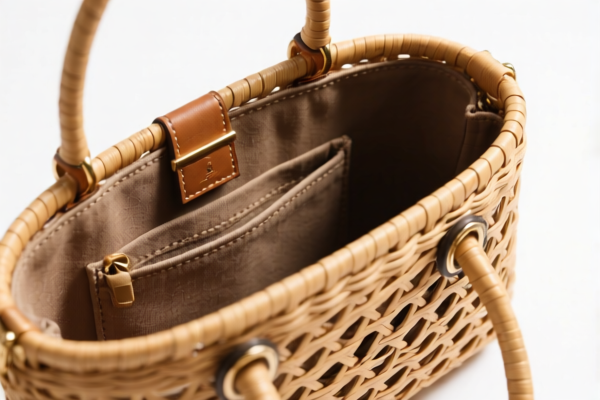
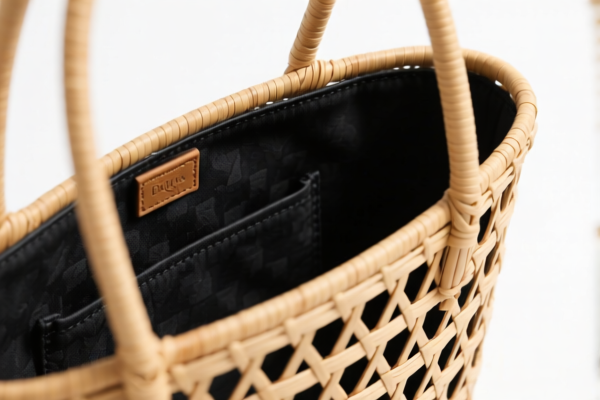
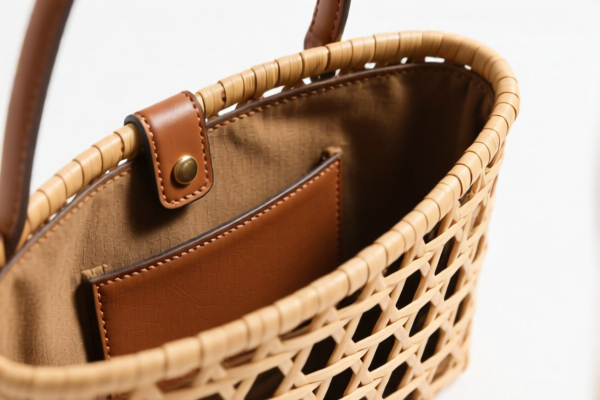
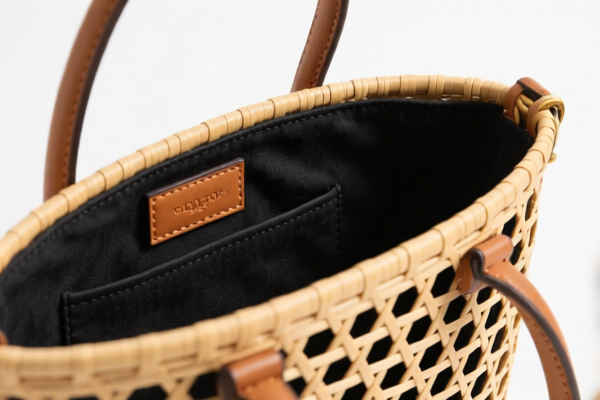
AI分析
👜 Woven Handbag with Inner Pouch (With Outer Surface of Textile Materials)
🌐 HS Code Reference & Customs Clearance Guide | 2026 Latest Tariff Analysis | Professional Entry Strategy
📌 I. Product Definition & Classification: Do You Really Understand "Woven Handbags"?
A "Woven Handbag with Inner Pouch" falls under the broader category of travel goods and similar containers. Specifically, it is classified based on its outer surface material and construction.
Key Distinction:
- Woven/Braided Material: If the bag is made of braided or woven textile strips (e.g., straw, raffia, plastic strips, or textile yarns interlaced), it falls under the sub-category "Wholly or in part of braid".
- With Inner Pouch: The presence of an inner pouch does not change the classification of the main container, provided the outer surface remains textile. It is still considered a single entity (the handbag).
⚠️ Critical Classification Point:
- If the outer surface is textile (including woven/braided textiles) → HS Code 4202.22.xx.xx
- If the outer surface is leather or plastic sheeting → Different HS Codes (Not applicable here)
- Material Specifics: The classification depends heavily on whether the woven material is Cotton or Man-made fibers.
📦 II. HS Code Classification Details (2026 Latest Tariff Authority对照)
Based on the provided , the product fits into two specific HS codes depending on the fiber content of the woven/textile material.
| HS Code | Product Description | Material Composition | Applicable Scenario |
|---|---|---|---|
4202.22.40.20 |
Handbags, outer surface textile, wholly/partly of braid | Of Cotton | Bags made from cotton yarns, cotton raffia, or cotton-based woven strips |
4202.22.40.30 |
Handbags, outer surface textile, wholly/partly of braid | Of Man-made Fibers | Bags made from polyester, nylon, acrylic, or synthetic raffia strips |
🔍 Key Reminder:
- Both codes fall under: 4202.22 (Handbags with outer surface of plastics or textile materials) → With outer surface of textile materials → Wholly or in part of braid → Other.
- The "Inner Pouch" is considered part of the handbag assembly and does not trigger a separate classification.
💰 III. 2026 Latest Tariff Rate Details (Including Surcharges)
✅ Applicable Country: United States (US)
✅ Origin: China (CN)
✅ Effective Date: 2025/2026 Tariff Schedule
🎯 1. 4202.22.40.20 —— Handbags (Of Cotton, Woven/Braided)
| Item | Content |
|---|---|
| Base Tariff | 0.0% |
| Section 301 Surcharge | 0.0% |
| Total Tax Rate | 0.0% |
| Tax Calculation | CIF Value × 0% = $0 |
| De Minimis Eligibility | ✅ Yes (If value ≤ $800, usually exempt from duties under Section 321, but this is already 0% so it doesn't matter) |
| Legal Basis | HTSUS:4202.22.40.20 → USTR:301 (No additional duty listed in provided data) |
📌 Explanation:
- This specific cotton woven handbag has a 0% duty rate.
- No additional Section 301 or IEEPA surcharges are listed in the provided for this code.
- Cost Advantage: This is a highly competitive HS code for cotton-based woven goods.
🎯 2. 4202.22.40.30 —— Handbags (Of Man-made Fibers, Woven/Braided)
| Item | Content |
|---|---|
| Base Tariff | 0.0% |
| Section 301 Surcharge | 0.0% |
| Total Tax Rate | 0.0% |
| Tax Calculation | CIF Value × 0% = $0 |
| De Minimis Eligibility | ✅ Yes |
| Legal Basis | HTSUS:4202.22.40.30 → USTR:301 (No additional duty listed in provided data) |
📌 Note:
- Similar to cotton, synthetic woven handbags also enjoy a 0% total duty rate according to the provided data.
- This makes both cotton and synthetic woven handbags low-cost entries compared to leather or plastic-sheeting handbags which may have higher base rates or surcharges.
🛠️ IV. Customs Clearance Practical Advice (Real-world Pitfall Guide)
✅ 1. Required Documentation Checklist (Essential)
| Document | Mandatory | Description |
|---|---|---|
| ✅ Product Specification Sheet | ✔️ | Must clearly state: "Woven Handbag with Inner Pouch" |
| ✅ Material Composition Breakdown | ✔️ | Critical: Specify % of Cotton vs. Man-made fibers for the woven outer layer |
| ✅ Photos of Product | ✔️ | Show the woven texture, braid pattern, and the inner pouch attachment |
| ✅ Commercial Invoice | ✔️ | Must match HS Code (4202.22.40.20 or 4202.22.40.30) |
| ✅ Packing List | ✔️ | Detail the handbag and inner pouch as one unit |
| ✅ Origin Certificate | ✔️ | Confirm Chinese origin to apply correct tax rates |
✅ 2. Declaration Tips (Key Mnemonics)
🔥 “Woven is Braid, Cotton or Synthetic, 0% Duty, Don’t Forget the Inner Pouch!”
| Scenario | Correct Declaration | Wrong Approach |
|---|---|---|
| Woven Straw/Raffia Bag | 4202.22.40.20 (if cotton-based) or 4202.22.40.30 (if synthetic) |
Misdeclare as "Leather" or "Plastic Sheet" → Higher Tax |
| Bag with Detachable Inner Pouch | Declare as One Handbag | Split into "Handbag" + "Pouch" → Risk of misclassification |
| Mixed Material (e.g., Cotton Braid + Leather Trim) | Declare based on Outer Surface Material | Do not let small leather parts dictate the code if outer is textile |
| Non-Woven Fabric Bag | Not 4202.22.40.xx (Unless "braid" includes certain fabric weaves per local ruling) |
Check if "braid" definition applies; otherwise, may fall under "Other Textile" |
✅ 3. Special Case Handling
| Situation | Handling Advice |
|---|---|
| "Woven" vs. "Knitted" | Ensure the material is truly woven/braided. If it is knitted fabric, it may fall under different sub-categories. The HS code 4202.22.40.xx specifies "Of braid". |
| Inner Pouch Material | The inner pouch material does not affect the HS code. Only the outer surface matters. |
| Plastic Strips Woven Like Textile | If made of plastic strips but woven like textile, it may still be classified as "Textile" or "Plastic Sheeting" depending on US Customs Rulings. Check specific precedents. |
| Sample Shipments | Even for samples, provide detailed material breakdown to avoid delays. |
🌍 V. Global Market Customs Comparison (2026 Latest)
| Country/Region | Recommended HS Code | Tariff Rate | Certification Requirements | Notes |
|---|---|---|---|---|
| 🇺🇸 USA | 4202.22.40.20 / .30 |
0.0% | None Specific | Highly favorable duty rate for woven textiles |
| 🇪🇺 EU | 4202.22.90 |
~4.5% | CE (if applicable) | Standard textile bag rate |
| 🇨🇳 China | 4202.22.90 |
10-20% | None | Import duty applies |
| 🇬🇧 UK | 4202.22.90 |
4.5% | None | Post-Brexit standard rate |
| 🇯🇵 Japan | 4202.22.90 |
8.1% | None | Standard tariff |
📌 Conclusion:
- The US market offers a 0% duty rate for these specific woven handbags, making it a prime destination for profit margin optimization.
- Ensure accurate material declaration (Cotton vs. Synthetic) to maintain eligibility for the 0% rate.
📌 VI. Common Errors & Pitfall Guide (Lessons Learned)
❌ Error 1: Declaring a woven plastic-strip bag as "Leather"
👉 Consequence: Misclassification → Potential penalties + Higher duties if leather rates were higher (though here both are 0%, accuracy is still key for compliance).
❌ Error 2: Forgetting to specify "Woven/Braided"
👉 Consequence: Customs may classify as "Other Handbags" under 4202.22.90, which could have different duty rates or regulatory requirements.
❌ Error 3: Splitting the Handbag and Inner Pouch in Documentation
👉 Consequence: Customs may assess the inner pouch separately, leading to complex duty calculations or rejection.
❌ Error 4: Confusing "Woven" with "Knitted"
👉 Consequence: If the material is knitted fabric (not braid), it may not fit 4202.22.40.xx. Verify with a textile expert.
✅ Correct Practice:
“Woven Textile Handbag, Outer Surface: 100% Cotton Braid, Includes Detachable Inner Pouch, Model: WH-2026”
🎯 VII. Conclusion: Precise Classification, Maximized Profit!
🎯 Remember the Key Points:
🔹 “Woven is Braid, Cotton or Synthetic, Both 0% Duty in US!”
🔹 “Outer Surface Determines Code, Inner Pouch is Just a Bonus!”
🔹 “Declare Accurately, Avoid Delays, Keep Margins High!”
📌 Pro Tip:
If your woven handbags are made from recycled materials or eco-friendly fibers, highlight this in your marketing and documentation, as it may qualify for additional green trade benefits or consumer preference in Western markets.
📣 Immediate Action:
📞 Confirm Material Composition: Cotton vs. Synthetic
📋 Prepare Detailed Product Photos: Showing weave and structure
🚀 File Correct HS Code:4202.22.40.20or4202.22.40.30
✨ Professional Clearance Starts with Accurate Classification!
💼 Your Product’s Profitability Depends on These Details!
用户评价
关于 HS 编码归类
协调制度(HS)是由世界海关组织(WCO)制定的国际贸易商品分类标准。全球 200 多个国家采用 HS 系统作为海关关税、贸易统计和进出口监管的基础。
每个 HS 编码遵循以下层级结构:
- 章(2 位)——商品大类(例如:第 84 章:机器和机械设备)
- 品目(4 位)——章内的更具体分类
- 子目(6 位)——国际通用细分,所有 WCO 成员国统一使用
- 本国细分(8-10 位)——各国自行扩展的细分编码,如美国 HTSUS 10 位编码
正确的 HS 编码归类对于顺利通关、准确缴纳关税和遵守贸易法规至关重要。错误归类可能导致海关延误、多缴关税或罚款。
从CN进口到US时,适用的关税税率可能包括:
- 最惠国(MFN)税率——适用于 WTO 成员国的标准关税税率
- 普通税率——适用于无贸易协定国家
- 贸易救济关税——附加关税,如 301 条款(反倾销)、232 条款(国家安全)或反补贴税
本页内容仅供参考。如需正式归类,请咨询当地海关或持牌报关代理。