Woven Handbag with Inner Pouch
CN → US| HS Code | Tariff Rate | Origin | Destination | Doc |
|---|---|---|---|---|
| 6307909891 | 24.5% | CN | US | Official Doc |
| 6307908940 | 17.0% | CN | US | Official Doc |
| 4602192920 | 40.3% | CN | US | Official Doc |
| 4202228980 | 52.6% | CN | US | Official Doc |
| 4602112100 | 41.2% | CN | US | Official Doc |
Product Images
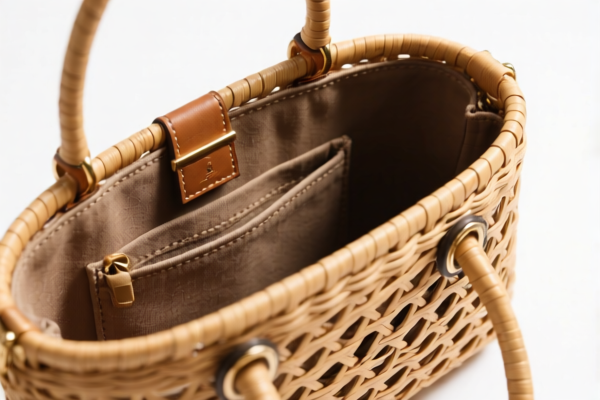
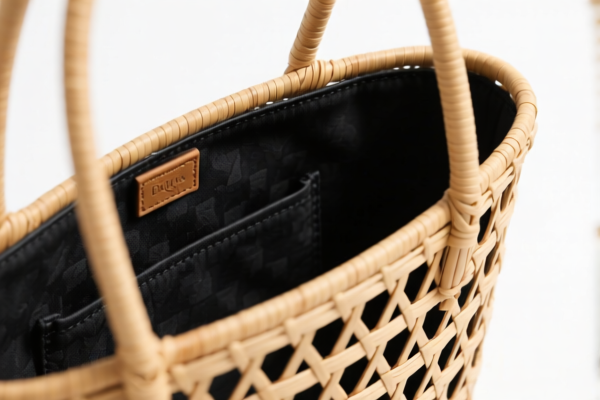
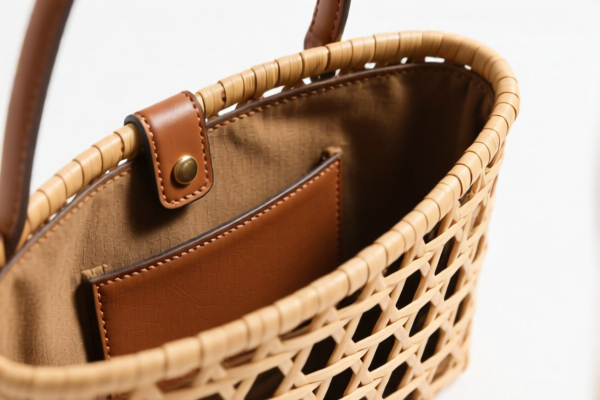
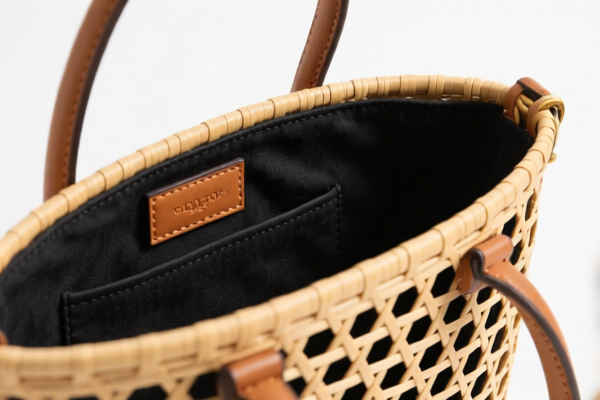
AI Analysis
👜 Woven Handbag with Inner Pouch (With Outer Surface of Textile Materials)
🌐 HS Code Reference & Customs Clearance Guide | 2026 Latest Tariff Analysis | Professional Entry Strategy
📌 I. Product Definition & Classification: Do You Really Understand "Woven Handbags"?
A "Woven Handbag with Inner Pouch" falls under the broader category of travel goods and similar containers. Specifically, it is classified based on its outer surface material and construction.
Key Distinction:
- Woven/Braided Material: If the bag is made of braided or woven textile strips (e.g., straw, raffia, plastic strips, or textile yarns interlaced), it falls under the sub-category "Wholly or in part of braid".
- With Inner Pouch: The presence of an inner pouch does not change the classification of the main container, provided the outer surface remains textile. It is still considered a single entity (the handbag).
⚠️ Critical Classification Point:
- If the outer surface is textile (including woven/braided textiles) → HS Code 4202.22.xx.xx
- If the outer surface is leather or plastic sheeting → Different HS Codes (Not applicable here)
- Material Specifics: The classification depends heavily on whether the woven material is Cotton or Man-made fibers.
📦 II. HS Code Classification Details (2026 Latest Tariff Authority对照)
Based on the provided , the product fits into two specific HS codes depending on the fiber content of the woven/textile material.
| HS Code | Product Description | Material Composition | Applicable Scenario |
|---|---|---|---|
4202.22.40.20 |
Handbags, outer surface textile, wholly/partly of braid | Of Cotton | Bags made from cotton yarns, cotton raffia, or cotton-based woven strips |
4202.22.40.30 |
Handbags, outer surface textile, wholly/partly of braid | Of Man-made Fibers | Bags made from polyester, nylon, acrylic, or synthetic raffia strips |
🔍 Key Reminder:
- Both codes fall under: 4202.22 (Handbags with outer surface of plastics or textile materials) → With outer surface of textile materials → Wholly or in part of braid → Other.
- The "Inner Pouch" is considered part of the handbag assembly and does not trigger a separate classification.
💰 III. 2026 Latest Tariff Rate Details (Including Surcharges)
✅ Applicable Country: United States (US)
✅ Origin: China (CN)
✅ Effective Date: 2025/2026 Tariff Schedule
🎯 1. 4202.22.40.20 —— Handbags (Of Cotton, Woven/Braided)
| Item | Content |
|---|---|
| Base Tariff | 0.0% |
| Section 301 Surcharge | 0.0% |
| Total Tax Rate | 0.0% |
| Tax Calculation | CIF Value × 0% = $0 |
| De Minimis Eligibility | ✅ Yes (If value ≤ $800, usually exempt from duties under Section 321, but this is already 0% so it doesn't matter) |
| Legal Basis | HTSUS:4202.22.40.20 → USTR:301 (No additional duty listed in provided data) |
📌 Explanation:
- This specific cotton woven handbag has a 0% duty rate.
- No additional Section 301 or IEEPA surcharges are listed in the provided for this code.
- Cost Advantage: This is a highly competitive HS code for cotton-based woven goods.
🎯 2. 4202.22.40.30 —— Handbags (Of Man-made Fibers, Woven/Braided)
| Item | Content |
|---|---|
| Base Tariff | 0.0% |
| Section 301 Surcharge | 0.0% |
| Total Tax Rate | 0.0% |
| Tax Calculation | CIF Value × 0% = $0 |
| De Minimis Eligibility | ✅ Yes |
| Legal Basis | HTSUS:4202.22.40.30 → USTR:301 (No additional duty listed in provided data) |
📌 Note:
- Similar to cotton, synthetic woven handbags also enjoy a 0% total duty rate according to the provided data.
- This makes both cotton and synthetic woven handbags low-cost entries compared to leather or plastic-sheeting handbags which may have higher base rates or surcharges.
🛠️ IV. Customs Clearance Practical Advice (Real-world Pitfall Guide)
✅ 1. Required Documentation Checklist (Essential)
| Document | Mandatory | Description |
|---|---|---|
| ✅ Product Specification Sheet | ✔️ | Must clearly state: "Woven Handbag with Inner Pouch" |
| ✅ Material Composition Breakdown | ✔️ | Critical: Specify % of Cotton vs. Man-made fibers for the woven outer layer |
| ✅ Photos of Product | ✔️ | Show the woven texture, braid pattern, and the inner pouch attachment |
| ✅ Commercial Invoice | ✔️ | Must match HS Code (4202.22.40.20 or 4202.22.40.30) |
| ✅ Packing List | ✔️ | Detail the handbag and inner pouch as one unit |
| ✅ Origin Certificate | ✔️ | Confirm Chinese origin to apply correct tax rates |
✅ 2. Declaration Tips (Key Mnemonics)
🔥 “Woven is Braid, Cotton or Synthetic, 0% Duty, Don’t Forget the Inner Pouch!”
| Scenario | Correct Declaration | Wrong Approach |
|---|---|---|
| Woven Straw/Raffia Bag | 4202.22.40.20 (if cotton-based) or 4202.22.40.30 (if synthetic) |
Misdeclare as "Leather" or "Plastic Sheet" → Higher Tax |
| Bag with Detachable Inner Pouch | Declare as One Handbag | Split into "Handbag" + "Pouch" → Risk of misclassification |
| Mixed Material (e.g., Cotton Braid + Leather Trim) | Declare based on Outer Surface Material | Do not let small leather parts dictate the code if outer is textile |
| Non-Woven Fabric Bag | Not 4202.22.40.xx (Unless "braid" includes certain fabric weaves per local ruling) |
Check if "braid" definition applies; otherwise, may fall under "Other Textile" |
✅ 3. Special Case Handling
| Situation | Handling Advice |
|---|---|
| "Woven" vs. "Knitted" | Ensure the material is truly woven/braided. If it is knitted fabric, it may fall under different sub-categories. The HS code 4202.22.40.xx specifies "Of braid". |
| Inner Pouch Material | The inner pouch material does not affect the HS code. Only the outer surface matters. |
| Plastic Strips Woven Like Textile | If made of plastic strips but woven like textile, it may still be classified as "Textile" or "Plastic Sheeting" depending on US Customs Rulings. Check specific precedents. |
| Sample Shipments | Even for samples, provide detailed material breakdown to avoid delays. |
🌍 V. Global Market Customs Comparison (2026 Latest)
| Country/Region | Recommended HS Code | Tariff Rate | Certification Requirements | Notes |
|---|---|---|---|---|
| 🇺🇸 USA | 4202.22.40.20 / .30 |
0.0% | None Specific | Highly favorable duty rate for woven textiles |
| 🇪🇺 EU | 4202.22.90 |
~4.5% | CE (if applicable) | Standard textile bag rate |
| 🇨🇳 China | 4202.22.90 |
10-20% | None | Import duty applies |
| 🇬🇧 UK | 4202.22.90 |
4.5% | None | Post-Brexit standard rate |
| 🇯🇵 Japan | 4202.22.90 |
8.1% | None | Standard tariff |
📌 Conclusion:
- The US market offers a 0% duty rate for these specific woven handbags, making it a prime destination for profit margin optimization.
- Ensure accurate material declaration (Cotton vs. Synthetic) to maintain eligibility for the 0% rate.
📌 VI. Common Errors & Pitfall Guide (Lessons Learned)
❌ Error 1: Declaring a woven plastic-strip bag as "Leather"
👉 Consequence: Misclassification → Potential penalties + Higher duties if leather rates were higher (though here both are 0%, accuracy is still key for compliance).
❌ Error 2: Forgetting to specify "Woven/Braided"
👉 Consequence: Customs may classify as "Other Handbags" under 4202.22.90, which could have different duty rates or regulatory requirements.
❌ Error 3: Splitting the Handbag and Inner Pouch in Documentation
👉 Consequence: Customs may assess the inner pouch separately, leading to complex duty calculations or rejection.
❌ Error 4: Confusing "Woven" with "Knitted"
👉 Consequence: If the material is knitted fabric (not braid), it may not fit 4202.22.40.xx. Verify with a textile expert.
✅ Correct Practice:
“Woven Textile Handbag, Outer Surface: 100% Cotton Braid, Includes Detachable Inner Pouch, Model: WH-2026”
🎯 VII. Conclusion: Precise Classification, Maximized Profit!
🎯 Remember the Key Points:
🔹 “Woven is Braid, Cotton or Synthetic, Both 0% Duty in US!”
🔹 “Outer Surface Determines Code, Inner Pouch is Just a Bonus!”
🔹 “Declare Accurately, Avoid Delays, Keep Margins High!”
📌 Pro Tip:
If your woven handbags are made from recycled materials or eco-friendly fibers, highlight this in your marketing and documentation, as it may qualify for additional green trade benefits or consumer preference in Western markets.
📣 Immediate Action:
📞 Confirm Material Composition: Cotton vs. Synthetic
📋 Prepare Detailed Product Photos: Showing weave and structure
🚀 File Correct HS Code:4202.22.40.20or4202.22.40.30
✨ Professional Clearance Starts with Accurate Classification!
💼 Your Product’s Profitability Depends on These Details!
Customer Reviews
About HS Code Classification
The Harmonized System (HS) is an internationally standardized nomenclature developed by the World Customs Organization (WCO) to classify traded products. Over 200 countries use the HS system as the basis for customs tariffs, trade statistics, and import/export regulations.
Each HS code follows a hierarchical structure:
- Chapter (2 digits) — Broad category of goods (e.g., Chapter 84: Machinery and Mechanical Appliances)
- Heading (4 digits) — More specific grouping within the chapter
- Subheading (6 digits) — Internationally standardized breakdown, used by all WCO member countries
- National subdivisions (8-10 digits) — Country-specific extensions for further classification, such as US HTSUS 10-digit codes
Correct HS code classification is essential for smooth customs clearance, accurate duty payment, and compliance with trade regulations. Misclassification can lead to customs delays, overpayment of duties, or penalties.
When importing from CN to US, the applicable tariff rates may include:
- Most-Favored-Nation (MFN) rate — The standard duty rate applied to WTO members
- General rate — Applied to countries without trade agreements
- Trade remedy duties — Additional tariffs such as Section 301 (anti-dumping), Section 232 (national security), or countervailing duties
The information provided on this page is for reference purposes only. For official classification, please consult with your local customs authority or a licensed customs broker.