acrylic backlight panel
CN → US| HS编码 | 关税税率 | 原产国 | 目的国 | 文档 |
|---|---|---|---|---|
| 3921190090 | 41.5% | CN | US | 官方文档 |
| 3921905050 | 39.8% | CN | US | 官方文档 |
| 3926909989 | 22.8% | CN | US | 官方文档 |
| 3926305000 | 22.8% | CN | US | 官方文档 |
| 3920515090 | 41.5% | CN | US | 官方文档 |
商品图片
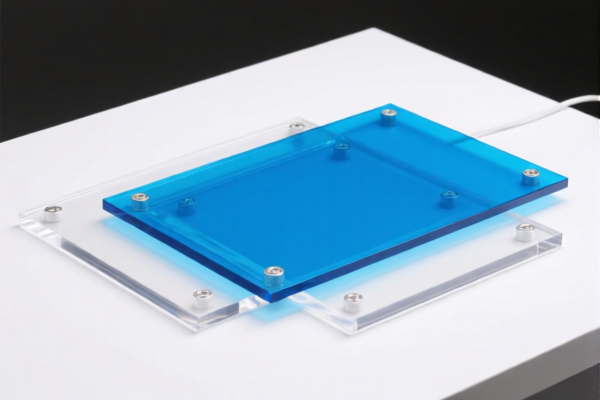
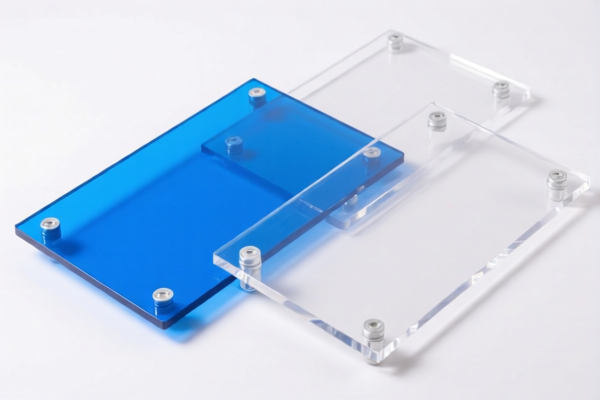
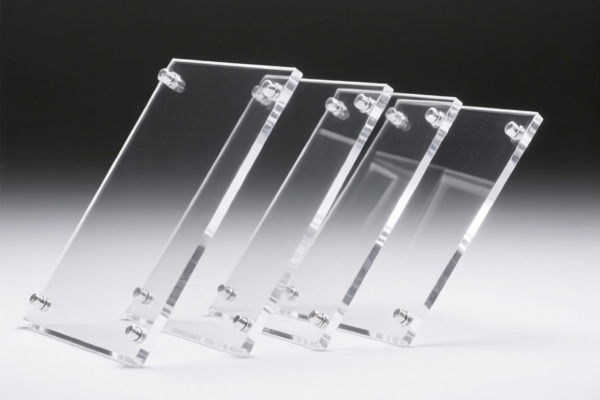
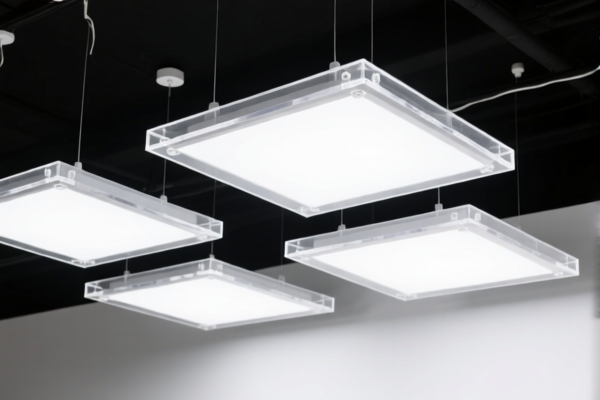
AI分析
💡 Acrylic Backlight Panel (Light Guide Plate / LGP)
🌐 HS Code Reference & Customs Clearance Guide | 2026 Latest Tariff Analysis | Professional通关 Strategies
📌 I. Product Definition & Classification: What is an "Acrylic Backlight Panel"?
An Acrylic Backlight Panel (often referred to as a Light Guide Plate or LGP in the LED industry) is a critical component in LCD backlight assemblies. It is made of Polymethyl Methacrylate (PMMA), commonly known as Acrylic.
In international trade, classification depends heavily on whether it is considered a raw plastic sheet or a finished plastic article. The interpretation varies based on the specific physical characteristics (thickness, surface treatment, precision molding) and how it is presented at the port of entry.
⚠️ Critical Distinction:
- If it is a rough or semi-finished sheet used primarily as a material for further processing → May fall under Chapter 39 (Plastics and Articles Thereof).
- If it is a finished, precision-molded plate ready for integration into lighting fixtures → May still fall under Chapter 39 but under different subheadings depending on thickness and specific use.
- Note: Even though it is used in lighting, it is generally not classified under Chapter 85 (Electrical Machinery) because it is a passive optical component, not an electrical device.
📦 II. HS Code Classification Details (2026 Latest Tariff Authority Comparison)
Based on the provided data, there are 5 potential HS Codes for Acrylic Backlight Panels. The choice depends on the specific interpretation of "Plastic Plates/Sheets" vs. "Other Plastic Articles."
| HS Code | Product Description & Logic | Why This Code? |
|---|---|---|
3921.19.00.90 |
Plastic Plates, Sheets, Film, Foil & Strip (Other) | Summarizes: Acrylic is plastic; "High Gloss Panel" fits the form of plates/sheets. Fits "Other" category if not elsewhere specified. |
3921.90.50.50 |
Other Plates, Sheets, Film, Foil & Strip (Other Plastic Materials) | Summarizes: Acrylic is plastic; "Panel" fits plates/sheets. Material and form match perfectly. |
3926.90.99.89 |
Other Plastic Articles (Not Elsewhere Specified) | Summarizes: Acrylic falls within 3901-3914 range. "Panel" is considered an "Other" plastic article not specifically listed elsewhere. |
3926.30.50.00 |
Other Plastic Articles (Fittings for Furniture, etc. - Contextual) | Summarizes: Acrylic is plastic; Panels are "Other Plastic Articles" under Chapter 39. Note: This code often targets fittings, but may be used if the panel is considered a specific fitting. |
3920.51.50.90 |
Plates, Sheets, Film, Foil (Other) | Summarizes: Acrylic = PMMA. Panel = Plate/Sheet. Non-flame retardant, conventional material. |
🔍 Key Insight:
- Codes3921and3920generally refer to plates, sheets, film, foil, and strip (Ch 39.01-39.14).
- Codes3926refer to other articles of plastic.
- The choice often hinges on whether customs views the item as a raw sheet material (3920/3921) or a manufactured article (3926).
💰 III. 2026 Latest Tariff Rate Breakdown (Including Additional Duties & Policy Surcharges)
✅ Applicable Country: United States (US)
✅ Origin: China (CN)
✅ Effective Date: From November 10, 2025 (Including subsequent imports)
🎯 1. High-Tariff Scenarios (3921.19.00.90 & 3920.51.50.90)
These codes carry the highest combined tariff burden due to higher base rates interacting with Section 301 and IEEPA surcharges.
| Item | Content |
|---|---|
| Base Tariff | 6.5% (Ad Valorem) |
| Section 301 Surcharge (25%) | +25.0% |
| 122 Clause Tariff | +10.0% |
| Total Tariff Rate | 41.5% |
| Tax Calculation | CIF Value × 41.5% |
| De Minimis Exemption | ❌ Not Applicable (Denied) |
| Legal Basis Path | Base Tariff → USITC Footnote 9903.88.01 → IEEPA 10% |
📌 Explanation:
- The 6.5% base rate is significantly higher than the 0-4.8% range seen in other codes.
- Combined with the 25% Section 301 tariff and 10% 122 Clause tariff, this results in a 41.5% total duty.
- This is a high-cost classification. Avoid if a lower-rate code is justifiable.
🎯 2. Medium-High Tariff Scenario (3921.90.50.50)
A slightly more efficient classification than the previous one, but still subject to significant surcharges.
| Item | Content |
|---|---|
| Base Tariff | 4.8% (Ad Valorem) |
| Section 301 Surcharge (25%) | +25.0% |
| 122 Clause Tariff | +10.0% |
| Total Tariff Rate | 39.8% |
| Tax Calculation | CIF Value × 39.8% |
| De Minimis Exemption | ❌ Not Applicable (Denied) |
| Legal Basis Path | Base Tariff → USITC Footnote 9903.88.01 → IEEPA 10% |
📌 Explanation:
- The 4.8% base rate saves 1.7% compared to the 41.5% scenario.
- Total duty is 39.8%, still substantial.
- This code is more favorable than3921.19.00.90and3920.51.50.90.
🎯 3. Lowest-Tariff Scenarios (3926.90.99.89 & 3926.30.50.00)
These codes offer the most cost-effective classification, leveraging a lower base rate.
| Item | Content |
|---|---|
| Base Tariff | 5.3% (Ad Valorem) |
| Section 301 Surcharge (7.5%) | +7.5% |
| 122 Clause Tariff | +10.0% |
| Total Tariff Rate | 22.8% |
| Tax Calculation | CIF Value × 22.8% |
| De Minimis Exemption | ❌ Not Applicable (Denied) |
| Legal Basis Path | Base Tariff → USITC Footnote 9903.88.01 → IEEPA 10% |
📌 Explanation:
- Crucial Difference: The Section 301 surcharge is only 7.5%, not 25%.
- The 122 Clause Tariff remains 10%.
- Total duty is 22.8%, which is ~17-19% lower than the high-tariff options.
- This is the preferred classification if the product can be justified as "Other Plastic Articles" (3926) rather than "Plastic Sheets/Plates" (3920/3921).
🛠️ IV. Customs Clearance Practical Advice (Avoid Pitfalls)
✅ 1. Preparation Checklist (Non-negotiable)
| Document | Required | Explanation |
|---|---|---|
| ✅ Product Specification Sheet | ✔️ | Must detail: Material (PMMA/Acrylic), Thickness, Dimensions, Optical Density, Surface Treatment (e.g., high gloss, matte). |
| ✅ Technical Data Sheet (TDS) | ✔️ | Proves it is a plastic article (light guide) and not an electrical component. |
| ✅ Product Photos | ✔️ | Clear images showing the panel’s shape, transparency, and any printed patterns (micro-prisms). |
| ✅ Commercial Invoice | ✔️ | Must clearly state "Acrylic Light Guide Plate (Backlight Panel)" and HS Code. |
| ✅ Packing List | ✔️ | Itemize panels, protectors, and any packaging materials separately. |
| ✅ Certificate of Origin | ✔️ | To prove origin as China (CN) for accurate tariff calculation. |
✅ 2. Declaration Strategy (Key Mnemonic)
🔥 "Material First, Form Second, Chapter 39 is Key!"
| Scenario | Correct Declaration | Risk if Wrong |
|---|---|---|
| Unfinished Acrylic Sheet | 3920.51.50.90 or 3921.19.00.90 |
If declared as 3926, risk of reclassification + penalty. |
| Finished Light Guide Plate | 3926.90.99.89 or 3926.30.50.00 |
If declared as 3920, you pay 41.5% instead of 22.8% → Huge Cost Increase! |
| With Integrated LED/Driver | Not Applicable (This guide is for passive panels only) | If electrical components are present, it may fall under Chapter 85, triggering different rules. |
📌 Critical Tip:
- Emphasize that the panel is a passive optical component.
- Avoid terms like "Electrical Component" or "LED Light." Use "Plastic Light Guide Plate" or "Acrylic Backlight Panel."
✅ 3. Special Case Handling
| Situation | Handling Advice |
|---|---|
| High-Gloss vs. Matte | Both are still Acrylic/PMMA. The surface treatment does not change the HS Code significantly but should be declared for clarity. |
| With Printed Patterns | If the micro-prism pattern is laser-etched, it is still a plastic article. If it has a separate film layer adhered, ensure the entire assembly is declared. |
| OEM Custom Shapes | Provide CAD drawings or 3D models to prove it is a custom-molded article (3926) rather than a generic sheet (3920). This helps justify the lower 22.8% rate. |
🌍 V. Global Market Comparison (2026 Latest)
| Country/Region | Recommended HS Code | Tariff (China Origin) | Certification Required | Notes |
|---|---|---|---|---|
| 🇺🇸 USA | 3926.90.99.89 |
22.8% (Total) | N/A (No special certs for acrylic) | Best rate available. Avoid 3920/3921 codes unless necessary. |
| 🇨🇳 China | 3926.90.99.89 |
5.3% | CCC (if applicable) | No Section 301 or IEEPA surcharges. |
| 🇪🇺 EU | 3926.90.99 |
6.5% (General) | CE + REACH | No additional US-style surcharges. |
| 🇯🇵 Japan | 3926.90.90 |
3.0% | PSE (if electrical) | Acrylic sheets are low-duty. |
📌 Conclusion:
- The USA is the most critical market for tariff optimization.
- The difference between 22.8% and 41.5% is 18.7 percentage points on the CIF value.
- For a $100,000 shipment, this difference is $18,700. Correct classification is financially vital.
📌 VI. Common Mistakes & Pitfalls (Lessons Learned)
❌ Mistake 1: Classifying a finished light guide plate under 3920 (Plastic Plates).
👉 Consequence: Tariff jumps from 22.8% to 41.5%.
👉 Fix: Argue that the item is a manufactured article (3926) due to precise molding and specific optical function.
❌ Mistake 2: Declaring the product as "LED Light" or "Lighting Fixture."
👉 Consequence: Misclassification under Chapter 85. If deemed an electrical good, it may require FCC certification and could face different, potentially higher, tariffs or regulatory hurdles.
👉 Fix: Clearly state it is a passive acrylic component.
❌ Mistake 3: Ignoring the 122 Clause Tariff.
👉 Consequence: Underestimating total cost. The 10% 122 Clause applies to many Chinese plastic articles.
👉 Fix: Include the 10% in all cost calculations.
✅ Correct Approach:
"PMMA Acrylic Light Guide Plate, High Gloss, Precision Molded, For LCD Backlight Application, Non-Electrical"
🎯 VII. Conclusion: Precision Classification Saves Money
🎯 Remember the Mnemonic:
🔹 "Passive Acrylic = 3926 = 22.8%"
🔹 "Raw Sheet = 3920 = 41.5%"
🔹 "18.7% Difference = $18,700 per $100k"📌 Pro Tip:
If your acrylic panels are highly customized, molded, and have specific optical features, lean towards3926.90.99.89.
If they are generic, unprocessed sheets cut to size, you may be forced into3920.51.50.90.
📣 Immediate Action:
📞 Contact your customs broker to review the product's physical state.
📄 Provide technical drawings to support the3926classification.
🚀 Optimize your HS Code to save 18.7% in duties!
✨ Professional clearance starts with accurate classification!
💼 Every cent saved in duty is pure profit!
用户评价
关于 HS 编码归类
协调制度(HS)是由世界海关组织(WCO)制定的国际贸易商品分类标准。全球 200 多个国家采用 HS 系统作为海关关税、贸易统计和进出口监管的基础。
每个 HS 编码遵循以下层级结构:
- 章(2 位)——商品大类(例如:第 84 章:机器和机械设备)
- 品目(4 位)——章内的更具体分类
- 子目(6 位)——国际通用细分,所有 WCO 成员国统一使用
- 本国细分(8-10 位)——各国自行扩展的细分编码,如美国 HTSUS 10 位编码
正确的 HS 编码归类对于顺利通关、准确缴纳关税和遵守贸易法规至关重要。错误归类可能导致海关延误、多缴关税或罚款。
从CN进口到US时,适用的关税税率可能包括:
- 最惠国(MFN)税率——适用于 WTO 成员国的标准关税税率
- 普通税率——适用于无贸易协定国家
- 贸易救济关税——附加关税,如 301 条款(反倾销)、232 条款(国家安全)或反补贴税
本页内容仅供参考。如需正式归类,请咨询当地海关或持牌报关代理。