acrylic backlight panel
CN → US| HS Code | Tariff Rate | Origin | Destination | Doc |
|---|---|---|---|---|
| 3921190090 | 41.5% | CN | US | Official Doc |
| 3921905050 | 39.8% | CN | US | Official Doc |
| 3926909989 | 22.8% | CN | US | Official Doc |
| 3926305000 | 22.8% | CN | US | Official Doc |
| 3920515090 | 41.5% | CN | US | Official Doc |
Product Images
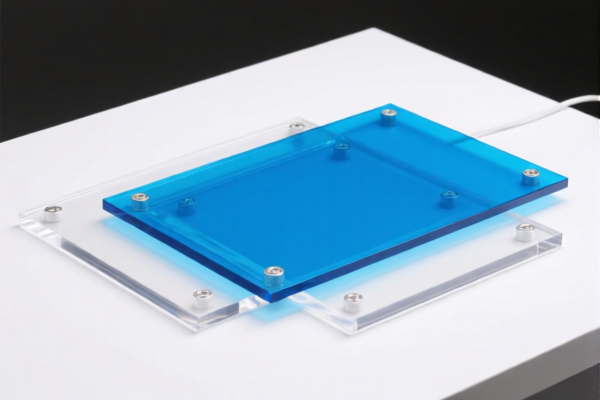
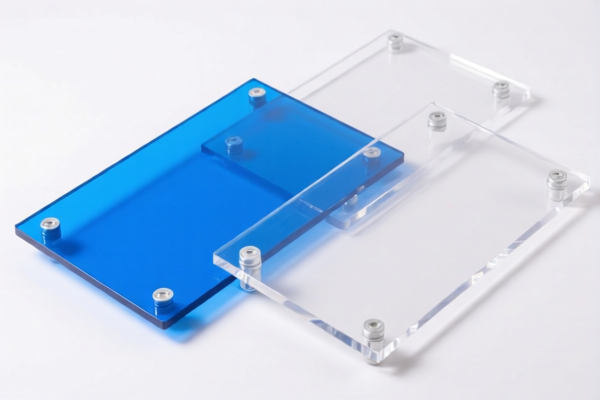
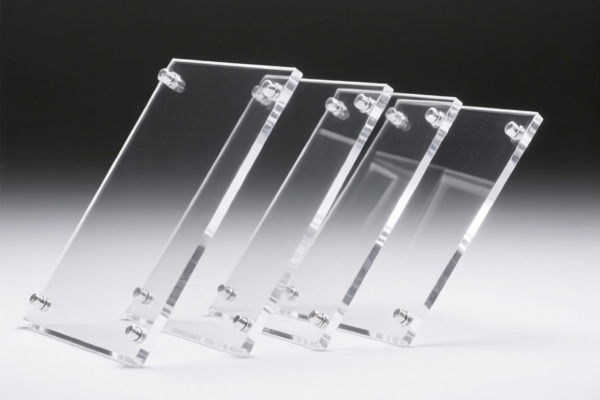
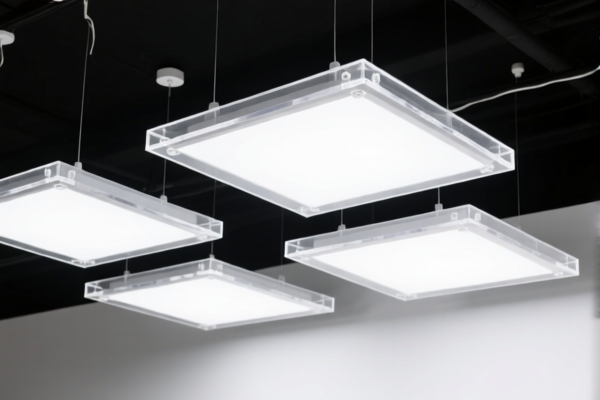
AI Analysis
💡 Acrylic Backlight Panel (Light Guide Plate / LGP)
🌐 HS Code Reference & Customs Clearance Guide | 2026 Latest Tariff Analysis | Professional通关 Strategies
📌 I. Product Definition & Classification: What is an "Acrylic Backlight Panel"?
An Acrylic Backlight Panel (often referred to as a Light Guide Plate or LGP in the LED industry) is a critical component in LCD backlight assemblies. It is made of Polymethyl Methacrylate (PMMA), commonly known as Acrylic.
In international trade, classification depends heavily on whether it is considered a raw plastic sheet or a finished plastic article. The interpretation varies based on the specific physical characteristics (thickness, surface treatment, precision molding) and how it is presented at the port of entry.
⚠️ Critical Distinction:
- If it is a rough or semi-finished sheet used primarily as a material for further processing → May fall under Chapter 39 (Plastics and Articles Thereof).
- If it is a finished, precision-molded plate ready for integration into lighting fixtures → May still fall under Chapter 39 but under different subheadings depending on thickness and specific use.
- Note: Even though it is used in lighting, it is generally not classified under Chapter 85 (Electrical Machinery) because it is a passive optical component, not an electrical device.
📦 II. HS Code Classification Details (2026 Latest Tariff Authority Comparison)
Based on the provided data, there are 5 potential HS Codes for Acrylic Backlight Panels. The choice depends on the specific interpretation of "Plastic Plates/Sheets" vs. "Other Plastic Articles."
| HS Code | Product Description & Logic | Why This Code? |
|---|---|---|
3921.19.00.90 |
Plastic Plates, Sheets, Film, Foil & Strip (Other) | Summarizes: Acrylic is plastic; "High Gloss Panel" fits the form of plates/sheets. Fits "Other" category if not elsewhere specified. |
3921.90.50.50 |
Other Plates, Sheets, Film, Foil & Strip (Other Plastic Materials) | Summarizes: Acrylic is plastic; "Panel" fits plates/sheets. Material and form match perfectly. |
3926.90.99.89 |
Other Plastic Articles (Not Elsewhere Specified) | Summarizes: Acrylic falls within 3901-3914 range. "Panel" is considered an "Other" plastic article not specifically listed elsewhere. |
3926.30.50.00 |
Other Plastic Articles (Fittings for Furniture, etc. - Contextual) | Summarizes: Acrylic is plastic; Panels are "Other Plastic Articles" under Chapter 39. Note: This code often targets fittings, but may be used if the panel is considered a specific fitting. |
3920.51.50.90 |
Plates, Sheets, Film, Foil (Other) | Summarizes: Acrylic = PMMA. Panel = Plate/Sheet. Non-flame retardant, conventional material. |
🔍 Key Insight:
- Codes3921and3920generally refer to plates, sheets, film, foil, and strip (Ch 39.01-39.14).
- Codes3926refer to other articles of plastic.
- The choice often hinges on whether customs views the item as a raw sheet material (3920/3921) or a manufactured article (3926).
💰 III. 2026 Latest Tariff Rate Breakdown (Including Additional Duties & Policy Surcharges)
✅ Applicable Country: United States (US)
✅ Origin: China (CN)
✅ Effective Date: From November 10, 2025 (Including subsequent imports)
🎯 1. High-Tariff Scenarios (3921.19.00.90 & 3920.51.50.90)
These codes carry the highest combined tariff burden due to higher base rates interacting with Section 301 and IEEPA surcharges.
| Item | Content |
|---|---|
| Base Tariff | 6.5% (Ad Valorem) |
| Section 301 Surcharge (25%) | +25.0% |
| 122 Clause Tariff | +10.0% |
| Total Tariff Rate | 41.5% |
| Tax Calculation | CIF Value × 41.5% |
| De Minimis Exemption | ❌ Not Applicable (Denied) |
| Legal Basis Path | Base Tariff → USITC Footnote 9903.88.01 → IEEPA 10% |
📌 Explanation:
- The 6.5% base rate is significantly higher than the 0-4.8% range seen in other codes.
- Combined with the 25% Section 301 tariff and 10% 122 Clause tariff, this results in a 41.5% total duty.
- This is a high-cost classification. Avoid if a lower-rate code is justifiable.
🎯 2. Medium-High Tariff Scenario (3921.90.50.50)
A slightly more efficient classification than the previous one, but still subject to significant surcharges.
| Item | Content |
|---|---|
| Base Tariff | 4.8% (Ad Valorem) |
| Section 301 Surcharge (25%) | +25.0% |
| 122 Clause Tariff | +10.0% |
| Total Tariff Rate | 39.8% |
| Tax Calculation | CIF Value × 39.8% |
| De Minimis Exemption | ❌ Not Applicable (Denied) |
| Legal Basis Path | Base Tariff → USITC Footnote 9903.88.01 → IEEPA 10% |
📌 Explanation:
- The 4.8% base rate saves 1.7% compared to the 41.5% scenario.
- Total duty is 39.8%, still substantial.
- This code is more favorable than3921.19.00.90and3920.51.50.90.
🎯 3. Lowest-Tariff Scenarios (3926.90.99.89 & 3926.30.50.00)
These codes offer the most cost-effective classification, leveraging a lower base rate.
| Item | Content |
|---|---|
| Base Tariff | 5.3% (Ad Valorem) |
| Section 301 Surcharge (7.5%) | +7.5% |
| 122 Clause Tariff | +10.0% |
| Total Tariff Rate | 22.8% |
| Tax Calculation | CIF Value × 22.8% |
| De Minimis Exemption | ❌ Not Applicable (Denied) |
| Legal Basis Path | Base Tariff → USITC Footnote 9903.88.01 → IEEPA 10% |
📌 Explanation:
- Crucial Difference: The Section 301 surcharge is only 7.5%, not 25%.
- The 122 Clause Tariff remains 10%.
- Total duty is 22.8%, which is ~17-19% lower than the high-tariff options.
- This is the preferred classification if the product can be justified as "Other Plastic Articles" (3926) rather than "Plastic Sheets/Plates" (3920/3921).
🛠️ IV. Customs Clearance Practical Advice (Avoid Pitfalls)
✅ 1. Preparation Checklist (Non-negotiable)
| Document | Required | Explanation |
|---|---|---|
| ✅ Product Specification Sheet | ✔️ | Must detail: Material (PMMA/Acrylic), Thickness, Dimensions, Optical Density, Surface Treatment (e.g., high gloss, matte). |
| ✅ Technical Data Sheet (TDS) | ✔️ | Proves it is a plastic article (light guide) and not an electrical component. |
| ✅ Product Photos | ✔️ | Clear images showing the panel’s shape, transparency, and any printed patterns (micro-prisms). |
| ✅ Commercial Invoice | ✔️ | Must clearly state "Acrylic Light Guide Plate (Backlight Panel)" and HS Code. |
| ✅ Packing List | ✔️ | Itemize panels, protectors, and any packaging materials separately. |
| ✅ Certificate of Origin | ✔️ | To prove origin as China (CN) for accurate tariff calculation. |
✅ 2. Declaration Strategy (Key Mnemonic)
🔥 "Material First, Form Second, Chapter 39 is Key!"
| Scenario | Correct Declaration | Risk if Wrong |
|---|---|---|
| Unfinished Acrylic Sheet | 3920.51.50.90 or 3921.19.00.90 |
If declared as 3926, risk of reclassification + penalty. |
| Finished Light Guide Plate | 3926.90.99.89 or 3926.30.50.00 |
If declared as 3920, you pay 41.5% instead of 22.8% → Huge Cost Increase! |
| With Integrated LED/Driver | Not Applicable (This guide is for passive panels only) | If electrical components are present, it may fall under Chapter 85, triggering different rules. |
📌 Critical Tip:
- Emphasize that the panel is a passive optical component.
- Avoid terms like "Electrical Component" or "LED Light." Use "Plastic Light Guide Plate" or "Acrylic Backlight Panel."
✅ 3. Special Case Handling
| Situation | Handling Advice |
|---|---|
| High-Gloss vs. Matte | Both are still Acrylic/PMMA. The surface treatment does not change the HS Code significantly but should be declared for clarity. |
| With Printed Patterns | If the micro-prism pattern is laser-etched, it is still a plastic article. If it has a separate film layer adhered, ensure the entire assembly is declared. |
| OEM Custom Shapes | Provide CAD drawings or 3D models to prove it is a custom-molded article (3926) rather than a generic sheet (3920). This helps justify the lower 22.8% rate. |
🌍 V. Global Market Comparison (2026 Latest)
| Country/Region | Recommended HS Code | Tariff (China Origin) | Certification Required | Notes |
|---|---|---|---|---|
| 🇺🇸 USA | 3926.90.99.89 |
22.8% (Total) | N/A (No special certs for acrylic) | Best rate available. Avoid 3920/3921 codes unless necessary. |
| 🇨🇳 China | 3926.90.99.89 |
5.3% | CCC (if applicable) | No Section 301 or IEEPA surcharges. |
| 🇪🇺 EU | 3926.90.99 |
6.5% (General) | CE + REACH | No additional US-style surcharges. |
| 🇯🇵 Japan | 3926.90.90 |
3.0% | PSE (if electrical) | Acrylic sheets are low-duty. |
📌 Conclusion:
- The USA is the most critical market for tariff optimization.
- The difference between 22.8% and 41.5% is 18.7 percentage points on the CIF value.
- For a $100,000 shipment, this difference is $18,700. Correct classification is financially vital.
📌 VI. Common Mistakes & Pitfalls (Lessons Learned)
❌ Mistake 1: Classifying a finished light guide plate under 3920 (Plastic Plates).
👉 Consequence: Tariff jumps from 22.8% to 41.5%.
👉 Fix: Argue that the item is a manufactured article (3926) due to precise molding and specific optical function.
❌ Mistake 2: Declaring the product as "LED Light" or "Lighting Fixture."
👉 Consequence: Misclassification under Chapter 85. If deemed an electrical good, it may require FCC certification and could face different, potentially higher, tariffs or regulatory hurdles.
👉 Fix: Clearly state it is a passive acrylic component.
❌ Mistake 3: Ignoring the 122 Clause Tariff.
👉 Consequence: Underestimating total cost. The 10% 122 Clause applies to many Chinese plastic articles.
👉 Fix: Include the 10% in all cost calculations.
✅ Correct Approach:
"PMMA Acrylic Light Guide Plate, High Gloss, Precision Molded, For LCD Backlight Application, Non-Electrical"
🎯 VII. Conclusion: Precision Classification Saves Money
🎯 Remember the Mnemonic:
🔹 "Passive Acrylic = 3926 = 22.8%"
🔹 "Raw Sheet = 3920 = 41.5%"
🔹 "18.7% Difference = $18,700 per $100k"📌 Pro Tip:
If your acrylic panels are highly customized, molded, and have specific optical features, lean towards3926.90.99.89.
If they are generic, unprocessed sheets cut to size, you may be forced into3920.51.50.90.
📣 Immediate Action:
📞 Contact your customs broker to review the product's physical state.
📄 Provide technical drawings to support the3926classification.
🚀 Optimize your HS Code to save 18.7% in duties!
✨ Professional clearance starts with accurate classification!
💼 Every cent saved in duty is pure profit!
Customer Reviews
About HS Code Classification
The Harmonized System (HS) is an internationally standardized nomenclature developed by the World Customs Organization (WCO) to classify traded products. Over 200 countries use the HS system as the basis for customs tariffs, trade statistics, and import/export regulations.
Each HS code follows a hierarchical structure:
- Chapter (2 digits) — Broad category of goods (e.g., Chapter 84: Machinery and Mechanical Appliances)
- Heading (4 digits) — More specific grouping within the chapter
- Subheading (6 digits) — Internationally standardized breakdown, used by all WCO member countries
- National subdivisions (8-10 digits) — Country-specific extensions for further classification, such as US HTSUS 10-digit codes
Correct HS code classification is essential for smooth customs clearance, accurate duty payment, and compliance with trade regulations. Misclassification can lead to customs delays, overpayment of duties, or penalties.
When importing from CN to US, the applicable tariff rates may include:
- Most-Favored-Nation (MFN) rate — The standard duty rate applied to WTO members
- General rate — Applied to countries without trade agreements
- Trade remedy duties — Additional tariffs such as Section 301 (anti-dumping), Section 232 (national security), or countervailing duties
The information provided on this page is for reference purposes only. For official classification, please consult with your local customs authority or a licensed customs broker.