aromatic modified copolymer
CN → US| HS编码 | 关税税率 | 原产国 | 目的国 | 文档 |
|---|---|---|---|---|
| 3506915000 | 37.1% | CN | US | 官方文档 |
| 3808591000 | 16.5% | CN | US | 官方文档 |
| 3808931500 | 41.5% | CN | US | 官方文档 |
| 2935901300 | 10.0% | CN | US | 官方文档 |
| 2935909500 | 16.5% | CN | US | 官方文档 |
商品图片
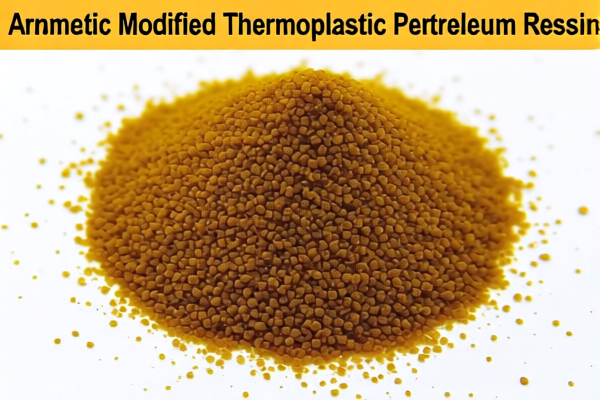
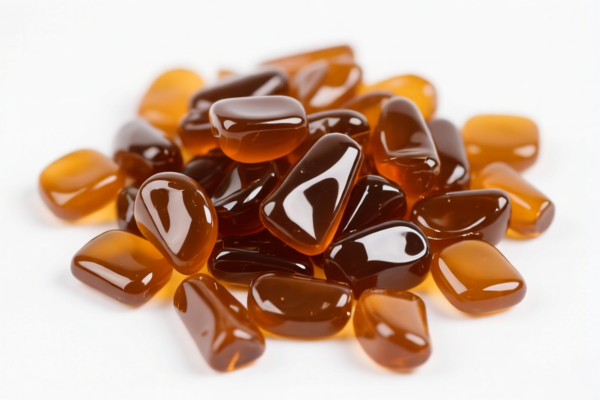
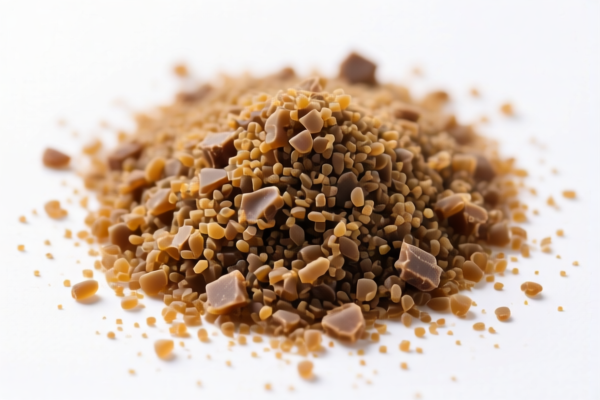
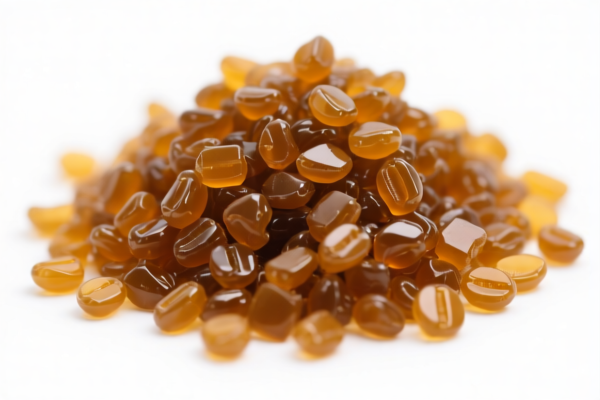
AI分析
🧪 Aromatic Modified Copolymer (Thermoplastic Liquid Crystal Aromatic Polyester Copolymers)
🌐 HS Code Reference & Customs Clearance Guide | 2026 Latest Tariff Analysis | Professional Clearance Strategy
📌 I. Product Definition & Classification: What Exactly is "Aromatic Modified Copolymer"?
"Aromatic Modified Copolymer" typically refers to thermoplastic liquid crystal aromatic polyester copolymers (often known by brand names like Vectrex™ or Xenoy™) in primary forms (powders, pellets, granules). These are high-performance engineering plastics characterized by:
Liquid Crystal Polymer (LCP) Characteristics:
- Self-reinforcing molecular structure;
- High heat resistance, low warpage, and excellent chemical resistance;
- Used in automotive, electronics, and industrial components.
"Modified" Aspect:
- Blended with other polymers (e.g., PC, ABS, PA) or filled with glass fibers/minerals to enhance specific properties.
⚠️ Key Distinction:
- If it is a thermoplastic liquid crystal aromatic polyester copolymer → It falls under 3907.99.20.00;
- If it is Polybutylene Terephthalate (PBT) or standard polyester copolymers (non-LCP) → It may fall under 3907.99.50.10 (if specified as "Other Polybutylene Terephthalate") or other subheadings.
📦 II. HS Code Classification Details (2026 Latest Tariff Authority Comparison)
Based on the provided DATA, we have two specific HS Codes. Here is the detailed breakdown:
| HS Code | Product Description | Applicable Scenario | Tax Rate (China Origin to US) |
|---|---|---|---|
3907.99.20.00 |
Thermoplastic liquid crystal aromatic polyester copolymers | High-performance LCP materials, self-reinforcing, high heat resistance | 25.0% |
3907.99.50.10 |
Other Polybutylene terephthalate (PBT) | Standard PBT resins, modified PBT (non-LCP), glass-fiber reinforced PBT | 31.5% |
🔍 Critical Note:
- 3907.99.20.00 is for Liquid Crystal polyesters. These are premium, high-tech materials.
- 3907.99.50.10 is for Polybutylene Terephthalate (PBT). While PBT is a polyester, it is not a liquid crystal polymer unless explicitly modified to be one (which would then fall under 3907.99.20.00).
- Misclassification Risk: Declaring a standard PBT as "Liquid Crystal" to claim a lower base tariff (0% vs 6.5%) is high-risk. Even though the base tax for 3907.99.20.00 is 0%, the Section 301 additional tariff still applies, making the total rate 25%. For PBT, the base is 6.5%, plus 25% = 31.5%.
💰 III. 2026 Latest Tariff Rate Breakdown (Detailed Tax Clauses)
✅ Applicable Country: United States (US)
✅ Origin: China (CN)
✅ 生效时间: Section 301 Tariffs are currently in effect (25% additional duty on many Chinese goods under HTS 3907)
🎯 1. 3907.99.20.00 —— Thermoplastic Liquid Crystal Aromatic Polyester Copolymers
| Item | Content |
|---|---|
| Base Tariff Rate | 0.0% (ad valorem) |
| Section 301 Additional Tariff | +25.0% (Footnote 9903.88.01 / HTS 3907.99.20.00) |
| Total Effective Tax Rate | 25.0% |
| Tax Calculation | CIF Value × 25% |
| De Minimis Exemption | ❌ Not Available (Section 301 tariffs apply regardless of value) |
| Legal Basis Path | HTSUS: 3907.99.20.00 → USITC Footnote 9903.88.01 → Section 301 Tariff |
📌 Explanation:
- The base rate for this high-performance plastic is 0% under normal MFN treatment.
- However, due to Section 301 Trade Act (China-specific tariffs), an additional 25% is applied.
- Total Cost Impact: You pay 25% of the CIF value in duties.
- No IEEPA 10%: Unlike some consumer electronics, these industrial plastics are typically covered only under Section 301, not the additional IEEPA 10% surcharge (unless specifically listed in other executive orders, but current data shows 25% total).
🎯 2. 3907.99.50.10 —— Other Polybutylene Terephthalate (PBT)
| Item | Content |
|---|---|
| Base Tariff Rate | 6.5% (ad valorem) |
| Section 301 Additional Tariff | +25.0% (Footnote 9903.88.01 / HTS 3907.99.50.10) |
| Total Effective Tax Rate | 31.5% |
| Tax Calculation | CIF Value × 31.5% |
| De Minimis Exemption | ❌ Not Available |
| Legal Basis Path | HTSUS: 3907.99.50.10 → USITC Footnote 9903.88.01 → Section 301 Tariff |
📌 Note:
- PBT is a common engineering plastic. Its base rate is 6.5%.
- The 25% Section 301 tariff is added on top, resulting in a 31.5% total duty.
- Cost Comparison: LCP (3907.99.20.00) is cheaper in terms of duty (25%) than standard PBT (3907.99.50.10) if both are subject to the same 25% add-on, because the base rate for LCP is 0%. However, LCP materials are significantly more expensive as raw materials.
🛠️ IV. Customs Clearance Practical Advice (Real-World Pitfall Guide)
✅ 1. Documentation Checklist (All Required)
| Document | Mandatory | Description |
|---|---|---|
| ✅ Product Specification Sheet | ✔️ | Must clearly state: "Thermoplastic Liquid Crystal Aromatic Polyester Copolymer" OR "Polybutylene Terephthalate (PBT)" |
| ✅ MSDS / SDS | ✔️ | Material Safety Data Sheet for chemical handling |
| ✅ Technical Data Sheet (TDS) | ✔️ | Shows heat deflection temperature, flow rate, etc., to prove LCP vs. PBT nature |
| ✅ Commercial Invoice | ✔️ | Must not use generic terms like "Plastic Pellets." Use precise HS Code description |
| ✅ Certificate of Origin | ✔️ | Essential for proving Chinese origin (if applicable) |
| ✅ Packaging List | ✔️ | Detail net/gross weight, number of bags, etc. |
✅ 2. Declaration Tips (Key Mnemonics)
🔥 "Be Precise, Not Generic. LCP is 0% Base + 25%. PBT is 6.5% Base + 25%."
| Scenario | Correct Declaration | Error to Avoid |
|---|---|---|
| LCP Material | 3907.99.20.00 - "Thermoplastic liquid crystal aromatic polyester copolymers" |
Generic "Plastic Resin" → May be misclassified as general polyester (higher duty) |
| PBT Material | 3907.99.50.10 - "Polybutylene terephthalate" |
Claiming it's "LCP" to get 0% base rate → Customs Audit Risk + Back Taxes + Penalties |
| Glass-Filled PBT | Still 3907.99.50.10 (if not LCP) |
Do not separate fiber and resin for dual classification |
| Other Polyesters | Check HTS 3907.99.80.00 (General) | If it doesn't fit LCP or PBT specifically, it may fall here with different rates |
✅ 3. Special Circumstances
| Situation | Handling Advice |
|---|---|
| OEM Custom Blend | Provide formulation details. If >50% LCP structure, argue for 3907.99.20.00. If PBT-dominant, use 3907.99.50.10. |
| Import from Non-China Origin | If origin is Vietnam, India, etc., Section 301 25% does NOT apply. Check FTA rates (e.g., 0% under certain FTAs). |
| Pre-Ruling Request | For large volumes, file an Advance Ruling with US CBP to confirm HS Code classification. |
🌍 V. Global Market Clearance Comparison (2026 Latest)
| Country/Region | Recommended HS Code | Base Duty | Additional Duty (China) | Total Duty | Notes |
|---|---|---|---|---|---|
| 🇺🇸 USA | 3907.99.20.00 |
0% | +25% (Sec 301) | 25% | High-performance plastic, subject to 301 |
| 🇺🇸 USA | 3907.99.50.10 |
6.5% | +25% (Sec 301) | 31.5% | Standard PBT, subject to 301 |
| 🇨🇳 China | 3907.99 |
~6-8% | 0% | ~6-8% | Import duty only, no additional tariffs |
| 🇪🇺 EU | 3907.99 |
~5-6.5% | 0% | ~5-6.5% | No Section 301 equivalent; standard MFN |
| 🇦🇺 Australia | 3907.99 |
~5% | 0% | ~5% | General duty, no anti-dumping on these specific grades |
📌 Conclusion:
- USA is the most expensive market for Chinese-origin aromatic copolymers due to the 25% Section 301 tariff.
- EU and China offer significantly lower duty burdens.
- Supply Chain Strategy: Consider sourcing LCP/PBT from Vietnam, India, or Korea to avoid the 25% US tariff, if quality and lead times permit.
📌 VI. Common Mistakes & Pitfalls (Blood Lesson Guide)
❌ Mistake 1: Declaring "Plastic Pellets" generically
👉 Consequence: CBP may assign a default code with higher duty (e.g., 3907.99.80.00) + audit risk.
❌ Mistake 2: Claiming PBT is "LCP" to save 6.5% base duty
👉 Consequence: Customs verification will show it's not liquid crystal. Back taxes + 25% penalty.
❌ Mistake 3: Ignoring Section 301 in cost calculation
👉 Consequence: Margin erosion. If you budgeted only for 0% base, you forgot the 25% additional duty.
❌ Mistake 4: Not providing TDS/MSDS
👉 Consequence: CBP holds shipment for 14-30 days for chemical classification review.
✅ Correct Practice:
"LCP Copolymer, Thermoplastic, Aromatic Polyester, Powder/Pellets, for Automotive Injection Molding, Model XYZ, MSDS Attached."
🎯 VII. Conclusion: Precision Classification, Cost Control, and Smooth Clearance!
🎯 Remember the Mnemonic:
🔹 "LCP is 0% Base + 25% Sec 301 = 25%. PBT is 6.5% Base + 25% Sec 301 = 31.5%. Don't Mix Them Up!"
🔹 "HS Code Determines Duty. A 6.5% Base Difference is Significant."
📌 Pro Tip:
If your LCP/PBT is sourced from Vietnam, India, or Japan, you can avoid the 25% Section 301 tariff. Total duty drops to 0% (LCP) or 6.5% (PBT).
Consider supply chain diversification to optimize landed cost.
📣 Immediate Action:
📞 Contact a licensed US Customs Broker + Provide TDS/MSDS + Apply for Advance Ruling if shipment value > $100k.
🚀 Ensure your aromatic copolymer clears customs smoothly, on time, and within budget!
✨ Professional Customs Clearance Starts with Accurate Classification!
💼 Every Percentage Point of Duty Affects Your Bottom Line!
用户评价
关于 HS 编码归类
协调制度(HS)是由世界海关组织(WCO)制定的国际贸易商品分类标准。全球 200 多个国家采用 HS 系统作为海关关税、贸易统计和进出口监管的基础。
每个 HS 编码遵循以下层级结构:
- 章(2 位)——商品大类(例如:第 84 章:机器和机械设备)
- 品目(4 位)——章内的更具体分类
- 子目(6 位)——国际通用细分,所有 WCO 成员国统一使用
- 本国细分(8-10 位)——各国自行扩展的细分编码,如美国 HTSUS 10 位编码
正确的 HS 编码归类对于顺利通关、准确缴纳关税和遵守贸易法规至关重要。错误归类可能导致海关延误、多缴关税或罚款。
从CN进口到US时,适用的关税税率可能包括:
- 最惠国(MFN)税率——适用于 WTO 成员国的标准关税税率
- 普通税率——适用于无贸易协定国家
- 贸易救济关税——附加关税,如 301 条款(反倾销)、232 条款(国家安全)或反补贴税
本页内容仅供参考。如需正式归类,请咨询当地海关或持牌报关代理。