aromatic modified copolymer
CN → US| HS Code | Tariff Rate | Origin | Destination | Doc |
|---|---|---|---|---|
| 3506915000 | 37.1% | CN | US | Official Doc |
| 3808591000 | 16.5% | CN | US | Official Doc |
| 3808931500 | 41.5% | CN | US | Official Doc |
| 2935901300 | 10.0% | CN | US | Official Doc |
| 2935909500 | 16.5% | CN | US | Official Doc |
Product Images
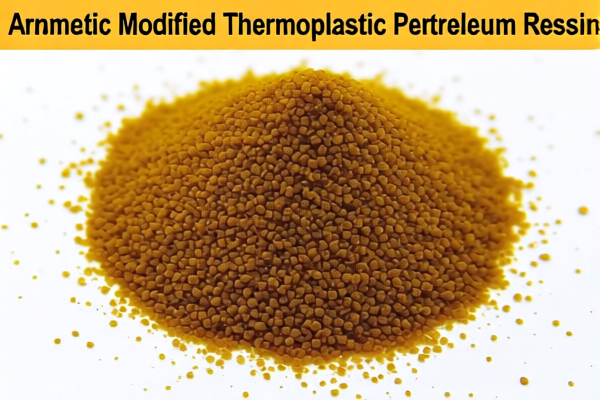
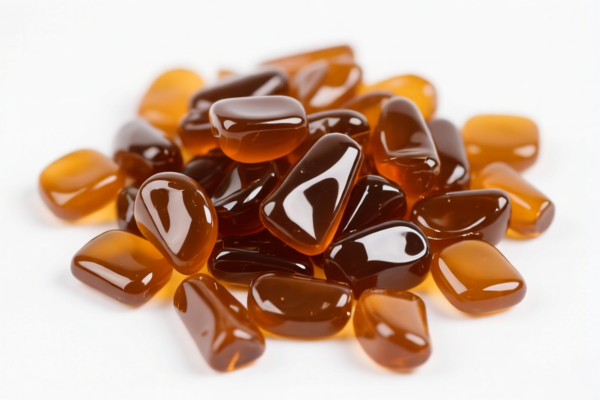
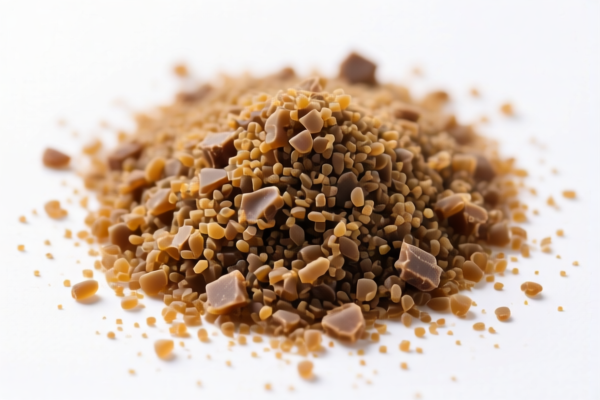
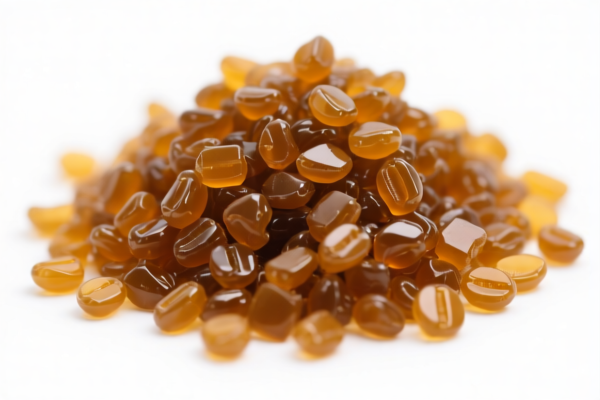
AI Analysis
🧪 Aromatic Modified Copolymer (Thermoplastic Liquid Crystal Aromatic Polyester Copolymers)
🌐 HS Code Reference & Customs Clearance Guide | 2026 Latest Tariff Analysis | Professional Clearance Strategy
📌 I. Product Definition & Classification: What Exactly is "Aromatic Modified Copolymer"?
"Aromatic Modified Copolymer" typically refers to thermoplastic liquid crystal aromatic polyester copolymers (often known by brand names like Vectrex™ or Xenoy™) in primary forms (powders, pellets, granules). These are high-performance engineering plastics characterized by:
Liquid Crystal Polymer (LCP) Characteristics:
- Self-reinforcing molecular structure;
- High heat resistance, low warpage, and excellent chemical resistance;
- Used in automotive, electronics, and industrial components.
"Modified" Aspect:
- Blended with other polymers (e.g., PC, ABS, PA) or filled with glass fibers/minerals to enhance specific properties.
⚠️ Key Distinction:
- If it is a thermoplastic liquid crystal aromatic polyester copolymer → It falls under 3907.99.20.00;
- If it is Polybutylene Terephthalate (PBT) or standard polyester copolymers (non-LCP) → It may fall under 3907.99.50.10 (if specified as "Other Polybutylene Terephthalate") or other subheadings.
📦 II. HS Code Classification Details (2026 Latest Tariff Authority Comparison)
Based on the provided DATA, we have two specific HS Codes. Here is the detailed breakdown:
| HS Code | Product Description | Applicable Scenario | Tax Rate (China Origin to US) |
|---|---|---|---|
3907.99.20.00 |
Thermoplastic liquid crystal aromatic polyester copolymers | High-performance LCP materials, self-reinforcing, high heat resistance | 25.0% |
3907.99.50.10 |
Other Polybutylene terephthalate (PBT) | Standard PBT resins, modified PBT (non-LCP), glass-fiber reinforced PBT | 31.5% |
🔍 Critical Note:
- 3907.99.20.00 is for Liquid Crystal polyesters. These are premium, high-tech materials.
- 3907.99.50.10 is for Polybutylene Terephthalate (PBT). While PBT is a polyester, it is not a liquid crystal polymer unless explicitly modified to be one (which would then fall under 3907.99.20.00).
- Misclassification Risk: Declaring a standard PBT as "Liquid Crystal" to claim a lower base tariff (0% vs 6.5%) is high-risk. Even though the base tax for 3907.99.20.00 is 0%, the Section 301 additional tariff still applies, making the total rate 25%. For PBT, the base is 6.5%, plus 25% = 31.5%.
💰 III. 2026 Latest Tariff Rate Breakdown (Detailed Tax Clauses)
✅ Applicable Country: United States (US)
✅ Origin: China (CN)
✅ 生效时间: Section 301 Tariffs are currently in effect (25% additional duty on many Chinese goods under HTS 3907)
🎯 1. 3907.99.20.00 —— Thermoplastic Liquid Crystal Aromatic Polyester Copolymers
| Item | Content |
|---|---|
| Base Tariff Rate | 0.0% (ad valorem) |
| Section 301 Additional Tariff | +25.0% (Footnote 9903.88.01 / HTS 3907.99.20.00) |
| Total Effective Tax Rate | 25.0% |
| Tax Calculation | CIF Value × 25% |
| De Minimis Exemption | ❌ Not Available (Section 301 tariffs apply regardless of value) |
| Legal Basis Path | HTSUS: 3907.99.20.00 → USITC Footnote 9903.88.01 → Section 301 Tariff |
📌 Explanation:
- The base rate for this high-performance plastic is 0% under normal MFN treatment.
- However, due to Section 301 Trade Act (China-specific tariffs), an additional 25% is applied.
- Total Cost Impact: You pay 25% of the CIF value in duties.
- No IEEPA 10%: Unlike some consumer electronics, these industrial plastics are typically covered only under Section 301, not the additional IEEPA 10% surcharge (unless specifically listed in other executive orders, but current data shows 25% total).
🎯 2. 3907.99.50.10 —— Other Polybutylene Terephthalate (PBT)
| Item | Content |
|---|---|
| Base Tariff Rate | 6.5% (ad valorem) |
| Section 301 Additional Tariff | +25.0% (Footnote 9903.88.01 / HTS 3907.99.50.10) |
| Total Effective Tax Rate | 31.5% |
| Tax Calculation | CIF Value × 31.5% |
| De Minimis Exemption | ❌ Not Available |
| Legal Basis Path | HTSUS: 3907.99.50.10 → USITC Footnote 9903.88.01 → Section 301 Tariff |
📌 Note:
- PBT is a common engineering plastic. Its base rate is 6.5%.
- The 25% Section 301 tariff is added on top, resulting in a 31.5% total duty.
- Cost Comparison: LCP (3907.99.20.00) is cheaper in terms of duty (25%) than standard PBT (3907.99.50.10) if both are subject to the same 25% add-on, because the base rate for LCP is 0%. However, LCP materials are significantly more expensive as raw materials.
🛠️ IV. Customs Clearance Practical Advice (Real-World Pitfall Guide)
✅ 1. Documentation Checklist (All Required)
| Document | Mandatory | Description |
|---|---|---|
| ✅ Product Specification Sheet | ✔️ | Must clearly state: "Thermoplastic Liquid Crystal Aromatic Polyester Copolymer" OR "Polybutylene Terephthalate (PBT)" |
| ✅ MSDS / SDS | ✔️ | Material Safety Data Sheet for chemical handling |
| ✅ Technical Data Sheet (TDS) | ✔️ | Shows heat deflection temperature, flow rate, etc., to prove LCP vs. PBT nature |
| ✅ Commercial Invoice | ✔️ | Must not use generic terms like "Plastic Pellets." Use precise HS Code description |
| ✅ Certificate of Origin | ✔️ | Essential for proving Chinese origin (if applicable) |
| ✅ Packaging List | ✔️ | Detail net/gross weight, number of bags, etc. |
✅ 2. Declaration Tips (Key Mnemonics)
🔥 "Be Precise, Not Generic. LCP is 0% Base + 25%. PBT is 6.5% Base + 25%."
| Scenario | Correct Declaration | Error to Avoid |
|---|---|---|
| LCP Material | 3907.99.20.00 - "Thermoplastic liquid crystal aromatic polyester copolymers" |
Generic "Plastic Resin" → May be misclassified as general polyester (higher duty) |
| PBT Material | 3907.99.50.10 - "Polybutylene terephthalate" |
Claiming it's "LCP" to get 0% base rate → Customs Audit Risk + Back Taxes + Penalties |
| Glass-Filled PBT | Still 3907.99.50.10 (if not LCP) |
Do not separate fiber and resin for dual classification |
| Other Polyesters | Check HTS 3907.99.80.00 (General) | If it doesn't fit LCP or PBT specifically, it may fall here with different rates |
✅ 3. Special Circumstances
| Situation | Handling Advice |
|---|---|
| OEM Custom Blend | Provide formulation details. If >50% LCP structure, argue for 3907.99.20.00. If PBT-dominant, use 3907.99.50.10. |
| Import from Non-China Origin | If origin is Vietnam, India, etc., Section 301 25% does NOT apply. Check FTA rates (e.g., 0% under certain FTAs). |
| Pre-Ruling Request | For large volumes, file an Advance Ruling with US CBP to confirm HS Code classification. |
🌍 V. Global Market Clearance Comparison (2026 Latest)
| Country/Region | Recommended HS Code | Base Duty | Additional Duty (China) | Total Duty | Notes |
|---|---|---|---|---|---|
| 🇺🇸 USA | 3907.99.20.00 |
0% | +25% (Sec 301) | 25% | High-performance plastic, subject to 301 |
| 🇺🇸 USA | 3907.99.50.10 |
6.5% | +25% (Sec 301) | 31.5% | Standard PBT, subject to 301 |
| 🇨🇳 China | 3907.99 |
~6-8% | 0% | ~6-8% | Import duty only, no additional tariffs |
| 🇪🇺 EU | 3907.99 |
~5-6.5% | 0% | ~5-6.5% | No Section 301 equivalent; standard MFN |
| 🇦🇺 Australia | 3907.99 |
~5% | 0% | ~5% | General duty, no anti-dumping on these specific grades |
📌 Conclusion:
- USA is the most expensive market for Chinese-origin aromatic copolymers due to the 25% Section 301 tariff.
- EU and China offer significantly lower duty burdens.
- Supply Chain Strategy: Consider sourcing LCP/PBT from Vietnam, India, or Korea to avoid the 25% US tariff, if quality and lead times permit.
📌 VI. Common Mistakes & Pitfalls (Blood Lesson Guide)
❌ Mistake 1: Declaring "Plastic Pellets" generically
👉 Consequence: CBP may assign a default code with higher duty (e.g., 3907.99.80.00) + audit risk.
❌ Mistake 2: Claiming PBT is "LCP" to save 6.5% base duty
👉 Consequence: Customs verification will show it's not liquid crystal. Back taxes + 25% penalty.
❌ Mistake 3: Ignoring Section 301 in cost calculation
👉 Consequence: Margin erosion. If you budgeted only for 0% base, you forgot the 25% additional duty.
❌ Mistake 4: Not providing TDS/MSDS
👉 Consequence: CBP holds shipment for 14-30 days for chemical classification review.
✅ Correct Practice:
"LCP Copolymer, Thermoplastic, Aromatic Polyester, Powder/Pellets, for Automotive Injection Molding, Model XYZ, MSDS Attached."
🎯 VII. Conclusion: Precision Classification, Cost Control, and Smooth Clearance!
🎯 Remember the Mnemonic:
🔹 "LCP is 0% Base + 25% Sec 301 = 25%. PBT is 6.5% Base + 25% Sec 301 = 31.5%. Don't Mix Them Up!"
🔹 "HS Code Determines Duty. A 6.5% Base Difference is Significant."
📌 Pro Tip:
If your LCP/PBT is sourced from Vietnam, India, or Japan, you can avoid the 25% Section 301 tariff. Total duty drops to 0% (LCP) or 6.5% (PBT).
Consider supply chain diversification to optimize landed cost.
📣 Immediate Action:
📞 Contact a licensed US Customs Broker + Provide TDS/MSDS + Apply for Advance Ruling if shipment value > $100k.
🚀 Ensure your aromatic copolymer clears customs smoothly, on time, and within budget!
✨ Professional Customs Clearance Starts with Accurate Classification!
💼 Every Percentage Point of Duty Affects Your Bottom Line!
Customer Reviews
About HS Code Classification
The Harmonized System (HS) is an internationally standardized nomenclature developed by the World Customs Organization (WCO) to classify traded products. Over 200 countries use the HS system as the basis for customs tariffs, trade statistics, and import/export regulations.
Each HS code follows a hierarchical structure:
- Chapter (2 digits) — Broad category of goods (e.g., Chapter 84: Machinery and Mechanical Appliances)
- Heading (4 digits) — More specific grouping within the chapter
- Subheading (6 digits) — Internationally standardized breakdown, used by all WCO member countries
- National subdivisions (8-10 digits) — Country-specific extensions for further classification, such as US HTSUS 10-digit codes
Correct HS code classification is essential for smooth customs clearance, accurate duty payment, and compliance with trade regulations. Misclassification can lead to customs delays, overpayment of duties, or penalties.
When importing from CN to US, the applicable tariff rates may include:
- Most-Favored-Nation (MFN) rate — The standard duty rate applied to WTO members
- General rate — Applied to countries without trade agreements
- Trade remedy duties — Additional tariffs such as Section 301 (anti-dumping), Section 232 (national security), or countervailing duties
The information provided on this page is for reference purposes only. For official classification, please consult with your local customs authority or a licensed customs broker.