bovine leather splits for sofas
CN → US商品图片
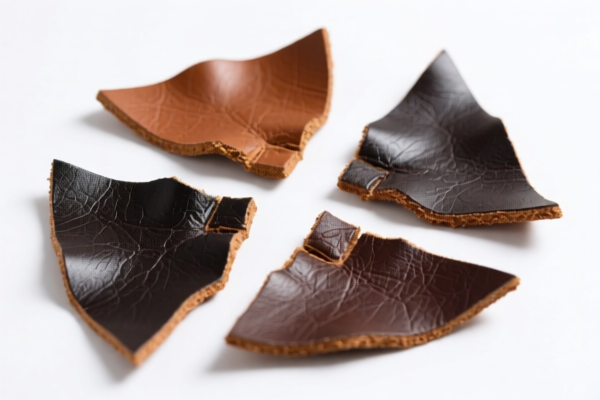
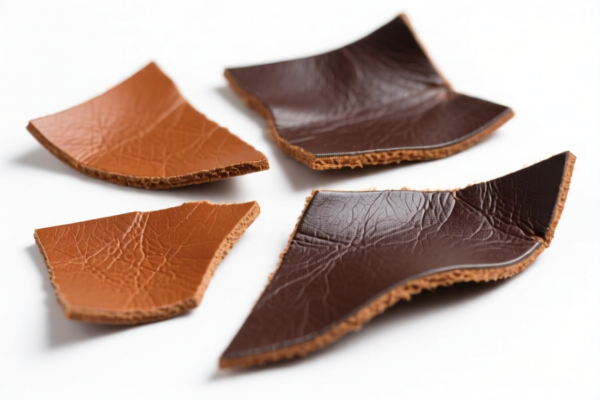
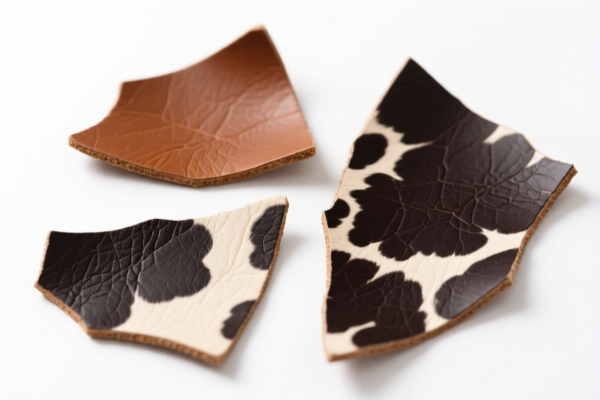
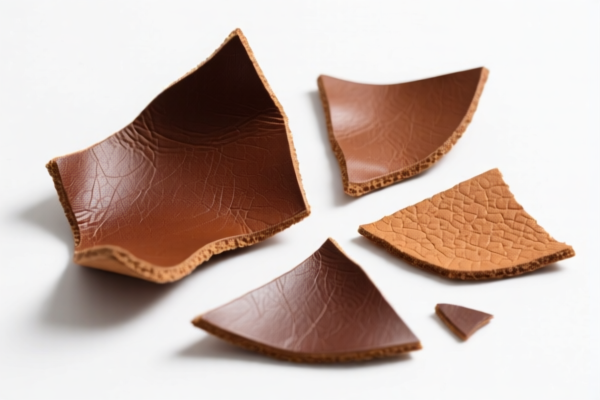
AI分析
🛋️ Bovine Leather Splits for Sofas (Split Cowhide)
🌐 HS Code Reference & Customs Clearance Guide | 2026 Latest Tariff Analysis | Professional Clearance Strategy
📌 I. Product Definition & Classification: Do You Really Know "Leather Split"?
Bovine leather splits are a crucial intermediate material in the furniture industry. They are obtained by splitting the hide horizontally after the top-grain layer (full-grain) has been removed. Unlike top-grain leather, splits are fibrous and porous on one side, requiring mechanical buffing and a heavy finish (PU/PVC coating) or embossing to mimic the texture of genuine leather.
In international trade, they are distinguished into two main categories:
1. Bovine Leather Splits (Unfinished/Finished): Split leather that may be chrome-tanned, vegetable-tanned, or finished with polymers (PU/PVC) for upholstery.
2. Semi-Manufactured Leather Splits: Raw or wet-blue splits not yet finished for upholstery use.
⚠️ Key Distinction Point:
- If the leather is buckled (mechanically treated to raise fibers) or heavily coated to hide the natural grain, it remains classified under Chapter 41.
- If the material is actually synthetic or fabric-backed, it falls under Chapter 59 or 39.
- Crucial for Sofas: Most "Sofa Leather" in the market is actually corrected grain split leather or bonded leather. Pure top-grain is reserved for high-end furniture.
📦 II. HS Code Classification Details (2026 Latest Tariff Authority Match)
| HS Code | Product Description | Application Scenario | Surface Treatment |
|---|---|---|---|
4113.00.00.00 |
Bovine Leather (Including Buffalo) Splits, with outer surface layer removed, tanned or chromed tanned, whether or not fleshed or split, with or without the flesh side, including its finishing | Sofa upholstery, automotive seats, bag lining. This is the most common HS Code for split leather used in furniture. | ✅ Chrome-tanned/Finished |
4115.20.00.00 |
Leather waste (e.g., leather dust, powder, and other scraps); leather dust and leather powder | Recycled materials for bonded leather production | ❌ Waste/Scrap |
5901.10.00.00 |
Travelling cloth, canvas, duck, imitation leather and similar coated fabrics | If the "split" is actually a fabric base coated to look like leather (Faux Leather) | ❌ Fabric Base |
3921.13.00.00 |
Plates, sheets, film, foil and strip, of polyurethane, in all shapes and sizes | Synthetic leather sheets (not genuine split) | ❌ Synthetic |
🔍 Key Reminder:
-4113.00.00.00is the standard HS Code for genuine bovine leather splits used in upholstery.
- If the product is non-genuine (e.g., PU leather, PVC coated fabric), it cannot be declared under Chapter 41. Misclassification can lead to severe penalties.
- Bonded Leather: If made from leather fibers bonded with polyurethane, it may fall under5901or3921, depending on the base material.
💰 III. 2026 Latest Tariff Rate Breakdown (Including Additional Duties)
✅ Applicable Country: United States (US)
✅ Origin: China (CN)
✅ Effective Date: November 10, 2025 (Including subsequent imports)
🎯 1. 4113.00.00.00 —— Bovine Leather Splits (Tanned/Finished)
| Item | Content |
|---|---|
| Base Tariff Rate | 4.8% (ad valorem) |
| USITC Additional Duty | +25% (From USITC Footnote 9903.88.01 - Section 301) |
| IEEPA Additional Duty | +10% (For products from China/HK, from Nov 10, 2025) |
| Total Tariff Rate | 39.8% |
| Tax Calculation | CIF Value × 39.8% |
| De Minimis Exemption | ❌ Not Eligible (deny_de_minimis) |
| Legal Basis Path | IEEPA:9903.01.25 → IEEPA:9903.01.24 → USITC:4113.00.00.00 → FOOTNOTE:9903.88.01 |
📌 Explanation:
- Leather products are considered strategic imports and are heavily taxed under Section 301.
- The 39.8% total rate is very high and significantly impacts profit margins.
- No de minimis exemption: Even small shipments (under $800) are subject to full duties if declared as commercial goods.
🎯 2. 4115.20.00.00 —— Leather Waste & Scraps
| Item | Content |
|---|---|
| Base Tariff Rate | 4.8% |
| USITC Additional Duty | +25% |
| IEEPA Additional Duty | +10% |
| Total Tariff Rate | 39.8% |
| Tax Calculation | CIF Value × 39.8% |
| De Minimis Exemption | ❌ Not Eligible |
📌 Note:
- This code applies only to waste, dust, and scraps.
- If you declare high-quality sofa leather as "waste," customs will reject it and impose fines.
🛠️ IV. Customs Clearance Practical Advice (Real-World Pitfall Avoidance)
✅ 1. Required Documentation Checklist (All Mandatory)
| Document | Mandatory? | Description |
|---|---|---|
| ✅ Product Specification Sheet | ✔️ | Include tanning method (Chrome/Veg), thickness, finish type (PU/PVC/Natural) |
| ✅ Leather Tanning Certificate | ✔️ | Proof of tanning process (Chrome-tanned vs. Vegetable-tanned) |
| ✅ Product Photos (with label) | ✔️ | Clear view of grain, surface coating, and any brand markings |
| ✅ Third-Party Test Report | ✔️ | REACH, Prop 65, Flame Retardancy (if for furniture) |
| ✅ Commercial Invoice | ✔️ | Must state: "Bovine Leather Splits, Chrome Tanned, for Upholstery" |
| ✅ Certificate of Origin (CO) | ✔️ | To verify origin; if not China, may apply for lower rates |
| ✅ Packing List | ✔️ | Detail gross/net weight, dimensions, and bundle count |
✅ 2. Declaration Tips (Critical Mantra)
🔥 “Authentic Split, Code 4113; Fake Leather, Code 5901/3921; Wrong Code, Heavy Fine!”
| Scenario | Correct Declaration | Wrong Practice |
|---|---|---|
| Genuine Split Leather (Sofa) | 4113.00.00.00 |
Misdeclare as "Fabric" → 39.8% penalty + audit |
| PU Leather (Synthetic) | 5901.10.00.00 or 3921.13.00.00 |
Misdeclare as "Genuine Leather" → 39.8% + fraud charge |
| Leather Scraps/Waste | 4115.20.00.00 |
Misdeclare as "Full Split" → 39.8% (same rate, but different regulation) |
| Bonded Leather (Particle) | 5901.10.00.00 |
Misdeclare as "Split" → Classification error |
✅ 3. Special Case Handling
| Scenario | Handling Advice |
|---|---|
| OEM Custom Split Leather | Provide client order + design specs to prove end-use (upholstery) |
| Leather with Heavy PU Coating | Still 4113.00.00.00 if base is genuine leather; do not declare as "Plastic Sheet" |
| Recycled Leather (Bonded) | Must declare base material; if >90% leather fibers, may qualify for 4115 but risky |
| Leather Samples | Declare as "Samples, No Commercial Value" if value < $50, but still subject to duty if > $800 |
🌍 V. Global Market Clearance Comparison (2026 Latest)
| Country/Region | Recommended HS Code | Tariff | Certification | Notes |
|---|---|---|---|---|
| 🇺🇸 United States | 4113.00.00.00 |
39.8% (China) | REACH, Prop 65 | High tariff; consider Vietnam/Mexico origin |
| 🇨🇳 China | 4113.00.00.00 |
4.8% | CCC (if applicable) | No additional duties |
| 🇪🇺 European Union | 4113.00.00.00 |
6.5% (China) | REACH, RoHS | No Section 301 equivalent, but REACH strict |
| 🇬🇧 United Kingdom | 4113.00.00.00 |
6.5% (China) | UKCA | Post-Brexit tariffs apply |
| 🇯🇵 Japan | 4113.00.00.00 |
7.5% (China) | PSE (if electrical accessories) | Moderate tariff |
📌 Conclusion:
- The US market is the most expensive due to Section 301 and IEEPA tariffs.
- EU and Japan have moderate tariffs but strict chemical regulations (REACH, Prop 65).
- China origin split leather faces 39.8% in the US. Consider third-country manufacturing (e.g., Vietnam, India) for duty optimization.
📌 VI. Common Mistakes & Pitfall Avoidance (Lessons Learned)
❌ Mistake 1: Declaring PU Leather as Genuine Leather Split
👉 Consequence: 39.8% duty + fraud penalty + potential seizure.
❌ Mistake 2: Splitting Shipment into multiple boxes to avoid de minimis
👉 Consequence: Customs tracks patterns; audit and back-taxes apply.
❌ Mistake 3: Not providing Tanning Certificate
👉 Consequence: Customs cannot verify material; delay in release or rejection.
❌ Mistake 4: Using vague description "Leather for Sofa"
👉 Consequence: Customs assigns highest duty rate; dispute resolution needed.
✅ Correct Practice:
"Bovine Leather Splits, Chrome Tanned, PU Finished, Grade A, for Upholstery, HS Code 4113.00.00.00, Origin China"
🎯 VII. Conclusion: Professional Declaration, Save Costs, Ensure Clearance!
🎯 Remember the Mantra:
🔹 "Split Leather, Code 4113; PU/Faux, Code 5901; Wrong Code, 39.8% Hit!"
🔹 "Tanning Proof is Key; Origin Matters in US; Clear Declaration Saves Thousands!"
📌 Pro Tip:
If your leather splits are originally tanned in Vietnam, India, or Turkey, but finished in China, you may still face 39.8% if the "substantial transformation" test fails.
Recommend pre-ruling (Advance Ruling) from US CBP to confirm origin and tariff status.
📣 Immediate Action:
📞 Contact a licensed customs broker + Provide Tanning Cert + Apply for HS Code Pre-Ruling
🚀 Let your leather products clear smoothly, efficiently, and profitably!
✨ Professional clearance starts with accurate classification!
💼 Every dollar saved is a dollar earned!
用户评价
关于 HS 编码归类
协调制度(HS)是由世界海关组织(WCO)制定的国际贸易商品分类标准。全球 200 多个国家采用 HS 系统作为海关关税、贸易统计和进出口监管的基础。
每个 HS 编码遵循以下层级结构:
- 章(2 位)——商品大类(例如:第 84 章:机器和机械设备)
- 品目(4 位)——章内的更具体分类
- 子目(6 位)——国际通用细分,所有 WCO 成员国统一使用
- 本国细分(8-10 位)——各国自行扩展的细分编码,如美国 HTSUS 10 位编码
正确的 HS 编码归类对于顺利通关、准确缴纳关税和遵守贸易法规至关重要。错误归类可能导致海关延误、多缴关税或罚款。
从CN进口到US时,适用的关税税率可能包括:
- 最惠国(MFN)税率——适用于 WTO 成员国的标准关税税率
- 普通税率——适用于无贸易协定国家
- 贸易救济关税——附加关税,如 301 条款(反倾销)、232 条款(国家安全)或反补贴税
本页内容仅供参考。如需正式归类,请咨询当地海关或持牌报关代理。