bovine leather splits for sofas
CN → USProduct Images
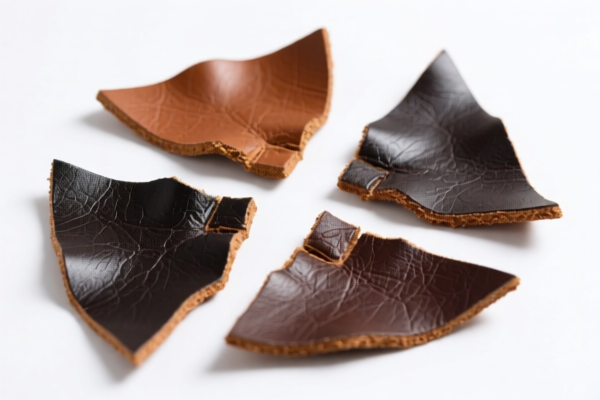
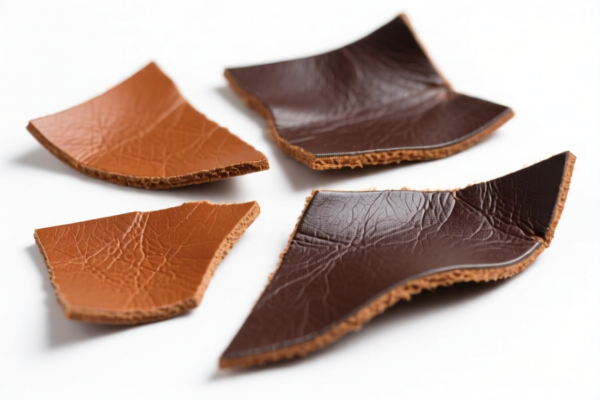
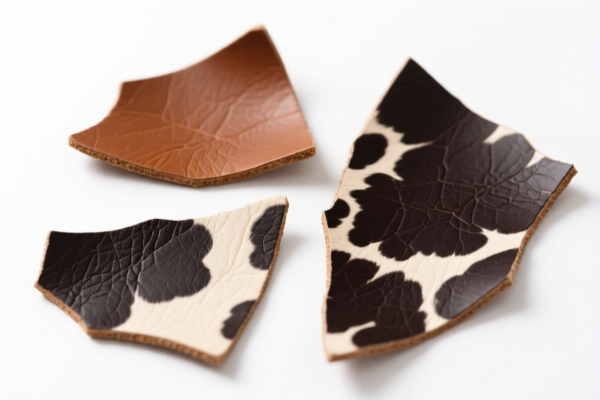
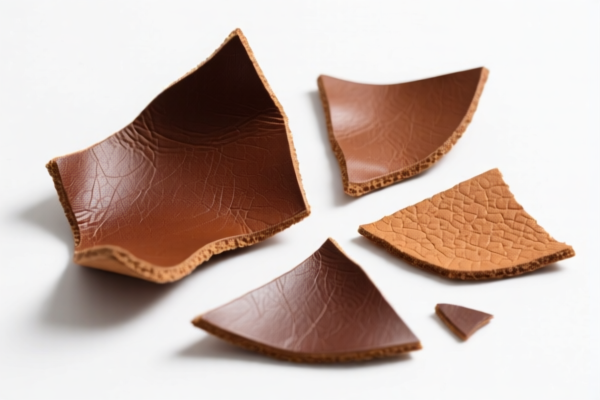
AI Analysis
🛋️ Bovine Leather Splits for Sofas (Split Cowhide)
🌐 HS Code Reference & Customs Clearance Guide | 2026 Latest Tariff Analysis | Professional Clearance Strategy
📌 I. Product Definition & Classification: Do You Really Know "Leather Split"?
Bovine leather splits are a crucial intermediate material in the furniture industry. They are obtained by splitting the hide horizontally after the top-grain layer (full-grain) has been removed. Unlike top-grain leather, splits are fibrous and porous on one side, requiring mechanical buffing and a heavy finish (PU/PVC coating) or embossing to mimic the texture of genuine leather.
In international trade, they are distinguished into two main categories:
1. Bovine Leather Splits (Unfinished/Finished): Split leather that may be chrome-tanned, vegetable-tanned, or finished with polymers (PU/PVC) for upholstery.
2. Semi-Manufactured Leather Splits: Raw or wet-blue splits not yet finished for upholstery use.
⚠️ Key Distinction Point:
- If the leather is buckled (mechanically treated to raise fibers) or heavily coated to hide the natural grain, it remains classified under Chapter 41.
- If the material is actually synthetic or fabric-backed, it falls under Chapter 59 or 39.
- Crucial for Sofas: Most "Sofa Leather" in the market is actually corrected grain split leather or bonded leather. Pure top-grain is reserved for high-end furniture.
📦 II. HS Code Classification Details (2026 Latest Tariff Authority Match)
| HS Code | Product Description | Application Scenario | Surface Treatment |
|---|---|---|---|
4113.00.00.00 |
Bovine Leather (Including Buffalo) Splits, with outer surface layer removed, tanned or chromed tanned, whether or not fleshed or split, with or without the flesh side, including its finishing | Sofa upholstery, automotive seats, bag lining. This is the most common HS Code for split leather used in furniture. | ✅ Chrome-tanned/Finished |
4115.20.00.00 |
Leather waste (e.g., leather dust, powder, and other scraps); leather dust and leather powder | Recycled materials for bonded leather production | ❌ Waste/Scrap |
5901.10.00.00 |
Travelling cloth, canvas, duck, imitation leather and similar coated fabrics | If the "split" is actually a fabric base coated to look like leather (Faux Leather) | ❌ Fabric Base |
3921.13.00.00 |
Plates, sheets, film, foil and strip, of polyurethane, in all shapes and sizes | Synthetic leather sheets (not genuine split) | ❌ Synthetic |
🔍 Key Reminder:
-4113.00.00.00is the standard HS Code for genuine bovine leather splits used in upholstery.
- If the product is non-genuine (e.g., PU leather, PVC coated fabric), it cannot be declared under Chapter 41. Misclassification can lead to severe penalties.
- Bonded Leather: If made from leather fibers bonded with polyurethane, it may fall under5901or3921, depending on the base material.
💰 III. 2026 Latest Tariff Rate Breakdown (Including Additional Duties)
✅ Applicable Country: United States (US)
✅ Origin: China (CN)
✅ Effective Date: November 10, 2025 (Including subsequent imports)
🎯 1. 4113.00.00.00 —— Bovine Leather Splits (Tanned/Finished)
| Item | Content |
|---|---|
| Base Tariff Rate | 4.8% (ad valorem) |
| USITC Additional Duty | +25% (From USITC Footnote 9903.88.01 - Section 301) |
| IEEPA Additional Duty | +10% (For products from China/HK, from Nov 10, 2025) |
| Total Tariff Rate | 39.8% |
| Tax Calculation | CIF Value × 39.8% |
| De Minimis Exemption | ❌ Not Eligible (deny_de_minimis) |
| Legal Basis Path | IEEPA:9903.01.25 → IEEPA:9903.01.24 → USITC:4113.00.00.00 → FOOTNOTE:9903.88.01 |
📌 Explanation:
- Leather products are considered strategic imports and are heavily taxed under Section 301.
- The 39.8% total rate is very high and significantly impacts profit margins.
- No de minimis exemption: Even small shipments (under $800) are subject to full duties if declared as commercial goods.
🎯 2. 4115.20.00.00 —— Leather Waste & Scraps
| Item | Content |
|---|---|
| Base Tariff Rate | 4.8% |
| USITC Additional Duty | +25% |
| IEEPA Additional Duty | +10% |
| Total Tariff Rate | 39.8% |
| Tax Calculation | CIF Value × 39.8% |
| De Minimis Exemption | ❌ Not Eligible |
📌 Note:
- This code applies only to waste, dust, and scraps.
- If you declare high-quality sofa leather as "waste," customs will reject it and impose fines.
🛠️ IV. Customs Clearance Practical Advice (Real-World Pitfall Avoidance)
✅ 1. Required Documentation Checklist (All Mandatory)
| Document | Mandatory? | Description |
|---|---|---|
| ✅ Product Specification Sheet | ✔️ | Include tanning method (Chrome/Veg), thickness, finish type (PU/PVC/Natural) |
| ✅ Leather Tanning Certificate | ✔️ | Proof of tanning process (Chrome-tanned vs. Vegetable-tanned) |
| ✅ Product Photos (with label) | ✔️ | Clear view of grain, surface coating, and any brand markings |
| ✅ Third-Party Test Report | ✔️ | REACH, Prop 65, Flame Retardancy (if for furniture) |
| ✅ Commercial Invoice | ✔️ | Must state: "Bovine Leather Splits, Chrome Tanned, for Upholstery" |
| ✅ Certificate of Origin (CO) | ✔️ | To verify origin; if not China, may apply for lower rates |
| ✅ Packing List | ✔️ | Detail gross/net weight, dimensions, and bundle count |
✅ 2. Declaration Tips (Critical Mantra)
🔥 “Authentic Split, Code 4113; Fake Leather, Code 5901/3921; Wrong Code, Heavy Fine!”
| Scenario | Correct Declaration | Wrong Practice |
|---|---|---|
| Genuine Split Leather (Sofa) | 4113.00.00.00 |
Misdeclare as "Fabric" → 39.8% penalty + audit |
| PU Leather (Synthetic) | 5901.10.00.00 or 3921.13.00.00 |
Misdeclare as "Genuine Leather" → 39.8% + fraud charge |
| Leather Scraps/Waste | 4115.20.00.00 |
Misdeclare as "Full Split" → 39.8% (same rate, but different regulation) |
| Bonded Leather (Particle) | 5901.10.00.00 |
Misdeclare as "Split" → Classification error |
✅ 3. Special Case Handling
| Scenario | Handling Advice |
|---|---|
| OEM Custom Split Leather | Provide client order + design specs to prove end-use (upholstery) |
| Leather with Heavy PU Coating | Still 4113.00.00.00 if base is genuine leather; do not declare as "Plastic Sheet" |
| Recycled Leather (Bonded) | Must declare base material; if >90% leather fibers, may qualify for 4115 but risky |
| Leather Samples | Declare as "Samples, No Commercial Value" if value < $50, but still subject to duty if > $800 |
🌍 V. Global Market Clearance Comparison (2026 Latest)
| Country/Region | Recommended HS Code | Tariff | Certification | Notes |
|---|---|---|---|---|
| 🇺🇸 United States | 4113.00.00.00 |
39.8% (China) | REACH, Prop 65 | High tariff; consider Vietnam/Mexico origin |
| 🇨🇳 China | 4113.00.00.00 |
4.8% | CCC (if applicable) | No additional duties |
| 🇪🇺 European Union | 4113.00.00.00 |
6.5% (China) | REACH, RoHS | No Section 301 equivalent, but REACH strict |
| 🇬🇧 United Kingdom | 4113.00.00.00 |
6.5% (China) | UKCA | Post-Brexit tariffs apply |
| 🇯🇵 Japan | 4113.00.00.00 |
7.5% (China) | PSE (if electrical accessories) | Moderate tariff |
📌 Conclusion:
- The US market is the most expensive due to Section 301 and IEEPA tariffs.
- EU and Japan have moderate tariffs but strict chemical regulations (REACH, Prop 65).
- China origin split leather faces 39.8% in the US. Consider third-country manufacturing (e.g., Vietnam, India) for duty optimization.
📌 VI. Common Mistakes & Pitfall Avoidance (Lessons Learned)
❌ Mistake 1: Declaring PU Leather as Genuine Leather Split
👉 Consequence: 39.8% duty + fraud penalty + potential seizure.
❌ Mistake 2: Splitting Shipment into multiple boxes to avoid de minimis
👉 Consequence: Customs tracks patterns; audit and back-taxes apply.
❌ Mistake 3: Not providing Tanning Certificate
👉 Consequence: Customs cannot verify material; delay in release or rejection.
❌ Mistake 4: Using vague description "Leather for Sofa"
👉 Consequence: Customs assigns highest duty rate; dispute resolution needed.
✅ Correct Practice:
"Bovine Leather Splits, Chrome Tanned, PU Finished, Grade A, for Upholstery, HS Code 4113.00.00.00, Origin China"
🎯 VII. Conclusion: Professional Declaration, Save Costs, Ensure Clearance!
🎯 Remember the Mantra:
🔹 "Split Leather, Code 4113; PU/Faux, Code 5901; Wrong Code, 39.8% Hit!"
🔹 "Tanning Proof is Key; Origin Matters in US; Clear Declaration Saves Thousands!"
📌 Pro Tip:
If your leather splits are originally tanned in Vietnam, India, or Turkey, but finished in China, you may still face 39.8% if the "substantial transformation" test fails.
Recommend pre-ruling (Advance Ruling) from US CBP to confirm origin and tariff status.
📣 Immediate Action:
📞 Contact a licensed customs broker + Provide Tanning Cert + Apply for HS Code Pre-Ruling
🚀 Let your leather products clear smoothly, efficiently, and profitably!
✨ Professional clearance starts with accurate classification!
💼 Every dollar saved is a dollar earned!
Customer Reviews
About HS Code Classification
The Harmonized System (HS) is an internationally standardized nomenclature developed by the World Customs Organization (WCO) to classify traded products. Over 200 countries use the HS system as the basis for customs tariffs, trade statistics, and import/export regulations.
Each HS code follows a hierarchical structure:
- Chapter (2 digits) — Broad category of goods (e.g., Chapter 84: Machinery and Mechanical Appliances)
- Heading (4 digits) — More specific grouping within the chapter
- Subheading (6 digits) — Internationally standardized breakdown, used by all WCO member countries
- National subdivisions (8-10 digits) — Country-specific extensions for further classification, such as US HTSUS 10-digit codes
Correct HS code classification is essential for smooth customs clearance, accurate duty payment, and compliance with trade regulations. Misclassification can lead to customs delays, overpayment of duties, or penalties.
When importing from CN to US, the applicable tariff rates may include:
- Most-Favored-Nation (MFN) rate — The standard duty rate applied to WTO members
- General rate — Applied to countries without trade agreements
- Trade remedy duties — Additional tariffs such as Section 301 (anti-dumping), Section 232 (national security), or countervailing duties
The information provided on this page is for reference purposes only. For official classification, please consult with your local customs authority or a licensed customs broker.