buffalo leather for agricultural use
CN → US| HS编码 | 关税税率 | 原产国 | 目的国 | 文档 |
|---|---|---|---|---|
| 4104115080 | 13.3% | CN | US | 官方文档 |
| 4107112000 | 37.4% | CN | US | 官方文档 |
| 4107123000 | 13.6% | CN | US | 官方文档 |
| 4203290800 | 49.0% | CN | US | 官方文档 |
| 4104415000 | 13.3% | CN | US | 官方文档 |
商品图片
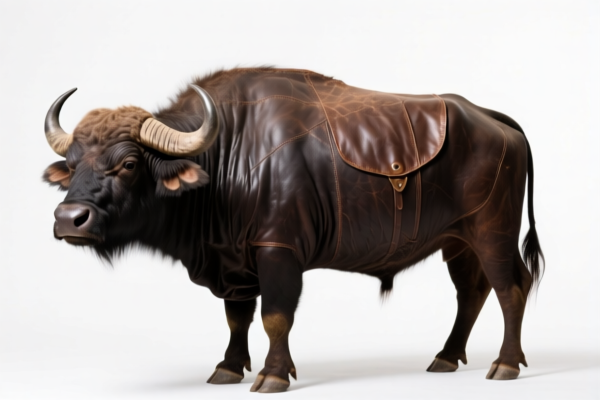
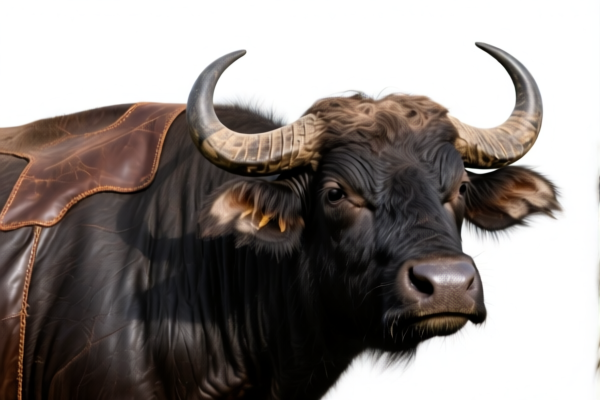
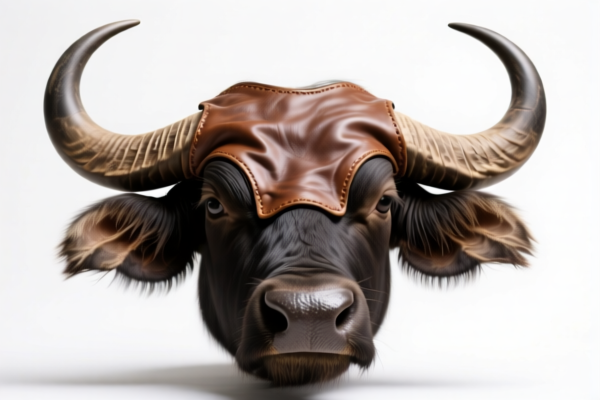

AI分析
🐃 Buffalo Leather for Agricultural Use
🌐 HS Code Reference & Customs Clearance Guide | 2026 Latest Tariff Analysis | Professional Compliance Strategy
📌 I. Product Definition & Classification: What is "Buffalo Leather for Agricultural Use"?
Buffalo leather is a durable, thick hide sourced from water buffalo, widely used in heavy-duty industrial applications. When specified for "Agricultural Use," it typically refers to raw or semi-processed hides intended for manufacturing tools, harnesses, saddles, straps, or other durable goods used in farming and ranching.
⚠️ Critical Distinction:
- The material is explicitly Buffalo (often classified under "Water Buffalo" in customs codes), which falls under the Bovine category (Ox/Cattle).
- "Agricultural Use" describes the end-use, not the form of the leather. Therefore, classification depends on the state of processing (e.g., raw, chrome-tanned, split, full-grain).
- Since the input does not specify if the leather is raw, tanned, split, or finished, we must analyze the provided HS Codes based on material match and processing assumptions.
📦 II. HS Code Classification Analysis (Based on Provided Data)
The following HS Codes are derived from the provided dataset. Each code is evaluated based on the material match (Buffalo/Bovine) and the processing state inferred from the "summary" and "tax detail" fields.
| HS Code | Product Description & Match Rationale | Key Characteristics |
|---|---|---|
4104.11.50.80 |
Other Bovine Leather, Chrome-Tanned or Pigmented • Match: Explicitly includes "Bovine" (Buffalo/Water Buffalo). • Assumption: Since processing degree is unspecified, it defaults to "Other" under this subheading. |
• Base Tariff: 3.3% • No additional US tariffs. • 122 Clause: 10% • Total: 13.3% |
4107.11.20.00 |
Other Fully Grain Bovine Leather, Tanned (not Chrome) • Match: Contains "Bovine" material. No conflict with "Full Grain" assumption due to lack of specific form data. Used as a fallback for high-value full-grain hides. |
• Base Tariff: 2.4% • Section 301 Tariff: 25% • 122 Clause: 10% • Total: 37.4% |
4107.12.30.00 |
Other Split Bovine Leather, Tanned (not Chrome) • Match: Explicitly includes "Bovine". "Other" category used when specific split details are missing. |
• Base Tariff: 3.6% • No Section 301 Tariff. • 122 Clause: 10% • Total: 13.6% |
4203.29.08.00 |
Other Articles of Leather (e.g., Gloves, Harness Parts) • Match: "Buffalo" matches "Bovine/Water Buffalo" material. "Agricultural Use" implies finished goods (gloves, straps) rather than raw hides. |
• Base Tariff: 14.0% • Section 301 Tariff: 25% • 122 Clause: 10% • Total: 49.0% |
4104.41.50.00 |
Other Bovine Leather, Vegetable-Tanned • Match: "Bovine" material match. "Other" category for unspecified processing. • Note: If the leather is vegetable-tanned (common for agricultural straps), this is a strong candidate. |
• Base Tariff: 3.3% • No Section 301 Tariff. • 122 Clause: 10% • Total: 13.3% |
🔍 Key Insight:
- Codes4104and4107.12are significantly cheaper (13.3%–13.6%) because they do not incur the 25% Section 301 tariff.
- Codes4107.11and4203are expensive (37.4%–49.0%) due to the 25% Section 301 tariff on specific bovine leathers and finished leather articles.
- Classification Risk: If the leather is "Finished" (e.g., gloves, belts), it may fall under Chapter 42 (4203), triggering the higher tax. If it is "Raw/Tanned Hide," it falls under Chapter 41 (4104/4107).
💰 III. 2026 Latest Tariff Rate Breakdown (Detailed Tax Clauses)
✅ Applicable Country: USA (US)
✅ Origin: China (CN) (Inferred from "122 Clause" and Section 301 references)
✅ Effective Date: 2025–2026 (Current Trade Environment)
🎯 1. 4104.11.50.80 & 4104.41.50.00 – The "Low-Tax" Options (13.3%)
| Item | Detail |
|---|---|
| Base Tariff | 3.3% (Ad Valorem) |
| Section 301 Tariff | 0% (Exempt) |
| Section 122 Tariff | 10% (China-specific duty) |
| Total Duty Rate | 13.3% |
| Legal Basis | HTSUS: 4104.11.50.80 / 4104.41.50.00 + IEEPA:9903.01.25 (Section 122) |
| De Minimis Exemption | ❌ Not Eligible (Section 122 duties apply to de minimis shipments < $800) |
📌 Explanation:
- These codes represent bovine leather that is either chrome-tanned (4104.11) or vegetable-tanned (4104.41).
- Crucially, they are NOT subject to the 25% Section 301 tariff, which applies to many finished leather goods and specific tanned hides.
- The 10% Section 122 tariff is a specific punitive duty on Chinese goods under the U.S. Trade Act of 1974.
- Strategy: If your product is raw/tanned hide (not finished goods), strive for these codes to save 24–35% in duties compared to Chapter 42 codes.
🎯 2. 4107.11.20.00 – The "Medium-Tax" Option (37.4%)
| Item | Detail |
|---|---|
| Base Tariff | 2.4% |
| Section 301 Tariff | +25% |
| Section 122 Tariff | +10% |
| Total Duty Rate | 37.4% |
| Legal Basis | HTSUS: 4107.11.20.00 + USITC:9903.88.01 (Section 301) |
| De Minimis Exemption | ❌ Not Eligible |
📌 Explanation:
- This code is for full-grain, non-chrome tanned bovine leather.
- It is subject to both Section 301 (25%) and Section 122 (10%) tariffs.
- Use Case: Only use if the leather is confirmed as full-grain, vegetable-tanned, and unsplit. If you can reclassify as4104(chrome-tanned), you save 24%.
🎯 3. 4107.12.30.00 – The "Low-Tax" Alternative (13.6%)
| Item | Detail |
|---|---|
| Base Tariff | 3.6% |
| Section 301 Tariff | 0% |
| Section 122 Tariff | +10% |
| Total Duty Rate | 13.6% |
| Legal Basis | HTSUS: 4107.12.30.00 + IEEPA:9903.01.25 (Section 122) |
| De Minimis Exemption | ❌ Not Eligible |
📌 Explanation:
- This code is for split bovine leather, tanned but not chrome.
- Like4104, it is exempt from Section 301, making it a competitive option if the leather is split.
🎯 4. 4203.29.08.00 – The "High-Tax" Option (49.0%)
| Item | Detail |
|---|---|
| Base Tariff | 14.0% |
| Section 301 Tariff | +25% |
| Section 122 Tariff | +10% |
| Total Duty Rate | 49.0% |
| Legal Basis | HTSUS: 4203.29.08.00 + USITC:9903.88.01 |
| De Minimis Exemption | ❌ Not Eligible |
📌 Explanation:
- This code is for finished leather articles (e.g., gloves, harnesses, straps).
- Warning: If you ship finished agricultural tools (e.g., buffalo leather gloves), you must use this code. You cannot misdeclare finished goods as raw hides to avoid the 25% tariff. This is customs fraud and carries severe penalties.
🛠️ IV. Customs Clearance Practical Advice (Pitfall Avoidance)
✅ 1. Documentation Checklist (Mandatory)
| Document | Required? | Purpose |
|---|---|---|
| Commercial Invoice | ✅ Yes | Must clearly state: "Buffalo Leather," "Water Buffalo," "HS Code: [Insert Code]," "For Agricultural Use." |
| Product Specifications | ✅ Yes | Detail the processing state: Raw? Chrome-Tanned? Vegetable-Tanned? Split? Full-Grain? This determines Chapter 41 vs. 42. |
| Material Certificate | ✅ Yes | Proof of bovine origin (Buffalo/Water Buffalo) to prevent misclassification as exotic skins. |
| Usage Declaration | ✅ Yes | State "Agricultural Use" to justify the product type, but do not use this to claim lower duties if the code doesn't match. |
| Photos of Product | ✅ Yes | Show texture, thickness, and any finishing (e.g., dyed, suede, smooth). Helps customs determine if it's raw or finished. |
✅ 2. Classification Strategy & Tax Optimization
| Scenario | Recommended HS Code | Estimated Duty | Why? |
|---|---|---|---|
| Raw/Tanned Hides (Chrome-Tanned) | 4104.11.50.80 |
13.3% | Lowest tax. No Section 301. Best for bulk hides. |
| Raw/Tanned Hides (Vegetable-Tanned) | 4104.41.50.00 |
13.3% | Lowest tax. No Section 301. Ideal for straps/harnesses if raw. |
| Split Leather (Vegetable-Tanned) | 4107.12.30.00 |
13.6% | Low tax. No Section 301. Good for suede or inner layers. |
| Full-Grain Hide (Vegetable-Tanned) | 4107.11.20.00 |
37.4% | Higher tax due to Section 301. Only if truly full-grain. |
| Finished Goods (Gloves, Straps) | 4203.29.08.00 |
49.0% | High Tax. Must be used for finished articles. No avoidance. |
🔥 Golden Rule:
"If it's a hide, go Chapter 41. If it's a finished product, go Chapter 42."
Misdeclaring finished goods (4203) as raw hides (4104) is a common red flag for Customs and can lead to seizures.
✅ 3. Special Notes on Section 122 & De Minimis
- Section 122 Tariff (10%): Applies to all Chinese-origin goods under these codes, regardless of shipment value.
- De Minimis ($800 Rule): You CANNOT use Section 321 (de minimis) to avoid these duties. All shipments, even small samples, are subject to the 13.3%–49.0% total duty.
- Section 301 (25%): Only applies to specific codes (
4107.11,4203). Always compare4104vs.4107for potential savings.
🌍 V. Global Market Comparison (2026)
| Market | Recommended HS Code | Duty Rate | Notes |
|---|---|---|---|
| 🇺🇸 USA | 4104.11.50.80 |
13.3% | Best option. Low base + 10% Sec 122. |
| 🇪🇺 EU | 4104.11 |
~6–12% | No Section 301/122. Check EU specific tariffs. |
| 🇨🇳 China | 4104.11 |
Varies | Import duties apply. Check free trade agreements. |
| 🇬🇧 UK | 4104.11 |
~6% | Post-Brexit tariffs may differ. |
📌 Conclusion:
The USA is the most complex market due to Section 301 and Section 122 tariffs. Prioritize Chapter 41 codes (4104) for hides to minimize duties.
📌 VI. Common Mistakes & Pitfalls (Lessons Learned)
❌ Mistake 1: Declaring finished leather gloves as "Buffalo Leather Hide" (4104).
👉 Consequence: Customs reclassifies to 4203.29.08.00 → 49% duty + penalties + potential seizure.
❌ Mistake 2: Assuming "Agricultural Use" grants a tariff exemption.
👉 Consequence: No such exemption exists for leather under these HS codes. Duty is based on material and form, not end-use.
❌ Mistake 3: Ignoring Section 122 Tariff.
👉 Consequence: Even if you avoid Section 301, the 10% Sec 122 duty still applies. Total duty is never just the "Base Tariff."
❌ Mistake 4: Misidentifying Buffalo as "Exotic Skin."
👉 Consequence: Buffalo is classified under Bovine (Water Buffalo) codes (4104/4107), not exotic codes (4106). Exotic codes may have different duties.
✅ Correct Approach:
"Buffalo Leather Hides, Chrome-Tanned, for Agricultural Harness Manufacturing, HS Code 4104.11.50.80"
🎯 VII. Conclusion: Professional Declaration for Cost Savings
🎯 Key Takeaway:
🔹 "Hides in Chapter 41, Finished in Chapter 42."
🔹 "Aim for4104to avoid 25% Sec 301."
🔹 "Budget for 13.3% minimum due to Sec 122."
📌 Action Plan:
1. Confirm Processing State: Is it chrome-tanned (4104) or vegetable-tanned (4107)?
2. Confirm Form: Is it raw/split (4104/4107) or finished (4203)?
3. Select Code:
- Chrome-Tanned Hide → 4104.11.50.80 (13.3%) ✅
- Vegetable-Tanned Split → 4107.12.30.00 (13.6%) ✅
- Finished Article → 4203.29.08.00 (49.0%) ⚠️
4. Declare Accurately: Use precise descriptions to avoid reclassification.
📣 Immediate Action:
📞 Consult a licensed customs broker for a Pre-Ruling (Advance Ruling) if unsure about the "Finished" vs. "Raw" distinction.
🚀 Correct classification saves up to 35% in duties!
✨ Professional Customs Compliance, Start with Precise Classification!
💼 Every dollar in duty saved is pure profit.
用户评价
关于 HS 编码归类
协调制度(HS)是由世界海关组织(WCO)制定的国际贸易商品分类标准。全球 200 多个国家采用 HS 系统作为海关关税、贸易统计和进出口监管的基础。
每个 HS 编码遵循以下层级结构:
- 章(2 位)——商品大类(例如:第 84 章:机器和机械设备)
- 品目(4 位)——章内的更具体分类
- 子目(6 位)——国际通用细分,所有 WCO 成员国统一使用
- 本国细分(8-10 位)——各国自行扩展的细分编码,如美国 HTSUS 10 位编码
正确的 HS 编码归类对于顺利通关、准确缴纳关税和遵守贸易法规至关重要。错误归类可能导致海关延误、多缴关税或罚款。
从CN进口到US时,适用的关税税率可能包括:
- 最惠国(MFN)税率——适用于 WTO 成员国的标准关税税率
- 普通税率——适用于无贸易协定国家
- 贸易救济关税——附加关税,如 301 条款(反倾销)、232 条款(国家安全)或反补贴税
本页内容仅供参考。如需正式归类,请咨询当地海关或持牌报关代理。