buffalo leather for agricultural use
CN → US| HS Code | Tariff Rate | Origin | Destination | Doc |
|---|---|---|---|---|
| 4104115080 | 13.3% | CN | US | Official Doc |
| 4107112000 | 37.4% | CN | US | Official Doc |
| 4107123000 | 13.6% | CN | US | Official Doc |
| 4203290800 | 49.0% | CN | US | Official Doc |
| 4104415000 | 13.3% | CN | US | Official Doc |
Product Images
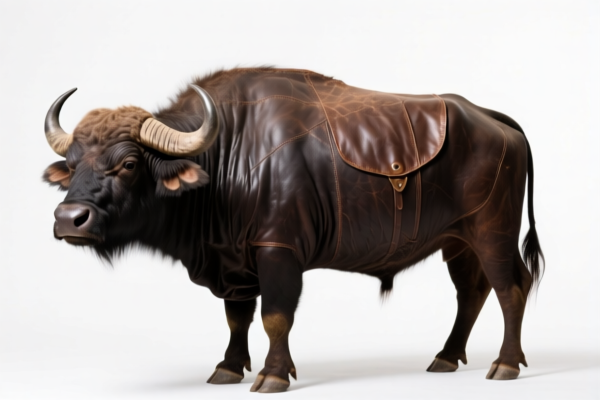
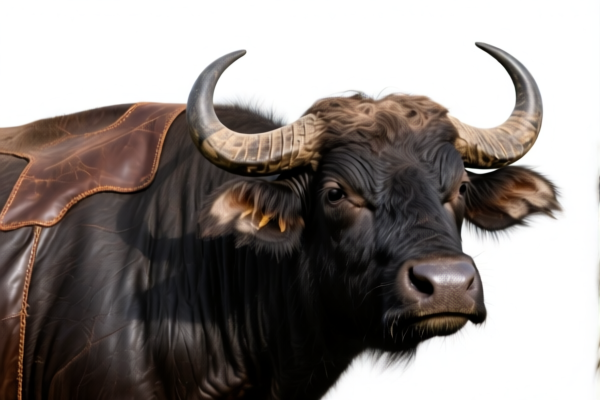


AI Analysis
🐃 Buffalo Leather for Agricultural Use
🌐 HS Code Reference & Customs Clearance Guide | 2026 Latest Tariff Analysis | Professional Compliance Strategy
📌 I. Product Definition & Classification: What is "Buffalo Leather for Agricultural Use"?
Buffalo leather is a durable, thick hide sourced from water buffalo, widely used in heavy-duty industrial applications. When specified for "Agricultural Use," it typically refers to raw or semi-processed hides intended for manufacturing tools, harnesses, saddles, straps, or other durable goods used in farming and ranching.
⚠️ Critical Distinction:
- The material is explicitly Buffalo (often classified under "Water Buffalo" in customs codes), which falls under the Bovine category (Ox/Cattle).
- "Agricultural Use" describes the end-use, not the form of the leather. Therefore, classification depends on the state of processing (e.g., raw, chrome-tanned, split, full-grain).
- Since the input does not specify if the leather is raw, tanned, split, or finished, we must analyze the provided HS Codes based on material match and processing assumptions.
📦 II. HS Code Classification Analysis (Based on Provided Data)
The following HS Codes are derived from the provided dataset. Each code is evaluated based on the material match (Buffalo/Bovine) and the processing state inferred from the "summary" and "tax detail" fields.
| HS Code | Product Description & Match Rationale | Key Characteristics |
|---|---|---|
4104.11.50.80 |
Other Bovine Leather, Chrome-Tanned or Pigmented • Match: Explicitly includes "Bovine" (Buffalo/Water Buffalo). • Assumption: Since processing degree is unspecified, it defaults to "Other" under this subheading. |
• Base Tariff: 3.3% • No additional US tariffs. • 122 Clause: 10% • Total: 13.3% |
4107.11.20.00 |
Other Fully Grain Bovine Leather, Tanned (not Chrome) • Match: Contains "Bovine" material. No conflict with "Full Grain" assumption due to lack of specific form data. Used as a fallback for high-value full-grain hides. |
• Base Tariff: 2.4% • Section 301 Tariff: 25% • 122 Clause: 10% • Total: 37.4% |
4107.12.30.00 |
Other Split Bovine Leather, Tanned (not Chrome) • Match: Explicitly includes "Bovine". "Other" category used when specific split details are missing. |
• Base Tariff: 3.6% • No Section 301 Tariff. • 122 Clause: 10% • Total: 13.6% |
4203.29.08.00 |
Other Articles of Leather (e.g., Gloves, Harness Parts) • Match: "Buffalo" matches "Bovine/Water Buffalo" material. "Agricultural Use" implies finished goods (gloves, straps) rather than raw hides. |
• Base Tariff: 14.0% • Section 301 Tariff: 25% • 122 Clause: 10% • Total: 49.0% |
4104.41.50.00 |
Other Bovine Leather, Vegetable-Tanned • Match: "Bovine" material match. "Other" category for unspecified processing. • Note: If the leather is vegetable-tanned (common for agricultural straps), this is a strong candidate. |
• Base Tariff: 3.3% • No Section 301 Tariff. • 122 Clause: 10% • Total: 13.3% |
🔍 Key Insight:
- Codes4104and4107.12are significantly cheaper (13.3%–13.6%) because they do not incur the 25% Section 301 tariff.
- Codes4107.11and4203are expensive (37.4%–49.0%) due to the 25% Section 301 tariff on specific bovine leathers and finished leather articles.
- Classification Risk: If the leather is "Finished" (e.g., gloves, belts), it may fall under Chapter 42 (4203), triggering the higher tax. If it is "Raw/Tanned Hide," it falls under Chapter 41 (4104/4107).
💰 III. 2026 Latest Tariff Rate Breakdown (Detailed Tax Clauses)
✅ Applicable Country: USA (US)
✅ Origin: China (CN) (Inferred from "122 Clause" and Section 301 references)
✅ Effective Date: 2025–2026 (Current Trade Environment)
🎯 1. 4104.11.50.80 & 4104.41.50.00 – The "Low-Tax" Options (13.3%)
| Item | Detail |
|---|---|
| Base Tariff | 3.3% (Ad Valorem) |
| Section 301 Tariff | 0% (Exempt) |
| Section 122 Tariff | 10% (China-specific duty) |
| Total Duty Rate | 13.3% |
| Legal Basis | HTSUS: 4104.11.50.80 / 4104.41.50.00 + IEEPA:9903.01.25 (Section 122) |
| De Minimis Exemption | ❌ Not Eligible (Section 122 duties apply to de minimis shipments < $800) |
📌 Explanation:
- These codes represent bovine leather that is either chrome-tanned (4104.11) or vegetable-tanned (4104.41).
- Crucially, they are NOT subject to the 25% Section 301 tariff, which applies to many finished leather goods and specific tanned hides.
- The 10% Section 122 tariff is a specific punitive duty on Chinese goods under the U.S. Trade Act of 1974.
- Strategy: If your product is raw/tanned hide (not finished goods), strive for these codes to save 24–35% in duties compared to Chapter 42 codes.
🎯 2. 4107.11.20.00 – The "Medium-Tax" Option (37.4%)
| Item | Detail |
|---|---|
| Base Tariff | 2.4% |
| Section 301 Tariff | +25% |
| Section 122 Tariff | +10% |
| Total Duty Rate | 37.4% |
| Legal Basis | HTSUS: 4107.11.20.00 + USITC:9903.88.01 (Section 301) |
| De Minimis Exemption | ❌ Not Eligible |
📌 Explanation:
- This code is for full-grain, non-chrome tanned bovine leather.
- It is subject to both Section 301 (25%) and Section 122 (10%) tariffs.
- Use Case: Only use if the leather is confirmed as full-grain, vegetable-tanned, and unsplit. If you can reclassify as4104(chrome-tanned), you save 24%.
🎯 3. 4107.12.30.00 – The "Low-Tax" Alternative (13.6%)
| Item | Detail |
|---|---|
| Base Tariff | 3.6% |
| Section 301 Tariff | 0% |
| Section 122 Tariff | +10% |
| Total Duty Rate | 13.6% |
| Legal Basis | HTSUS: 4107.12.30.00 + IEEPA:9903.01.25 (Section 122) |
| De Minimis Exemption | ❌ Not Eligible |
📌 Explanation:
- This code is for split bovine leather, tanned but not chrome.
- Like4104, it is exempt from Section 301, making it a competitive option if the leather is split.
🎯 4. 4203.29.08.00 – The "High-Tax" Option (49.0%)
| Item | Detail |
|---|---|
| Base Tariff | 14.0% |
| Section 301 Tariff | +25% |
| Section 122 Tariff | +10% |
| Total Duty Rate | 49.0% |
| Legal Basis | HTSUS: 4203.29.08.00 + USITC:9903.88.01 |
| De Minimis Exemption | ❌ Not Eligible |
📌 Explanation:
- This code is for finished leather articles (e.g., gloves, harnesses, straps).
- Warning: If you ship finished agricultural tools (e.g., buffalo leather gloves), you must use this code. You cannot misdeclare finished goods as raw hides to avoid the 25% tariff. This is customs fraud and carries severe penalties.
🛠️ IV. Customs Clearance Practical Advice (Pitfall Avoidance)
✅ 1. Documentation Checklist (Mandatory)
| Document | Required? | Purpose |
|---|---|---|
| Commercial Invoice | ✅ Yes | Must clearly state: "Buffalo Leather," "Water Buffalo," "HS Code: [Insert Code]," "For Agricultural Use." |
| Product Specifications | ✅ Yes | Detail the processing state: Raw? Chrome-Tanned? Vegetable-Tanned? Split? Full-Grain? This determines Chapter 41 vs. 42. |
| Material Certificate | ✅ Yes | Proof of bovine origin (Buffalo/Water Buffalo) to prevent misclassification as exotic skins. |
| Usage Declaration | ✅ Yes | State "Agricultural Use" to justify the product type, but do not use this to claim lower duties if the code doesn't match. |
| Photos of Product | ✅ Yes | Show texture, thickness, and any finishing (e.g., dyed, suede, smooth). Helps customs determine if it's raw or finished. |
✅ 2. Classification Strategy & Tax Optimization
| Scenario | Recommended HS Code | Estimated Duty | Why? |
|---|---|---|---|
| Raw/Tanned Hides (Chrome-Tanned) | 4104.11.50.80 |
13.3% | Lowest tax. No Section 301. Best for bulk hides. |
| Raw/Tanned Hides (Vegetable-Tanned) | 4104.41.50.00 |
13.3% | Lowest tax. No Section 301. Ideal for straps/harnesses if raw. |
| Split Leather (Vegetable-Tanned) | 4107.12.30.00 |
13.6% | Low tax. No Section 301. Good for suede or inner layers. |
| Full-Grain Hide (Vegetable-Tanned) | 4107.11.20.00 |
37.4% | Higher tax due to Section 301. Only if truly full-grain. |
| Finished Goods (Gloves, Straps) | 4203.29.08.00 |
49.0% | High Tax. Must be used for finished articles. No avoidance. |
🔥 Golden Rule:
"If it's a hide, go Chapter 41. If it's a finished product, go Chapter 42."
Misdeclaring finished goods (4203) as raw hides (4104) is a common red flag for Customs and can lead to seizures.
✅ 3. Special Notes on Section 122 & De Minimis
- Section 122 Tariff (10%): Applies to all Chinese-origin goods under these codes, regardless of shipment value.
- De Minimis ($800 Rule): You CANNOT use Section 321 (de minimis) to avoid these duties. All shipments, even small samples, are subject to the 13.3%–49.0% total duty.
- Section 301 (25%): Only applies to specific codes (
4107.11,4203). Always compare4104vs.4107for potential savings.
🌍 V. Global Market Comparison (2026)
| Market | Recommended HS Code | Duty Rate | Notes |
|---|---|---|---|
| 🇺🇸 USA | 4104.11.50.80 |
13.3% | Best option. Low base + 10% Sec 122. |
| 🇪🇺 EU | 4104.11 |
~6–12% | No Section 301/122. Check EU specific tariffs. |
| 🇨🇳 China | 4104.11 |
Varies | Import duties apply. Check free trade agreements. |
| 🇬🇧 UK | 4104.11 |
~6% | Post-Brexit tariffs may differ. |
📌 Conclusion:
The USA is the most complex market due to Section 301 and Section 122 tariffs. Prioritize Chapter 41 codes (4104) for hides to minimize duties.
📌 VI. Common Mistakes & Pitfalls (Lessons Learned)
❌ Mistake 1: Declaring finished leather gloves as "Buffalo Leather Hide" (4104).
👉 Consequence: Customs reclassifies to 4203.29.08.00 → 49% duty + penalties + potential seizure.
❌ Mistake 2: Assuming "Agricultural Use" grants a tariff exemption.
👉 Consequence: No such exemption exists for leather under these HS codes. Duty is based on material and form, not end-use.
❌ Mistake 3: Ignoring Section 122 Tariff.
👉 Consequence: Even if you avoid Section 301, the 10% Sec 122 duty still applies. Total duty is never just the "Base Tariff."
❌ Mistake 4: Misidentifying Buffalo as "Exotic Skin."
👉 Consequence: Buffalo is classified under Bovine (Water Buffalo) codes (4104/4107), not exotic codes (4106). Exotic codes may have different duties.
✅ Correct Approach:
"Buffalo Leather Hides, Chrome-Tanned, for Agricultural Harness Manufacturing, HS Code 4104.11.50.80"
🎯 VII. Conclusion: Professional Declaration for Cost Savings
🎯 Key Takeaway:
🔹 "Hides in Chapter 41, Finished in Chapter 42."
🔹 "Aim for4104to avoid 25% Sec 301."
🔹 "Budget for 13.3% minimum due to Sec 122."
📌 Action Plan:
1. Confirm Processing State: Is it chrome-tanned (4104) or vegetable-tanned (4107)?
2. Confirm Form: Is it raw/split (4104/4107) or finished (4203)?
3. Select Code:
- Chrome-Tanned Hide → 4104.11.50.80 (13.3%) ✅
- Vegetable-Tanned Split → 4107.12.30.00 (13.6%) ✅
- Finished Article → 4203.29.08.00 (49.0%) ⚠️
4. Declare Accurately: Use precise descriptions to avoid reclassification.
📣 Immediate Action:
📞 Consult a licensed customs broker for a Pre-Ruling (Advance Ruling) if unsure about the "Finished" vs. "Raw" distinction.
🚀 Correct classification saves up to 35% in duties!
✨ Professional Customs Compliance, Start with Precise Classification!
💼 Every dollar in duty saved is pure profit.
Customer Reviews
About HS Code Classification
The Harmonized System (HS) is an internationally standardized nomenclature developed by the World Customs Organization (WCO) to classify traded products. Over 200 countries use the HS system as the basis for customs tariffs, trade statistics, and import/export regulations.
Each HS code follows a hierarchical structure:
- Chapter (2 digits) — Broad category of goods (e.g., Chapter 84: Machinery and Mechanical Appliances)
- Heading (4 digits) — More specific grouping within the chapter
- Subheading (6 digits) — Internationally standardized breakdown, used by all WCO member countries
- National subdivisions (8-10 digits) — Country-specific extensions for further classification, such as US HTSUS 10-digit codes
Correct HS code classification is essential for smooth customs clearance, accurate duty payment, and compliance with trade regulations. Misclassification can lead to customs delays, overpayment of duties, or penalties.
When importing from CN to US, the applicable tariff rates may include:
- Most-Favored-Nation (MFN) rate — The standard duty rate applied to WTO members
- General rate — Applied to countries without trade agreements
- Trade remedy duties — Additional tariffs such as Section 301 (anti-dumping), Section 232 (national security), or countervailing duties
The information provided on this page is for reference purposes only. For official classification, please consult with your local customs authority or a licensed customs broker.