carbon paper fast print
CN → US| HS编码 | 关税税率 | 原产国 | 目的国 | 文档 |
|---|---|---|---|---|
| 4809202000 | 35.0% | CN | US | 官方文档 |
| 4811493000 | 35.0% | CN | US | 官方文档 |
| 4816200000 | 35.0% | CN | US | 官方文档 |
| 4816900100 | 35.0% | CN | US | 官方文档 |
| 4809204000 | 35.0% | CN | US | 官方文档 |
商品图片
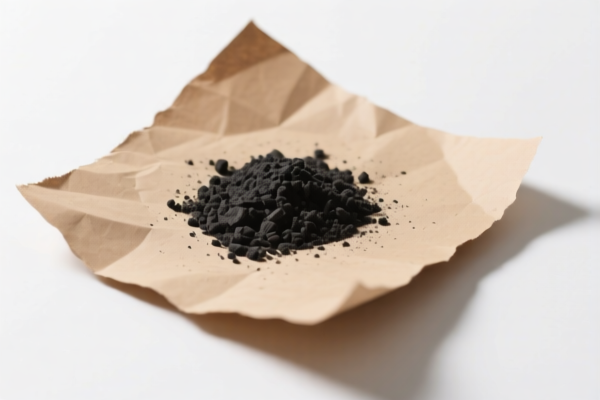
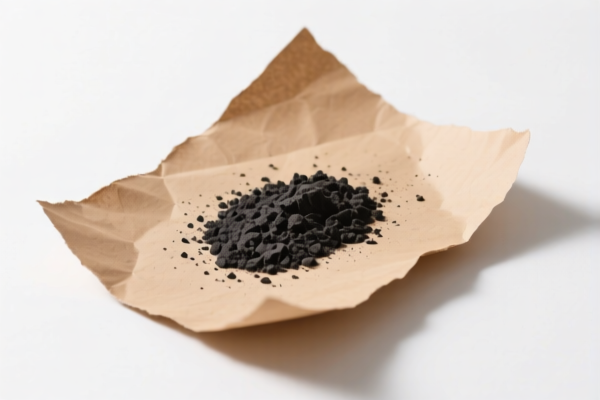
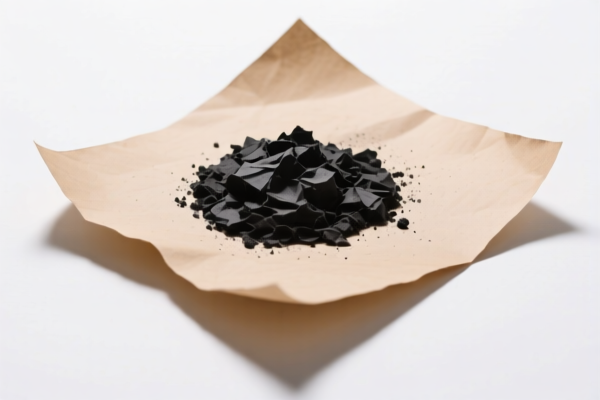
AI分析
📄 Carbon Paper Fast Print (Self-Coloring/Rapid Copy Paper)
🌐 HS Code Reference & Customs Clearance Guide | 2026 Latest Tariff Analysis | Professional Strategy for US Imports
📌 Part 1: Product Definition and Classification: Do You Really Understand "Carbon Paper"?
"Carbon Paper Fast Print" typically refers to multi-ply copy paper, self-coloring paper, or rapid-copy paper. In international trade, these products are classified based on their chemical coating (transfer ink layer) and physical form (rolls, sheets, or pads).
Key Product Types: 1. Traditional Carbon Paper: Coated with dry ink on one side, used for making copies by pressure. 2. Self-Coloring/Rapid Copy Paper (NCR Paper): No separate carbon sheet needed; the back of the top sheet transfers ink to the bottom sheet under pressure. 3. Multi-ply Sets: Pre-stacked sheets of carbon and non-carbon paper.
⚠️ Critical Distinction:
- If it is loose sheets or rolls primarily used for copying/printing via pressure → Falls under Chapter 48 (Paper/Paperboard).
- If it is finished writing pads or books containing carbon paper → May fall under 4820 (Notebooks, etc.).
- For "Fast Print" specifically, if it is standard carbon or self-coloring sheets, it is almost exclusively classified under 4809 (Carbon Paper) or 4816 (Other Paper for Copying/Printing).
📦 Part 2: HS Code Classification Details (2026 Latest Tariff Authority Mapping)
| HS Code | Product Description | Matching Criteria from Data | Applicable Scenario |
|---|---|---|---|
4809.20.20.00 |
Carbon paper, fully matching in material and use | Summary: "Carbon paper, material and use fully match" | Traditional carbon paper rolls/sheets, standard industrial use |
4811.49.30.00 |
Coated or colored paper products, fitting adhesive paper/board attributes | Summary: "Coated or colored paper products, fit adhesive paper attributes" | Paper with special coatings that may include self-coloring properties or specific adhesive-like transfer layers |
4816.20.00.00 |
Carbon paper, use and form fully match | Summary: "Carbon paper, use and form fully match" | Standard carbon paper specifically designed for copying machines or manual reproduction |
4816.90.01.00 |
Carbon paper, use and form fully match | Summary: "Carbon paper, use and form fully match" | Other forms of carbon paper not covered in 4816.20 (e.g., specific niche forms) |
4809.20.40.00 |
Self-coloring carbon paper, use and material attributes consistent | Summary: "Self-coloring carbon paper, use and material attributes consistent" | NCR (No Carbon Required) paper, rapid-copy multi-ply sheets |
🔍 Key Insight:
- "Fast Print" often implies NCR (Self-Coloring) paper, which is best mapped to4809.20.40.00or4816.20.00.00depending on the exact coating technology.
- Traditional Carbon Paper maps to4809.20.20.00.
- All these codes share the same high tariff structure due to US-China trade tensions.
💰 Part 3: 2026 Latest Tariff Rate Breakdown (Including Surcharges & Policy Add-ons)
✅ Applicable Country: United States (US)
✅ Origin: China (CN)
✅ Effective Date: November 10, 2025 (and subsequent imports)
🎯 1. All Mapped HS Codes (4809.20.20.00, 4811.49.30.00, 4816.20.00.00, 4816.90.01.00, 4809.20.40.00)
| Item | Content |
|---|---|
| Base Tariff | 0.0% (ad valorem) |
| Section 301 Additional Tariff | +25.0% (USITC Footnote 9903.48.01 series) |
| IEEPA Additional Tariff (122 Clause) | +10.0% (Against China/HK products, effective Nov 10, 2025) |
| Total Tariff Rate | 35.0% |
| Tax Calculation | CIF Value × 35% |
| De Minimis Exemption Available? | ❌ NO (deny_de_minimis) |
| Legal Authority Path | IEEPA:9903.01.25 → USITC:4809/4816 Codes → FOOTNOTE:9903.48.01 |
📌 Explanation:
- "Base Tariff 0%": Standard MFN rate for paper products.
- "Section 301 Tariff 25%": The core punitive tariff on Chinese paper and paper articles.
- "122 Clause IEEPA 10%": The new additional tariff applied to specific Chinese goods, including certain paper products.
- Total 35%: This is a fixed, high tariff rate. There are no loopholes for "fast print" carbon paper. Every single unit imported from China into the US is subject to this 35% duty.
🛠️ Part 4: Customs Clearance Practical Advice (Battle-Tested Pitfall Guide)
✅ 1. Required Documentation Checklist (Non-Negotiable)
| Document | Mandatory | Description |
|---|---|---|
| ✅ Product Specification Sheet | ✔️ | Must detail: Weight (gsm), Coating Type (Carbon/Chromic/NCR), Roll Dimensions, Sheet Count |
| ✅ Composition Analysis | ✔️ | Proof of paper base (wood pulp, recycled) and chemical coating. Critical for distinguishing 4809 vs 4816 |
| ✅ Product Photos (Clear) | ✔️ | Show labels, "Made in China" stamp, and product form (roll/sheet) |
| ✅ Commercial Invoice | ✔️ | Must state: "Carbon Paper / Self-Coloring Paper for Copying", HS Code, Country of Origin: China |
| ✅ Packing List | ✔️ | Detailed weight/volume. Avoid vague terms like "Office Supplies" |
| ✅ Certificate of Origin (CO) | ✔️ | Mandatory to prove Chinese origin. No Preferential Rate applies |
✅ 2. Declaration Tips (Key Mantra)
🔥 "Be Specific, Don't Vague, 'Carbon' or 'Self-Coloring' Clearly Stated!"
| Scenario | Correct Declaration | Error to Avoid |
|---|---|---|
| NCR Paper (No Carbon Required) | "Self-Coloring Copy Paper, NCR Type, 5 Ply" | Calling it "Office Paper" → May trigger detailed inspection, delay clearance |
| Traditional Carbon Rolls | "Carbon Paper Rolls, Chromic Coated, for Manual Copying" | Calling it "Rolls of Paper" → Incorrect HS Code risk |
| Pre-stacked Carbon Sets | "Carbon Paper Sheets, Multi-ply Set" | Splitting into "Paper Sheets" + "Ink" → Overcomplicates, risks misclassification |
| Mixed Containers (Office Supplies) | Declare Carbon Paper Separately | Grouping with pencils/pens → Carbon paper taxed at 35%, pens may be lower. Do not bundle! |
✅ 3. Special Handling for "Fast Print" Variants
| Variant | Handling Advice |
|---|---|
| NCR Paper (Self-Coloring) | Use HS Code 4809.20.40.00. Ensure invoice specifies "No separate carbon sheet needed" to avoid confusion with traditional carbon paper. |
| Industrial Carbon Rolls | Use HS Code 4809.20.20.00. Specify "Industrial Use" if applicable, but tax rate remains 35%. |
| Samples | Even free samples are subject to the 35% tariff if the value exceeds the de minimis threshold (which is effectively denied for these codes). |
🌍 Part 5: Global Market Comparison (2026 Update)
| Country/Region | Recommended HS Code | Tariff Rate (China Origin) | Certification Requirements | Notes |
|---|---|---|---|---|
| 🇺🇸 USA | 4809.20.20.00 / 4809.20.40.00 / 4816.20.00.00 |
35% (0% Base + 25% 301 + 10% IEEPA) | None specific for paper | Highest Cost. No exemptions. |
| 🇨🇳 China | 4809.20.20.00 |
0% - 5% (Import Tariff) | None | Low cost for domestic use |
| 🇪🇺 EU | 4809.20.20.00 |
0% - 6% | REACH (Chemicals) | No Section 301 equivalent |
| 🇬🇧 UK | 4809.20.20.00 |
0% - 6% | UKCA (if applicable) | No punitive tariffs |
| 🇯🇵 Japan | 4809.20.20.00 |
0% - 3% | JIS | Very low tariffs |
📌 Conclusion:
- The US is the only major market with a 35% effective tariff on carbon/self-coloring paper from China.
- Profit Margins are Severely Compressed: A $100 product incurs $35 in duties alone.
- No Workarounds: The "122 Clause" and Section 301 apply uniformly.
📌 Part 6: Common Mistakes & Pitfalls (Lessons Learned)
❌ Mistake 1: Classifying NCR Paper as "Writing Paper" (4802)
👉 Consequence: If misclassified, CBP may assess back duties + penalties. While base tariff might be similar, the 301/IEEPA surcharges are tied to the specific HS Code. Misclassification is considered fraud if intent is proven.
❌ Mistake 2: Ignoring the "122 Clause" Tariff
👉 Consequence: Many importers only account for the 25% Section 301 tariff. The additional 10% IEEPA tariff is mandatory since Nov 2025. Under-declaring leads to seizure and fines.
❌ Mistake 3: Using Generic Descriptions ("Paper Rolls")
👉 Consequence: High risk of CBP audit. CBP uses AI to flag vague descriptions for paper products. Provide exact product type (Carbon vs. Self-Coloring).
❌ Mistake 4: Assuming "Fast Print" Qualifies for a Different Code
👉 Consequence: "Fast Print" is a marketing term, not a tariff classification. The physical properties determine the HS Code. No special "Fast Print" code exists.
✅ Correct Practice:
"Self-Coloring Copy Paper, 3-Ply NCR, 28gsm, Roll Size 20cm x 50m, Made in China, HS Code 4809.20.40.00"
🎯 Part 7: Conclusion: Strategic Sourcing for Carbon Paper
🎯 Key Takeaway:
🔹 "Carbon Paper from China to US = 35% Fixed Duty"
🔹 "No De Minimis Exemption"
🔹 "Marketing Terms Do Not Change Tariffs"
📌 Strategic Recommendations for Importers:
- Price Calculation: Always include 35% duty in your landed cost calculation. Do not assume lower rates.
- Supplier Negotiation: Negotiate FOB prices with Chinese suppliers, knowing the 35% duty is borne by the importer.
- Alternative Sourcing: Consider sourcing from Vietnam, Thailand, or Mexico if possible.
- Note: Verify origin rules. If Chinese components are significant, "Country of Origin" may still be China.
- Mexico/Canada (USMCA): If sourced from Mexico/Canada, 0% Duty may apply (check specific tariff exclusions).
- Pre-Ruling: File an Advance Ruling with CBP to confirm the HS Code and duty rate before shipment. This reduces audit risk.
📣 Immediate Action Required:
📞 Contact your Customs Broker with the exact product specs.
🚚 Do not ship until the 35% tariff is factored into your budget.
📄 Ensure Commercial Invoices clearly state the product type and HS Code.
✨ Professional Clearance Starts with Accurate Classification!
💼 Every 1% of duty savings is pure profit! But in this case, 35% is non-negotiable unless you change your supply chain!
用户评价
关于 HS 编码归类
协调制度(HS)是由世界海关组织(WCO)制定的国际贸易商品分类标准。全球 200 多个国家采用 HS 系统作为海关关税、贸易统计和进出口监管的基础。
每个 HS 编码遵循以下层级结构:
- 章(2 位)——商品大类(例如:第 84 章:机器和机械设备)
- 品目(4 位)——章内的更具体分类
- 子目(6 位)——国际通用细分,所有 WCO 成员国统一使用
- 本国细分(8-10 位)——各国自行扩展的细分编码,如美国 HTSUS 10 位编码
正确的 HS 编码归类对于顺利通关、准确缴纳关税和遵守贸易法规至关重要。错误归类可能导致海关延误、多缴关税或罚款。
从CN进口到US时,适用的关税税率可能包括:
- 最惠国(MFN)税率——适用于 WTO 成员国的标准关税税率
- 普通税率——适用于无贸易协定国家
- 贸易救济关税——附加关税,如 301 条款(反倾销)、232 条款(国家安全)或反补贴税
本页内容仅供参考。如需正式归类,请咨询当地海关或持牌报关代理。