carbon paper fast print
CN → US| HS Code | Tariff Rate | Origin | Destination | Doc |
|---|---|---|---|---|
| 4809202000 | 35.0% | CN | US | Official Doc |
| 4811493000 | 35.0% | CN | US | Official Doc |
| 4816200000 | 35.0% | CN | US | Official Doc |
| 4816900100 | 35.0% | CN | US | Official Doc |
| 4809204000 | 35.0% | CN | US | Official Doc |
Product Images
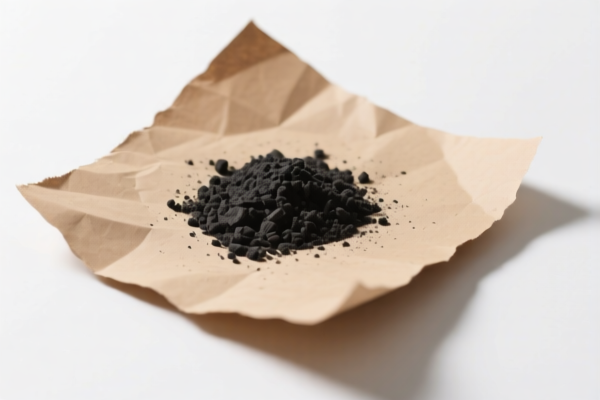
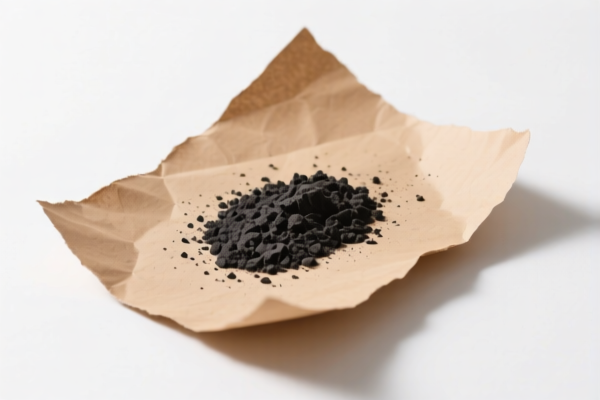
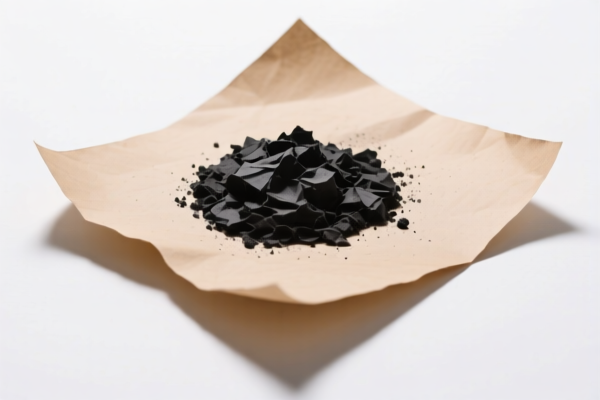
AI Analysis
📄 Carbon Paper Fast Print (Self-Coloring/Rapid Copy Paper)
🌐 HS Code Reference & Customs Clearance Guide | 2026 Latest Tariff Analysis | Professional Strategy for US Imports
📌 Part 1: Product Definition and Classification: Do You Really Understand "Carbon Paper"?
"Carbon Paper Fast Print" typically refers to multi-ply copy paper, self-coloring paper, or rapid-copy paper. In international trade, these products are classified based on their chemical coating (transfer ink layer) and physical form (rolls, sheets, or pads).
Key Product Types: 1. Traditional Carbon Paper: Coated with dry ink on one side, used for making copies by pressure. 2. Self-Coloring/Rapid Copy Paper (NCR Paper): No separate carbon sheet needed; the back of the top sheet transfers ink to the bottom sheet under pressure. 3. Multi-ply Sets: Pre-stacked sheets of carbon and non-carbon paper.
⚠️ Critical Distinction:
- If it is loose sheets or rolls primarily used for copying/printing via pressure → Falls under Chapter 48 (Paper/Paperboard).
- If it is finished writing pads or books containing carbon paper → May fall under 4820 (Notebooks, etc.).
- For "Fast Print" specifically, if it is standard carbon or self-coloring sheets, it is almost exclusively classified under 4809 (Carbon Paper) or 4816 (Other Paper for Copying/Printing).
📦 Part 2: HS Code Classification Details (2026 Latest Tariff Authority Mapping)
| HS Code | Product Description | Matching Criteria from Data | Applicable Scenario |
|---|---|---|---|
4809.20.20.00 |
Carbon paper, fully matching in material and use | Summary: "Carbon paper, material and use fully match" | Traditional carbon paper rolls/sheets, standard industrial use |
4811.49.30.00 |
Coated or colored paper products, fitting adhesive paper/board attributes | Summary: "Coated or colored paper products, fit adhesive paper attributes" | Paper with special coatings that may include self-coloring properties or specific adhesive-like transfer layers |
4816.20.00.00 |
Carbon paper, use and form fully match | Summary: "Carbon paper, use and form fully match" | Standard carbon paper specifically designed for copying machines or manual reproduction |
4816.90.01.00 |
Carbon paper, use and form fully match | Summary: "Carbon paper, use and form fully match" | Other forms of carbon paper not covered in 4816.20 (e.g., specific niche forms) |
4809.20.40.00 |
Self-coloring carbon paper, use and material attributes consistent | Summary: "Self-coloring carbon paper, use and material attributes consistent" | NCR (No Carbon Required) paper, rapid-copy multi-ply sheets |
🔍 Key Insight:
- "Fast Print" often implies NCR (Self-Coloring) paper, which is best mapped to4809.20.40.00or4816.20.00.00depending on the exact coating technology.
- Traditional Carbon Paper maps to4809.20.20.00.
- All these codes share the same high tariff structure due to US-China trade tensions.
💰 Part 3: 2026 Latest Tariff Rate Breakdown (Including Surcharges & Policy Add-ons)
✅ Applicable Country: United States (US)
✅ Origin: China (CN)
✅ Effective Date: November 10, 2025 (and subsequent imports)
🎯 1. All Mapped HS Codes (4809.20.20.00, 4811.49.30.00, 4816.20.00.00, 4816.90.01.00, 4809.20.40.00)
| Item | Content |
|---|---|
| Base Tariff | 0.0% (ad valorem) |
| Section 301 Additional Tariff | +25.0% (USITC Footnote 9903.48.01 series) |
| IEEPA Additional Tariff (122 Clause) | +10.0% (Against China/HK products, effective Nov 10, 2025) |
| Total Tariff Rate | 35.0% |
| Tax Calculation | CIF Value × 35% |
| De Minimis Exemption Available? | ❌ NO (deny_de_minimis) |
| Legal Authority Path | IEEPA:9903.01.25 → USITC:4809/4816 Codes → FOOTNOTE:9903.48.01 |
📌 Explanation:
- "Base Tariff 0%": Standard MFN rate for paper products.
- "Section 301 Tariff 25%": The core punitive tariff on Chinese paper and paper articles.
- "122 Clause IEEPA 10%": The new additional tariff applied to specific Chinese goods, including certain paper products.
- Total 35%: This is a fixed, high tariff rate. There are no loopholes for "fast print" carbon paper. Every single unit imported from China into the US is subject to this 35% duty.
🛠️ Part 4: Customs Clearance Practical Advice (Battle-Tested Pitfall Guide)
✅ 1. Required Documentation Checklist (Non-Negotiable)
| Document | Mandatory | Description |
|---|---|---|
| ✅ Product Specification Sheet | ✔️ | Must detail: Weight (gsm), Coating Type (Carbon/Chromic/NCR), Roll Dimensions, Sheet Count |
| ✅ Composition Analysis | ✔️ | Proof of paper base (wood pulp, recycled) and chemical coating. Critical for distinguishing 4809 vs 4816 |
| ✅ Product Photos (Clear) | ✔️ | Show labels, "Made in China" stamp, and product form (roll/sheet) |
| ✅ Commercial Invoice | ✔️ | Must state: "Carbon Paper / Self-Coloring Paper for Copying", HS Code, Country of Origin: China |
| ✅ Packing List | ✔️ | Detailed weight/volume. Avoid vague terms like "Office Supplies" |
| ✅ Certificate of Origin (CO) | ✔️ | Mandatory to prove Chinese origin. No Preferential Rate applies |
✅ 2. Declaration Tips (Key Mantra)
🔥 "Be Specific, Don't Vague, 'Carbon' or 'Self-Coloring' Clearly Stated!"
| Scenario | Correct Declaration | Error to Avoid |
|---|---|---|
| NCR Paper (No Carbon Required) | "Self-Coloring Copy Paper, NCR Type, 5 Ply" | Calling it "Office Paper" → May trigger detailed inspection, delay clearance |
| Traditional Carbon Rolls | "Carbon Paper Rolls, Chromic Coated, for Manual Copying" | Calling it "Rolls of Paper" → Incorrect HS Code risk |
| Pre-stacked Carbon Sets | "Carbon Paper Sheets, Multi-ply Set" | Splitting into "Paper Sheets" + "Ink" → Overcomplicates, risks misclassification |
| Mixed Containers (Office Supplies) | Declare Carbon Paper Separately | Grouping with pencils/pens → Carbon paper taxed at 35%, pens may be lower. Do not bundle! |
✅ 3. Special Handling for "Fast Print" Variants
| Variant | Handling Advice |
|---|---|
| NCR Paper (Self-Coloring) | Use HS Code 4809.20.40.00. Ensure invoice specifies "No separate carbon sheet needed" to avoid confusion with traditional carbon paper. |
| Industrial Carbon Rolls | Use HS Code 4809.20.20.00. Specify "Industrial Use" if applicable, but tax rate remains 35%. |
| Samples | Even free samples are subject to the 35% tariff if the value exceeds the de minimis threshold (which is effectively denied for these codes). |
🌍 Part 5: Global Market Comparison (2026 Update)
| Country/Region | Recommended HS Code | Tariff Rate (China Origin) | Certification Requirements | Notes |
|---|---|---|---|---|
| 🇺🇸 USA | 4809.20.20.00 / 4809.20.40.00 / 4816.20.00.00 |
35% (0% Base + 25% 301 + 10% IEEPA) | None specific for paper | Highest Cost. No exemptions. |
| 🇨🇳 China | 4809.20.20.00 |
0% - 5% (Import Tariff) | None | Low cost for domestic use |
| 🇪🇺 EU | 4809.20.20.00 |
0% - 6% | REACH (Chemicals) | No Section 301 equivalent |
| 🇬🇧 UK | 4809.20.20.00 |
0% - 6% | UKCA (if applicable) | No punitive tariffs |
| 🇯🇵 Japan | 4809.20.20.00 |
0% - 3% | JIS | Very low tariffs |
📌 Conclusion:
- The US is the only major market with a 35% effective tariff on carbon/self-coloring paper from China.
- Profit Margins are Severely Compressed: A $100 product incurs $35 in duties alone.
- No Workarounds: The "122 Clause" and Section 301 apply uniformly.
📌 Part 6: Common Mistakes & Pitfalls (Lessons Learned)
❌ Mistake 1: Classifying NCR Paper as "Writing Paper" (4802)
👉 Consequence: If misclassified, CBP may assess back duties + penalties. While base tariff might be similar, the 301/IEEPA surcharges are tied to the specific HS Code. Misclassification is considered fraud if intent is proven.
❌ Mistake 2: Ignoring the "122 Clause" Tariff
👉 Consequence: Many importers only account for the 25% Section 301 tariff. The additional 10% IEEPA tariff is mandatory since Nov 2025. Under-declaring leads to seizure and fines.
❌ Mistake 3: Using Generic Descriptions ("Paper Rolls")
👉 Consequence: High risk of CBP audit. CBP uses AI to flag vague descriptions for paper products. Provide exact product type (Carbon vs. Self-Coloring).
❌ Mistake 4: Assuming "Fast Print" Qualifies for a Different Code
👉 Consequence: "Fast Print" is a marketing term, not a tariff classification. The physical properties determine the HS Code. No special "Fast Print" code exists.
✅ Correct Practice:
"Self-Coloring Copy Paper, 3-Ply NCR, 28gsm, Roll Size 20cm x 50m, Made in China, HS Code 4809.20.40.00"
🎯 Part 7: Conclusion: Strategic Sourcing for Carbon Paper
🎯 Key Takeaway:
🔹 "Carbon Paper from China to US = 35% Fixed Duty"
🔹 "No De Minimis Exemption"
🔹 "Marketing Terms Do Not Change Tariffs"
📌 Strategic Recommendations for Importers:
- Price Calculation: Always include 35% duty in your landed cost calculation. Do not assume lower rates.
- Supplier Negotiation: Negotiate FOB prices with Chinese suppliers, knowing the 35% duty is borne by the importer.
- Alternative Sourcing: Consider sourcing from Vietnam, Thailand, or Mexico if possible.
- Note: Verify origin rules. If Chinese components are significant, "Country of Origin" may still be China.
- Mexico/Canada (USMCA): If sourced from Mexico/Canada, 0% Duty may apply (check specific tariff exclusions).
- Pre-Ruling: File an Advance Ruling with CBP to confirm the HS Code and duty rate before shipment. This reduces audit risk.
📣 Immediate Action Required:
📞 Contact your Customs Broker with the exact product specs.
🚚 Do not ship until the 35% tariff is factored into your budget.
📄 Ensure Commercial Invoices clearly state the product type and HS Code.
✨ Professional Clearance Starts with Accurate Classification!
💼 Every 1% of duty savings is pure profit! But in this case, 35% is non-negotiable unless you change your supply chain!
Customer Reviews
About HS Code Classification
The Harmonized System (HS) is an internationally standardized nomenclature developed by the World Customs Organization (WCO) to classify traded products. Over 200 countries use the HS system as the basis for customs tariffs, trade statistics, and import/export regulations.
Each HS code follows a hierarchical structure:
- Chapter (2 digits) — Broad category of goods (e.g., Chapter 84: Machinery and Mechanical Appliances)
- Heading (4 digits) — More specific grouping within the chapter
- Subheading (6 digits) — Internationally standardized breakdown, used by all WCO member countries
- National subdivisions (8-10 digits) — Country-specific extensions for further classification, such as US HTSUS 10-digit codes
Correct HS code classification is essential for smooth customs clearance, accurate duty payment, and compliance with trade regulations. Misclassification can lead to customs delays, overpayment of duties, or penalties.
When importing from CN to US, the applicable tariff rates may include:
- Most-Favored-Nation (MFN) rate — The standard duty rate applied to WTO members
- General rate — Applied to countries without trade agreements
- Trade remedy duties — Additional tariffs such as Section 301 (anti-dumping), Section 232 (national security), or countervailing duties
The information provided on this page is for reference purposes only. For official classification, please consult with your local customs authority or a licensed customs broker.