cheese filter cloth
CN → US| HS编码 | 关税税率 | 原产国 | 目的国 | 文档 |
|---|---|---|---|---|
| 5911400100 | 43.0% | CN | US | 官方文档 |
| 5911900080 | 38.8% | CN | US | 官方文档 |
| 5907008090 | 35.0% | CN | US | 官方文档 |
| 5603930090 | 35.0% | CN | US | 官方文档 |
| 5907003500 | 43.0% | CN | US | 官方文档 |
| 5603949090 | 35.0% | CN | US | 官方文档 |
商品图片
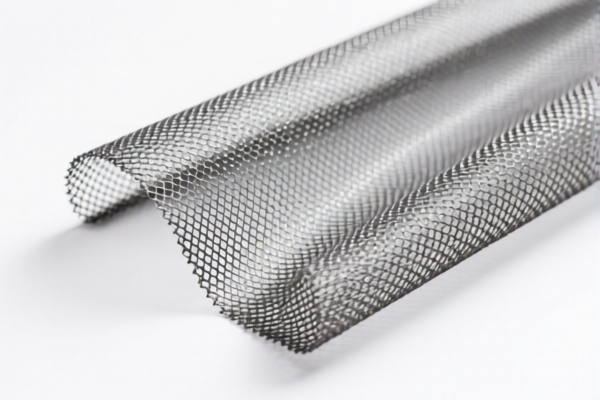
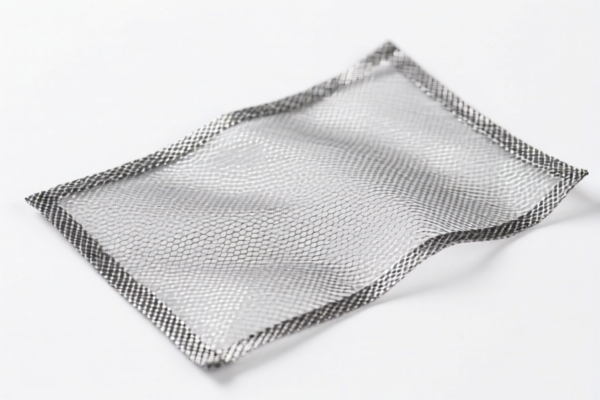
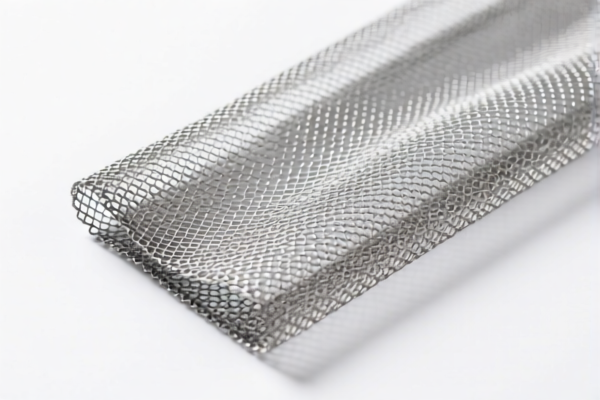
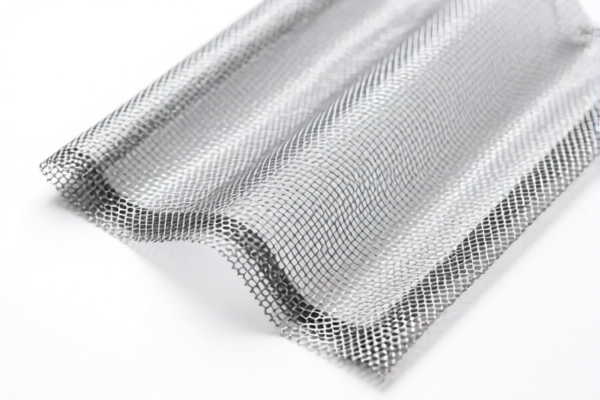
AI分析
🧀 Cheese Filter Cloth (Technical Textile Filters)
🌐 HS Code Reference & Customs Clearance Guide | 2024-2026 Latest Tariff Analysis | Professional Clearance Strategy
📌 I. Product Definition & Classification: What Exactly is "Cheese Filter Cloth"?
Cheese filter cloth is a specialized technical textile used in the dairy industry for separating curds from whey during cheese production. In international trade, it is classified as a technical textile product. The classification depends heavily on its specific material structure (woven vs. non-woven) and treatment (impregnated/coated).
⚠️ Key Distinction:
- If it is a specific woven fabric designed explicitly for filtration → Often falls under 5911
- If it is a non-woven material or generic textile filter → May fall under 5603 or 5907
- Crucial Note: The classification determines the tariff burden significantly, ranging from 35% to 43% due to US trade policies.
📦 II. HS Code Classification Details (Based on Provided Data)
| HS Code | Summary & Reasoning | Application Scenario | Material/State |
|---|---|---|---|
5911.40.01.00 |
Primary Filter Classification: Directly corresponds to the "filter cloth" form, meeting the characteristics of textiles for technical uses. | Standard woven cheese filters, high-precision dairy filtration. | Woven, Technical Textile |
5911.90.00.80 |
Other Technical Textiles: Classified as a textile product under the "technical textile" category, inferred as a textile filter medium based on common sense. | Generic technical textile filters not specifically listed under 5911.40. | Textile, Technical Use |
5907.00.80.90 |
Impregnated/Coated Textiles: Inferred material is textile fiber, form is cloth-like, fitting "other impregnated, coated, or covered textiles." | Cloth treated with chemicals/resins for better filtration or durability. | Impregnated/Coated Fabric |
5603.93.00.90 |
Non-Woven Fabrics: Form is cloth-like, usually composed of non-woven or woven fibers, fitting non-woven fabric product characteristics. | Non-woven cheese filter pads or disposable filter cloths. | Non-Woven Fabric |
5907.00.35.00 |
Covered/Impregnated Weaves: Material is textile, form falls under covered or impregnated fabrics, matching descriptions under this code. | Specialty coated filter cloths for industrial dairy processing. | Covered/Impregnated Weave |
5603.94.90.90 |
Other Non-Wovens: Belongs to non-woven cloth form, fitting the material attributes of other non-woven products, no obvious conflict. | Generic non-woven filter media for cheese pressing/filtration. | Non-Woven Fabric |
🔍 Key Insight:
- 5911 is the most direct classification for "filter cloth" in a technical context.
- 5907 and 5603 are alternative classifications based on material treatment (coating) or manufacturing method (non-woven).
- All classifications carry high tariffs due to US-China trade tensions.
💰 III. 2024-2026 Latest Tariff Rate Breakdown (Including Surcharges & Policy Add-ons)
✅ Applicable Country: United States (US)
✅ Origin: China (CN)
✅ Effective Date: Ongoing (as of 2024-2026 data context)
🎯 1. 5911.40.01.00 —— Primary Filter Cloth Classification
| Item | Content |
|---|---|
| Base Tariff | 8.0% (Ad Valorem) |
| Section 301 Surcharge | +25.0% (USITC Footnote) |
| IEEPA Surcharge | +10.0% (Targeting China/HK products) |
| Total Tariff Rate | 43.0% |
| Tax Calculation | CIF Value × 43% |
| De Minimis Exemption? | ❌ NO (Not eligible for Section 321 de minimis) |
| Legal Basis Path | USITC:5911.40.01.00 → Section 301: 25% → IEEPA: 10% |
📌 Explanation:
- This is the highest tariff bracket among the options.
- The 8% base tariff is standard for technical textiles.
- The 35% combined surcharge (25% + 10%) makes this a high-cost import.
- Critical: Any attempt to misclassify to lower tariffs is high-risk due to specific product descriptors.
🎯 2. 5911.90.00.80 —— Other Technical Textiles
| Item | Content |
|---|---|
| Base Tariff | 3.8% (Ad Valorem) |
| Section 301 Surcharge | +25.0% |
| IEEPA Surcharge | +10.0% |
| Total Tariff Rate | 38.8% |
| Tax Calculation | CIF Value × 38.8% |
| De Minimis Exemption? | ❌ NO |
| Legal Basis Path | USITC:5911.90.00.80 → Section 301: 25% → IEEPA: 10% |
📌 Note:
- Slightly lower than the primary filter code, but still very high.
- Suitable if the cloth does not strictly meet the "specific filter cloth" definition of 5911.40.
- Risk: Customs may reclassify to 5911.40.01.00 if evidence suggests it is primarily a filter cloth.
🎯 3. 5907.00.80.90 & 5907.00.35.00 —— Impregnated/Coated Textiles
| Item | Content |
|---|---|
| Base Tariff | 0.0% (for 5907.80) / 8.0% (for 5907.35) |
| Section 301 Surcharge | +25.0% |
| IEEPA Surcharge | +10.0% |
| Total Tariff Rate | 35.0% (for 5907.80) / 43.0% (for 5907.35) |
| Tax Calculation | CIF Value × Rate |
| De Minimis Exemption? | ❌ NO |
| Legal Basis Path | USITC:5907.xx.xx → Section 301: 25% → IEEPA: 10% |
📌 Strategy:
- 5907.00.80.90 offers the lowest total tariff (35%) if the cloth can be legitimately described as "impregnated/coated" rather than a pure filter.
- 5907.00.35.00 has the same high tariff (43%) as 5911.40.01.00.
- Caution: Must provide proof of impregnation/coating process to justify 5907 classification.
🎯 4. 5603.93.00.90 & 5603.94.90.90 —— Non-Woven Fabrics
| Item | Content |
|---|---|
| Base Tariff | 0.0% |
| Section 301 Surcharge | +25.0% |
| IEEPA Surcharge | +10.0% |
| Total Tariff Rate | 35.0% |
| Tax Calculation | CIF Value × 35% |
| De Minimis Exemption? | ❌ NO |
| Legal Basis Path | USITC:5603.xx.xx → Section 301: 25% → IEEPA: 10% |
📌 Strategy:
- If your cheese filter is non-woven (disposable or reusable pads), this is the optimal classification at 35%.
- Proof Required: Material composition reports showing non-woven structure (bonded fibers, not woven).
- Common Use: Cheese pressing cloths, disposable filter pads.
🛠️ IV. Customs Clearance Practical Advice (Avoid Pitfalls)
✅ 1. Document Checklist (All Required)
| Document | Required | Notes |
|---|---|---|
| ✅ Product Specification Sheet | ✔️ | Must detail material (woven/non-woven), treatment (coated/plain), and use (cheese filtration). |
| ✅ Material Composition Certificate | ✔️ | Essential to distinguish between 5911 (woven) and 5603 (non-woven). |
| ✅ Process Description | ✔️ | If claiming 5907, provide details on impregnation/coating process. |
| ✅ Product Photos | ✔️ | Clear images of the cloth structure (close-up of weave vs. non-woven felt). |
| ✅ Commercial Invoice | ✔️ | Accurate description: "Cheese Filter Cloth, Technical Textile, Material: [Polyester/Cotton], Structure: [Woven/Non-woven]." |
| ✅ Bill of Lading | ✔️ | Match description with invoice. |
✅ 2. Declaration Tips (Key Mnemonics)
🔥 "Structure Determines Code, Coating Lowers Rate, But 35% is the Floor!"
| Situation | Correct Declaration | Wrong Practice |
|---|---|---|
| Woven Filter Cloth | 5911.40.01.00 (43%) or 5911.90.00.80 (38.8%) |
Claiming as "Cloth" without technical detail → Risk of reclassification |
| Non-Woven Filter Pad | 5603.93.00.90 or 5603.94.90.90 (35%) |
Declaring as woven → Higher tariff (43%) |
| Coated Filter Cloth | 5907.00.80.90 (35%) |
Declaring as plain textile → Misdeclaration risk |
| Generic Textile | Not recommended | Must specify technical use for 5911 |
✅ 3. Special Cases & Handling
| Situation | Handling Advice |
|---|---|
| OEM Custom Filters | Provide client specs + material test reports to justify 5911 classification. |
| Reusble vs. Disposable | Reusable often woven (5911); Disposable often non-woven (5603). Declare accordingly. |
| Impregnated Filters | If treated for acid/alkali resistance, provide chemical treatment proof for 5907. |
| Mixed Shipments | Separate HS codes for woven and non-woven items in one shipment to avoid confusion. |
🌍 V. Global Market Comparison (2024-2026)
| Country/Region | Recommended HS Code | Total Tariff (China Origin) | Certification | Notes |
|---|---|---|---|---|
| 🇺🇸 USA | 5603.93.00.90 (Non-woven) |
35% | None specific | Best rate if non-woven. Woven = 43%. |
| 🇪🇺 EU | 5911.40.00 |
~6-8% | CE (if applicable) | No Section 301/IEEPA surcharges. |
| 🇨🇳 China | 5911.40.00 |
8% | CCC (if applicable) | Base rate only. |
| 🇯🇵 Japan | 5911.40.00 |
~6% | JIS | Low base rate, no major surcharges. |
📌 Conclusion:
- USA is the most expensive market for cheese filter cloths due to 35-43% total tariffs.
- Non-woven classification (5603) offers the lowest rate (35%) in the US.
- Woven/Technical filter (5911) is the highest (43%).
- Strategy: If possible, switch to non-woven materials or ensure accurate classification to minimize costs.
📌 VI. Common Errors & Pitfalls (Lessons Learned)
❌ Error 1: Declaring all filter cloths as 5911.40.01.00
👉 Consequence: Paying 43% when 35% is possible if non-woven.
👉 Fix: Check material structure. If non-woven, use 5603.
❌ Error 2: Ignoring the "Coated" aspect
👉 Consequence: Misclassification if cloth is impregnated.
👉 Fix: Provide coating process documents to support 5907 classification (35% or 43% depending on code).
❌ Error 3: Vague Description "Cheese Cloth"
👉 Consequence: Customs detention, reclassification, fines.
👉 Fix: Use precise terms: "Technical Filter Cloth, Non-Woven, Polyester, for Dairy Use."
❌ Error 4: Assuming De Minimis Applies
👉 Consequence: Section 321 (De Minimis) DOES NOT APPLY to these HS codes from China due to surcharges.
👉 Fix: Plan for full tariff payment.
🎯 VII. Conclusion: Professional Declaration, Cost Optimization!
🎯 Remember the Golden Rule:
🔹 "Non-Woven = 35%, Woven = 43%, Coated = 35% or 43%.
🔹 "Structure is Key, Documents are Queen, No De Minimis for You!"
📌 Pro Tip:
- If your product is non-woven, insist on 5603 classification for the 35% rate.
- If woven, prepare for 43%.
- Always provide material composition and structure photos to Customs.
- Consider sourcing from non-China origins (e.g., Vietnam, India) to avoid US surcharges (check local tariffs).
📣 Immediate Action:
📞 Consult a Customs Broker + Provide Material Test Reports + Apply for Advance Ruling if shipment value is high.
🚀 Optimize Your Supply Chain to minimize the 35-43% tariff burden!
✨ Professional Customs Clearance Starts with Accurate Classification!
💼 Every Percentage Point Counts in Your Profit Margin!
用户评价
关于 HS 编码归类
协调制度(HS)是由世界海关组织(WCO)制定的国际贸易商品分类标准。全球 200 多个国家采用 HS 系统作为海关关税、贸易统计和进出口监管的基础。
每个 HS 编码遵循以下层级结构:
- 章(2 位)——商品大类(例如:第 84 章:机器和机械设备)
- 品目(4 位)——章内的更具体分类
- 子目(6 位)——国际通用细分,所有 WCO 成员国统一使用
- 本国细分(8-10 位)——各国自行扩展的细分编码,如美国 HTSUS 10 位编码
正确的 HS 编码归类对于顺利通关、准确缴纳关税和遵守贸易法规至关重要。错误归类可能导致海关延误、多缴关税或罚款。
从CN进口到US时,适用的关税税率可能包括:
- 最惠国(MFN)税率——适用于 WTO 成员国的标准关税税率
- 普通税率——适用于无贸易协定国家
- 贸易救济关税——附加关税,如 301 条款(反倾销)、232 条款(国家安全)或反补贴税
本页内容仅供参考。如需正式归类,请咨询当地海关或持牌报关代理。