cheese filter cloth
CN → US| HS Code | Tariff Rate | Origin | Destination | Doc |
|---|---|---|---|---|
| 5911400100 | 43.0% | CN | US | Official Doc |
| 5911900080 | 38.8% | CN | US | Official Doc |
| 5907008090 | 35.0% | CN | US | Official Doc |
| 5603930090 | 35.0% | CN | US | Official Doc |
| 5907003500 | 43.0% | CN | US | Official Doc |
| 5603949090 | 35.0% | CN | US | Official Doc |
Product Images
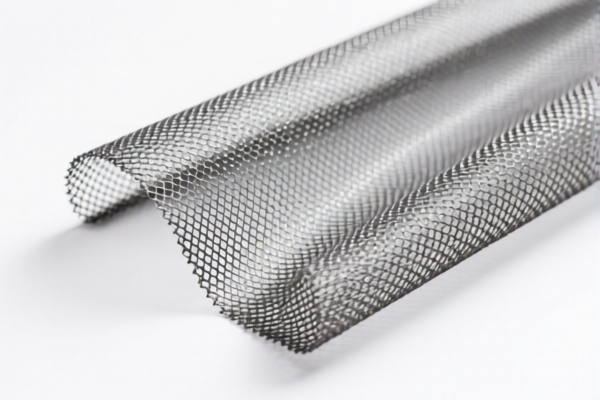
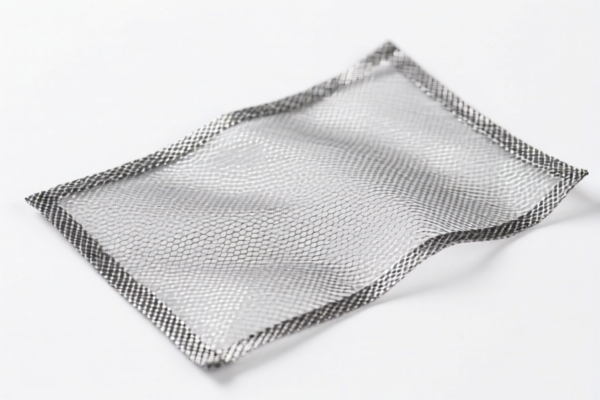
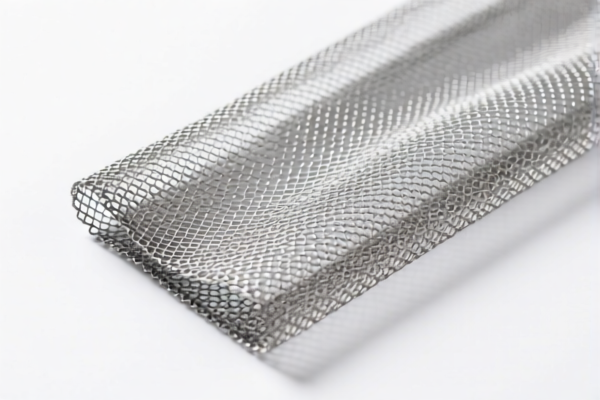
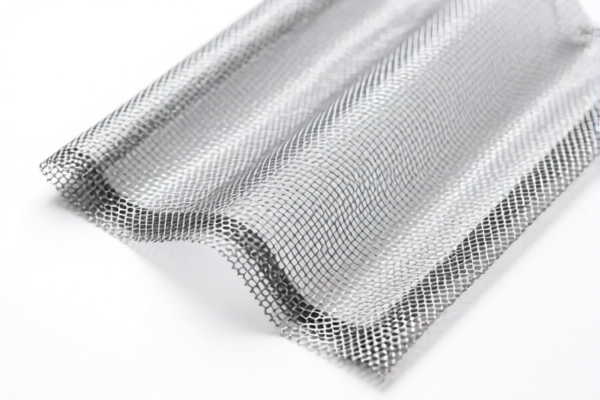
AI Analysis
🧀 Cheese Filter Cloth (Technical Textile Filters)
🌐 HS Code Reference & Customs Clearance Guide | 2024-2026 Latest Tariff Analysis | Professional Clearance Strategy
📌 I. Product Definition & Classification: What Exactly is "Cheese Filter Cloth"?
Cheese filter cloth is a specialized technical textile used in the dairy industry for separating curds from whey during cheese production. In international trade, it is classified as a technical textile product. The classification depends heavily on its specific material structure (woven vs. non-woven) and treatment (impregnated/coated).
⚠️ Key Distinction:
- If it is a specific woven fabric designed explicitly for filtration → Often falls under 5911
- If it is a non-woven material or generic textile filter → May fall under 5603 or 5907
- Crucial Note: The classification determines the tariff burden significantly, ranging from 35% to 43% due to US trade policies.
📦 II. HS Code Classification Details (Based on Provided Data)
| HS Code | Summary & Reasoning | Application Scenario | Material/State |
|---|---|---|---|
5911.40.01.00 |
Primary Filter Classification: Directly corresponds to the "filter cloth" form, meeting the characteristics of textiles for technical uses. | Standard woven cheese filters, high-precision dairy filtration. | Woven, Technical Textile |
5911.90.00.80 |
Other Technical Textiles: Classified as a textile product under the "technical textile" category, inferred as a textile filter medium based on common sense. | Generic technical textile filters not specifically listed under 5911.40. | Textile, Technical Use |
5907.00.80.90 |
Impregnated/Coated Textiles: Inferred material is textile fiber, form is cloth-like, fitting "other impregnated, coated, or covered textiles." | Cloth treated with chemicals/resins for better filtration or durability. | Impregnated/Coated Fabric |
5603.93.00.90 |
Non-Woven Fabrics: Form is cloth-like, usually composed of non-woven or woven fibers, fitting non-woven fabric product characteristics. | Non-woven cheese filter pads or disposable filter cloths. | Non-Woven Fabric |
5907.00.35.00 |
Covered/Impregnated Weaves: Material is textile, form falls under covered or impregnated fabrics, matching descriptions under this code. | Specialty coated filter cloths for industrial dairy processing. | Covered/Impregnated Weave |
5603.94.90.90 |
Other Non-Wovens: Belongs to non-woven cloth form, fitting the material attributes of other non-woven products, no obvious conflict. | Generic non-woven filter media for cheese pressing/filtration. | Non-Woven Fabric |
🔍 Key Insight:
- 5911 is the most direct classification for "filter cloth" in a technical context.
- 5907 and 5603 are alternative classifications based on material treatment (coating) or manufacturing method (non-woven).
- All classifications carry high tariffs due to US-China trade tensions.
💰 III. 2024-2026 Latest Tariff Rate Breakdown (Including Surcharges & Policy Add-ons)
✅ Applicable Country: United States (US)
✅ Origin: China (CN)
✅ Effective Date: Ongoing (as of 2024-2026 data context)
🎯 1. 5911.40.01.00 —— Primary Filter Cloth Classification
| Item | Content |
|---|---|
| Base Tariff | 8.0% (Ad Valorem) |
| Section 301 Surcharge | +25.0% (USITC Footnote) |
| IEEPA Surcharge | +10.0% (Targeting China/HK products) |
| Total Tariff Rate | 43.0% |
| Tax Calculation | CIF Value × 43% |
| De Minimis Exemption? | ❌ NO (Not eligible for Section 321 de minimis) |
| Legal Basis Path | USITC:5911.40.01.00 → Section 301: 25% → IEEPA: 10% |
📌 Explanation:
- This is the highest tariff bracket among the options.
- The 8% base tariff is standard for technical textiles.
- The 35% combined surcharge (25% + 10%) makes this a high-cost import.
- Critical: Any attempt to misclassify to lower tariffs is high-risk due to specific product descriptors.
🎯 2. 5911.90.00.80 —— Other Technical Textiles
| Item | Content |
|---|---|
| Base Tariff | 3.8% (Ad Valorem) |
| Section 301 Surcharge | +25.0% |
| IEEPA Surcharge | +10.0% |
| Total Tariff Rate | 38.8% |
| Tax Calculation | CIF Value × 38.8% |
| De Minimis Exemption? | ❌ NO |
| Legal Basis Path | USITC:5911.90.00.80 → Section 301: 25% → IEEPA: 10% |
📌 Note:
- Slightly lower than the primary filter code, but still very high.
- Suitable if the cloth does not strictly meet the "specific filter cloth" definition of 5911.40.
- Risk: Customs may reclassify to 5911.40.01.00 if evidence suggests it is primarily a filter cloth.
🎯 3. 5907.00.80.90 & 5907.00.35.00 —— Impregnated/Coated Textiles
| Item | Content |
|---|---|
| Base Tariff | 0.0% (for 5907.80) / 8.0% (for 5907.35) |
| Section 301 Surcharge | +25.0% |
| IEEPA Surcharge | +10.0% |
| Total Tariff Rate | 35.0% (for 5907.80) / 43.0% (for 5907.35) |
| Tax Calculation | CIF Value × Rate |
| De Minimis Exemption? | ❌ NO |
| Legal Basis Path | USITC:5907.xx.xx → Section 301: 25% → IEEPA: 10% |
📌 Strategy:
- 5907.00.80.90 offers the lowest total tariff (35%) if the cloth can be legitimately described as "impregnated/coated" rather than a pure filter.
- 5907.00.35.00 has the same high tariff (43%) as 5911.40.01.00.
- Caution: Must provide proof of impregnation/coating process to justify 5907 classification.
🎯 4. 5603.93.00.90 & 5603.94.90.90 —— Non-Woven Fabrics
| Item | Content |
|---|---|
| Base Tariff | 0.0% |
| Section 301 Surcharge | +25.0% |
| IEEPA Surcharge | +10.0% |
| Total Tariff Rate | 35.0% |
| Tax Calculation | CIF Value × 35% |
| De Minimis Exemption? | ❌ NO |
| Legal Basis Path | USITC:5603.xx.xx → Section 301: 25% → IEEPA: 10% |
📌 Strategy:
- If your cheese filter is non-woven (disposable or reusable pads), this is the optimal classification at 35%.
- Proof Required: Material composition reports showing non-woven structure (bonded fibers, not woven).
- Common Use: Cheese pressing cloths, disposable filter pads.
🛠️ IV. Customs Clearance Practical Advice (Avoid Pitfalls)
✅ 1. Document Checklist (All Required)
| Document | Required | Notes |
|---|---|---|
| ✅ Product Specification Sheet | ✔️ | Must detail material (woven/non-woven), treatment (coated/plain), and use (cheese filtration). |
| ✅ Material Composition Certificate | ✔️ | Essential to distinguish between 5911 (woven) and 5603 (non-woven). |
| ✅ Process Description | ✔️ | If claiming 5907, provide details on impregnation/coating process. |
| ✅ Product Photos | ✔️ | Clear images of the cloth structure (close-up of weave vs. non-woven felt). |
| ✅ Commercial Invoice | ✔️ | Accurate description: "Cheese Filter Cloth, Technical Textile, Material: [Polyester/Cotton], Structure: [Woven/Non-woven]." |
| ✅ Bill of Lading | ✔️ | Match description with invoice. |
✅ 2. Declaration Tips (Key Mnemonics)
🔥 "Structure Determines Code, Coating Lowers Rate, But 35% is the Floor!"
| Situation | Correct Declaration | Wrong Practice |
|---|---|---|
| Woven Filter Cloth | 5911.40.01.00 (43%) or 5911.90.00.80 (38.8%) |
Claiming as "Cloth" without technical detail → Risk of reclassification |
| Non-Woven Filter Pad | 5603.93.00.90 or 5603.94.90.90 (35%) |
Declaring as woven → Higher tariff (43%) |
| Coated Filter Cloth | 5907.00.80.90 (35%) |
Declaring as plain textile → Misdeclaration risk |
| Generic Textile | Not recommended | Must specify technical use for 5911 |
✅ 3. Special Cases & Handling
| Situation | Handling Advice |
|---|---|
| OEM Custom Filters | Provide client specs + material test reports to justify 5911 classification. |
| Reusble vs. Disposable | Reusable often woven (5911); Disposable often non-woven (5603). Declare accordingly. |
| Impregnated Filters | If treated for acid/alkali resistance, provide chemical treatment proof for 5907. |
| Mixed Shipments | Separate HS codes for woven and non-woven items in one shipment to avoid confusion. |
🌍 V. Global Market Comparison (2024-2026)
| Country/Region | Recommended HS Code | Total Tariff (China Origin) | Certification | Notes |
|---|---|---|---|---|
| 🇺🇸 USA | 5603.93.00.90 (Non-woven) |
35% | None specific | Best rate if non-woven. Woven = 43%. |
| 🇪🇺 EU | 5911.40.00 |
~6-8% | CE (if applicable) | No Section 301/IEEPA surcharges. |
| 🇨🇳 China | 5911.40.00 |
8% | CCC (if applicable) | Base rate only. |
| 🇯🇵 Japan | 5911.40.00 |
~6% | JIS | Low base rate, no major surcharges. |
📌 Conclusion:
- USA is the most expensive market for cheese filter cloths due to 35-43% total tariffs.
- Non-woven classification (5603) offers the lowest rate (35%) in the US.
- Woven/Technical filter (5911) is the highest (43%).
- Strategy: If possible, switch to non-woven materials or ensure accurate classification to minimize costs.
📌 VI. Common Errors & Pitfalls (Lessons Learned)
❌ Error 1: Declaring all filter cloths as 5911.40.01.00
👉 Consequence: Paying 43% when 35% is possible if non-woven.
👉 Fix: Check material structure. If non-woven, use 5603.
❌ Error 2: Ignoring the "Coated" aspect
👉 Consequence: Misclassification if cloth is impregnated.
👉 Fix: Provide coating process documents to support 5907 classification (35% or 43% depending on code).
❌ Error 3: Vague Description "Cheese Cloth"
👉 Consequence: Customs detention, reclassification, fines.
👉 Fix: Use precise terms: "Technical Filter Cloth, Non-Woven, Polyester, for Dairy Use."
❌ Error 4: Assuming De Minimis Applies
👉 Consequence: Section 321 (De Minimis) DOES NOT APPLY to these HS codes from China due to surcharges.
👉 Fix: Plan for full tariff payment.
🎯 VII. Conclusion: Professional Declaration, Cost Optimization!
🎯 Remember the Golden Rule:
🔹 "Non-Woven = 35%, Woven = 43%, Coated = 35% or 43%.
🔹 "Structure is Key, Documents are Queen, No De Minimis for You!"
📌 Pro Tip:
- If your product is non-woven, insist on 5603 classification for the 35% rate.
- If woven, prepare for 43%.
- Always provide material composition and structure photos to Customs.
- Consider sourcing from non-China origins (e.g., Vietnam, India) to avoid US surcharges (check local tariffs).
📣 Immediate Action:
📞 Consult a Customs Broker + Provide Material Test Reports + Apply for Advance Ruling if shipment value is high.
🚀 Optimize Your Supply Chain to minimize the 35-43% tariff burden!
✨ Professional Customs Clearance Starts with Accurate Classification!
💼 Every Percentage Point Counts in Your Profit Margin!
Customer Reviews
About HS Code Classification
The Harmonized System (HS) is an internationally standardized nomenclature developed by the World Customs Organization (WCO) to classify traded products. Over 200 countries use the HS system as the basis for customs tariffs, trade statistics, and import/export regulations.
Each HS code follows a hierarchical structure:
- Chapter (2 digits) — Broad category of goods (e.g., Chapter 84: Machinery and Mechanical Appliances)
- Heading (4 digits) — More specific grouping within the chapter
- Subheading (6 digits) — Internationally standardized breakdown, used by all WCO member countries
- National subdivisions (8-10 digits) — Country-specific extensions for further classification, such as US HTSUS 10-digit codes
Correct HS code classification is essential for smooth customs clearance, accurate duty payment, and compliance with trade regulations. Misclassification can lead to customs delays, overpayment of duties, or penalties.
When importing from CN to US, the applicable tariff rates may include:
- Most-Favored-Nation (MFN) rate — The standard duty rate applied to WTO members
- General rate — Applied to countries without trade agreements
- Trade remedy duties — Additional tariffs such as Section 301 (anti-dumping), Section 232 (national security), or countervailing duties
The information provided on this page is for reference purposes only. For official classification, please consult with your local customs authority or a licensed customs broker.