corrosion resistant vinyl elastomer resin
CN → US| HS编码 | 关税税率 | 原产国 | 目的国 | 文档 |
|---|---|---|---|---|
| 3904905000 | 41.5% | CN | US | 官方文档 |
| 3904901000 | 35.0% | CN | US | 官方文档 |
| 3901905501 | 41.5% | CN | US | 官方文档 |
| 3901901000 | 35.0% | CN | US | 官方文档 |
| 3901901000 | 35.0% | CN | US | 官方文档 |
商品图片
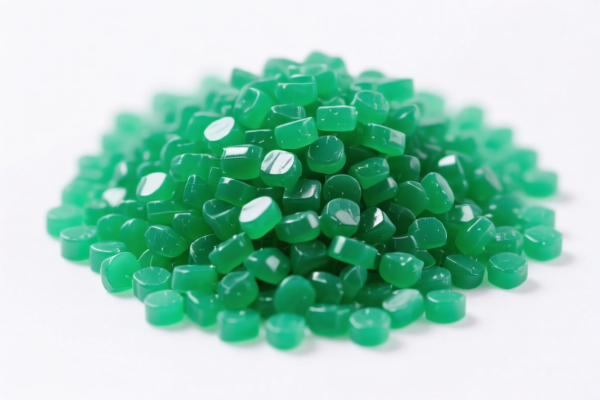


AI分析
🧪 Corrosion Resistant Vinyl Elastomer Resin: HS Code Classification & US Customs Clearance Guide (2026)
🌐 HS Code Reference & Customs Clearance Strategy | 2026 Latest Tariff Analysis | Professional Entry Strategy
📌 I. Product Definition & Classification: What is "Vinyl Elastomer Resin"?
"Corrosion Resistant Vinyl Elastomer Resin" typically refers to a polymer material based on vinyl monomers (such as ethylene, vinyl chloride, or other vinyl derivatives) that possesses elastic properties (elastomer) and is supplied in its primary form (resin/pellets/powder).
In international trade, classification depends heavily on: 1. Base Monomer: Is it Ethylene-based (Vinyl polymer), Vinyl Chloride-based, or another halogenated olefin? 2. State: Is it in primary form (resin) or processed? 3. Properties: Does it behave as an elastomer (rubber-like elasticity)?
⚠️ Key Classification Trap:
- If the material is an Ethylene Polymer (including copolymers) in primary form → Look at Chapter 3901.
- If the material is a Vinyl Chloride or Halogenated Olefin in primary form → Look at Chapter 3904.
- "Elastomer" implies cross-linking potential or specific mechanical properties, but if it is sold as a raw "Resin," it is often classified under the base polymer heading unless it is specifically prepared for rubber use.
📦 II. HS Code Classification Details (2026 Latest Tariff Mapping)
Based on the provided data, there are four potential HS Codes depending on the precise chemical composition. Below is the detailed breakdown.
| HS Code | Product Description & Matching Logic | Tax Rate (US Import from China) | Tax Breakdown |
|---|---|---|---|
| 3904.90.50.00 | Vinyl Polymer / Elastomer Resin Summary: Material matches vinyl polymers (vinyl elastomers); State matches raw resin form. Note: This is a generic "Other" category for vinyl polymers not specified elsewhere. |
41.5% | Base: 6.5% Sec 301: 25.0% Section 122: 10% |
| 3904.90.10.00 | Chlorinated/Halogenated Vinyl Polymer Summary: High consistency. Product name "Vinyl Elastomer" matches "Vinyl Chloride or other halogenated olefin polymers" + "Elastomer" traits. "Resin" matches "Primary Form." Note: This assumes the vinyl component is halogenated (e.g., PVC-based). |
35.0% | Base: 0.0% Sec 301: 25.0% Section 122: 10% |
| 3901.90.55.01 | Ethylene Copolymer (Primary Form) Summary: "Vinyl" often refers to ethylene derivatives. "Resin" is primary shape. Matches Ethylene Copolymer (Primary Form). Note: "Vinyl" is sometimes used loosely for ethylene-based polymers in trade. |
41.5% | Base: 6.5% Sec 301: 25.0% Section 122: 10% |
| 3901.90.10.00 | Ethylene Polymer / Elastomer Resin Summary: "Vinyl Elastomer" matches "Ethylene Polymer" material + "Elastomer" attribute. "Resin" matches "Primary Form." Note: This is a specific subheading for certain ethylene polymers. |
35.0% | Base: 0.0% Sec 301: 25.0% Section 122: 10% |
🔍 Critical Distinction:
- 3901 Series (Ethylene-based) vs. 3904 Series (Vinyl Chloride/Halogenated-based): You must know the exact chemical composition. "Vinyl" can technically refer to the vinyl group (-CH=CH2) present in many polymers, but in customs terminology, it often points to PVC (Polyvinyl Chloride) unless specified as "Ethylene." - Tax Difference: The Base Tariff varies between 0% and 6.5%, leading to a 6.5% difference in total cost. However, both are subject to high additional tariffs.
💰 III. 2026 Latest Tariff Rate Detail (Including Surcharges)
✅ Applicable Country: United States (US)
✅ Origin: China (CN)
✅ Effective Time: Current tariffs apply (including Section 301 and IEEPA/Section 122 provisions)
🎯 1. 3904.90.10.00 & 3901.90.10.00 —— Lower Total Rate (35.0%)
| Item | Content |
|---|---|
| Base Tariff | 0% (ad valorem) |
| USITC Surcharge (Sec 301) | +25% (Section 301 Tariff) |
| IEEPA/Section 122 Surcharge | +10% (Additional duty on Chinese goods) |
| Total Rate | 35.0% |
| Calculation | CIF Value × 35% |
| De Minimis Exemption | ❌ Not Eligible (Deny de minimis) |
| Legal Path | USITC:3904.90.10.00 / USITC:3901.90.10.00 → FOOTNOTE:301 → IEEPA |
📌 Explanation:
- These codes have a 0% base rate, making them slightly more favorable than the 6.5% base codes. - The 25% Sec 301 tariff is mandatory for Chinese-origin plastics/polymers. - The 10% Section 122/IEEPA tariff adds further burden.
🎯 2. 3904.90.50.00 & 3901.90.55.01 —— Higher Total Rate (41.5%)
| Item | Content |
|---|---|
| Base Tariff | 6.5% (ad valorem) |
| USITC Surcharge (Sec 301) | +25% (Section 301 Tariff) |
| IEEPA/Section 122 Surcharge | +10% (Additional duty on Chinese goods) |
| Total Rate | 41.5% |
| Calculation | CIF Value × 41.5% |
| De Minimis Exemption | ❌ Not Eligible (Deny de minimis) |
| Legal Path | USITC:3904.90.50.00 / USITC:3901.90.55.01 → FOOTNOTE:301 → IEEPA |
📌 Explanation:
- These codes have a 6.5% base rate. - While the base rate is higher, the additional tariffs remain the same (25% + 10%). - Total Impact: You pay 6.5% more in base duties compared to the 0% base codes.
🛠️ IV. Customs Clearance Practical Advice
✅ 1. Documentation Checklist (Mandatory)
| Document | Required | Notes |
|---|---|---|
| ✅ Product Specification Sheet | ✔️ | Must explicitly state: Chemical Composition (e.g., % Ethylene vs. Vinyl Chloride), Molecular Weight, Elastomer Properties. |
| ✅ Safety Data Sheet (SDS) | ✔️ | Section 3 must list chemical ingredients. Confirms "Elastomer" and "Corrosion Resistant" claims. |
| ✅ Material Safety Data Sheet | ✔️ | Proves the material is not hazardous waste. |
| ✅ Commercial Invoice | ✔️ | Must use precise description: "Vinyl Elastomer Resin, Corrosion Resistant, Primary Form" |
| ✅ Packing List | ✔️ | Net/Gross weight, quantity (kg/lbs). |
| ✅ Certificate of Origin (CO) | ✔️ | If claimed to be non-Chinese, CO is critical. If Chinese, CO does not exempt from 301/122 tariffs. |
| ✅ Formula/Composition Proof | ✔️ | Critical: To distinguish between 3901 (Ethylene) and 3904 (Vinyl Chloride), customs may require a lab report or manufacturer formula. |
✅ 2. Declaration Strategy (Key Tips)
🔥 "Clarify Monomer, State Form, Avoid Ambiguity!"
| Scenario | Correct Declaration | Risk if Incorrect |
|---|---|---|
| Pure Ethylene Polymer | 3901.90.10.00 (0% base) or 3901.90.55.01 (6.5% base) |
Misclassification as 3904 may lead to penalties if composition differs. |
| PVC-Based Elastomer | 3904.90.10.00 (0% base) |
If labeled "Vinyl" but is Ethylene-based, customs may reclassify. |
| "Resin" Form | Must state "Primary Form" or "Resin" | If sold as "Pre-mixed compound," it may fall under a different heading (e.g., 3915). |
| Corrosion Resistant | Use as Usage Description, not HS determinant | HS is based on material, not function. Do not claim "Corrosion Resistant" to change code. |
✅ 3. Special Handling for "Elastomer"
- Elastomers vs. Plastics: If the resin is uncross-linked and in primary form (pellets/powder), it is classified as a Plastic/Polymer (Chapter 39).
- If Cross-linked: If it is pre-cross-linked rubber, it may fall under Chapter 40 (Rubber). However, "Resin" strongly implies Chapter 39.
- Recommendation: Provide a technical statement confirming the material is in primary form (not vulcanized/rubberized yet).
🌍 V. Global Market Comparison (2026)
| Country/Region | Recommended HS Code | Base Tariff | Surcharge (China) | Total Est. Rate | Notes |
|---|---|---|---|---|---|
| 🇺🇸 USA | 3901.90.10.00 or 3904.90.10.00 |
0% - 6.5% | 25% (Sec 301) + 10% (122) | 35% - 41.5% | High barrier. De minimis exempt. |
| 🇨🇳 China (Import) | 3901.90.10.00 / 3904.90.10.00 |
6.5% - 8.0% | 0% (Most Favored Nation) | ~7-10% | Standard MFN rate applies. |
| 🇪🇺 EU | 3901.90 / 3904.90 |
6.5% | 0% (if no trade war) | ~6.5% | Check for anti-dumping duties on specific vinyl chlorides. |
| 🇬🇧 UK | 3901.90 / 3904.90 |
6.5% | 0% | ~6.5% | Post-Brexit tariff schedule applies. |
| 🇯🇵 Japan | 3901.90 / 3904.90 |
6.0% | 0% | ~6.0% | CPTPP may offer reductions if originating from member countries. |
📌 Conclusion:
- USA is the most expensive market due to 35-41.5% total tariffs.
- EU/UK/Japan are significantly cheaper (~6-8%).
- Consider supply chain diversification if targeting the US market.
📌 VI. Common Mistakes & Pitfalls (Lessons Learned)
❌ Mistake 1: Labeling as "Vinyl" without specifying if it's PVC or Ethylene-based.
👉 Consequence: Customs may assign the higher 6.5% base tariff (3901.90.55.01 or 3904.90.50.00) or demand a lab test, causing delays.
❌ Mistake 2: Claiming "Elastomer" to get rubber classification (Chapter 40).
👉 Consequence: If it's raw resin, it must be Chapter 39. Misclassification leads to penalties and back-taxes.
❌ Mistake 3: Ignoring Section 122/IEEPA 10% tariff.
👉 Consequence: Underpayment by 10%. Customs will assess additional duties + interest.
❌ Mistake 4: Using "Corrosion Resistant" as the primary description.
👉 Consequence: This is a property, not a material. It does not affect HS code but helps in pre-clearance explanations.
✅ Correct Approach:
"Ethylene-Vinyl Copolymer Elastomer Resin, Primary Form, Corrosion Resistant, Unvulcanized, CAS No. XXXXX-XX-X"
🎯 VII. Conclusion: Precision Classification Saves Money
🎯 Remember the Golden Rule:
🔹 "Vinyl = PVC/Halogen? Go 3904. Ethylene? Go 3901."
🔹 "Resin = Primary Form = Chapter 39."
🔹 "USA Tariff = Base + 25% + 10%. Total 35-41.5%."
📌 Pro Tip:
If your supplier is in Vietnam, Mexico, or Thailand, you may qualify for lower or zero US tariffs (NAFTA/USMCA or ASEAN benefits).
Action:
📞 Request a Form B (or equivalent) from your supplier.
📄 Apply for a Pre-Ruling with CBP if the material is borderline between Ethylene and Vinyl Chloride.
🚀 Optimize Supply Chain: If targeting the US, consider sourcing from non-China origins to save 35-41.5% in duties.
✨ Professional Customs Clearance Starts with Accurate Classification!
💼 Every percentage point matters in global trade!
用户评价
关于 HS 编码归类
协调制度(HS)是由世界海关组织(WCO)制定的国际贸易商品分类标准。全球 200 多个国家采用 HS 系统作为海关关税、贸易统计和进出口监管的基础。
每个 HS 编码遵循以下层级结构:
- 章(2 位)——商品大类(例如:第 84 章:机器和机械设备)
- 品目(4 位)——章内的更具体分类
- 子目(6 位)——国际通用细分,所有 WCO 成员国统一使用
- 本国细分(8-10 位)——各国自行扩展的细分编码,如美国 HTSUS 10 位编码
正确的 HS 编码归类对于顺利通关、准确缴纳关税和遵守贸易法规至关重要。错误归类可能导致海关延误、多缴关税或罚款。
从CN进口到US时,适用的关税税率可能包括:
- 最惠国(MFN)税率——适用于 WTO 成员国的标准关税税率
- 普通税率——适用于无贸易协定国家
- 贸易救济关税——附加关税,如 301 条款(反倾销)、232 条款(国家安全)或反补贴税
本页内容仅供参考。如需正式归类,请咨询当地海关或持牌报关代理。