corrosion resistant vinyl elastomer resin
CN → US| HS Code | Tariff Rate | Origin | Destination | Doc |
|---|---|---|---|---|
| 3904905000 | 41.5% | CN | US | Official Doc |
| 3904901000 | 35.0% | CN | US | Official Doc |
| 3901905501 | 41.5% | CN | US | Official Doc |
| 3901901000 | 35.0% | CN | US | Official Doc |
| 3901901000 | 35.0% | CN | US | Official Doc |
Product Images
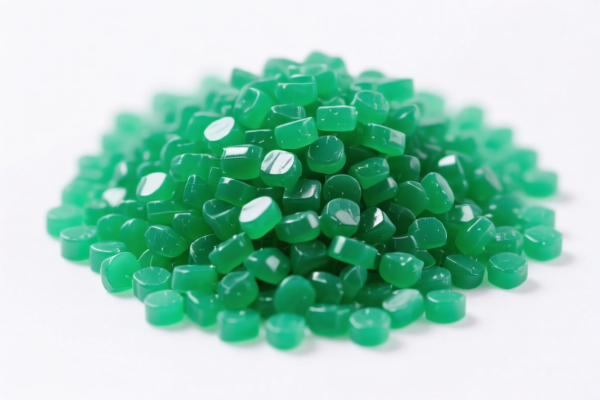


AI Analysis
🧪 Corrosion Resistant Vinyl Elastomer Resin: HS Code Classification & US Customs Clearance Guide (2026)
🌐 HS Code Reference & Customs Clearance Strategy | 2026 Latest Tariff Analysis | Professional Entry Strategy
📌 I. Product Definition & Classification: What is "Vinyl Elastomer Resin"?
"Corrosion Resistant Vinyl Elastomer Resin" typically refers to a polymer material based on vinyl monomers (such as ethylene, vinyl chloride, or other vinyl derivatives) that possesses elastic properties (elastomer) and is supplied in its primary form (resin/pellets/powder).
In international trade, classification depends heavily on: 1. Base Monomer: Is it Ethylene-based (Vinyl polymer), Vinyl Chloride-based, or another halogenated olefin? 2. State: Is it in primary form (resin) or processed? 3. Properties: Does it behave as an elastomer (rubber-like elasticity)?
⚠️ Key Classification Trap:
- If the material is an Ethylene Polymer (including copolymers) in primary form → Look at Chapter 3901.
- If the material is a Vinyl Chloride or Halogenated Olefin in primary form → Look at Chapter 3904.
- "Elastomer" implies cross-linking potential or specific mechanical properties, but if it is sold as a raw "Resin," it is often classified under the base polymer heading unless it is specifically prepared for rubber use.
📦 II. HS Code Classification Details (2026 Latest Tariff Mapping)
Based on the provided data, there are four potential HS Codes depending on the precise chemical composition. Below is the detailed breakdown.
| HS Code | Product Description & Matching Logic | Tax Rate (US Import from China) | Tax Breakdown |
|---|---|---|---|
| 3904.90.50.00 | Vinyl Polymer / Elastomer Resin Summary: Material matches vinyl polymers (vinyl elastomers); State matches raw resin form. Note: This is a generic "Other" category for vinyl polymers not specified elsewhere. |
41.5% | Base: 6.5% Sec 301: 25.0% Section 122: 10% |
| 3904.90.10.00 | Chlorinated/Halogenated Vinyl Polymer Summary: High consistency. Product name "Vinyl Elastomer" matches "Vinyl Chloride or other halogenated olefin polymers" + "Elastomer" traits. "Resin" matches "Primary Form." Note: This assumes the vinyl component is halogenated (e.g., PVC-based). |
35.0% | Base: 0.0% Sec 301: 25.0% Section 122: 10% |
| 3901.90.55.01 | Ethylene Copolymer (Primary Form) Summary: "Vinyl" often refers to ethylene derivatives. "Resin" is primary shape. Matches Ethylene Copolymer (Primary Form). Note: "Vinyl" is sometimes used loosely for ethylene-based polymers in trade. |
41.5% | Base: 6.5% Sec 301: 25.0% Section 122: 10% |
| 3901.90.10.00 | Ethylene Polymer / Elastomer Resin Summary: "Vinyl Elastomer" matches "Ethylene Polymer" material + "Elastomer" attribute. "Resin" matches "Primary Form." Note: This is a specific subheading for certain ethylene polymers. |
35.0% | Base: 0.0% Sec 301: 25.0% Section 122: 10% |
🔍 Critical Distinction:
- 3901 Series (Ethylene-based) vs. 3904 Series (Vinyl Chloride/Halogenated-based): You must know the exact chemical composition. "Vinyl" can technically refer to the vinyl group (-CH=CH2) present in many polymers, but in customs terminology, it often points to PVC (Polyvinyl Chloride) unless specified as "Ethylene." - Tax Difference: The Base Tariff varies between 0% and 6.5%, leading to a 6.5% difference in total cost. However, both are subject to high additional tariffs.
💰 III. 2026 Latest Tariff Rate Detail (Including Surcharges)
✅ Applicable Country: United States (US)
✅ Origin: China (CN)
✅ Effective Time: Current tariffs apply (including Section 301 and IEEPA/Section 122 provisions)
🎯 1. 3904.90.10.00 & 3901.90.10.00 —— Lower Total Rate (35.0%)
| Item | Content |
|---|---|
| Base Tariff | 0% (ad valorem) |
| USITC Surcharge (Sec 301) | +25% (Section 301 Tariff) |
| IEEPA/Section 122 Surcharge | +10% (Additional duty on Chinese goods) |
| Total Rate | 35.0% |
| Calculation | CIF Value × 35% |
| De Minimis Exemption | ❌ Not Eligible (Deny de minimis) |
| Legal Path | USITC:3904.90.10.00 / USITC:3901.90.10.00 → FOOTNOTE:301 → IEEPA |
📌 Explanation:
- These codes have a 0% base rate, making them slightly more favorable than the 6.5% base codes. - The 25% Sec 301 tariff is mandatory for Chinese-origin plastics/polymers. - The 10% Section 122/IEEPA tariff adds further burden.
🎯 2. 3904.90.50.00 & 3901.90.55.01 —— Higher Total Rate (41.5%)
| Item | Content |
|---|---|
| Base Tariff | 6.5% (ad valorem) |
| USITC Surcharge (Sec 301) | +25% (Section 301 Tariff) |
| IEEPA/Section 122 Surcharge | +10% (Additional duty on Chinese goods) |
| Total Rate | 41.5% |
| Calculation | CIF Value × 41.5% |
| De Minimis Exemption | ❌ Not Eligible (Deny de minimis) |
| Legal Path | USITC:3904.90.50.00 / USITC:3901.90.55.01 → FOOTNOTE:301 → IEEPA |
📌 Explanation:
- These codes have a 6.5% base rate. - While the base rate is higher, the additional tariffs remain the same (25% + 10%). - Total Impact: You pay 6.5% more in base duties compared to the 0% base codes.
🛠️ IV. Customs Clearance Practical Advice
✅ 1. Documentation Checklist (Mandatory)
| Document | Required | Notes |
|---|---|---|
| ✅ Product Specification Sheet | ✔️ | Must explicitly state: Chemical Composition (e.g., % Ethylene vs. Vinyl Chloride), Molecular Weight, Elastomer Properties. |
| ✅ Safety Data Sheet (SDS) | ✔️ | Section 3 must list chemical ingredients. Confirms "Elastomer" and "Corrosion Resistant" claims. |
| ✅ Material Safety Data Sheet | ✔️ | Proves the material is not hazardous waste. |
| ✅ Commercial Invoice | ✔️ | Must use precise description: "Vinyl Elastomer Resin, Corrosion Resistant, Primary Form" |
| ✅ Packing List | ✔️ | Net/Gross weight, quantity (kg/lbs). |
| ✅ Certificate of Origin (CO) | ✔️ | If claimed to be non-Chinese, CO is critical. If Chinese, CO does not exempt from 301/122 tariffs. |
| ✅ Formula/Composition Proof | ✔️ | Critical: To distinguish between 3901 (Ethylene) and 3904 (Vinyl Chloride), customs may require a lab report or manufacturer formula. |
✅ 2. Declaration Strategy (Key Tips)
🔥 "Clarify Monomer, State Form, Avoid Ambiguity!"
| Scenario | Correct Declaration | Risk if Incorrect |
|---|---|---|
| Pure Ethylene Polymer | 3901.90.10.00 (0% base) or 3901.90.55.01 (6.5% base) |
Misclassification as 3904 may lead to penalties if composition differs. |
| PVC-Based Elastomer | 3904.90.10.00 (0% base) |
If labeled "Vinyl" but is Ethylene-based, customs may reclassify. |
| "Resin" Form | Must state "Primary Form" or "Resin" | If sold as "Pre-mixed compound," it may fall under a different heading (e.g., 3915). |
| Corrosion Resistant | Use as Usage Description, not HS determinant | HS is based on material, not function. Do not claim "Corrosion Resistant" to change code. |
✅ 3. Special Handling for "Elastomer"
- Elastomers vs. Plastics: If the resin is uncross-linked and in primary form (pellets/powder), it is classified as a Plastic/Polymer (Chapter 39).
- If Cross-linked: If it is pre-cross-linked rubber, it may fall under Chapter 40 (Rubber). However, "Resin" strongly implies Chapter 39.
- Recommendation: Provide a technical statement confirming the material is in primary form (not vulcanized/rubberized yet).
🌍 V. Global Market Comparison (2026)
| Country/Region | Recommended HS Code | Base Tariff | Surcharge (China) | Total Est. Rate | Notes |
|---|---|---|---|---|---|
| 🇺🇸 USA | 3901.90.10.00 or 3904.90.10.00 |
0% - 6.5% | 25% (Sec 301) + 10% (122) | 35% - 41.5% | High barrier. De minimis exempt. |
| 🇨🇳 China (Import) | 3901.90.10.00 / 3904.90.10.00 |
6.5% - 8.0% | 0% (Most Favored Nation) | ~7-10% | Standard MFN rate applies. |
| 🇪🇺 EU | 3901.90 / 3904.90 |
6.5% | 0% (if no trade war) | ~6.5% | Check for anti-dumping duties on specific vinyl chlorides. |
| 🇬🇧 UK | 3901.90 / 3904.90 |
6.5% | 0% | ~6.5% | Post-Brexit tariff schedule applies. |
| 🇯🇵 Japan | 3901.90 / 3904.90 |
6.0% | 0% | ~6.0% | CPTPP may offer reductions if originating from member countries. |
📌 Conclusion:
- USA is the most expensive market due to 35-41.5% total tariffs.
- EU/UK/Japan are significantly cheaper (~6-8%).
- Consider supply chain diversification if targeting the US market.
📌 VI. Common Mistakes & Pitfalls (Lessons Learned)
❌ Mistake 1: Labeling as "Vinyl" without specifying if it's PVC or Ethylene-based.
👉 Consequence: Customs may assign the higher 6.5% base tariff (3901.90.55.01 or 3904.90.50.00) or demand a lab test, causing delays.
❌ Mistake 2: Claiming "Elastomer" to get rubber classification (Chapter 40).
👉 Consequence: If it's raw resin, it must be Chapter 39. Misclassification leads to penalties and back-taxes.
❌ Mistake 3: Ignoring Section 122/IEEPA 10% tariff.
👉 Consequence: Underpayment by 10%. Customs will assess additional duties + interest.
❌ Mistake 4: Using "Corrosion Resistant" as the primary description.
👉 Consequence: This is a property, not a material. It does not affect HS code but helps in pre-clearance explanations.
✅ Correct Approach:
"Ethylene-Vinyl Copolymer Elastomer Resin, Primary Form, Corrosion Resistant, Unvulcanized, CAS No. XXXXX-XX-X"
🎯 VII. Conclusion: Precision Classification Saves Money
🎯 Remember the Golden Rule:
🔹 "Vinyl = PVC/Halogen? Go 3904. Ethylene? Go 3901."
🔹 "Resin = Primary Form = Chapter 39."
🔹 "USA Tariff = Base + 25% + 10%. Total 35-41.5%."
📌 Pro Tip:
If your supplier is in Vietnam, Mexico, or Thailand, you may qualify for lower or zero US tariffs (NAFTA/USMCA or ASEAN benefits).
Action:
📞 Request a Form B (or equivalent) from your supplier.
📄 Apply for a Pre-Ruling with CBP if the material is borderline between Ethylene and Vinyl Chloride.
🚀 Optimize Supply Chain: If targeting the US, consider sourcing from non-China origins to save 35-41.5% in duties.
✨ Professional Customs Clearance Starts with Accurate Classification!
💼 Every percentage point matters in global trade!
Customer Reviews
About HS Code Classification
The Harmonized System (HS) is an internationally standardized nomenclature developed by the World Customs Organization (WCO) to classify traded products. Over 200 countries use the HS system as the basis for customs tariffs, trade statistics, and import/export regulations.
Each HS code follows a hierarchical structure:
- Chapter (2 digits) — Broad category of goods (e.g., Chapter 84: Machinery and Mechanical Appliances)
- Heading (4 digits) — More specific grouping within the chapter
- Subheading (6 digits) — Internationally standardized breakdown, used by all WCO member countries
- National subdivisions (8-10 digits) — Country-specific extensions for further classification, such as US HTSUS 10-digit codes
Correct HS code classification is essential for smooth customs clearance, accurate duty payment, and compliance with trade regulations. Misclassification can lead to customs delays, overpayment of duties, or penalties.
When importing from CN to US, the applicable tariff rates may include:
- Most-Favored-Nation (MFN) rate — The standard duty rate applied to WTO members
- General rate — Applied to countries without trade agreements
- Trade remedy duties — Additional tariffs such as Section 301 (anti-dumping), Section 232 (national security), or countervailing duties
The information provided on this page is for reference purposes only. For official classification, please consult with your local customs authority or a licensed customs broker.