cotton paper rolls for reports
CN → US| HS编码 | 关税税率 | 原产国 | 目的国 | 文档 |
|---|---|---|---|---|
| 4823908680 | 35.0% | CN | US | 官方文档 |
| 4802204020 | 35.0% | CN | US | 官方文档 |
| 4823906700 | 35.0% | CN | US | 官方文档 |
| 4817204000 | 35.0% | CN | US | 官方文档 |
| 4802557020 | 35.0% | CN | US | 官方文档 |
商品图片
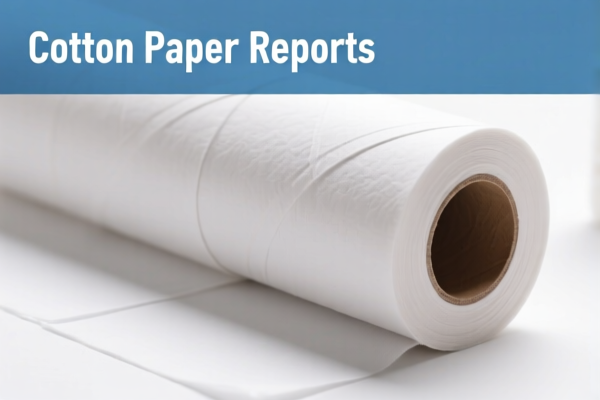
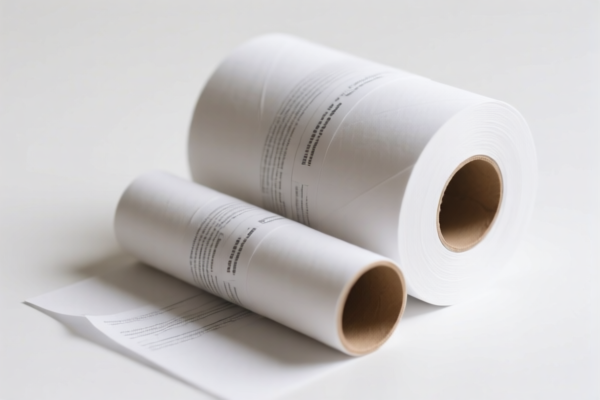
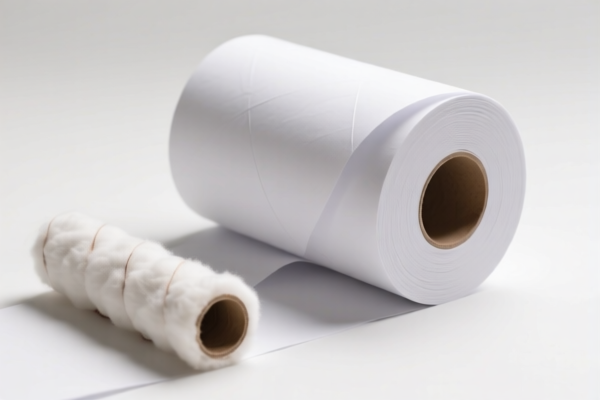
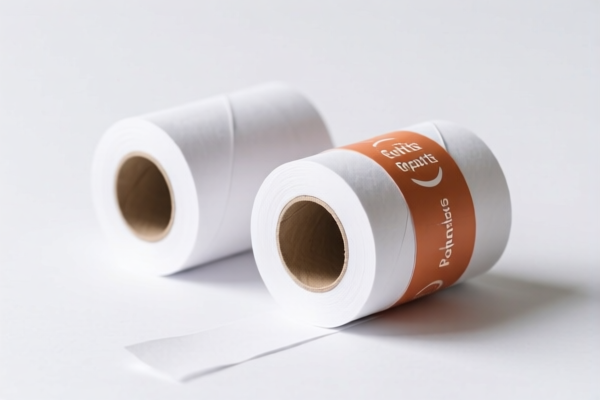
AI分析
📜 Cotton Paper Rolls (For Reports & Documentation)
🌐 HS Code Reference & Customs Clearance Guide | 2026 Latest Tariff Analysis | Professional Entry Strategies
📌 I. Product Definition & Classification: What Exactly is "Cotton Paper"?
Cotton paper rolls, specifically those intended for reports, official documents, or archival purposes, are high-grade cellulose-based products. In international trade, they are often misclassified due to the confusion between "cotton fiber content" and "paper material."
Key Distinction: * Not Textile: Even if the paper contains cotton fibers (for durability/watermark), if it is in the form of rolls/sheets for writing/printing, it is classified as Paper/Board, not Textile (Chapter 50-55). * Material Composition: Typically composed of cellulose fibers, where cotton may be a component, or purely chemical wood pulp with a "cotton-like" feel. * Form: Continuous rolls, suitable for office equipment (dot matrix, plotters, printers) or archival storage.
⚠️ Critical Classification Point:
- If it is uncalendered, uncoated, and primarily cellulose → Chapter 48 (Paper/Paperboard).
- Do NOT classify under Textiles (e.g., Cotton Yarn) unless it is loose fiber or woven fabric.
- The "Cotton" in the name refers to the material composition, not the textile nature.
📦 II. HS Code Classification Details (2026 Latest Tariff Authority Cross-Reference)
Based on the provided data for "Cotton Paper Rolls," here are the precise HS Codes and their logical mapping:
| HS Code | Product Description (Based on Data) | Key Characteristics | Why This Code? |
|---|---|---|---|
4823.90.86.80 |
Cotton Paper Rolls: Material is cellulose fiber network/paper; Form is paper product. | Generic paper roll, cellulose-based. | Best for general-purpose cellulose paper rolls where specific cotton % is not the primary classifier or fits under "Other paper articles." |
4802.20.40.20 |
Uncalendered Paper Rolls with Cotton Material: Meets cotton fiber characteristics. | Uncalendered (no surface gloss/texture treatment), contains cotton fibers. | Specific for uncalendered paper. If the paper is not smoothed/ironed after formation, this is the most accurate fit. |
4823.90.67.00 |
Cotton Paper Rolls: Cellulose product, rolled form, no material conflict. | Rolled cellulose products, other. | Similar to 4823.90.86.80 but may refer to specific sub-category for "Other" paper articles. Use if 4823.90.86.80 is unavailable or specific regional variation applies. |
4817.20.40.00 |
Paper Rolls for Document Carrier: Paper material, primary form. | Paper for writing/printing/documents. | Focuses on the function (document carrier). If the roll is specifically for printing/reports and not just raw material, this may apply. |
4802.55.70.20 |
Paper Rolls with >25% Cotton Fiber: Meets material & rolled form definition. | High cotton content (>25%). | Crucial: If the paper explicitly contains more than 25% by weight of cotton fibers, this is the most technically accurate code for "Cotton Paper." |
🔍 Priority Logic:
1. Check Cotton Content: If >25% cotton by weight → Prioritize4802.55.70.20.
2. Check Processing: If uncalendered (rough surface) → Prioritize4802.20.40.20.
3. General Case: If standard calendered paper or general cellulose → Use4823.90.86.80or4823.90.67.00.
4. Function-Specific: If strictly for "document carrying" (e.g., continuous form paper) → Consider4817.20.40.00.
💰 III. 2026 Latest Tariff Rate Breakdown (Including Surcharge, Policy Add-ons)
✅ Applicable Country: United States (US)
✅ Origin: China (CN)
✅ Effective Date: November 10, 2025 onwards (including subsequent imports)
All HS Codes listed in the data share the same tariff structure due to the broad "Section VI" (Paper/Paperboard) general treatment under current trade policies.
🎯 1. All Applicable HS Codes (4802.20.40.20, 4802.55.70.20, 4817.20.40.00, 4823.90.67.00, 4823.90.86.80)
| Item | Content |
|---|---|
| Base Tariff | 0% (ad valorem) |
| USITC Surcharge (Section 301) | +25% (High tariff for many paper products from China) |
| IEEPA Surcharge (Section 122 / Trade Act) | +10% (Targeted Chinese/HK products, effective Nov 10, 2025) |
| Total Tariff Rate | 35.0% |
| Tax Calculation | CIF Value × 35% |
| De Minimis Eligibility | ❌ Not Eligible (Most Section 301/IEEPA tariffs exclude de minimis exemption) |
| Legal Basis Path | IEEPA:9903.01.24 → USITC:48xx.xx → FOOTNOTE:301 → FOOTNOTE:122 |
📌 Explanation:
- "Base Tariff 0%": Most paper products have a low base duty under USHTS.
- "301 Surcharge 25%": The Trump-era/Biden-continuing trade war tariff on Chinese goods. Paper products are often caught in this net.
- "122 Clause 10%": Refers to additional tariffs under the Trade Expansion Act of 1962 (Section 122) or similar emergency powers recently reinforced.
- Total 35%: This is a significant cost. Importers must factor this into landed cost calculations immediately.
🛠️ IV. Customs Clearance Practical Advice (Avoiding Pitfalls)
✅ 1. Document Checklist (Must-Haves)
| Document | Required? | Notes |
|---|---|---|
| ✅ Product Specification Sheet | ✔️ | Must state: Material (Cellulose/Cotton blend), Weight (gsm), Width, Length, Form (Roll). |
| ✅ Cotton Content Declaration | ✔️ | Critical: Must explicitly state % of cotton fiber (e.g., "25% Cotton, 75% Wood Pulp"). This determines if 4802.55 or 4802.20 applies. |
| ✅ Uncoated/Uncalendered Statement | ✔️ | If claiming 4802.20, provide proof of uncalendered status (e.g., micrograph photos, manufacturer specs). |
| ✅ Commercial Invoice | ✔️ | Description: "Cotton Paper Rolls for Report Printing, Uncoated, Rolled Form." Avoid vague terms like "Office Supplies." |
| ✅ Packing List | ✔️ | Net/Gross weight, dimensions, number of rolls. |
| ✅ COO (Certificate of Origin) | ✔️ | Confirm China origin to verify applicability of 35% tariff. |
✅ 2. Declaration Tips (Key Mantras)
🔥 “Material Truth, Form Clear, Percentage Specific, Tariff Predictable!”
| Scenario | Correct Declaration | Wrong Approach |
|---|---|---|
| Paper with >25% Cotton | HS 4802.55.70.20 + State "25%+ Cotton Content" |
Declare as "Wood Pulp Paper" → Audit risk. |
| Uncalendered Paper | HS 4802.20.40.20 + State "Uncalendered" |
Declare as "Print Paper" (Calendered) → Wrong subheading. |
| General Paper Rolls | HS 4823.90.86.80 + State "Cellulose Paper" |
Use generic "Paper" → May be flagged for misclassification. |
| Cotton Fabric Rolls | Do Not Use HS 48xx | If it is woven cotton, it’s Textile (HS 50-55). Check weave structure! |
✅ 3. Special Cases & Mitigation
| Situation | Recommendation |
|---|---|
| High Cotton Content (>25%) | Ensure 4802.55.70.20 is used. It is the most defensible code for "Cotton Paper." |
| Uncoated & Uncalendered | Use 4802.20.40.20. Provide manufacturer’s technical data sheet proving no calendering. |
| General Purpose Rolls | 4823.90.86.80 is the safest broad category if specific cotton/processing details are ambiguous. |
| Risk Mitigation | Apply for an Advance Ruling from US Customs and Border Protection (CBP) before shipping. Provide samples + specs. |
| Value Declaration | Ensure CIF Value is accurate. A 35% tariff on undervalued goods leads to heavy penalties. |
🌍 V. Global Market Comparison (2026 Outlook)
| Country/Region | Recommended HS Code | Tariff (China Origin) | Certification | Notes |
|---|---|---|---|---|
| 🇺🇸 USA | 4802.55.70.20 (Preferred) or 4823.90.86.80 |
35% (0% Base + 25% 301 + 10% 122) | None specific | High Tariff Risk. Advance Ruling highly recommended. |
| 🇨🇳 China | 4802.55.70.20 |
~6-10% | CCC (if applicable) | No Section 301/IEEPA surcharges. |
| 🇪🇺 EU | 4802.55 or 4823.90 |
6.5% - 8.5% | None | Lower base tariff, no major surcharges like US. |
| 🇬🇧 UK | 4802.55 |
~6.5% | UKCA (if labeled as safety gear, not applicable here) | Post-Brexit rules apply. |
📌 Conclusion:
- USA is the only market with extreme 35% tariffs on these goods.
- No major exemptions are currently available for standard paper products from China under de minimis.
- Strategy: Consider tariff engineering (e.g., verifying if any processing in a third country can change origin) or Advance Ruling to secure classification certainty.
📌 VI. Common Errors & Pitfalls (Lessons Learned)
❌ Error 1: Declaring "Cotton Paper" as "Textile" (HS 50-55)
👉 Consequence: Misclassification penalty. Paper is Chapter 48, regardless of fiber content, if in roll/sheet form.
❌ Error 2: Ignoring Cotton Percentage
👉 Consequence: If >25% cotton is present but declared as "Wood Pulp Paper," customs may reclassify and apply different (potentially higher) scrutiny or penalties for false declaration.
❌ Error 3: Omitting "Uncalendered" Status
👉 Consequence: Misusing 4802.20 (Uncalendered) for calendered paper leads to incorrect HS code selection and potential audit flags.
❌ Error 4: Assuming De Minimis Exemption Applies
👉 Consequence: Packages under $800 may still be subject to 35% tariff if the goods are from China and listed in the Section 301/IEEPA exclusions list (which paper often is not).
✅ Correct Practice:
"Cotton Content Paper Rolls, Uncalendered, 25% Cotton, 75% Wood Pulp, 12-inch Width, 500m Length, for Report Printing. HS Code: 4802.55.70.20. Origin: China. Value: $X CIF."
🎯 VII. Conclusion: Precise Classification Saves Costs!
🎯 Remember Mantra:
🔹 "Check Cotton %, Check Calendering, Pick HS Code, Avoid 35% Pitfall!"
🔹 "Paper is Paper (Ch48), Not Cloth (Ch50), Unless Woven!"
🔹 "35% Total Tax, Advance Ruling is Your Friend!"
📌 Pro Tip:
If your paper rolls are shipped via a third country (e.g., Vietnam, Mexico) and undergo substantial transformation (not just repacking), you may be able to claim non-China origin, potentially avoiding the 301/IEEPA surcharges. However, simple transshipment will NOT work.
📣 Immediate Action:
📞 Contact a licensed customs broker NOW.
📄 Prepare Product Spec Sheet with Fiber Breakdown.
🚀 Apply for an Advance Ruling to lock in your HS Code and avoid surprise 35% bills at the border.
✨ Professional Clearance Starts with Accurate Classification!
💼 Every % of Tariff Matters in 2026!
用户评价
关于 HS 编码归类
协调制度(HS)是由世界海关组织(WCO)制定的国际贸易商品分类标准。全球 200 多个国家采用 HS 系统作为海关关税、贸易统计和进出口监管的基础。
每个 HS 编码遵循以下层级结构:
- 章(2 位)——商品大类(例如:第 84 章:机器和机械设备)
- 品目(4 位)——章内的更具体分类
- 子目(6 位)——国际通用细分,所有 WCO 成员国统一使用
- 本国细分(8-10 位)——各国自行扩展的细分编码,如美国 HTSUS 10 位编码
正确的 HS 编码归类对于顺利通关、准确缴纳关税和遵守贸易法规至关重要。错误归类可能导致海关延误、多缴关税或罚款。
从CN进口到US时,适用的关税税率可能包括:
- 最惠国(MFN)税率——适用于 WTO 成员国的标准关税税率
- 普通税率——适用于无贸易协定国家
- 贸易救济关税——附加关税,如 301 条款(反倾销)、232 条款(国家安全)或反补贴税
本页内容仅供参考。如需正式归类,请咨询当地海关或持牌报关代理。