cotton paper rolls for reports
CN → US| HS Code | Tariff Rate | Origin | Destination | Doc |
|---|---|---|---|---|
| 4823908680 | 35.0% | CN | US | Official Doc |
| 4802204020 | 35.0% | CN | US | Official Doc |
| 4823906700 | 35.0% | CN | US | Official Doc |
| 4817204000 | 35.0% | CN | US | Official Doc |
| 4802557020 | 35.0% | CN | US | Official Doc |
Product Images
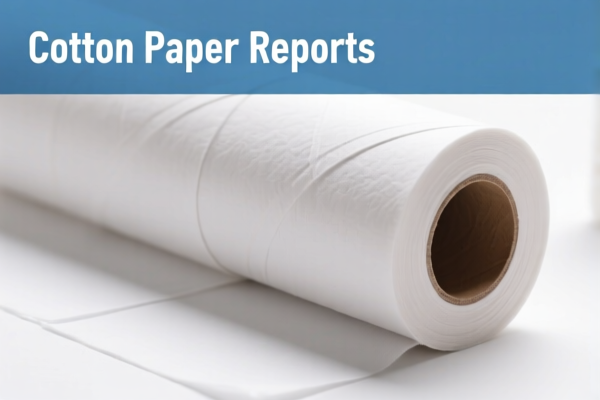
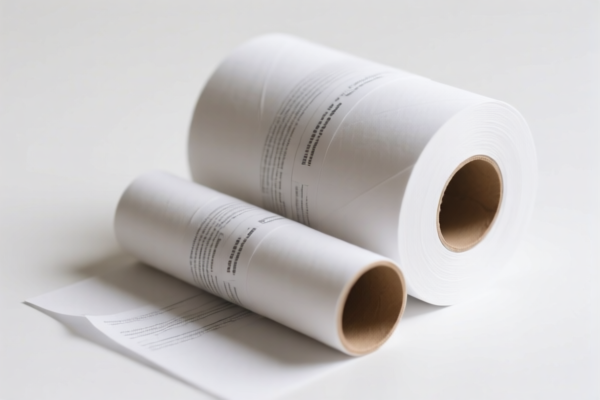
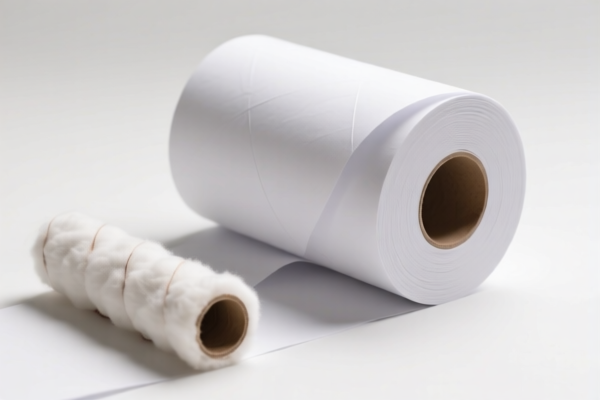
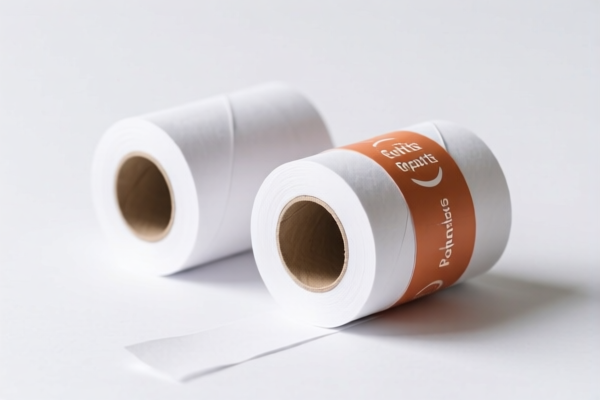
AI Analysis
📜 Cotton Paper Rolls (For Reports & Documentation)
🌐 HS Code Reference & Customs Clearance Guide | 2026 Latest Tariff Analysis | Professional Entry Strategies
📌 I. Product Definition & Classification: What Exactly is "Cotton Paper"?
Cotton paper rolls, specifically those intended for reports, official documents, or archival purposes, are high-grade cellulose-based products. In international trade, they are often misclassified due to the confusion between "cotton fiber content" and "paper material."
Key Distinction: * Not Textile: Even if the paper contains cotton fibers (for durability/watermark), if it is in the form of rolls/sheets for writing/printing, it is classified as Paper/Board, not Textile (Chapter 50-55). * Material Composition: Typically composed of cellulose fibers, where cotton may be a component, or purely chemical wood pulp with a "cotton-like" feel. * Form: Continuous rolls, suitable for office equipment (dot matrix, plotters, printers) or archival storage.
⚠️ Critical Classification Point:
- If it is uncalendered, uncoated, and primarily cellulose → Chapter 48 (Paper/Paperboard).
- Do NOT classify under Textiles (e.g., Cotton Yarn) unless it is loose fiber or woven fabric.
- The "Cotton" in the name refers to the material composition, not the textile nature.
📦 II. HS Code Classification Details (2026 Latest Tariff Authority Cross-Reference)
Based on the provided data for "Cotton Paper Rolls," here are the precise HS Codes and their logical mapping:
| HS Code | Product Description (Based on Data) | Key Characteristics | Why This Code? |
|---|---|---|---|
4823.90.86.80 |
Cotton Paper Rolls: Material is cellulose fiber network/paper; Form is paper product. | Generic paper roll, cellulose-based. | Best for general-purpose cellulose paper rolls where specific cotton % is not the primary classifier or fits under "Other paper articles." |
4802.20.40.20 |
Uncalendered Paper Rolls with Cotton Material: Meets cotton fiber characteristics. | Uncalendered (no surface gloss/texture treatment), contains cotton fibers. | Specific for uncalendered paper. If the paper is not smoothed/ironed after formation, this is the most accurate fit. |
4823.90.67.00 |
Cotton Paper Rolls: Cellulose product, rolled form, no material conflict. | Rolled cellulose products, other. | Similar to 4823.90.86.80 but may refer to specific sub-category for "Other" paper articles. Use if 4823.90.86.80 is unavailable or specific regional variation applies. |
4817.20.40.00 |
Paper Rolls for Document Carrier: Paper material, primary form. | Paper for writing/printing/documents. | Focuses on the function (document carrier). If the roll is specifically for printing/reports and not just raw material, this may apply. |
4802.55.70.20 |
Paper Rolls with >25% Cotton Fiber: Meets material & rolled form definition. | High cotton content (>25%). | Crucial: If the paper explicitly contains more than 25% by weight of cotton fibers, this is the most technically accurate code for "Cotton Paper." |
🔍 Priority Logic:
1. Check Cotton Content: If >25% cotton by weight → Prioritize4802.55.70.20.
2. Check Processing: If uncalendered (rough surface) → Prioritize4802.20.40.20.
3. General Case: If standard calendered paper or general cellulose → Use4823.90.86.80or4823.90.67.00.
4. Function-Specific: If strictly for "document carrying" (e.g., continuous form paper) → Consider4817.20.40.00.
💰 III. 2026 Latest Tariff Rate Breakdown (Including Surcharge, Policy Add-ons)
✅ Applicable Country: United States (US)
✅ Origin: China (CN)
✅ Effective Date: November 10, 2025 onwards (including subsequent imports)
All HS Codes listed in the data share the same tariff structure due to the broad "Section VI" (Paper/Paperboard) general treatment under current trade policies.
🎯 1. All Applicable HS Codes (4802.20.40.20, 4802.55.70.20, 4817.20.40.00, 4823.90.67.00, 4823.90.86.80)
| Item | Content |
|---|---|
| Base Tariff | 0% (ad valorem) |
| USITC Surcharge (Section 301) | +25% (High tariff for many paper products from China) |
| IEEPA Surcharge (Section 122 / Trade Act) | +10% (Targeted Chinese/HK products, effective Nov 10, 2025) |
| Total Tariff Rate | 35.0% |
| Tax Calculation | CIF Value × 35% |
| De Minimis Eligibility | ❌ Not Eligible (Most Section 301/IEEPA tariffs exclude de minimis exemption) |
| Legal Basis Path | IEEPA:9903.01.24 → USITC:48xx.xx → FOOTNOTE:301 → FOOTNOTE:122 |
📌 Explanation:
- "Base Tariff 0%": Most paper products have a low base duty under USHTS.
- "301 Surcharge 25%": The Trump-era/Biden-continuing trade war tariff on Chinese goods. Paper products are often caught in this net.
- "122 Clause 10%": Refers to additional tariffs under the Trade Expansion Act of 1962 (Section 122) or similar emergency powers recently reinforced.
- Total 35%: This is a significant cost. Importers must factor this into landed cost calculations immediately.
🛠️ IV. Customs Clearance Practical Advice (Avoiding Pitfalls)
✅ 1. Document Checklist (Must-Haves)
| Document | Required? | Notes |
|---|---|---|
| ✅ Product Specification Sheet | ✔️ | Must state: Material (Cellulose/Cotton blend), Weight (gsm), Width, Length, Form (Roll). |
| ✅ Cotton Content Declaration | ✔️ | Critical: Must explicitly state % of cotton fiber (e.g., "25% Cotton, 75% Wood Pulp"). This determines if 4802.55 or 4802.20 applies. |
| ✅ Uncoated/Uncalendered Statement | ✔️ | If claiming 4802.20, provide proof of uncalendered status (e.g., micrograph photos, manufacturer specs). |
| ✅ Commercial Invoice | ✔️ | Description: "Cotton Paper Rolls for Report Printing, Uncoated, Rolled Form." Avoid vague terms like "Office Supplies." |
| ✅ Packing List | ✔️ | Net/Gross weight, dimensions, number of rolls. |
| ✅ COO (Certificate of Origin) | ✔️ | Confirm China origin to verify applicability of 35% tariff. |
✅ 2. Declaration Tips (Key Mantras)
🔥 “Material Truth, Form Clear, Percentage Specific, Tariff Predictable!”
| Scenario | Correct Declaration | Wrong Approach |
|---|---|---|
| Paper with >25% Cotton | HS 4802.55.70.20 + State "25%+ Cotton Content" |
Declare as "Wood Pulp Paper" → Audit risk. |
| Uncalendered Paper | HS 4802.20.40.20 + State "Uncalendered" |
Declare as "Print Paper" (Calendered) → Wrong subheading. |
| General Paper Rolls | HS 4823.90.86.80 + State "Cellulose Paper" |
Use generic "Paper" → May be flagged for misclassification. |
| Cotton Fabric Rolls | Do Not Use HS 48xx | If it is woven cotton, it’s Textile (HS 50-55). Check weave structure! |
✅ 3. Special Cases & Mitigation
| Situation | Recommendation |
|---|---|
| High Cotton Content (>25%) | Ensure 4802.55.70.20 is used. It is the most defensible code for "Cotton Paper." |
| Uncoated & Uncalendered | Use 4802.20.40.20. Provide manufacturer’s technical data sheet proving no calendering. |
| General Purpose Rolls | 4823.90.86.80 is the safest broad category if specific cotton/processing details are ambiguous. |
| Risk Mitigation | Apply for an Advance Ruling from US Customs and Border Protection (CBP) before shipping. Provide samples + specs. |
| Value Declaration | Ensure CIF Value is accurate. A 35% tariff on undervalued goods leads to heavy penalties. |
🌍 V. Global Market Comparison (2026 Outlook)
| Country/Region | Recommended HS Code | Tariff (China Origin) | Certification | Notes |
|---|---|---|---|---|
| 🇺🇸 USA | 4802.55.70.20 (Preferred) or 4823.90.86.80 |
35% (0% Base + 25% 301 + 10% 122) | None specific | High Tariff Risk. Advance Ruling highly recommended. |
| 🇨🇳 China | 4802.55.70.20 |
~6-10% | CCC (if applicable) | No Section 301/IEEPA surcharges. |
| 🇪🇺 EU | 4802.55 or 4823.90 |
6.5% - 8.5% | None | Lower base tariff, no major surcharges like US. |
| 🇬🇧 UK | 4802.55 |
~6.5% | UKCA (if labeled as safety gear, not applicable here) | Post-Brexit rules apply. |
📌 Conclusion:
- USA is the only market with extreme 35% tariffs on these goods.
- No major exemptions are currently available for standard paper products from China under de minimis.
- Strategy: Consider tariff engineering (e.g., verifying if any processing in a third country can change origin) or Advance Ruling to secure classification certainty.
📌 VI. Common Errors & Pitfalls (Lessons Learned)
❌ Error 1: Declaring "Cotton Paper" as "Textile" (HS 50-55)
👉 Consequence: Misclassification penalty. Paper is Chapter 48, regardless of fiber content, if in roll/sheet form.
❌ Error 2: Ignoring Cotton Percentage
👉 Consequence: If >25% cotton is present but declared as "Wood Pulp Paper," customs may reclassify and apply different (potentially higher) scrutiny or penalties for false declaration.
❌ Error 3: Omitting "Uncalendered" Status
👉 Consequence: Misusing 4802.20 (Uncalendered) for calendered paper leads to incorrect HS code selection and potential audit flags.
❌ Error 4: Assuming De Minimis Exemption Applies
👉 Consequence: Packages under $800 may still be subject to 35% tariff if the goods are from China and listed in the Section 301/IEEPA exclusions list (which paper often is not).
✅ Correct Practice:
"Cotton Content Paper Rolls, Uncalendered, 25% Cotton, 75% Wood Pulp, 12-inch Width, 500m Length, for Report Printing. HS Code: 4802.55.70.20. Origin: China. Value: $X CIF."
🎯 VII. Conclusion: Precise Classification Saves Costs!
🎯 Remember Mantra:
🔹 "Check Cotton %, Check Calendering, Pick HS Code, Avoid 35% Pitfall!"
🔹 "Paper is Paper (Ch48), Not Cloth (Ch50), Unless Woven!"
🔹 "35% Total Tax, Advance Ruling is Your Friend!"
📌 Pro Tip:
If your paper rolls are shipped via a third country (e.g., Vietnam, Mexico) and undergo substantial transformation (not just repacking), you may be able to claim non-China origin, potentially avoiding the 301/IEEPA surcharges. However, simple transshipment will NOT work.
📣 Immediate Action:
📞 Contact a licensed customs broker NOW.
📄 Prepare Product Spec Sheet with Fiber Breakdown.
🚀 Apply for an Advance Ruling to lock in your HS Code and avoid surprise 35% bills at the border.
✨ Professional Clearance Starts with Accurate Classification!
💼 Every % of Tariff Matters in 2026!
Customer Reviews
About HS Code Classification
The Harmonized System (HS) is an internationally standardized nomenclature developed by the World Customs Organization (WCO) to classify traded products. Over 200 countries use the HS system as the basis for customs tariffs, trade statistics, and import/export regulations.
Each HS code follows a hierarchical structure:
- Chapter (2 digits) — Broad category of goods (e.g., Chapter 84: Machinery and Mechanical Appliances)
- Heading (4 digits) — More specific grouping within the chapter
- Subheading (6 digits) — Internationally standardized breakdown, used by all WCO member countries
- National subdivisions (8-10 digits) — Country-specific extensions for further classification, such as US HTSUS 10-digit codes
Correct HS code classification is essential for smooth customs clearance, accurate duty payment, and compliance with trade regulations. Misclassification can lead to customs delays, overpayment of duties, or penalties.
When importing from CN to US, the applicable tariff rates may include:
- Most-Favored-Nation (MFN) rate — The standard duty rate applied to WTO members
- General rate — Applied to countries without trade agreements
- Trade remedy duties — Additional tariffs such as Section 301 (anti-dumping), Section 232 (national security), or countervailing duties
The information provided on this page is for reference purposes only. For official classification, please consult with your local customs authority or a licensed customs broker.