desk mat
CN → US| HS编码 | 关税税率 | 原产国 | 目的国 | 文档 |
|---|---|---|---|---|
| 4016990500 | 20.9% | CN | US | 官方文档 |
| 3926902500 | 24.0% | CN | US | 官方文档 |
| 3926305000 | 22.8% | CN | US | 官方文档 |
| 4016996050 | 37.5% | CN | US | 官方文档 |
商品图片
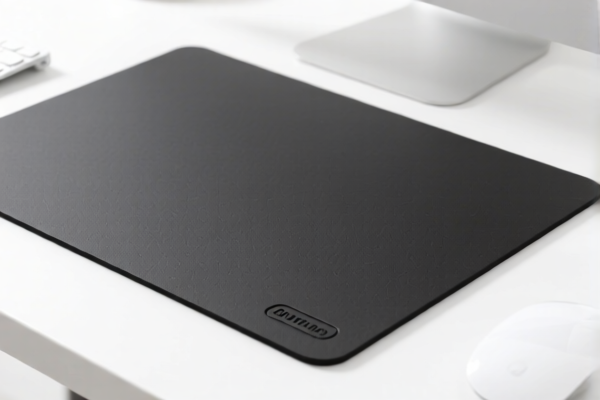
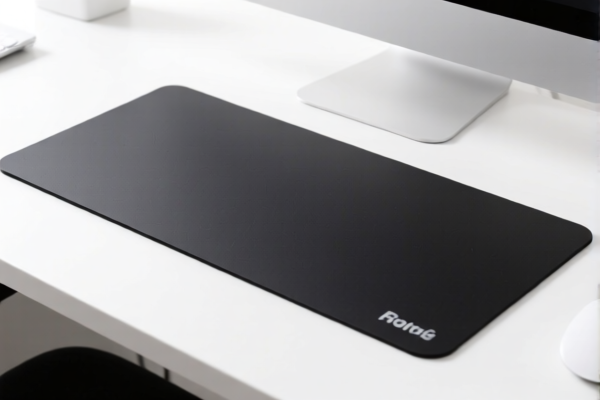
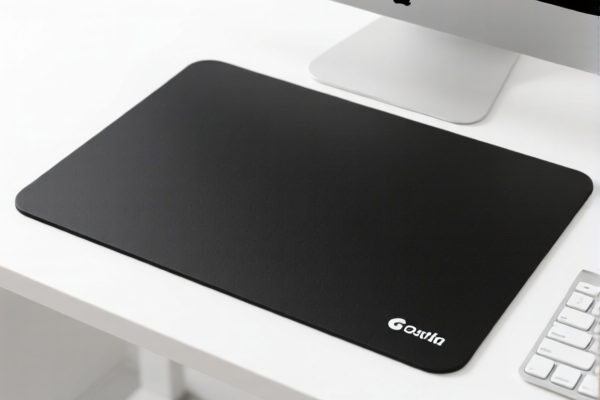
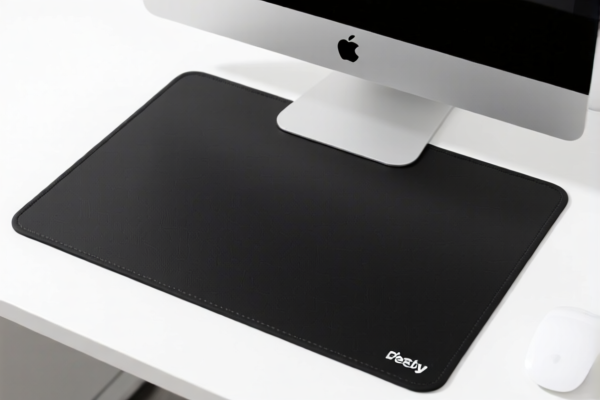
AI分析
🖥️ Desk Mat: HS Code Classification, Tax Analysis & Customs Clearance Guide (2026)
🌐 HS Code Reference & Customs Guide | 2026 Latest Tariff Structure | Professional Clearance Strategy
📌 I. Product Definition & Classification: What Exactly is a "Desk Mat"?
A Desk Mat (also known as a Desk Pad or Writing Pad) is a protective and decorative accessory placed on a desk to protect the surface, provide a smooth writing area, and enhance the aesthetic of the workspace. In international trade, classification depends strictly on the material composition of the mat.
There are two primary material categories: 1. Rubber Products: Made from vulcanized rubber or rubber-like materials (often non-slip bottoms). 2. Plastic Products: Made from PVC, PU, TPU, or other polymer plastics.
⚠️ Key Distinction Point:
- If the mat is made of rubber (vulcanized or not), it falls under Chapter 40.
- If the mat is made of plastic (PVC/PU sheets), it falls under Chapter 39.
- Note: The specific sub-heading within Chapter 39 depends on whether it is classified as a general "other article" or specifically as a "connecting piece/fitting" in certain jurisdictions, though "other article" is more common. However, based on the provided data, we have specific codes for both general plastic articles and "connecting pieces."
📦 II. HS Code Classification Details (Based on Provided Data)
The following table outlines the four specific HS Codes provided in the data, categorized by material and description.
| HS Code | Product Description | Material Type | Applicability |
|---|---|---|---|
4016.99.05.00 |
Other vulcanized rubber articles | Rubber | Desk mats made of rubber materials. |
3926.90.25.00 |
Other articles of plastics | Plastic | Desk mats made of plastic materials (General classification). |
3926.30.50.00 |
Articles of plastics as connecting pieces | Plastic | Desk mats made of plastic materials (Classified as connecting pieces/fitting). |
4016.99.60.50 |
Other vulcanized rubber articles | Rubber | Desk mats made of rubber materials (Alternative rubber classification). |
🔍 Critical Note:
- Rubber vs. Plastic: The biggest error importers make is misidentifying PU (Polyurethane) as rubber. PU is technically a plastic (Chapter 39), not rubber (Chapter 40), unless it is a specific vulcanized rubber compound. Always check the Material Safety Data Sheet (MSDS) or composition. - Plastic Sub-choices: Depending on the customs authority's interpretation, a plastic desk mat might be classified under3926.90.25.00(general plastic article) or3926.30.50.00(if considered a "connecting piece" for furniture). Always verify with local customs.
💰 III. 2026 Latest Tariff Rate Breakdown (Detailed Tax Analysis)
✅ Applicable Country: United States (US)
✅ Origin: China (CN)
✅ Effective Time: Includes tariffs effective from 2025 onwards (Section 301 & Section 122)
🎯 1. 4016.99.05.00 — Other Vulcanized Rubber Articles (Rubber Desk Mats)
| Item | Detail |
|---|---|
| Base Tariff | 3.4% |
| Section 301 Additional Tariff | 7.5% |
| Section 122 Tariff | 10% |
| Total Effective Tax Rate | 20.9% |
| Calculation Basis | CIF Value × 20.9% |
| De Minimis Exemption | ❌ Not Eligible (Section 301/122 tariffs apply) |
| Legal Basis | Base Rate + 301 Footnote + 122 Provision |
📌 Explanation:
- Base (3.4%): Standard Most Favored Nation (MFN) rate for rubber articles. - 301 (7.5%): Standard US-China trade war tariff. - 122 (10%): Specific additional tariff applied to certain Chinese rubber/plastic goods. - Total 20.9%: A moderate-high tariff burden.
🎯 2. 3926.90.25.00 — Other Articles of Plastics (Plastic Desk Mats - General)
| Item | Detail |
|---|---|
| Base Tariff | 6.5% |
| Section 301 Additional Tariff | 7.5% |
| Section 122 Tariff | 10% |
| Total Effective Tax Rate | 24.0% |
| Calculation Basis | CIF Value × 24.0% |
| De Minimis Exemption | ❌ Not Eligible |
| Legal Basis | Base Rate + 301 Footnote + 122 Provision |
📌 Explanation:
- Plastic desk mats generally have a higher base rate (6.5%) compared to rubber (3.4%). - The additional tariffs remain the same (7.5% + 10%). - Total 24.0%: Higher than rubber mats.
🎯 3. 3926.30.50.00 — Articles of Plastics as Connecting Pieces (Plastic Desk Mats - Fitting)
| Item | Detail |
|---|---|
| Base Tariff | 5.3% |
| Section 301 Additional Tariff | 7.5% |
| Section 122 Tariff | 10% |
| Total Effective Tax Rate | 22.8% |
| Calculation Basis | CIF Value × 22.8% |
| De Minimis Exemption | ❌ Not Eligible |
| Legal Basis | Base Rate + 301 Footnote + 122 Provision |
📌 Explanation:
- If customs classifies the desk mat as a "connecting piece" (e.g., a pad that connects to the desk surface), the base rate is 5.3%. - Total 22.8%: Slightly cheaper than general plastic articles (3926.90.25.00), but still higher than rubber.
🎯 4. 4016.99.60.50 — Other Vulcanized Rubber Articles (Alternative Rubber Code)
| Item | Detail |
|---|---|
| Base Tariff | 2.5% |
| Section 301 Additional Tariff | 25.0% |
| Section 122 Tariff | 10% |
| Total Effective Tax Rate | 37.5% |
| Calculation Basis | CIF Value × 37.5% |
| De Minimis Exemption | ❌ Not Eligible |
| Legal Basis | Base Rate + 301 Footnote (Higher Bracket) + 122 Provision |
📌 CRITICAL WARNING:
- This code has a much higher Section 301 tariff (25%) compared to the other codes (7.5%). - Total 37.5%: This is the most expensive option. - Why the difference? Different sub-headings under4016.99may have different 301 tariff rates based on the specific type of rubber good. Using this code incorrectly could double your tax bill.
🛠️ IV. Customs Clearance Practical Advice (Avoiding Pitfalls)
✅ 1. Preparation Checklist (All Documents Required)
| Document | Required | Purpose |
|---|---|---|
| Product Specification Sheet | ✅ Yes | Must state: Material Composition (e.g., "100% PVC," "Vulcanized Rubber"), Dimensions, Weight. |
| Material Test Report | ✅ Yes | To prove material type (Plastic vs. Rubber). Crucial for avoiding misclassification. |
| Commercial Invoice | ✅ Yes | Must clearly describe the item as "Desk Mat" or "Writing Pad," not generic "Office Supplies." |
| Packing List | ✅ Yes | Show net/gross weight to help customs verify value and weight. |
| Product Photos | ✅ Yes | Clear images of the front, back (non-slip texture), and any labels. |
✅ 2. Classification Strategy & Tips
🔥 Golden Rule: "Material Determines Chapter, Description Determines Sub-Heading!"
| Scenario | Recommended HS Code | Reason |
|---|---|---|
| Rubber Desk Mat (Natural/Synthetic Rubber) | 4016.99.05.00 |
Lowest total tax (20.9%) among rubber options. Avoid 4016.99.60.50 unless explicitly required, due to 37.5% tax. |
| PVC/PU Desk Mat (Plastic) | 3926.90.25.00 |
Standard classification for general plastic articles. Total tax 24.0%. |
| Plastic Desk Mat (If deemed "Connecting Piece") | 3926.30.50.00 |
Only use if customs agrees it's a "connecting piece." Saves 1.2% vs. general plastic. |
📌 Risk Alert:
- Do NOT use4016.99.60.50unless you are certain it is the correct sub-heading. The 25% Section 301 tariff makes it significantly more expensive than4016.99.05.00(7.5% Section 301). - PU vs. Rubber: Many "leather-look" desk mats are actually PU (Plastic), not rubber. Misclassifying PU as Rubber (Chapter 40) can lead to penalties and back-taxes.
✅ 3. Special Cases
| Situation | Advice |
|---|---|
| Composite Materials (e.g., Rubber bottom + Plastic top) | Classify based on essential character. Usually, the larger volume or functional material dictates. If 50/50, consult a customs broker. |
| OEM Custom Desk Mats | Provide design files and material specs. Ensure the description matches the actual material, not the marketing name (e.g., "Leather Desk Mat" is likely PU/Plastic). |
| Sample Shipments | Even for samples, Section 301 and 122 tariffs may apply if the value exceeds $800 (de minimis threshold) or if the carrier does not clear under de minimis. Plan accordingly. |
🌍 V. Global Market Comparison (Quick Reference)
| Country/Region | Recommended HS Code | Estimated Tax (China Origin) | Notes |
|---|---|---|---|
| 🇺🇸 USA | 4016.99.05.00 or 3926.90.25.00 |
20.9% - 24.0% | Includes Section 301 & 122. High risk. |
| 🇨🇳 China | 4016.99.05.00 or 3926.90.25.00 |
~5-10% | Lower base tariffs, no Section 301. |
| 🇪🇺 EU | 4016.99 or 3926.90 |
~3-4% | No anti-dumping/retaliatory tariffs for desk mats. |
| 🇬🇧 UK | 4016.99 or 3926.90 |
~3-4% | Post-Brexit, standard MFN rates apply. |
| 🇦🇺 Australia | 4016.99 or 3926.90 |
~5% | No additional punitive tariffs. |
📌 Conclusion:
The USA market is the most challenging for Desk Mats due to the layered tariffs (Base + 301 + 122). Ensure accurate material declaration to avoid the highest tax bracket (37.5%).
📌 VI. Common Mistakes & Pitfalls (Blood Lessons)
❌ Mistake 1: Calling a PVC mat "Rubber" to get a lower base rate.
👉 Consequence: Customs inspection reveals PU material. Penalty + Back Taxes (24%) + Potential Fraud Charges.
❌ Mistake 2: Using 4016.99.60.50 for a standard rubber mat.
👉 Consequence: Paying 37.5% tax instead of 20.9%. Overpayment by 16.6%!
❌ Mistake 3: Ignoring Section 122 Tariff.
👉 Consequence: Underestimating landing cost by 10%. Profit Margin Erosion.
❌ Mistake 4: Declaring as "Office Supplies" without HS Code.
👉 Consequence: Customs may assign a generic code with higher duty or hold shipment for examination.
✅ Correct Action:
"Desk Mat, 24"x12", Material: 100% PVC Plastic, Color: Black, Model XYZ, Made in China"
🎯 VII. Conclusion: Smart Classification Saves Money!
🎯 Key Takeaways:
🔹 Rubber Mats: Prefer
4016.99.05.00(20.9%) over4016.99.60.50(37.5%).
🔹 Plastic Mats: Generally 22.8% - 24.0%. Verify if "connecting piece" classification applies.
🔹 Material Truth: PU is Plastic, not Rubber.
🔹 US Tariffs: Expect to pay Base + 301 + 122. Plan your pricing accordingly.
📌 Pro Tip:
If your desk mats are originating from Vietnam, Mexico, or Thailand, you may qualify for Section 301 Exclusions or lower tariffs. Always check your Certificate of Origin!
📣 Immediate Action:
📞 Confirm Material: Ask your supplier for the exact chemical composition.
📄 Pre-Ruling: If shipping large volumes, consider applying for a Pre-Ruling with US Customs for certainty.
🚀 Cost Calculation: Use 20.9% (Rubber) or 24.0% (Plastic) in your landed cost calculator. Do not ignore Section 122!
✨ Professional clearance starts with precise classification!
💼 Every percent saved is pure profit!
用户评价
关于 HS 编码归类
协调制度(HS)是由世界海关组织(WCO)制定的国际贸易商品分类标准。全球 200 多个国家采用 HS 系统作为海关关税、贸易统计和进出口监管的基础。
每个 HS 编码遵循以下层级结构:
- 章(2 位)——商品大类(例如:第 84 章:机器和机械设备)
- 品目(4 位)——章内的更具体分类
- 子目(6 位)——国际通用细分,所有 WCO 成员国统一使用
- 本国细分(8-10 位)——各国自行扩展的细分编码,如美国 HTSUS 10 位编码
正确的 HS 编码归类对于顺利通关、准确缴纳关税和遵守贸易法规至关重要。错误归类可能导致海关延误、多缴关税或罚款。
从CN进口到US时,适用的关税税率可能包括:
- 最惠国(MFN)税率——适用于 WTO 成员国的标准关税税率
- 普通税率——适用于无贸易协定国家
- 贸易救济关税——附加关税,如 301 条款(反倾销)、232 条款(国家安全)或反补贴税
本页内容仅供参考。如需正式归类,请咨询当地海关或持牌报关代理。