desk mat
CN → US| HS Code | Tariff Rate | Origin | Destination | Doc |
|---|---|---|---|---|
| 4016990500 | 20.9% | CN | US | Official Doc |
| 3926902500 | 24.0% | CN | US | Official Doc |
| 3926305000 | 22.8% | CN | US | Official Doc |
| 4016996050 | 37.5% | CN | US | Official Doc |
Product Images
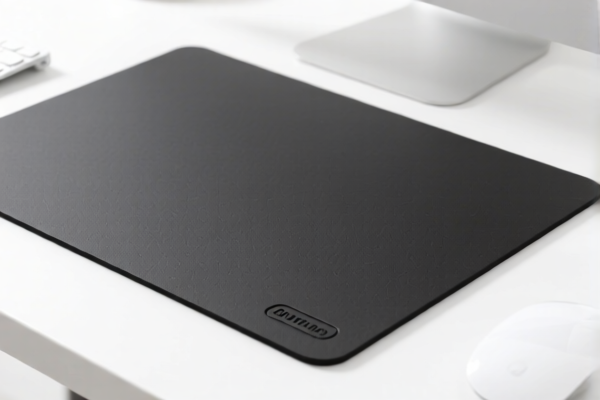
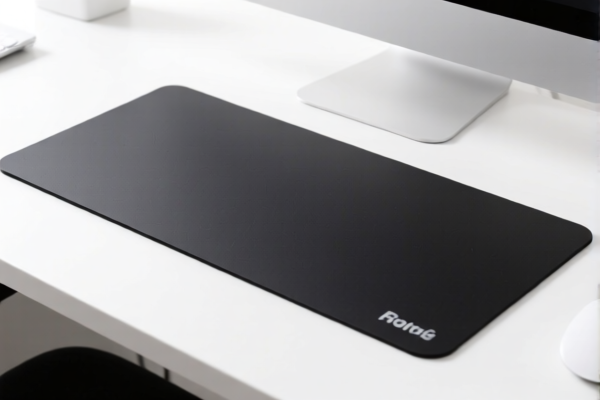
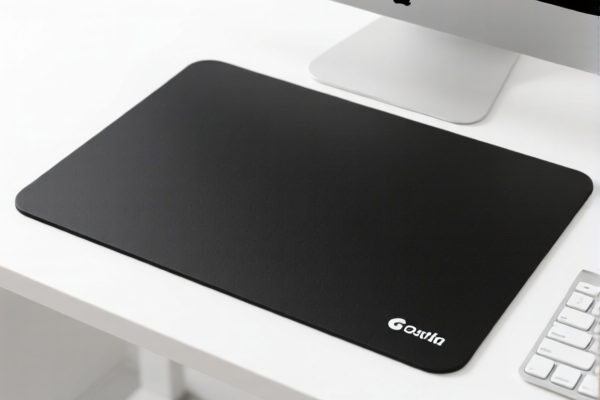
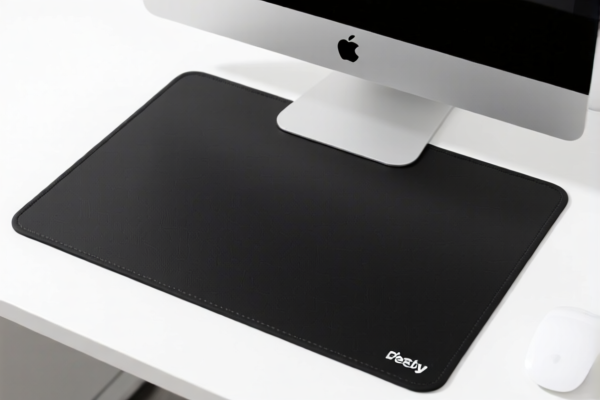
AI Analysis
🖥️ Desk Mat: HS Code Classification, Tax Analysis & Customs Clearance Guide (2026)
🌐 HS Code Reference & Customs Guide | 2026 Latest Tariff Structure | Professional Clearance Strategy
📌 I. Product Definition & Classification: What Exactly is a "Desk Mat"?
A Desk Mat (also known as a Desk Pad or Writing Pad) is a protective and decorative accessory placed on a desk to protect the surface, provide a smooth writing area, and enhance the aesthetic of the workspace. In international trade, classification depends strictly on the material composition of the mat.
There are two primary material categories: 1. Rubber Products: Made from vulcanized rubber or rubber-like materials (often non-slip bottoms). 2. Plastic Products: Made from PVC, PU, TPU, or other polymer plastics.
⚠️ Key Distinction Point:
- If the mat is made of rubber (vulcanized or not), it falls under Chapter 40.
- If the mat is made of plastic (PVC/PU sheets), it falls under Chapter 39.
- Note: The specific sub-heading within Chapter 39 depends on whether it is classified as a general "other article" or specifically as a "connecting piece/fitting" in certain jurisdictions, though "other article" is more common. However, based on the provided data, we have specific codes for both general plastic articles and "connecting pieces."
📦 II. HS Code Classification Details (Based on Provided Data)
The following table outlines the four specific HS Codes provided in the data, categorized by material and description.
| HS Code | Product Description | Material Type | Applicability |
|---|---|---|---|
4016.99.05.00 |
Other vulcanized rubber articles | Rubber | Desk mats made of rubber materials. |
3926.90.25.00 |
Other articles of plastics | Plastic | Desk mats made of plastic materials (General classification). |
3926.30.50.00 |
Articles of plastics as connecting pieces | Plastic | Desk mats made of plastic materials (Classified as connecting pieces/fitting). |
4016.99.60.50 |
Other vulcanized rubber articles | Rubber | Desk mats made of rubber materials (Alternative rubber classification). |
🔍 Critical Note:
- Rubber vs. Plastic: The biggest error importers make is misidentifying PU (Polyurethane) as rubber. PU is technically a plastic (Chapter 39), not rubber (Chapter 40), unless it is a specific vulcanized rubber compound. Always check the Material Safety Data Sheet (MSDS) or composition. - Plastic Sub-choices: Depending on the customs authority's interpretation, a plastic desk mat might be classified under3926.90.25.00(general plastic article) or3926.30.50.00(if considered a "connecting piece" for furniture). Always verify with local customs.
💰 III. 2026 Latest Tariff Rate Breakdown (Detailed Tax Analysis)
✅ Applicable Country: United States (US)
✅ Origin: China (CN)
✅ Effective Time: Includes tariffs effective from 2025 onwards (Section 301 & Section 122)
🎯 1. 4016.99.05.00 — Other Vulcanized Rubber Articles (Rubber Desk Mats)
| Item | Detail |
|---|---|
| Base Tariff | 3.4% |
| Section 301 Additional Tariff | 7.5% |
| Section 122 Tariff | 10% |
| Total Effective Tax Rate | 20.9% |
| Calculation Basis | CIF Value × 20.9% |
| De Minimis Exemption | ❌ Not Eligible (Section 301/122 tariffs apply) |
| Legal Basis | Base Rate + 301 Footnote + 122 Provision |
📌 Explanation:
- Base (3.4%): Standard Most Favored Nation (MFN) rate for rubber articles. - 301 (7.5%): Standard US-China trade war tariff. - 122 (10%): Specific additional tariff applied to certain Chinese rubber/plastic goods. - Total 20.9%: A moderate-high tariff burden.
🎯 2. 3926.90.25.00 — Other Articles of Plastics (Plastic Desk Mats - General)
| Item | Detail |
|---|---|
| Base Tariff | 6.5% |
| Section 301 Additional Tariff | 7.5% |
| Section 122 Tariff | 10% |
| Total Effective Tax Rate | 24.0% |
| Calculation Basis | CIF Value × 24.0% |
| De Minimis Exemption | ❌ Not Eligible |
| Legal Basis | Base Rate + 301 Footnote + 122 Provision |
📌 Explanation:
- Plastic desk mats generally have a higher base rate (6.5%) compared to rubber (3.4%). - The additional tariffs remain the same (7.5% + 10%). - Total 24.0%: Higher than rubber mats.
🎯 3. 3926.30.50.00 — Articles of Plastics as Connecting Pieces (Plastic Desk Mats - Fitting)
| Item | Detail |
|---|---|
| Base Tariff | 5.3% |
| Section 301 Additional Tariff | 7.5% |
| Section 122 Tariff | 10% |
| Total Effective Tax Rate | 22.8% |
| Calculation Basis | CIF Value × 22.8% |
| De Minimis Exemption | ❌ Not Eligible |
| Legal Basis | Base Rate + 301 Footnote + 122 Provision |
📌 Explanation:
- If customs classifies the desk mat as a "connecting piece" (e.g., a pad that connects to the desk surface), the base rate is 5.3%. - Total 22.8%: Slightly cheaper than general plastic articles (3926.90.25.00), but still higher than rubber.
🎯 4. 4016.99.60.50 — Other Vulcanized Rubber Articles (Alternative Rubber Code)
| Item | Detail |
|---|---|
| Base Tariff | 2.5% |
| Section 301 Additional Tariff | 25.0% |
| Section 122 Tariff | 10% |
| Total Effective Tax Rate | 37.5% |
| Calculation Basis | CIF Value × 37.5% |
| De Minimis Exemption | ❌ Not Eligible |
| Legal Basis | Base Rate + 301 Footnote (Higher Bracket) + 122 Provision |
📌 CRITICAL WARNING:
- This code has a much higher Section 301 tariff (25%) compared to the other codes (7.5%). - Total 37.5%: This is the most expensive option. - Why the difference? Different sub-headings under4016.99may have different 301 tariff rates based on the specific type of rubber good. Using this code incorrectly could double your tax bill.
🛠️ IV. Customs Clearance Practical Advice (Avoiding Pitfalls)
✅ 1. Preparation Checklist (All Documents Required)
| Document | Required | Purpose |
|---|---|---|
| Product Specification Sheet | ✅ Yes | Must state: Material Composition (e.g., "100% PVC," "Vulcanized Rubber"), Dimensions, Weight. |
| Material Test Report | ✅ Yes | To prove material type (Plastic vs. Rubber). Crucial for avoiding misclassification. |
| Commercial Invoice | ✅ Yes | Must clearly describe the item as "Desk Mat" or "Writing Pad," not generic "Office Supplies." |
| Packing List | ✅ Yes | Show net/gross weight to help customs verify value and weight. |
| Product Photos | ✅ Yes | Clear images of the front, back (non-slip texture), and any labels. |
✅ 2. Classification Strategy & Tips
🔥 Golden Rule: "Material Determines Chapter, Description Determines Sub-Heading!"
| Scenario | Recommended HS Code | Reason |
|---|---|---|
| Rubber Desk Mat (Natural/Synthetic Rubber) | 4016.99.05.00 |
Lowest total tax (20.9%) among rubber options. Avoid 4016.99.60.50 unless explicitly required, due to 37.5% tax. |
| PVC/PU Desk Mat (Plastic) | 3926.90.25.00 |
Standard classification for general plastic articles. Total tax 24.0%. |
| Plastic Desk Mat (If deemed "Connecting Piece") | 3926.30.50.00 |
Only use if customs agrees it's a "connecting piece." Saves 1.2% vs. general plastic. |
📌 Risk Alert:
- Do NOT use4016.99.60.50unless you are certain it is the correct sub-heading. The 25% Section 301 tariff makes it significantly more expensive than4016.99.05.00(7.5% Section 301). - PU vs. Rubber: Many "leather-look" desk mats are actually PU (Plastic), not rubber. Misclassifying PU as Rubber (Chapter 40) can lead to penalties and back-taxes.
✅ 3. Special Cases
| Situation | Advice |
|---|---|
| Composite Materials (e.g., Rubber bottom + Plastic top) | Classify based on essential character. Usually, the larger volume or functional material dictates. If 50/50, consult a customs broker. |
| OEM Custom Desk Mats | Provide design files and material specs. Ensure the description matches the actual material, not the marketing name (e.g., "Leather Desk Mat" is likely PU/Plastic). |
| Sample Shipments | Even for samples, Section 301 and 122 tariffs may apply if the value exceeds $800 (de minimis threshold) or if the carrier does not clear under de minimis. Plan accordingly. |
🌍 V. Global Market Comparison (Quick Reference)
| Country/Region | Recommended HS Code | Estimated Tax (China Origin) | Notes |
|---|---|---|---|
| 🇺🇸 USA | 4016.99.05.00 or 3926.90.25.00 |
20.9% - 24.0% | Includes Section 301 & 122. High risk. |
| 🇨🇳 China | 4016.99.05.00 or 3926.90.25.00 |
~5-10% | Lower base tariffs, no Section 301. |
| 🇪🇺 EU | 4016.99 or 3926.90 |
~3-4% | No anti-dumping/retaliatory tariffs for desk mats. |
| 🇬🇧 UK | 4016.99 or 3926.90 |
~3-4% | Post-Brexit, standard MFN rates apply. |
| 🇦🇺 Australia | 4016.99 or 3926.90 |
~5% | No additional punitive tariffs. |
📌 Conclusion:
The USA market is the most challenging for Desk Mats due to the layered tariffs (Base + 301 + 122). Ensure accurate material declaration to avoid the highest tax bracket (37.5%).
📌 VI. Common Mistakes & Pitfalls (Blood Lessons)
❌ Mistake 1: Calling a PVC mat "Rubber" to get a lower base rate.
👉 Consequence: Customs inspection reveals PU material. Penalty + Back Taxes (24%) + Potential Fraud Charges.
❌ Mistake 2: Using 4016.99.60.50 for a standard rubber mat.
👉 Consequence: Paying 37.5% tax instead of 20.9%. Overpayment by 16.6%!
❌ Mistake 3: Ignoring Section 122 Tariff.
👉 Consequence: Underestimating landing cost by 10%. Profit Margin Erosion.
❌ Mistake 4: Declaring as "Office Supplies" without HS Code.
👉 Consequence: Customs may assign a generic code with higher duty or hold shipment for examination.
✅ Correct Action:
"Desk Mat, 24"x12", Material: 100% PVC Plastic, Color: Black, Model XYZ, Made in China"
🎯 VII. Conclusion: Smart Classification Saves Money!
🎯 Key Takeaways:
🔹 Rubber Mats: Prefer
4016.99.05.00(20.9%) over4016.99.60.50(37.5%).
🔹 Plastic Mats: Generally 22.8% - 24.0%. Verify if "connecting piece" classification applies.
🔹 Material Truth: PU is Plastic, not Rubber.
🔹 US Tariffs: Expect to pay Base + 301 + 122. Plan your pricing accordingly.
📌 Pro Tip:
If your desk mats are originating from Vietnam, Mexico, or Thailand, you may qualify for Section 301 Exclusions or lower tariffs. Always check your Certificate of Origin!
📣 Immediate Action:
📞 Confirm Material: Ask your supplier for the exact chemical composition.
📄 Pre-Ruling: If shipping large volumes, consider applying for a Pre-Ruling with US Customs for certainty.
🚀 Cost Calculation: Use 20.9% (Rubber) or 24.0% (Plastic) in your landed cost calculator. Do not ignore Section 122!
✨ Professional clearance starts with precise classification!
💼 Every percent saved is pure profit!
Customer Reviews
About HS Code Classification
The Harmonized System (HS) is an internationally standardized nomenclature developed by the World Customs Organization (WCO) to classify traded products. Over 200 countries use the HS system as the basis for customs tariffs, trade statistics, and import/export regulations.
Each HS code follows a hierarchical structure:
- Chapter (2 digits) — Broad category of goods (e.g., Chapter 84: Machinery and Mechanical Appliances)
- Heading (4 digits) — More specific grouping within the chapter
- Subheading (6 digits) — Internationally standardized breakdown, used by all WCO member countries
- National subdivisions (8-10 digits) — Country-specific extensions for further classification, such as US HTSUS 10-digit codes
Correct HS code classification is essential for smooth customs clearance, accurate duty payment, and compliance with trade regulations. Misclassification can lead to customs delays, overpayment of duties, or penalties.
When importing from CN to US, the applicable tariff rates may include:
- Most-Favored-Nation (MFN) rate — The standard duty rate applied to WTO members
- General rate — Applied to countries without trade agreements
- Trade remedy duties — Additional tariffs such as Section 301 (anti-dumping), Section 232 (national security), or countervailing duties
The information provided on this page is for reference purposes only. For official classification, please consult with your local customs authority or a licensed customs broker.