dry tanned buffalo upper leather
CN → US| HS编码 | 关税税率 | 原产国 | 目的国 | 文档 |
|---|---|---|---|---|
| 4107112000 | 37.4% | CN | US | 官方文档 |
| 4107192000 | 37.4% | CN | US | 官方文档 |
| 4104415000 | 13.3% | CN | US | 官方文档 |
| 4104495000 | 13.3% | CN | US | 官方文档 |
商品图片
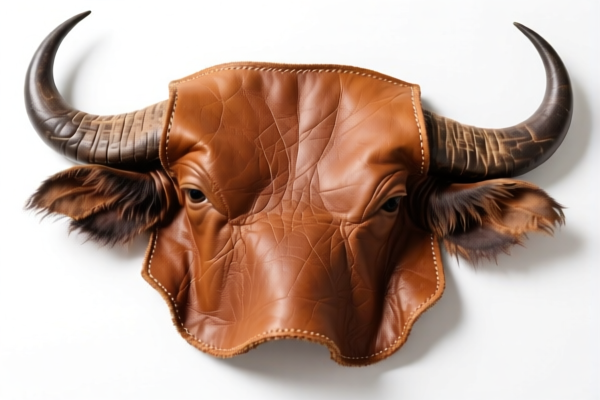
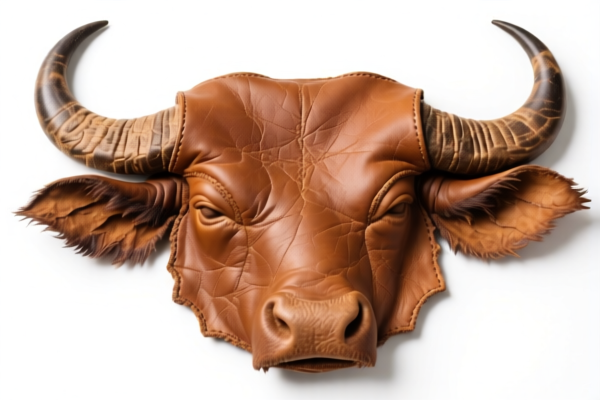
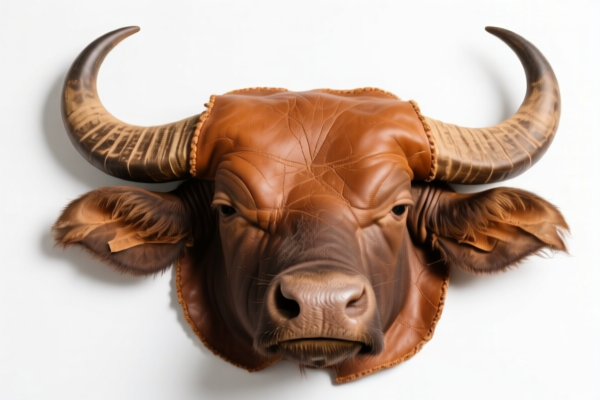
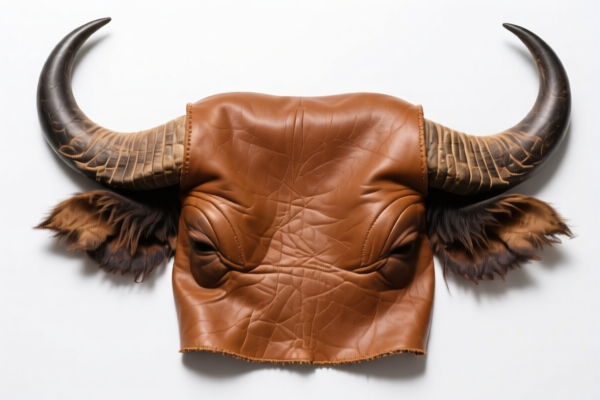
AI分析
🐂 Dry Tanned Buffalo Upper Leather (牛皮/水牛皮)
🌐 HS Code Reference & Customs Clearance Guide | 2026 Latest Tariff Analysis | Professional Compliance Strategy
📌 I. Product Definition & Classification: Understanding "Dry Tanned Buffalo Upper Leather"
"Dry Tanned Buffalo Upper Leather" refers to hides or skins of water buffalo that have undergone a tanning process (specifically "dry" or vegetable/chrome tanning that results in a dry finish) and are intended for use as uppers in footwear or leather goods.
In international trade, classification depends heavily on: 1. Animal Origin: Buffalo (Water Buffalo). 2. Processing State: Tanned or semi-tanned (not raw). 3. Form: Full piece/skin (not further fabricated into articles). 4. Finish: "Dry" often implies vegetable tanning or specific chrome tanning with a matte/dry hand feel, distinguishing it from wet-blue or heavily pigmented/corrected grains.
⚠️ Key Distinction:
- If it is vegetable-tanned (common for "dry" feel) → Likely falls under Chapter 41 (Raw/Hide/Skin/Tanned).
- If it is chrome-tanned but considered "dry" due to finish → Still usually Chapter 41 unless coated/fabricated beyond skin form.
- Crucial: "Upper leather" is a use case, not a classification term. The HS Code is based on material and processing, not end-use.
📦 II. HS Code Classification Details (2026 Latest Tariff Authority Mapping)
Based on the provided data, here are the matched HS Codes, their logical justification, and tax implications.
🎯 1. 4107.11.20.00 – Vegetable-Tanned Hides/Skins of Bovines
| Item | Content |
|---|---|
| Product Description | Vegetable-tanned hides and skins of bovine animals (including water buffalo), whole-body and with full grain surface, whether or not split, but not further prepared than tanned or crust. |
| Matching Logic | ✅ Match Confirmed. Material matches (Buffalo/Water Buffalo); Form matches (Tanned/semi-tanned leather); No conflict with raw/split definitions. "Dry tanned" often implies vegetable tanning, which fits this subheading perfectly. |
| Total Tax Rate | 37.4% |
| Tax Breakdown | Base Duty: 2.4%, Section 301 Tariff: 25.0%, Section 122 Tariff: 10% |
| Legal Basis | Chapter 41 (Raw Hides and Skins and Leather); Heading 41.07 (Vegetable-tanned) |
📌 Explanation:
- "4107.11" specifically covers vegetable-tanned bovine hides/skins with full grain.
- "Dry tanned" buffalo leather used for uppers is frequently vegetable-tanned for durability and structure.
- High Tax Alert: This classification incurs the highest tariff burden due to Section 301 and 122 duties.
🎯 2. 4107.19.20.00 – Other Vegetable-Tanned Hides/Skins of Bovines
| Item | Content |
|---|---|
| Product Description | Other vegetable-tanned hides and skins of bovine animals (including water buffalo), not falling within subheading 4107.11 (e.g., split, corrected grain, or different finish). |
| Matching Logic | ✅ Match Confirmed. Material matches (Buffalo); Form matches (Tanned); Even if area/specs aren't specified, the "Other" category infers no conflict. If the leather is split or has a modified grain surface, it falls here. |
| Total Tax Rate | 37.4% |
| Tax Breakdown | Base Duty: 2.4%, Section 301 Tariff: 25.0%, Section 122 Tariff: 10% |
| Legal Basis | Chapter 41; Heading 41.07; Subheading 4107.19 |
📌 Note:
- Use this code if the leather is not full-grain or is split.
- Same high tax rate as4107.11.20.00.
- "Dry tanned" can apply to split leathers too, so confirm grain status.
🎯 3. 4104.41.50.00 – Chrome-Tanned or Semi-Tanned Bovine Leather
| Item | Content |
|---|---|
| Product Description | Chrome-tanned or semi-tanned bovine leather (including buffalo), full-grain, not further prepared than tanned/crust. |
| Matching Logic | ✅ Match Confirmed. Material matches (Buffalo/Water Buffalo); Form matches (Tanned leather); Fits the "Other" category for chrome-tanned full-grain. "Dry" finish can also result from certain chrome-tanning processes with matte additives. |
| Total Tax Rate | 13.3% |
| Tax Breakdown | Base Duty: 3.3%, Section 301 Tariff: 0.0%, Section 122 Tariff: 10% |
| Legal Basis | Chapter 41; Heading 41.04 (Chrome-tanned or semi-tanned) |
📌 Explanation:
- "4104.41" covers chrome-tanned bovine leathers with full grain.
- Significant Tax Advantage: No Section 301 (25%) tariff! Only Base (3.3%) + Section 122 (10%).
- Crucial: If your "dry tanned" leather is chrome-tanned (even with a dry hand feel), this code is FAR MORE COST-EFFECTIVE.
🎯 4. 4104.49.50.00 – Other Chrome-Tanned Bovine Leather
| Item | Content |
|---|---|
| Product Description | Other chrome-tanned or semi-tanned bovine leather (e.g., split, corrected grain, different finish). |
| Matching Logic | ✅ Match Confirmed. Material matches (Buffalo); Form matches (Tanned); Logical fit for "Other" chrome-tanned leathers not in 4104.41. |
| Total Tax Rate | 13.3% |
| Tax Breakdown | Base Duty: 3.3%, Section 301 Tariff: 0.0%, Section 122 Tariff: 10% |
| Legal Basis | Chapter 41; Heading 41.04; Subheading 4104.49 |
📌 Note:
- Same low tax rate as4104.41.50.00.
- Use if the leather is split or has a corrected grain surface.
- Confirm if the "dry" finish is due to chrome tanning with matte agents → Likely qualifies here.
💰 III. 2026 Latest Tariff Rate Breakdown (Including Surcharges)
✅ Applicable Country: United States (US)
✅ Origin: China (CN)
✅ Effective Date: From November 10, 2025 (including subsequent imports)
🎯 A. High-Tax Scenarios: Vegetable-Tanned (4107.xx.xx)
| Item | Content |
|---|---|
| HS Codes | 4107.11.20.00, 4107.19.20.00 |
| Base Duty | 2.4% |
| Section 301 Tariff | +25.0% (USITC Footnote) |
| Section 122 Tariff | +10.0% (China-specific) |
| Total Effective Rate | 37.4% |
| Tax Calculation | CIF Value × 37.4% |
| De Minimis Exemption | ❌ NOT Applicable |
| Legal Path | USITC:4107.11.20.00 → FOOTNOTE:301 → IEEPA:122 |
📌 Explanation:
- Vegetable-tanned leather is heavily taxed due to Section 301 (25%) and Section 122 (10%).
- High Cost Warning: A $10,000 shipment incurs $3,740 in duties.
🎯 B. Low-Tax Scenarios: Chrome-Tanned (4104.xx.xx)
| Item | Content |
|---|---|
| HS Codes | 4104.41.50.00, 4104.49.50.00 |
| Base Duty | 3.3% |
| Section 301 Tariff | 0.0% (Exempt) |
| Section 122 Tariff | +10.0% |
| Total Effective Rate | 13.3% |
| Tax Calculation | CIF Value × 13.3% |
| De Minimis Exemption | ❌ NOT Applicable |
| Legal Path | USITC:4104.41.50.00 → IEEPA:122 |
📌 Explanation:
- Chrome-tanned leather enjoys a 25% savings in Section 301 tariffs.
- Cost Efficiency: A $10,000 shipment incurs only $1,330 in duties.
- Critical: Confirm if "dry tanned" is chrome-tanned. If yes, use 4104 codes!
🛠️ IV. Customs Clearance Practical Advice (Avoiding Pitfalls)
✅ 1. Essential Documentation Checklist
| Document | Required? | Notes |
|---|---|---|
| ✅ Product Specification Sheet | ✔️ | Must specify: Animal type (Buffalo), Tanning method (Vegetable/Chrome), Finish (Dry/Matte), Grain type (Full/Corrected/Split). |
| ✅ Tanning Process Description | ✔️ | CRITICAL: Clearly state if Vegetable or Chrome tanned. This determines HS Code and Tax Rate! |
| ✅ Product Photos | ✔️ | Show surface texture (grain), cut edge (split vs. full), and any markings. |
| ✅ Commercial Invoice | ✔️ | Accurate description: "Buffalo Leather, Chrome-Tanned, Full Grain, Dry Finish, for Upper Leather." |
| ✅ Packing List | ✔️ | Detail quantities and weights. |
| ✅ Origin Certificate | ✔️ | If applicable for other markets, but for US, origin is key for tariffs. |
✅ 2. Declaration Tips (Key Rules)
🔥 "Tanning Method Defines Tax: Veg = 37.4%, Chrome = 13.3%"
| Scenario | Correct HS Code | Incorrect Approach |
|---|---|---|
| Vegetable-Tanned, Full Grain | 4107.11.20.00 |
Misdeclaring as Chrome → Penalty + Back Taxes |
| Vegetable-Tanned, Split | 4107.19.20.00 |
Misdeclaring as Chrome → Penalty + Back Taxes |
| Chrome-Tanned, Full Grain | 4104.41.50.00 |
Misdeclaring as Vegetable → Overpay 24% |
| Chrome-Tanned, Split/Corrected | 4104.49.50.00 |
Misdeclaring as Vegetable → Overpay 24% |
📌 Pro Tip:
- "Dry Tanned" is ambiguous. In the leather industry, it often refers to vegetable tanning (traditional, dry feel) OR chrome tanning with matte/dry finish.
- ACTION: Ask your tannery for the chemical composition or tanning agent used.
- If Vegetable tannins → Use4107codes (37.4%).
- If Chrome salts → Use4104codes (13.3%).
✅ 3. Special Cases
| Situation | Handling Advice |
|---|---|
| Mixed Shipments (Veg & Chrome) | Must be declared separately with accurate HS Codes. Do not mix under one code. |
| "Upper Leather" Labeling | Do NOT use "Upper Leather" as the primary description. Use "Tanned Buffalo Leather" as the product name, and specify "For Footwear Uppers" in the remarks. |
| Sample vs. Bulk | Samples still require proper HS Code and duty payment if over de minimis. |
| Pre-Arrival Review | Strongly recommend applying for Advance Ruling if unsure about tanning method. |
🌍 V. Global Market Comparison (2026 Latest)
| Country/Region | Recommended HS Code | Tariff (China Origin) | Certification | Notes |
|---|---|---|---|---|
| 🇺🇸 USA | 4104.41.50.00 (Chrome) |
13.3% | None | Best option if Chrome-tanned. Avoid 4107 (37.4%). |
| 🇺🇸 USA | 4107.11.20.00 (Veg) |
37.4% | None | High cost due to Sec 301 + 122. |
| 🇨🇳 China | 4104.41.50.00 |
5% | None | No additional surcharges. |
| 🇪🇺 EU | 4104.41.50.00 |
6.5% | REACH | No Section 301/122 equivalents. |
| 🇬🇧 UK | 4104.41.50.00 |
6.5% | UKCA | Post-Brexit tariffs similar to EU. |
| 🇯🇵 Japan | 4104.41.50.00 |
5% | JIS | No high surcharges. |
📌 Conclusion:
- USA is the most expensive market due to Section 301 and 122 tariffs.
- Chrome-tanned leather (4104) is significantly cheaper than Vegetable-tanned (4107) in the US.
- Verify Tanning Method! This is the single biggest cost driver.
📌 VI. Common Mistakes & Pitfalls (Lessons Learned)
❌ Mistake 1: Assuming "Dry Tanned" means Vegetable-Tanned.
👉 Result: Using 4107 codes (37.4%) when the leather is actually Chrome-tanned (13.3%). You overpay 24%!
❌ Mistake 2: Using "Upper Leather" as the HS Code description.
👉 Result: Customs may reject or delay clearance. Use "Tanned Leather" and specify use in remarks.
❌ Mistake 3: Failing to distinguish between Full Grain and Split.
👉 Result: Misclassification between 4107.11/4104.41 (Full Grain) and 4107.19/4104.49 (Split/Other). Can lead to audits.
❌ Mistake 4: Ignoring Section 122 Tariff.
👉 Result: Forgetting the 10% surcharge on all Chapter 41 leather imports from China. Every shipment pays this!
✅ Correct Approach:
"Buffalo Leather, Chrome-Tanned, Full Grain, Dry Finish, for Footwear Uppers, Model BL-123, Tanning Agent: Chrome Salts, Origin: China"
🎯 VII. Conclusion: Professional Declaration, Save Costs!
🎯 Remember the Golden Rule:
🔹 "Chrome Tanned = 13.3%, Veg Tanned = 37.4%"
🔹 "Dry Finish ≠ Veg Tanned Always. Check the Chemicals!"
🔹 "Section 122 (10%) applies to ALL leather from China."
📌 Pro Tip:
If your leather is Chrome-Tanned, insist on 4104.41.50.00 or 4104.49.50.00 to save 24% in duties.
If it is Vegetable-Tanned, prepare for 37.4% and consider pricing accordingly.
📣 Immediate Action:
📞 Contact your tannery for Tanning Method Confirmation.
📄 Update Commercial Invoice with accurate HS Code and detailed product description.
🚀 Optimize your supply chain by choosing Chrome-Tanned where possible!
✨ Professional Clearance Starts with Accurate Classification!
💼 Every Percent in Duty is Money in Your Pocket!
用户评价
关于 HS 编码归类
协调制度(HS)是由世界海关组织(WCO)制定的国际贸易商品分类标准。全球 200 多个国家采用 HS 系统作为海关关税、贸易统计和进出口监管的基础。
每个 HS 编码遵循以下层级结构:
- 章(2 位)——商品大类(例如:第 84 章:机器和机械设备)
- 品目(4 位)——章内的更具体分类
- 子目(6 位)——国际通用细分,所有 WCO 成员国统一使用
- 本国细分(8-10 位)——各国自行扩展的细分编码,如美国 HTSUS 10 位编码
正确的 HS 编码归类对于顺利通关、准确缴纳关税和遵守贸易法规至关重要。错误归类可能导致海关延误、多缴关税或罚款。
从CN进口到US时,适用的关税税率可能包括:
- 最惠国(MFN)税率——适用于 WTO 成员国的标准关税税率
- 普通税率——适用于无贸易协定国家
- 贸易救济关税——附加关税,如 301 条款(反倾销)、232 条款(国家安全)或反补贴税
本页内容仅供参考。如需正式归类,请咨询当地海关或持牌报关代理。