electric door lock
CN → US| HS编码 | 关税税率 | 原产国 | 目的国 | 文档 |
|---|---|---|---|---|
| 8538908180 | 38.5% | CN | US | 官方文档 |
| 8301406060 | 23.2% | CN | US | 官方文档 |
| 8538908140 | 38.5% | CN | US | 官方文档 |
| 8301406030 | 23.2% | CN | US | 官方文档 |
| 8536509020 | 35.0% | CN | US | 官方文档 |
商品图片
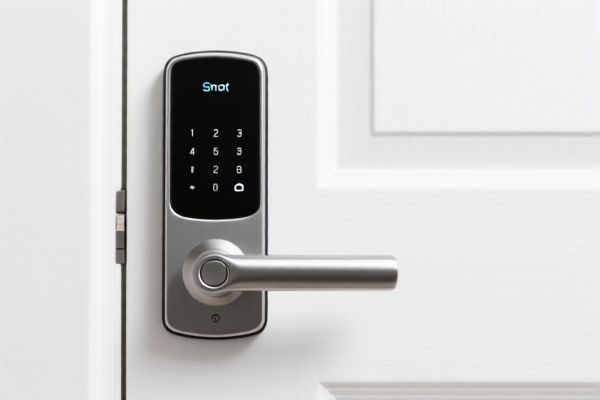
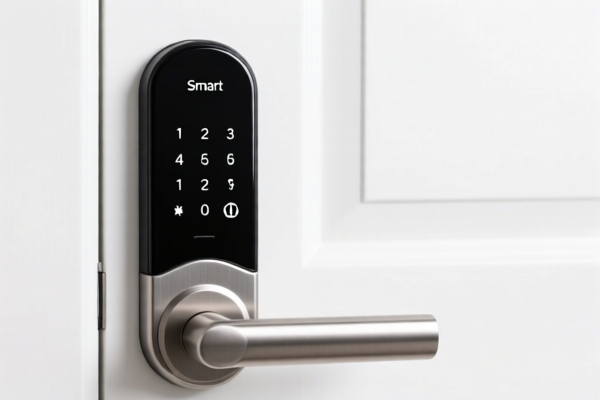
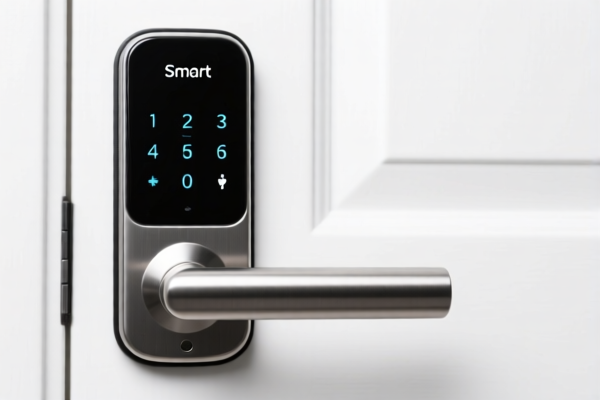
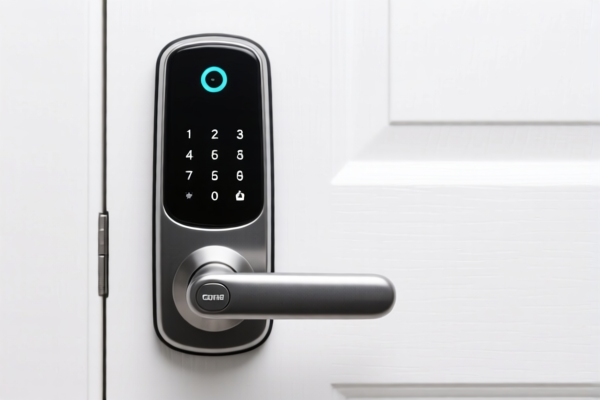
AI分析
🔐 Electric Door Lock (Electronic Locking Systems)
🌐 HS Code Reference & Customs Clearance Guide | 2026 Latest Tariff Analysis | Professional Clearance Strategy
📌 I. Product Definition & Classification: Do You Really Understand "Electric Door Locks"?
An Electric Door Lock is a critical security component used in residential, commercial, and industrial applications. In international trade, classification depends heavily on whether it is viewed as a mechanical locking device or an electrical control component. The distinction is crucial for determining the correct Harmonized System (HS) Code and applicable tax rates.
⚠️ Key Distinction Points:
- If the lock is primarily a mechanical locking mechanism operated by electricity (e.g., solenoid-based, metal body), it often falls under Chapter 83 (Base Metal Locks).
- If the lock is primarily a control/switching component for electrical circuits (e.g., part of a power distribution unit or control panel), it may fall under Chapter 85 (Electrical Machinery/Control Parts).
📦 II. HS Code Classification Details (2026 Latest Tariff Authority Comparison)
Based on the provided data, here are the five potential classifications for "Electric Door Locks" and their corresponding tax implications:
| HS Code | Product Description | Logic Summary | Total Tax Rate |
|---|---|---|---|
8538.90.81.80 |
Parts suitable for use with apparatus of heading 8535, 8536, or 8537 | Viewed as a control/switching component for electrical apparatus. | 38.5% |
8301.40.60.60 |
Other locks, electrically operated | Viewed as a metal lock based on name inference. No material/form conflict. | 23.2% |
8538.90.81.40 |
Parts for switchgear or control apparatus | Viewed as a component of switching/control devices. Fits the logic of Chapter 85 parts. | 38.5% |
8301.40.60.30 |
Electric/electronic locks, base metal material | Viewed as a locking device made of base metal. Material consistency with classification requirements. | 23.2% |
8536.50.90.20 |
Other circuit switches for controlling current/voltage | Viewed as a circuit switch for voltage/current control. Fits logic of electrical switching equipment. | 35.0% |
🔍 Important Reminder:
- Chapter 83 (8301) classifications are generally cheaper due to lower base tariffs. These apply if the item is primarily a "lock" mechanism.
- Chapter 85 (8538,8536) classifications are more expensive due to higher base tariffs + specific duties. These apply if the item is primarily an "electrical control part."
- Misclassification can lead to significant tax discrepancies (e.g., 23.2% vs. 38.5%).
💰 III. 2026 Latest Tariff Rate Breakdown (Including Surcharges & Policy Add-ons)
✅ Applicable Country: USA (US)
✅ Origin: China (CN)
✅ Effective Date: Post-November 10, 2025 (including subsequent imports)
🎯 1. 8538.90.81.80 & 8538.90.81.40 — Electrical Apparatus Parts
| Item | Content |
|---|---|
| Base Tariff | 3.5% (Ad Valorem) |
| Section 301 Surcharge (Section 301) | +25.0% (Specific to Chinese origin electrical parts) |
| Section 122 Duty (IEEPA) | +10% (Targeting specific Chinese goods) |
| Total Tax Rate | 38.5% |
| Tax Calculation | CIF Value × 38.5% |
| De Minimis Exemption? | ❌ No (deny_de_minimis applies) |
| Legal Path | USITC:8538.90.81.80 → FOOTNOTE:301 → IEEPA:122 |
📌 Explanation:
- These codes are classified as parts of electrical machinery.
- The 3.5% base tariff is relatively low, but the 25% Section 301 duty significantly increases the cost.
- Total 38.5% is a high-risk classification for cost control.
🎯 2. 8301.40.60.60 & 8301.40.60.30 — Electric Locks (Base Metal)
| Item | Content |
|---|---|
| Base Tariff | 5.7% (Ad Valorem) |
| Section 301 Surcharge (Section 301) | +7.5% (Lower rate for certain base metal articles) |
| Section 122 Duty (IEEPA) | +10% |
| Total Tax Rate | 23.2% |
| Tax Calculation | CIF Value × 23.2% |
| De Minimis Exemption? | ❌ No (deny_de_minimis applies) |
| Legal Path | USITC:8301.40.60.60 → FOOTNOTE:301 → IEEPA:122 |
📌 Note:
- These codes classify the item as a lock rather than an electrical part.
- The 7.5% Section 301 surcharge is significantly lower than the 25% applied to electrical parts.
- Total 23.2% offers substantial cost savings compared to the 38.5% bracket.
- Critical: You must prove the item’s primary function is locking/securing, not just electrical switching.
🎯 3. 8536.50.90.20 — Other Circuit Switches
| Item | Content |
|---|---|
| Base Tariff | 0.0% (Ad Valorem) |
| Section 301 Surcharge (Section 301) | +25.0% |
| Section 122 Duty (IEEPA) | +10% |
| Total Tax Rate | 35.0% |
| Tax Calculation | CIF Value × 35.0% |
| De Minimis Exemption? | ❌ No (deny_de_minimis applies) |
| Legal Path | USITC:8536.50.90.20 → FOOTNOTE:301 → IEEPA:122 |
📌 Attention:
- This code has a 0% base tariff, which looks attractive, but the 25% Section 301 duty still applies.
- Total 35.0% is in the middle range.
- Suitable if the lock is primarily a switch for controlling power to other devices (e.g., a power interlock).
🛠️ IV. Customs Clearance Practical Advice (Avoid Pitfalls)
✅ 1. Documentation Checklist (All Required)
| Document | Required? | Description |
|---|---|---|
| ✅ Product Specification Sheet | ✔️ | Must detail voltage, current, locking mechanism type (solenoid, motor), and material (e.g., zinc alloy, steel). |
| ✅ Function Diagram/Explanation | ✔️ | Clearly explain if it is a lock (primary function) or a switch/part (primary function). |
| ✅ Product Photos (Label) | ✔️ | Show model number, brand, input/output parameters, and any certifications. |
| ✅ Third-Party Test Reports | ✔️ | UL, ETL, CE, FCC (if applicable). Critical for proving safety and compliance. |
| ✅ Commercial Invoice | ✔️ | Must use precise terminology: "Electric Lock" vs. "Electrical Switch Part". |
| ✅ Packing List | ✔️ | Detail contents to avoid confusion with accessories. |
✅ 2. Declaration Tips (Key Mantras)
🔥 "Lock First, Part Second. Name Precision Saves 15%!"
| Scenario | Correct Declaration | Wrong Practice |
|---|---|---|
| Primary Function: Securing a Door | Use 8301.40.60.xx (Locks) |
Misdeclare as "Electrical Part" → 38.5% Tax |
| Primary Function: Circuit Control | Use 8536.50.90.20 or 8538.xx |
Misdeclare as "Lock" → Potential audit for misclassification |
| Mixed Use (Lock + Switch) | Analyze Primary Function | Vague description "Electric Door Lock" → Risk of arbitrary classification |
| Accessories (Keys, Mounting Brackets) | Declare Separately if not integral | Bundling as one unit may raise scrutiny |
✅ 3. Special Case Handling
| Situation | Handling Advice |
|---|---|
| Smart Locks with Wi-Fi/Bluetooth | Still likely 8301 if mechanical locking is primary. Software is secondary. |
| Industrial Interlock Switches | Likely 8536 or 8538. Focus on electrical control function. |
| OEM Custom Locks | Provide client design drawings to prove it is a "lock" and not a generic electrical part. |
| Origin Proof | Ensure CO (Certificate of Origin) is accurate. Misstatement leads to penalties. |
🌍 V. Global Market Comparison (2026 Latest)
| Country/Region | Recommended HS Code | Tariff (China Origin) | Certification Requirements | Notes |
|---|---|---|---|---|
| 🇺🇸 USA | 8301.40.60.30/60 |
23.2% | UL/ETL + FCC | Savings vs. 38.5% for electrical parts |
| 🇨🇳 China | 8301.40.60 |
5-10% (Import) | CCC (if applicable) | Domestic trade benefits from lower rates |
| 🇪🇺 EU | 8301.40 |
0-3% | CE + RoHS | No Section 301/IEEPA equivalent |
| 🇯🇵 Japan | 8301.40 |
0-3% | PSE/JIS | Low tariffs for locks |
📌 Conclusion:
- USA is the most critical market for tariff optimization.
- Choosing8301over8538can save 15.3% in total taxes.
- Evidence must strongly support the "Lock" classification.
📌 VI. Common Errors & Pitfall Guide (Lessons Learned)
❌ Mistake 1: Declaring an Electric Lock as "Electrical Part" (8538)
👉 Result: Tax jumps from 23.2% to 38.5%. Loss of $15.30 per $100 CIF value.
❌ Mistake 2: Declaring a Circuit Switch as a "Lock" (8301)
👉 Result: Customs may challenge the classification. If deemed a switch, back taxes + penalties.
❌ Mistake 3: Vague Description "Electric Door Lock"
👉 Result: Customs officer makes a best judgment. Risk of being assigned the higher tax bracket (8538).
❌ Mistake 4: Ignoring Section 122/301 Applicability
👉 Result: Underpayment of duties. Audit triggers.
✅ Correct Practice:
"Electric Mortise Lock, Zinc Alloy, 12V DC, UL Listed, for Commercial Use"
Provide functional diagram showing mechanical locking mechanism as primary function.
🎯 VII. Conclusion: Precision Classification, Cost Efficiency!
🎯 Remember the Mantra:
🔹 "Lock vs. Part: Primary Function is Key."
🔹 "8301 Saves 15%, 8538 Costs More."
🔹 "Documentation Proves Classification."
📌 Pro Tip:
If your lock is primarily for electrical safety interlocking (e.g., preventing power-on while door is open), consider 8536 or 8538. If it is for security/access control (locking a door), aim for 8301.
Recommendation: Apply for a Binding Tariff Information (BTI) or Advance Ruling with US CBP to secure the lower 23.2% rate confidently.
📣 Immediate Action:
📞 Consult with a Customs Broker + Provide Product Specs + Request HS Code Pre-ruling
🚀 Optimize Your Supply Chain, Maximize Profit Margins!
✨ Professional Clearance Starts with Accurate Classification!
💼 Every Percent of Tax Saved is Pure Profit!
用户评价
关于 HS 编码归类
协调制度(HS)是由世界海关组织(WCO)制定的国际贸易商品分类标准。全球 200 多个国家采用 HS 系统作为海关关税、贸易统计和进出口监管的基础。
每个 HS 编码遵循以下层级结构:
- 章(2 位)——商品大类(例如:第 84 章:机器和机械设备)
- 品目(4 位)——章内的更具体分类
- 子目(6 位)——国际通用细分,所有 WCO 成员国统一使用
- 本国细分(8-10 位)——各国自行扩展的细分编码,如美国 HTSUS 10 位编码
正确的 HS 编码归类对于顺利通关、准确缴纳关税和遵守贸易法规至关重要。错误归类可能导致海关延误、多缴关税或罚款。
从CN进口到US时,适用的关税税率可能包括:
- 最惠国(MFN)税率——适用于 WTO 成员国的标准关税税率
- 普通税率——适用于无贸易协定国家
- 贸易救济关税——附加关税,如 301 条款(反倾销)、232 条款(国家安全)或反补贴税
本页内容仅供参考。如需正式归类,请咨询当地海关或持牌报关代理。