electric door lock
CN → US| HS Code | Tariff Rate | Origin | Destination | Doc |
|---|---|---|---|---|
| 8538908180 | 38.5% | CN | US | Official Doc |
| 8301406060 | 23.2% | CN | US | Official Doc |
| 8538908140 | 38.5% | CN | US | Official Doc |
| 8301406030 | 23.2% | CN | US | Official Doc |
| 8536509020 | 35.0% | CN | US | Official Doc |
Product Images
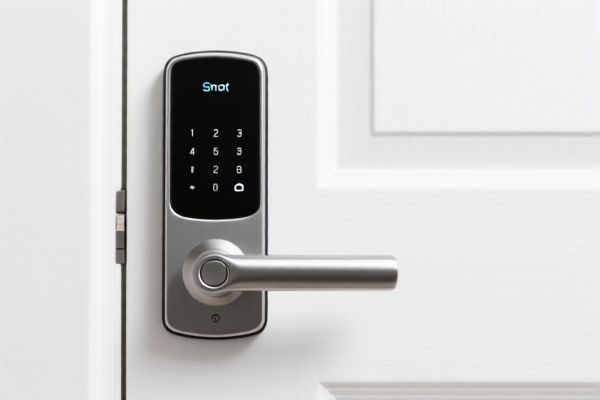
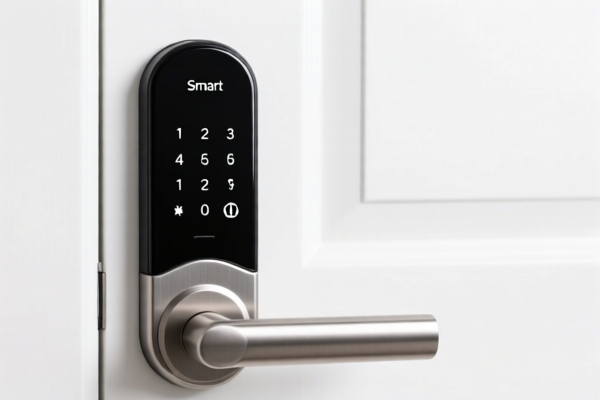
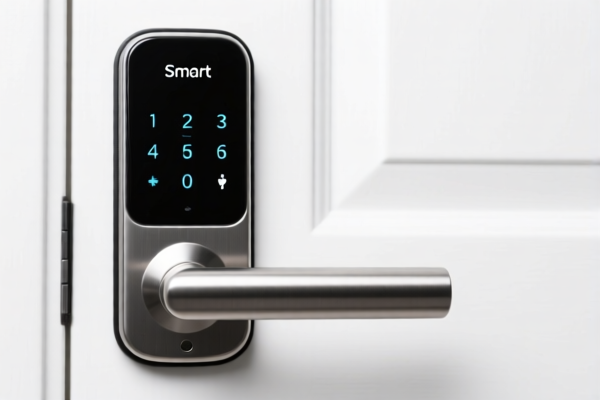
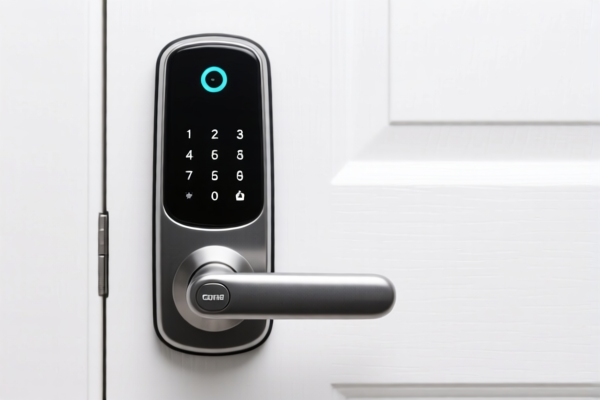
AI Analysis
🔐 Electric Door Lock (Electronic Locking Systems)
🌐 HS Code Reference & Customs Clearance Guide | 2026 Latest Tariff Analysis | Professional Clearance Strategy
📌 I. Product Definition & Classification: Do You Really Understand "Electric Door Locks"?
An Electric Door Lock is a critical security component used in residential, commercial, and industrial applications. In international trade, classification depends heavily on whether it is viewed as a mechanical locking device or an electrical control component. The distinction is crucial for determining the correct Harmonized System (HS) Code and applicable tax rates.
⚠️ Key Distinction Points:
- If the lock is primarily a mechanical locking mechanism operated by electricity (e.g., solenoid-based, metal body), it often falls under Chapter 83 (Base Metal Locks).
- If the lock is primarily a control/switching component for electrical circuits (e.g., part of a power distribution unit or control panel), it may fall under Chapter 85 (Electrical Machinery/Control Parts).
📦 II. HS Code Classification Details (2026 Latest Tariff Authority Comparison)
Based on the provided data, here are the five potential classifications for "Electric Door Locks" and their corresponding tax implications:
| HS Code | Product Description | Logic Summary | Total Tax Rate |
|---|---|---|---|
8538.90.81.80 |
Parts suitable for use with apparatus of heading 8535, 8536, or 8537 | Viewed as a control/switching component for electrical apparatus. | 38.5% |
8301.40.60.60 |
Other locks, electrically operated | Viewed as a metal lock based on name inference. No material/form conflict. | 23.2% |
8538.90.81.40 |
Parts for switchgear or control apparatus | Viewed as a component of switching/control devices. Fits the logic of Chapter 85 parts. | 38.5% |
8301.40.60.30 |
Electric/electronic locks, base metal material | Viewed as a locking device made of base metal. Material consistency with classification requirements. | 23.2% |
8536.50.90.20 |
Other circuit switches for controlling current/voltage | Viewed as a circuit switch for voltage/current control. Fits logic of electrical switching equipment. | 35.0% |
🔍 Important Reminder:
- Chapter 83 (8301) classifications are generally cheaper due to lower base tariffs. These apply if the item is primarily a "lock" mechanism.
- Chapter 85 (8538,8536) classifications are more expensive due to higher base tariffs + specific duties. These apply if the item is primarily an "electrical control part."
- Misclassification can lead to significant tax discrepancies (e.g., 23.2% vs. 38.5%).
💰 III. 2026 Latest Tariff Rate Breakdown (Including Surcharges & Policy Add-ons)
✅ Applicable Country: USA (US)
✅ Origin: China (CN)
✅ Effective Date: Post-November 10, 2025 (including subsequent imports)
🎯 1. 8538.90.81.80 & 8538.90.81.40 — Electrical Apparatus Parts
| Item | Content |
|---|---|
| Base Tariff | 3.5% (Ad Valorem) |
| Section 301 Surcharge (Section 301) | +25.0% (Specific to Chinese origin electrical parts) |
| Section 122 Duty (IEEPA) | +10% (Targeting specific Chinese goods) |
| Total Tax Rate | 38.5% |
| Tax Calculation | CIF Value × 38.5% |
| De Minimis Exemption? | ❌ No (deny_de_minimis applies) |
| Legal Path | USITC:8538.90.81.80 → FOOTNOTE:301 → IEEPA:122 |
📌 Explanation:
- These codes are classified as parts of electrical machinery.
- The 3.5% base tariff is relatively low, but the 25% Section 301 duty significantly increases the cost.
- Total 38.5% is a high-risk classification for cost control.
🎯 2. 8301.40.60.60 & 8301.40.60.30 — Electric Locks (Base Metal)
| Item | Content |
|---|---|
| Base Tariff | 5.7% (Ad Valorem) |
| Section 301 Surcharge (Section 301) | +7.5% (Lower rate for certain base metal articles) |
| Section 122 Duty (IEEPA) | +10% |
| Total Tax Rate | 23.2% |
| Tax Calculation | CIF Value × 23.2% |
| De Minimis Exemption? | ❌ No (deny_de_minimis applies) |
| Legal Path | USITC:8301.40.60.60 → FOOTNOTE:301 → IEEPA:122 |
📌 Note:
- These codes classify the item as a lock rather than an electrical part.
- The 7.5% Section 301 surcharge is significantly lower than the 25% applied to electrical parts.
- Total 23.2% offers substantial cost savings compared to the 38.5% bracket.
- Critical: You must prove the item’s primary function is locking/securing, not just electrical switching.
🎯 3. 8536.50.90.20 — Other Circuit Switches
| Item | Content |
|---|---|
| Base Tariff | 0.0% (Ad Valorem) |
| Section 301 Surcharge (Section 301) | +25.0% |
| Section 122 Duty (IEEPA) | +10% |
| Total Tax Rate | 35.0% |
| Tax Calculation | CIF Value × 35.0% |
| De Minimis Exemption? | ❌ No (deny_de_minimis applies) |
| Legal Path | USITC:8536.50.90.20 → FOOTNOTE:301 → IEEPA:122 |
📌 Attention:
- This code has a 0% base tariff, which looks attractive, but the 25% Section 301 duty still applies.
- Total 35.0% is in the middle range.
- Suitable if the lock is primarily a switch for controlling power to other devices (e.g., a power interlock).
🛠️ IV. Customs Clearance Practical Advice (Avoid Pitfalls)
✅ 1. Documentation Checklist (All Required)
| Document | Required? | Description |
|---|---|---|
| ✅ Product Specification Sheet | ✔️ | Must detail voltage, current, locking mechanism type (solenoid, motor), and material (e.g., zinc alloy, steel). |
| ✅ Function Diagram/Explanation | ✔️ | Clearly explain if it is a lock (primary function) or a switch/part (primary function). |
| ✅ Product Photos (Label) | ✔️ | Show model number, brand, input/output parameters, and any certifications. |
| ✅ Third-Party Test Reports | ✔️ | UL, ETL, CE, FCC (if applicable). Critical for proving safety and compliance. |
| ✅ Commercial Invoice | ✔️ | Must use precise terminology: "Electric Lock" vs. "Electrical Switch Part". |
| ✅ Packing List | ✔️ | Detail contents to avoid confusion with accessories. |
✅ 2. Declaration Tips (Key Mantras)
🔥 "Lock First, Part Second. Name Precision Saves 15%!"
| Scenario | Correct Declaration | Wrong Practice |
|---|---|---|
| Primary Function: Securing a Door | Use 8301.40.60.xx (Locks) |
Misdeclare as "Electrical Part" → 38.5% Tax |
| Primary Function: Circuit Control | Use 8536.50.90.20 or 8538.xx |
Misdeclare as "Lock" → Potential audit for misclassification |
| Mixed Use (Lock + Switch) | Analyze Primary Function | Vague description "Electric Door Lock" → Risk of arbitrary classification |
| Accessories (Keys, Mounting Brackets) | Declare Separately if not integral | Bundling as one unit may raise scrutiny |
✅ 3. Special Case Handling
| Situation | Handling Advice |
|---|---|
| Smart Locks with Wi-Fi/Bluetooth | Still likely 8301 if mechanical locking is primary. Software is secondary. |
| Industrial Interlock Switches | Likely 8536 or 8538. Focus on electrical control function. |
| OEM Custom Locks | Provide client design drawings to prove it is a "lock" and not a generic electrical part. |
| Origin Proof | Ensure CO (Certificate of Origin) is accurate. Misstatement leads to penalties. |
🌍 V. Global Market Comparison (2026 Latest)
| Country/Region | Recommended HS Code | Tariff (China Origin) | Certification Requirements | Notes |
|---|---|---|---|---|
| 🇺🇸 USA | 8301.40.60.30/60 |
23.2% | UL/ETL + FCC | Savings vs. 38.5% for electrical parts |
| 🇨🇳 China | 8301.40.60 |
5-10% (Import) | CCC (if applicable) | Domestic trade benefits from lower rates |
| 🇪🇺 EU | 8301.40 |
0-3% | CE + RoHS | No Section 301/IEEPA equivalent |
| 🇯🇵 Japan | 8301.40 |
0-3% | PSE/JIS | Low tariffs for locks |
📌 Conclusion:
- USA is the most critical market for tariff optimization.
- Choosing8301over8538can save 15.3% in total taxes.
- Evidence must strongly support the "Lock" classification.
📌 VI. Common Errors & Pitfall Guide (Lessons Learned)
❌ Mistake 1: Declaring an Electric Lock as "Electrical Part" (8538)
👉 Result: Tax jumps from 23.2% to 38.5%. Loss of $15.30 per $100 CIF value.
❌ Mistake 2: Declaring a Circuit Switch as a "Lock" (8301)
👉 Result: Customs may challenge the classification. If deemed a switch, back taxes + penalties.
❌ Mistake 3: Vague Description "Electric Door Lock"
👉 Result: Customs officer makes a best judgment. Risk of being assigned the higher tax bracket (8538).
❌ Mistake 4: Ignoring Section 122/301 Applicability
👉 Result: Underpayment of duties. Audit triggers.
✅ Correct Practice:
"Electric Mortise Lock, Zinc Alloy, 12V DC, UL Listed, for Commercial Use"
Provide functional diagram showing mechanical locking mechanism as primary function.
🎯 VII. Conclusion: Precision Classification, Cost Efficiency!
🎯 Remember the Mantra:
🔹 "Lock vs. Part: Primary Function is Key."
🔹 "8301 Saves 15%, 8538 Costs More."
🔹 "Documentation Proves Classification."
📌 Pro Tip:
If your lock is primarily for electrical safety interlocking (e.g., preventing power-on while door is open), consider 8536 or 8538. If it is for security/access control (locking a door), aim for 8301.
Recommendation: Apply for a Binding Tariff Information (BTI) or Advance Ruling with US CBP to secure the lower 23.2% rate confidently.
📣 Immediate Action:
📞 Consult with a Customs Broker + Provide Product Specs + Request HS Code Pre-ruling
🚀 Optimize Your Supply Chain, Maximize Profit Margins!
✨ Professional Clearance Starts with Accurate Classification!
💼 Every Percent of Tax Saved is Pure Profit!
Customer Reviews
About HS Code Classification
The Harmonized System (HS) is an internationally standardized nomenclature developed by the World Customs Organization (WCO) to classify traded products. Over 200 countries use the HS system as the basis for customs tariffs, trade statistics, and import/export regulations.
Each HS code follows a hierarchical structure:
- Chapter (2 digits) — Broad category of goods (e.g., Chapter 84: Machinery and Mechanical Appliances)
- Heading (4 digits) — More specific grouping within the chapter
- Subheading (6 digits) — Internationally standardized breakdown, used by all WCO member countries
- National subdivisions (8-10 digits) — Country-specific extensions for further classification, such as US HTSUS 10-digit codes
Correct HS code classification is essential for smooth customs clearance, accurate duty payment, and compliance with trade regulations. Misclassification can lead to customs delays, overpayment of duties, or penalties.
When importing from CN to US, the applicable tariff rates may include:
- Most-Favored-Nation (MFN) rate — The standard duty rate applied to WTO members
- General rate — Applied to countries without trade agreements
- Trade remedy duties — Additional tariffs such as Section 301 (anti-dumping), Section 232 (national security), or countervailing duties
The information provided on this page is for reference purposes only. For official classification, please consult with your local customs authority or a licensed customs broker.