eps plastic buffer board
CN → US| HS编码 | 关税税率 | 原产国 | 目的国 | 文档 |
|---|---|---|---|---|
| 3921110000 | 40.3% | CN | US | 官方文档 |
| 3921190010 | 41.5% | CN | US | 官方文档 |
商品图片
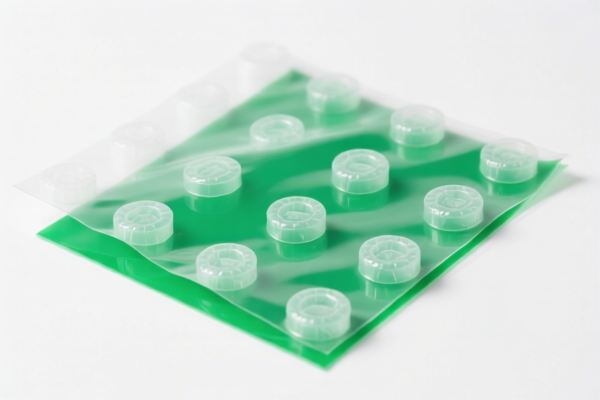


AI分析
📦 EPS Plastic Buffer Board (Cellular Plastic Plates/Sheets)
🌐 HS Code Reference & Clearance Guide | 2026 Latest Tariff Analysis | Professional Clearance Strategy
📌 Key Takeaway: The product "EPS Plastic Buffer Board" refers to Cellular plates, sheets, film, foil, and strip of plastics. In international trade classification, "EPS" (Expanded Polystyrene) is a polymer of styrene. The critical distinction lies in whether the material is cellular (foamed) or solid. Buffer boards are almost exclusively cellular (foamed/polystyrene foam) to provide cushioning.
⚠️ CRITICAL DISTINCTION: * Cellular Polystyrene (EPS Foam): If the board is made of expanded polystyrene foam (lightweight, bubble-like structure), it falls under 3921.11.00.00. * Non-Cellular Polystyrene (Solid): If it were solid plastic (rare for "buffer" boards), it would fall under a different heading. However, for "buffer" applications, 3921.11.00.00 is the primary classification. * Other Plastics: If the board is not polystyrene (e.g., PE or PP foam), it falls under 3921.19.00.10. Note: Standard "EPS" explicitly denotes Polystyrene.
📦 HS Code Classification Details (2026 Latest Tariff Reference)
Based on the provided <DATA>, there are two relevant HS Codes. We must distinguish them by material type:
| HS Code | Product Description | Material Type | Applicable Scenario | Is it Polystyrene (EPS)? |
|---|---|---|---|---|
3921.11.00.00 |
Other plates, sheets, film, foil and strip, of plastics: Cellular: Of polymers of styrene | Polymers of Styrene (EPS/PS) | Standard EPS Buffer Boards, Styrofoam packaging, lightweight cushioning | ✅ YES |
3921.19.00.10 |
Other plates, sheets, film, foil and strip, of plastics: Cellular: Of other plastics Microporous sheets of polyethylene or polypropylene film | Other Plastics (PE/PP) | PE Foam, PP Foam, EPE (Expanded Polyethylene) cushioning | ❌ NO (Unless mislabeled as EPS but actually PE) |
🔍 重点提醒 (Key Warning): * "EPS" stands for Expanded Polystyrene. Therefore, unless the product is mistakenly labeled, it should be classified under
3921.11.00.00. * Do not classify EPS buffer boards under3921.19.00.10unless the manufacturer confirms it is actually PE/PP foam. Misclassification can lead to customs audits or penalties. * If the product is solid polystyrene (not cellular), it does not fall under these specific cellular headings and would require a different classification (not in the provided<DATA>). However, "Buffer Board" implies cellular structure.
💰 2026 Latest Tariff Rate Details (Detailed Tax Breakdown)
✅ Applicable Country: United States (US)
✅ Origin: China (CN) (Assuming typical origin for such goods; adjust if from other origins)
✅ Validity: Based on provided data for 2026 reference
🎯 1. 3921.11.00.00 — Cellular Polystyrene (EPS) Plates/Sheets
| Item | Content |
|---|---|
| Base Tariff Rate | 0.0% |
| Additional Tariffs | 0.0% |
| Total Tariff Rate | 0.0% |
| Tax Detail | "基础关税: 0.0%, 加征关税: 0.0%" (Base Tariff: 0.0%, Additional Tariff: 0.0%) |
| Calculation | CIF Value × 0.0% = $0 |
| De Minimis Eligibility | ❓ Check Specific Rules: While the tariff is 0%, ensure no Section 301 or IEEPA restrictions apply to plastic cellular goods from China. Note: The provided data states total tax is 0.0%, implying no additional duties for this specific HS code in the provided scope. |
📌 Explanation:
0% Total Tax: This is a highly favorable classification. Cellular polystyrene (EPS) from China currently faces no additional tariffs in the provided dataset. * Zero Duty Advantage: This makes EPS buffer boards a cost-effective packaging solution compared to other plastic goods that may face higher duties. * Compliance: Ensure the product is indeed Polystyrene and Cellular*. If it is PE foam, it falls under3921.19.00.10.
🎯 2. 3921.19.00.10 — Cellular Other Plastics (PE/PP)
| Item | Content |
|---|---|
| Base Tariff Rate | 0.0% |
| Additional Tariffs | 0.0% |
| Total Tariff Rate | 0.0% |
| Tax Detail | "基础关税: 0.0%, 加征关税: 0.0%" (Base Tariff: 0.0%, Additional Tariff: 0.0%) |
| Calculation | CIF Value × 0.0% = $0 |
📌 Explanation:
0% Total Tax: Similar to EPS, cellular PE/PP sheets also have 0% total tax in the provided data. * Material Verification*: If your "EPS" board is actually PE (common in some flexible packaging), use this code. If it is rigid EPS, use3921.11.00.00.
🛠️ Customs Clearance Practical Advice (Avoid Pitfalls)
✅ 1. Document Preparation Checklist (Essential)
| Document | Required? | Notes |
|---|---|---|
| ✅ Product Specification Sheet | ✔️ | Must clearly state: "Expanded Polystyrene (EPS)" or "Polyethylene (PE)". Include density, thickness, and dimensions. |
| ✅ Material Composition Certificate | ✔️ | Crucial to prove it is Polystyrene (for 3921.11) vs. Other Plastics (for 3921.19). |
| ✅ Product Photos | ✔️ | Show the cellular structure (bubbles) to prove it is Cellular (foam) and not solid plastic. |
| ✅ Commercial Invoice | ✔️ | Description must match HS Code: "Cellular Polystyrene Buffer Board" or "Cellular PE Sheet". |
| ✅ Packing List | ✔️ | Weight and dimensions for freight calculation. |
✅ 2. Classification Strategy (Key Mnemonic)
🔥 "EPS = Polystyrene = 3921.11. EPS Foam, 0% Tax!"
🔥 "PE/PP Foam = Other Plastics = 3921.19. Also 0% Tax!"
| Scenario | Correct HS Code | Risk of Misclassification |
|---|---|---|
| Rigid EPS Block (White, lightweight, bubble-like) | 3921.11.00.00 |
✅ Low Risk (if correctly labeled as Polystyrene) |
| Flexible PE Foam (EPE, stretchy, different texture) | 3921.19.00.10 |
✅ Low Risk (if correctly labeled as PE/PP) |
| Solid Polystyrene Sheet (Hard, non-bubbly) | NOT IN DATA | ❌ High Risk (Misclassified as Cellular) |
| Mixed Material Board | Complex | ❌ Very High Risk (May require separate declaration) |
✅ 3. Special Cases & Handling
| Situation | Handling Advice |
|---|---|
| OEM Custom EPS Boards | Provide mold design drawings and material certs to prove it is EPS, not a generic plastic. |
| Recycled EPS | If made from recycled polystyrene, still falls under 3921.11.00.00 as long as it is cellular polystyrene. |
| Composite Boards (EPS + Film) | If the EPS is laminated with plastic film, the essential character (EPS) usually dictates the classification. Consult customs if complex. |
| Dust Control Issues | EPS produces dust. Ensure packaging is sealed to prevent "dirty" customs inspections. |
🌍 Global Market Comparison (2026 Reference)
| Country/Region | Recommended HS Code | Tariff (China Origin) | Certification | Notes |
|---|---|---|---|---|
| 🇺🇸 USA | 3921.11.00.00 (EPS) |
0.0% | None (General) | 0% Tax Advantage |
| 🇨🇳 China | 3921.11.00.00 |
0.0% (Import) | None | Import duty is 0% |
| 🇪🇺 EU | 3921.10 (General) |
~0-6.5% | CE (if applicable) | Varies by specific subheading |
| 🇦🇺 Australia | 3921.11 |
5% | None | Lower than US if taxes were applied |
| 🇯🇵 Japan | 3921.11 |
~0-6% | None | Low duty |
📌 Conclusion:
The USA offers a 0% tariff for both EPS (3921.11.00.00) and other cellular plastics (3921.19.00.10) from China, according to the provided data. * This is a competitive advantage for EPS buffer board exporters to the US. * Ensure Accurate Material Declaration: Mislabeling PE as EPS or vice versa can lead to incorrect HS Code declaration, even if the tax rate is the same, potentially causing customs delays or audits*.
📌 Common Errors & Pitfalls (Lessons Learned)
❌ Error 1: Labeling PE Foam as EPS
👉 Consequence: HS Code 3921.19.00.10 should be used, not 3921.11.00.00. While both are 0% in this data, misdeclaration is a compliance violation.
❌ Error 2: Not specifying "Cellular" in the description
👉 Consequence: Customs may question if it is solid plastic, leading to additional testing or delays.
❌ Error 3: Ignoring Density Specifications
👉 Consequence: Different densities may fall under different subheadings in other countries (not in US data, but important for global trade).
❌ Error 4: Using Generic Terms like "Plastic Board"
👉 Consequence: Customs may assign a default higher tariff code. Always use "Cellular Polystyrene Buffer Board" or "Expanded Polyethylene Sheet".
✅ Correct Practice:
"Cellular Expanded Polystyrene (EPS) Buffer Board, White, Density: 20kg/m³, Thickness: 50mm, for Electronics Packaging, Made in China"
🎯 Conclusion: Precision Classification for Cost Efficiency
🎯 Remember:
🔹 "EPS is Polystyrene, PE is Polyethylene. Both Cellular, Both 0% Tax in US (per data)."
🔹 "Declare Material Clearly: 'Expanded Polystyrene' or 'Expanded Polyethylene'."
🔹 "Cellular Structure is Key: Proven by Photos and Specs."
📌 Tip:
If you are exporting Recycled EPS, still classify under 3921.11.00.00 but ensure your material certificate confirms it is Polystyrene and not mixed with other plastics.
📣 Immediate Action:
📞 Confirm Material Composition with your supplier (EPS vs. PE).
📄 Use Accurate Description in Invoice and Packing List.
📦 Provide Product Photos showing cellular structure.
✨ Professional Clearance Starts with Precise Classification!
💼 Your 0% Tariff Advantage Depends on Correct HS Code Declaration!
用户评价
关于 HS 编码归类
协调制度(HS)是由世界海关组织(WCO)制定的国际贸易商品分类标准。全球 200 多个国家采用 HS 系统作为海关关税、贸易统计和进出口监管的基础。
每个 HS 编码遵循以下层级结构:
- 章(2 位)——商品大类(例如:第 84 章:机器和机械设备)
- 品目(4 位)——章内的更具体分类
- 子目(6 位)——国际通用细分,所有 WCO 成员国统一使用
- 本国细分(8-10 位)——各国自行扩展的细分编码,如美国 HTSUS 10 位编码
正确的 HS 编码归类对于顺利通关、准确缴纳关税和遵守贸易法规至关重要。错误归类可能导致海关延误、多缴关税或罚款。
从CN进口到US时,适用的关税税率可能包括:
- 最惠国(MFN)税率——适用于 WTO 成员国的标准关税税率
- 普通税率——适用于无贸易协定国家
- 贸易救济关税——附加关税,如 301 条款(反倾销)、232 条款(国家安全)或反补贴税
本页内容仅供参考。如需正式归类,请咨询当地海关或持牌报关代理。