eps plastic buffer board
CN → US| HS Code | Tariff Rate | Origin | Destination | Doc |
|---|---|---|---|---|
| 3921110000 | 40.3% | CN | US | Official Doc |
| 3921190010 | 41.5% | CN | US | Official Doc |
Product Images
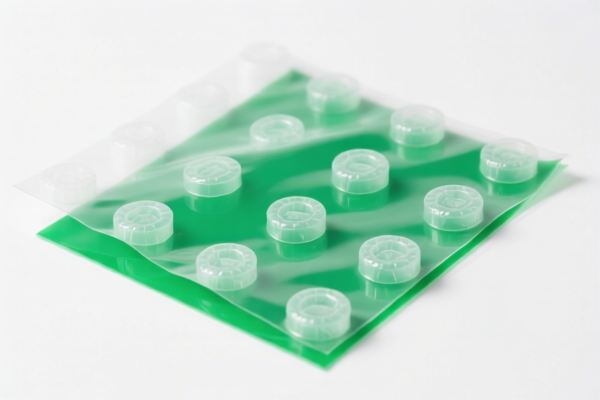


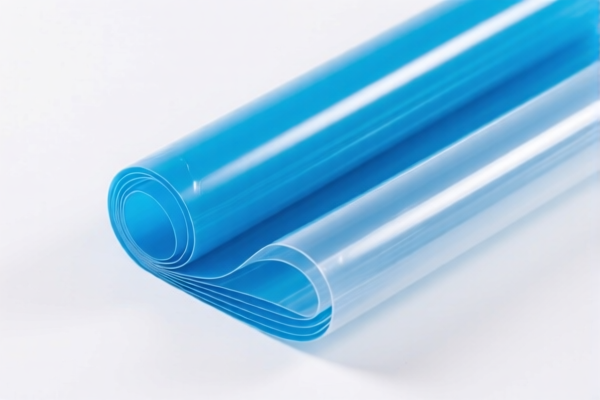
AI Analysis
📦 EPS Plastic Buffer Board (Cellular Plastic Plates/Sheets)
🌐 HS Code Reference & Clearance Guide | 2026 Latest Tariff Analysis | Professional Clearance Strategy
📌 Key Takeaway: The product "EPS Plastic Buffer Board" refers to Cellular plates, sheets, film, foil, and strip of plastics. In international trade classification, "EPS" (Expanded Polystyrene) is a polymer of styrene. The critical distinction lies in whether the material is cellular (foamed) or solid. Buffer boards are almost exclusively cellular (foamed/polystyrene foam) to provide cushioning.
⚠️ CRITICAL DISTINCTION: * Cellular Polystyrene (EPS Foam): If the board is made of expanded polystyrene foam (lightweight, bubble-like structure), it falls under 3921.11.00.00. * Non-Cellular Polystyrene (Solid): If it were solid plastic (rare for "buffer" boards), it would fall under a different heading. However, for "buffer" applications, 3921.11.00.00 is the primary classification. * Other Plastics: If the board is not polystyrene (e.g., PE or PP foam), it falls under 3921.19.00.10. Note: Standard "EPS" explicitly denotes Polystyrene.
📦 HS Code Classification Details (2026 Latest Tariff Reference)
Based on the provided <DATA>, there are two relevant HS Codes. We must distinguish them by material type:
| HS Code | Product Description | Material Type | Applicable Scenario | Is it Polystyrene (EPS)? |
|---|---|---|---|---|
3921.11.00.00 |
Other plates, sheets, film, foil and strip, of plastics: Cellular: Of polymers of styrene | Polymers of Styrene (EPS/PS) | Standard EPS Buffer Boards, Styrofoam packaging, lightweight cushioning | ✅ YES |
3921.19.00.10 |
Other plates, sheets, film, foil and strip, of plastics: Cellular: Of other plastics Microporous sheets of polyethylene or polypropylene film | Other Plastics (PE/PP) | PE Foam, PP Foam, EPE (Expanded Polyethylene) cushioning | ❌ NO (Unless mislabeled as EPS but actually PE) |
🔍 重点提醒 (Key Warning): * "EPS" stands for Expanded Polystyrene. Therefore, unless the product is mistakenly labeled, it should be classified under
3921.11.00.00. * Do not classify EPS buffer boards under3921.19.00.10unless the manufacturer confirms it is actually PE/PP foam. Misclassification can lead to customs audits or penalties. * If the product is solid polystyrene (not cellular), it does not fall under these specific cellular headings and would require a different classification (not in the provided<DATA>). However, "Buffer Board" implies cellular structure.
💰 2026 Latest Tariff Rate Details (Detailed Tax Breakdown)
✅ Applicable Country: United States (US)
✅ Origin: China (CN) (Assuming typical origin for such goods; adjust if from other origins)
✅ Validity: Based on provided data for 2026 reference
🎯 1. 3921.11.00.00 — Cellular Polystyrene (EPS) Plates/Sheets
| Item | Content |
|---|---|
| Base Tariff Rate | 0.0% |
| Additional Tariffs | 0.0% |
| Total Tariff Rate | 0.0% |
| Tax Detail | "基础关税: 0.0%, 加征关税: 0.0%" (Base Tariff: 0.0%, Additional Tariff: 0.0%) |
| Calculation | CIF Value × 0.0% = $0 |
| De Minimis Eligibility | ❓ Check Specific Rules: While the tariff is 0%, ensure no Section 301 or IEEPA restrictions apply to plastic cellular goods from China. Note: The provided data states total tax is 0.0%, implying no additional duties for this specific HS code in the provided scope. |
📌 Explanation:
0% Total Tax: This is a highly favorable classification. Cellular polystyrene (EPS) from China currently faces no additional tariffs in the provided dataset. * Zero Duty Advantage: This makes EPS buffer boards a cost-effective packaging solution compared to other plastic goods that may face higher duties. * Compliance: Ensure the product is indeed Polystyrene and Cellular*. If it is PE foam, it falls under3921.19.00.10.
🎯 2. 3921.19.00.10 — Cellular Other Plastics (PE/PP)
| Item | Content |
|---|---|
| Base Tariff Rate | 0.0% |
| Additional Tariffs | 0.0% |
| Total Tariff Rate | 0.0% |
| Tax Detail | "基础关税: 0.0%, 加征关税: 0.0%" (Base Tariff: 0.0%, Additional Tariff: 0.0%) |
| Calculation | CIF Value × 0.0% = $0 |
📌 Explanation:
0% Total Tax: Similar to EPS, cellular PE/PP sheets also have 0% total tax in the provided data. * Material Verification*: If your "EPS" board is actually PE (common in some flexible packaging), use this code. If it is rigid EPS, use3921.11.00.00.
🛠️ Customs Clearance Practical Advice (Avoid Pitfalls)
✅ 1. Document Preparation Checklist (Essential)
| Document | Required? | Notes |
|---|---|---|
| ✅ Product Specification Sheet | ✔️ | Must clearly state: "Expanded Polystyrene (EPS)" or "Polyethylene (PE)". Include density, thickness, and dimensions. |
| ✅ Material Composition Certificate | ✔️ | Crucial to prove it is Polystyrene (for 3921.11) vs. Other Plastics (for 3921.19). |
| ✅ Product Photos | ✔️ | Show the cellular structure (bubbles) to prove it is Cellular (foam) and not solid plastic. |
| ✅ Commercial Invoice | ✔️ | Description must match HS Code: "Cellular Polystyrene Buffer Board" or "Cellular PE Sheet". |
| ✅ Packing List | ✔️ | Weight and dimensions for freight calculation. |
✅ 2. Classification Strategy (Key Mnemonic)
🔥 "EPS = Polystyrene = 3921.11. EPS Foam, 0% Tax!"
🔥 "PE/PP Foam = Other Plastics = 3921.19. Also 0% Tax!"
| Scenario | Correct HS Code | Risk of Misclassification |
|---|---|---|
| Rigid EPS Block (White, lightweight, bubble-like) | 3921.11.00.00 |
✅ Low Risk (if correctly labeled as Polystyrene) |
| Flexible PE Foam (EPE, stretchy, different texture) | 3921.19.00.10 |
✅ Low Risk (if correctly labeled as PE/PP) |
| Solid Polystyrene Sheet (Hard, non-bubbly) | NOT IN DATA | ❌ High Risk (Misclassified as Cellular) |
| Mixed Material Board | Complex | ❌ Very High Risk (May require separate declaration) |
✅ 3. Special Cases & Handling
| Situation | Handling Advice |
|---|---|
| OEM Custom EPS Boards | Provide mold design drawings and material certs to prove it is EPS, not a generic plastic. |
| Recycled EPS | If made from recycled polystyrene, still falls under 3921.11.00.00 as long as it is cellular polystyrene. |
| Composite Boards (EPS + Film) | If the EPS is laminated with plastic film, the essential character (EPS) usually dictates the classification. Consult customs if complex. |
| Dust Control Issues | EPS produces dust. Ensure packaging is sealed to prevent "dirty" customs inspections. |
🌍 Global Market Comparison (2026 Reference)
| Country/Region | Recommended HS Code | Tariff (China Origin) | Certification | Notes |
|---|---|---|---|---|
| 🇺🇸 USA | 3921.11.00.00 (EPS) |
0.0% | None (General) | 0% Tax Advantage |
| 🇨🇳 China | 3921.11.00.00 |
0.0% (Import) | None | Import duty is 0% |
| 🇪🇺 EU | 3921.10 (General) |
~0-6.5% | CE (if applicable) | Varies by specific subheading |
| 🇦🇺 Australia | 3921.11 |
5% | None | Lower than US if taxes were applied |
| 🇯🇵 Japan | 3921.11 |
~0-6% | None | Low duty |
📌 Conclusion:
The USA offers a 0% tariff for both EPS (3921.11.00.00) and other cellular plastics (3921.19.00.10) from China, according to the provided data. * This is a competitive advantage for EPS buffer board exporters to the US. * Ensure Accurate Material Declaration: Mislabeling PE as EPS or vice versa can lead to incorrect HS Code declaration, even if the tax rate is the same, potentially causing customs delays or audits*.
📌 Common Errors & Pitfalls (Lessons Learned)
❌ Error 1: Labeling PE Foam as EPS
👉 Consequence: HS Code 3921.19.00.10 should be used, not 3921.11.00.00. While both are 0% in this data, misdeclaration is a compliance violation.
❌ Error 2: Not specifying "Cellular" in the description
👉 Consequence: Customs may question if it is solid plastic, leading to additional testing or delays.
❌ Error 3: Ignoring Density Specifications
👉 Consequence: Different densities may fall under different subheadings in other countries (not in US data, but important for global trade).
❌ Error 4: Using Generic Terms like "Plastic Board"
👉 Consequence: Customs may assign a default higher tariff code. Always use "Cellular Polystyrene Buffer Board" or "Expanded Polyethylene Sheet".
✅ Correct Practice:
"Cellular Expanded Polystyrene (EPS) Buffer Board, White, Density: 20kg/m³, Thickness: 50mm, for Electronics Packaging, Made in China"
🎯 Conclusion: Precision Classification for Cost Efficiency
🎯 Remember:
🔹 "EPS is Polystyrene, PE is Polyethylene. Both Cellular, Both 0% Tax in US (per data)."
🔹 "Declare Material Clearly: 'Expanded Polystyrene' or 'Expanded Polyethylene'."
🔹 "Cellular Structure is Key: Proven by Photos and Specs."
📌 Tip:
If you are exporting Recycled EPS, still classify under 3921.11.00.00 but ensure your material certificate confirms it is Polystyrene and not mixed with other plastics.
📣 Immediate Action:
📞 Confirm Material Composition with your supplier (EPS vs. PE).
📄 Use Accurate Description in Invoice and Packing List.
📦 Provide Product Photos showing cellular structure.
✨ Professional Clearance Starts with Precise Classification!
💼 Your 0% Tariff Advantage Depends on Correct HS Code Declaration!
Customer Reviews
About HS Code Classification
The Harmonized System (HS) is an internationally standardized nomenclature developed by the World Customs Organization (WCO) to classify traded products. Over 200 countries use the HS system as the basis for customs tariffs, trade statistics, and import/export regulations.
Each HS code follows a hierarchical structure:
- Chapter (2 digits) — Broad category of goods (e.g., Chapter 84: Machinery and Mechanical Appliances)
- Heading (4 digits) — More specific grouping within the chapter
- Subheading (6 digits) — Internationally standardized breakdown, used by all WCO member countries
- National subdivisions (8-10 digits) — Country-specific extensions for further classification, such as US HTSUS 10-digit codes
Correct HS code classification is essential for smooth customs clearance, accurate duty payment, and compliance with trade regulations. Misclassification can lead to customs delays, overpayment of duties, or penalties.
When importing from CN to US, the applicable tariff rates may include:
- Most-Favored-Nation (MFN) rate — The standard duty rate applied to WTO members
- General rate — Applied to countries without trade agreements
- Trade remedy duties — Additional tariffs such as Section 301 (anti-dumping), Section 232 (national security), or countervailing duties
The information provided on this page is for reference purposes only. For official classification, please consult with your local customs authority or a licensed customs broker.