foot sole pad
CN → US| HS编码 | 关税税率 | 原产国 | 目的国 | 文档 |
|---|---|---|---|---|
| 6406909000 | 17.5% | CN | US | 官方文档 |
| 9021100090 | 10.0% | CN | US | 官方文档 |
| 6406901580 | 32.4% | CN | US | 官方文档 |
| 9021908100 | 10.0% | CN | US | 官方文档 |
商品图片
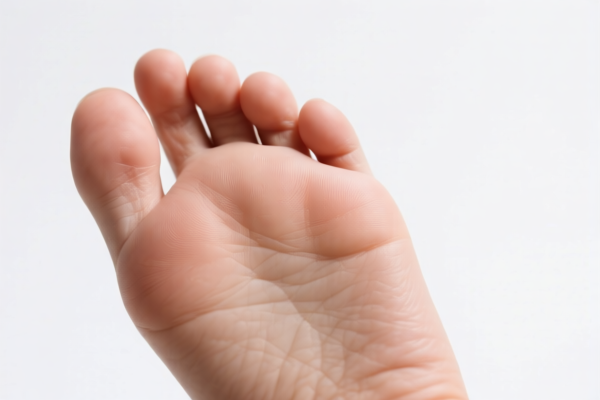
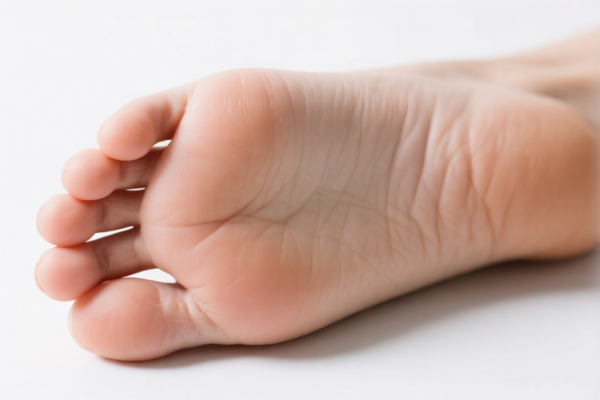
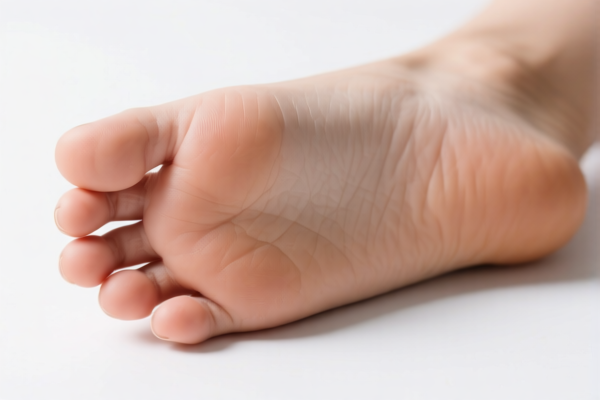
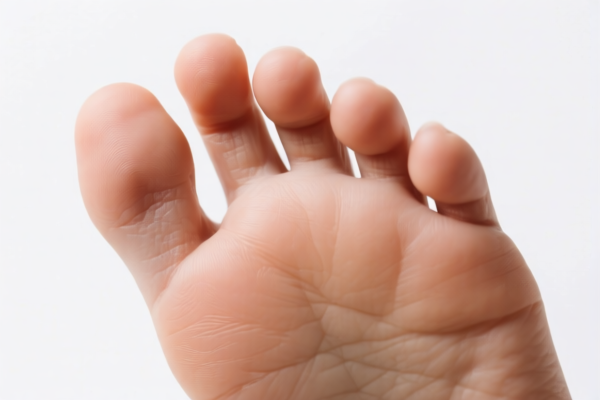
AI分析
👣 Foot Sole Pads: The Hidden Battle for Customs Classification | 2026 Tariff Deep Dive
🌐 HS Code Reference & Clearance Guide | 2026 Latest Tariff Analysis | Strategic Customs Strategy
📌 I. Product Definition: What Exactly Is a "Foot Sole Pad"?
The term "Foot Sole Pad" is deceptively simple. In international trade, this single term masks a complex classification dilemma. Depending on the material, function, and intended use, a foot pad can be classified as:
- Shoe Accessory: A removable insole or insert made of textile, foam, or non-metal materials, designed for comfort or minor support within footwear.
- Orthopedic Device: A rigid or semi-rigid structural support device classified as a "prosthetic or orthopedic appliance," designed to correct deformities or support specific medical conditions.
⚠️ Critical Distinction Point:
- If it is primarily a soft insert (textile, foam, rubber) for comfort → Chapter 64 (Footwear) or Chapter 90 (Medical)?
- If it is a structural orthotic device with medical purpose → Chapter 90 (Medical Apparatus).
- Material Matters: Textile-based pads face higher tariffs than non-metallic/medical-grade pads.
📦 II. HS Code Classification Details (2026 Latest Tariff Authority Comparison)
| HS Code | Product Description | Application Scenario | Key Classification Logic |
|---|---|---|---|
6406.90.90.00 |
Other footwear parts/accessories (Non-metallic) | General purpose removable insoles, foam pads, non-textile inserts | Shoe Parts: Non-metallic materials, general comfort/support |
9021.10.00.90 |
Orthopedic Appliances (External) | Rigid foot supports, arch supports, non-internal fixation devices | Medical Device: Positive shaping/suppression, no material conflict |
6406.90.15.80 |
Footwear parts (Textile Materials) | Removable insoles/pads made of textile fabrics, felt, or woven materials | Shoe Parts: Specifically textile-based insoles |
9021.90.81.00 |
Parts and Accessories of Orthopedic Appliances | Medical-grade insoles, custom orthotics, functional accessories | Medical Accessory: Functional support, consumable/accessory nature for orthotics |
🔍 Key Insight:
- Textile vs. Non-Textile: If your pad is made of textile (fabric, felt), it falls under6406.90.15.80. If it’s foam, rubber, or plastic, it may fall under6406.90.90.00OR9021depending on medical intent. - Medical Intent: If the product is designed for orthopedic correction (not just comfort), it moves to Chapter 90 (9021.10or9021.90).
💰 III. 2026 Latest Tariff Rate Breakdown (Including Additional Duties & Policy Surcharges)
✅ Applicable Country: United States (US)
✅ Country of Origin: China (CN)
✅ Effective Date: November 10, 2025 (and subsequent imports)
🎯 1. 6406.90.90.00 —— Footwear Parts (Non-Metallic, General)
| Item | Content |
|---|---|
| Base Tariff | 0.0% (ad valorem) |
| Section 301 Additional Duty | +7.5% (USITC Footnote for footwear parts) |
| 122 Section Additional Duty | +10% (Specific surcharge for certain footwear accessories) |
| Total Tax Rate | 17.5% |
| Tax Calculation | CIF Value × 17.5% |
| De Minimis Exemption | ❌ Not Applicable (Deny de minimis for Section 301/122 items) |
| Legal Basis Path | USITC:6406.90.90.00 → Section 301: 7.5% → Section 122: 10% |
📌 Explanation:
- This is the "default" classification for generic, non-textile insoles.
- While the base tariff is 0%, the Section 122 (10%) and Section 301 (7.5%) surcharges significantly increase the cost.
- Total Impact: 17.5% is moderate compared to textile alternatives.
🎯 2. 9021.10.00.90 —— Orthopedic Appliances (External, Positive Shaping)
| Item | Content |
|---|---|
| Base Tariff | 0.0% |
| Section 301 Additional Duty | 0.0% (Exempt from Section 301 surcharge) |
| 122 Section Additional Duty | +10% (Specific surcharge for certain medical accessories) |
| Total Tax Rate | 10.0% |
| Tax Calculation | CIF Value × 10.0% |
| De Minimis Exemption | ❌ Not Applicable (Medical imports under 122 often restricted from de minimis) |
| Legal Basis Path | USITC:9021.10.00.90 → Section 122: 10% |
📌 Strategic Advantage:
- Lowest Duty Rate: At 10%, this is the most tariff-efficient option IF the product qualifies as a medical orthopedic device.
- Key Requirement: Must prove medical/orthopedic function (e.g., "arch support for plantar fasciitis," "corrective device") rather than mere comfort.
- Exemption: Benefits from 0% Section 301 surcharge, saving 7.5% compared to shoe parts.
🎯 3. 6406.90.15.80 —— Footwear Parts (Textile Materials)
| Item | Content |
|---|---|
| Base Tariff | 14.9% |
| Section 301 Additional Duty | +7.5% |
| 122 Section Additional Duty | +10% |
| Total Tax Rate | 32.4% |
| Tax Calculation | CIF Value × 32.4% |
| De Minimis Exemption | ❌ Not Applicable |
| Legal Basis Path | USITC:6406.90.15.80 → Section 301: 7.5% → Section 122: 10% |
📌 Warning:
- Highest Duty Rate: 32.4% is significantly higher due to the 14.9% base tariff for textile footwear parts.
- Avoid If Possible: Unless the product is exclusively textile and cannot be reclassified as medical, this is the least cost-effective option.
🎯 4. 9021.90.81.00 —— Parts/Accessories of Orthopedic Appliances
| Item | Content |
|---|---|
| Base Tariff | 0.0% |
| Section 301 Additional Duty | 0.0% (Exempt from Section 301 surcharge) |
| 122 Section Additional Duty | +10% (Specific surcharge for certain medical accessories) |
| Total Tax Rate | 10.0% |
| Tax Calculation | CIF Value × 10.0% |
| De Minimis Exemption | ❌ Not Applicable |
| Legal Basis Path | USITC:9021.90.81.00 → Section 122: 10% |
📌 Strategic Advantage:
- Same Low Rate as Main Device: At 10%, this classification applies to consumables or accessories for orthotic devices (e.g., replacement pads for custom orthotics).
- Key Requirement: Must be marketed and used as a component/accessory of a larger orthopedic system.
- Exemption: Benefits from 0% Section 301 surcharge.
🛠️ IV. Customs Clearance Practical Advice (Pitfall Avoidance Guide)
✅ 1. Document Checklist (Non-Negotiable)
| Document | Required? | Explanation |
|---|---|---|
| ✅ Product Specification Sheet | ✔️ | Must detail material composition (Textile vs. Foam/Rubber), thickness, density. |
| ✅ Usage Statement/Instructions | ✔️ | Critical: Must state intended use. For 9021, explicitly state "Orthopedic Support," "Arch Correction," etc. |
| ✅ Product Photos (Labeled) | ✔️ | Show dimensions, material texture, and any medical claims/markings. |
| ✅ Material Certificate | ✔️ | Proof of material type (e.g., "100% EVA Foam" vs. "Cotton/Polyester Blend"). |
| ✅ Commercial Invoice | ✔️ | Accurate description: Do NOT just write "Foot Pad." Use "Orthopedic Arch Support Pad" or "Textile Insole." |
| ✅ Packing List | ✔️ | Clarify if items are sold individually or as kits with orthotic devices. |
✅ 2. Classification Strategy (Key Mantra)
🔥 “Medical Function, Zero 301. Textile Material, High Tax Hit. Generic Non-Metal, Moderate Cost.”
| Scenario | Recommended HS Code | Estimated Duty | Risk Level |
|---|---|---|---|
| Product is a generic foam insole | 6406.90.90.00 |
17.5% | 🟡 Medium |
| Product is a medical arch support | 9021.10.00.90 |
10.0% | 🟢 Low (Best Option) |
| Product is a textile/cotton insole | 6406.90.15.80 |
32.4% | 🔴 High (Avoid) |
| Pad is an accessory to an orthotic device | 9021.90.81.00 |
10.0% | 🟢 Low (Best Option) |
⚠️ Key Warning:
- Do not misclassify textile insoles as medical devices. Customs will check material composition. If it’s 100% cotton, it’s likely6406.90.15.80.
- Do not misclassify generic comfort pads as medical devices without evidence. If it’s just "soft foam," it’s6406.90.90.00.
✅ 3. Special Cases Handling
| Scenario | Handling Advice |
|---|---|
| OEM Custom Orthotics | Provide design drawings and medical indications. Classify under 9021.10 or 9021.90. |
| Packaged with Orthotic Shoes | If sold as a complete orthotic system, the entire package may be classified under 9021. Do not split. |
| "Insoles" for Sports | If marketed for "performance" not "medical correction," likely 6406.90.90.00. |
| Textile Insoles with Gel Inserts | Check dominant material. If textile dominates, 6406.90.15.80. If gel/plastic dominates, 6406.90.90.00. |
🌍 V. Global Market Clearance Comparison (2026 Latest)
| Country/Region | Recommended HS Code | Duty Rate | Certification Required | Notes |
|---|---|---|---|---|
| 🇺🇸 USA | 9021.10.00.90 / 9021.90.81.00 |
10.0% | N/A | Best rate for medical; 122 surcharge applies. |
| 🇺🇸 USA | 6406.90.15.80 |
32.4% | N/A | High cost for textile. |
| 🇨🇳 China | 6406.90 / 9021.90 |
0% - 6% | CCC (if applicable) | No Section 301/122 surcharges. |
| 🇪🇺 EU | 9021.10 / 9021.90 |
0% - 2% | CE Marking | Medical devices require CE MDR certification. |
| 🇬🇧 UK | 9021.10 / 9021.90 |
0% - 2% | UKCA Marking | Post-Brexit rules apply. |
📌 Conclusion:
- USA is the most complex market due to Section 301 and Section 122 surcharges.
- Medical Classification (9021) is the most cost-effective strategy for the US market, saving up to 17.5% compared to textile shoe parts.
📌 VI. Common Errors & Pitfall Guide (Blood Lessons)
❌ Error 1: Classifying textile insoles as medical devices (9021).
👉 Consequence: Customs audits material content. Misclassification leads to back taxes + penalties. Textile insoles are hard to classify as medical unless they have specific structural support features.
❌ Error 2: Classifying generic foam pads as orthopedic devices (9021).
👉 Consequence: Lack of medical evidence. Customs reclassifies to 6406.90.90.00 or 6406.90.15.80, increasing duty from 10% to 17.5% or 32.4%.
❌ Error 3: Ignoring Section 122 surcharges.
👉 Consequence: Even if base duty is 0%, the 10% Section 122 surcharge applies to most footwear parts and medical accessories. Failing to account for this leads to underpayment.
❌ Error 4: Using vague descriptions like "Foot Pad" on invoices.
👉 Consequence: Customs ambiguity. Delays, audits, or random reclassification. Always specify Material and Function.
✅ Correct Practice:
"Orthopedic Arch Support Pad, EVA Foam, Non-Medical Grade, For Comfort" →
6406.90.90.00
"Custom Orthotic Foot Support, Rigid Plastic, For Plantar Fasciitis" →9021.10.00.90
"Cotton Blend Removable Insole, Soft Foam Insert" →6406.90.15.80
🎯 VII. Conclusion: Strategic Classification Saves Costs!
🎯 Remember the Mantra:
🔹 "Medical = 10%. Generic Non-Metal = 17.5%. Textile = 32.4%."
🔹 "Prove Medical Function to Avoid Section 301."
🔹 "Textile Triggers High Base Duty."
📌 Pro Tip:
If your product is a generic comfort pad, consider if it can be redesigned with medical-grade materials or structural support features to qualify for 9021.10 or 9021.90. This can save 17.5% in duties.
Request an Advance Ruling from US Customs (CBP) if the classification is borderline.
📣 Immediate Action:
📞 Consult a Customs Broker + Provide Product Specs + Submit for CBP Advance Ruling
🚀 Optimize your supply chain by choosing the lowest duty HS Code that accurately reflects your product.
✨ Professional Classification, Start with Precision!
💼 Every Dollar of Duty Saved is Profit Earned!
用户评价
关于 HS 编码归类
协调制度(HS)是由世界海关组织(WCO)制定的国际贸易商品分类标准。全球 200 多个国家采用 HS 系统作为海关关税、贸易统计和进出口监管的基础。
每个 HS 编码遵循以下层级结构:
- 章(2 位)——商品大类(例如:第 84 章:机器和机械设备)
- 品目(4 位)——章内的更具体分类
- 子目(6 位)——国际通用细分,所有 WCO 成员国统一使用
- 本国细分(8-10 位)——各国自行扩展的细分编码,如美国 HTSUS 10 位编码
正确的 HS 编码归类对于顺利通关、准确缴纳关税和遵守贸易法规至关重要。错误归类可能导致海关延误、多缴关税或罚款。
从CN进口到US时,适用的关税税率可能包括:
- 最惠国(MFN)税率——适用于 WTO 成员国的标准关税税率
- 普通税率——适用于无贸易协定国家
- 贸易救济关税——附加关税,如 301 条款(反倾销)、232 条款(国家安全)或反补贴税
本页内容仅供参考。如需正式归类,请咨询当地海关或持牌报关代理。