headlamp control module
CN → US| HS编码 | 关税税率 | 原产国 | 目的国 | 文档 |
|---|---|---|---|---|
| 8708998180 | 12.5% | CN | US | 官方文档 |
| 8542310075 | 10.0% | CN | US | 官方文档 |
| 8542310030 | 60.0% | CN | US | 官方文档 |
| 8708994850 | 35.0% | CN | US | 官方文档 |
| 8708994850 | 35.0% | CN | US | 官方文档 |
商品图片
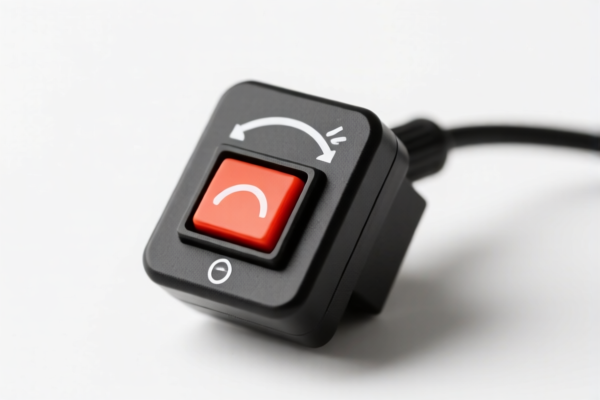
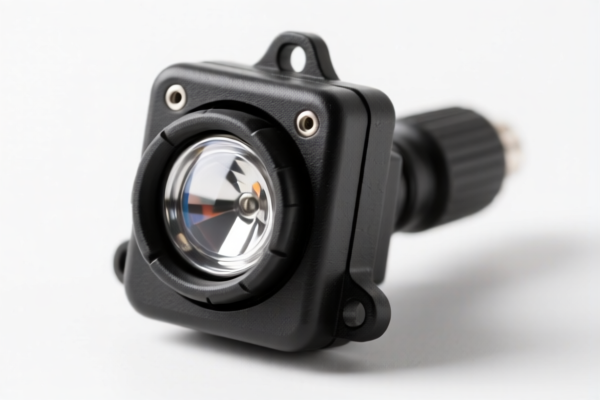
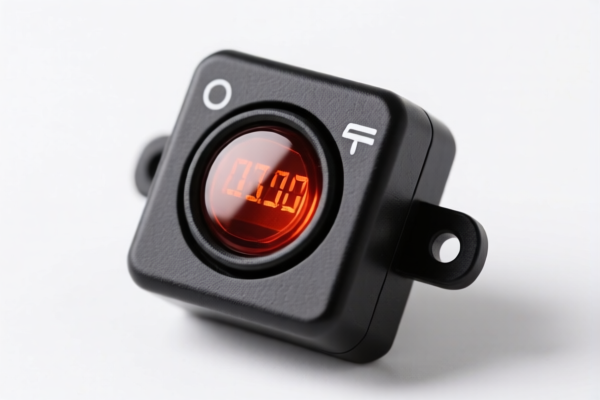
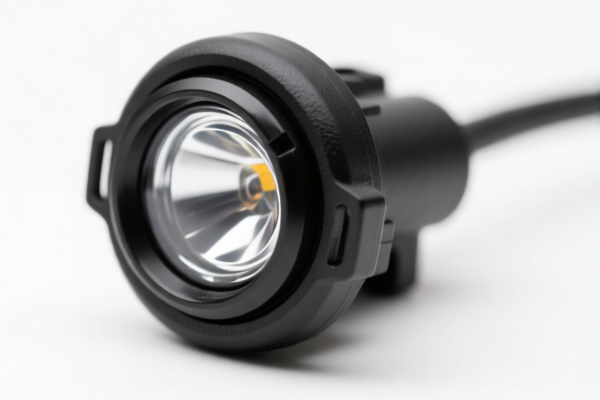
AI分析
🚗 Headlamp Control Module (Automotive Lighting Electronics)
🌐 HS Code Reference & Clearance Guide | 2026 Latest Tariff Analysis | Professional Clearance Strategy
📌 Part I: Product Definition & Classification: Do You Really Understand "Headlamp Control Modules"?
The Headlamp Control Module is the "brain" of modern automotive lighting systems. In international trade, it is not treated as a simple lamp or bulb, but as an electronic control component. Depending on the internal architecture (whether it contains dedicated processors/semiconductors or is a generic automotive accessory), it falls into two distinct HS Code categories with vastly different tariff implications.
⚠️ Key Distinction Point:
- If the module is classified broadly as an automotive part/accessory (general fallback), it falls under 8708.99.
- If the module is technically defined as a processor/controller unit with integrated circuits, it falls under 8542.31.
📦 Part II: HS Code Classification Details (2026 Latest Tariff Authority Mapping)
Based on the provided data, here are the specific classifications and their corresponding tax implications:
| HS Code | Product Description | Applicable Scenario | Tax Rate (Total) |
|---|---|---|---|
8708.99.81.80 |
Automotive Electronic Control Parts Falls under automotive parts/accessories, fits the "other items" fallback logic. |
General headlamp controllers, lighting switches, generic automotive electronic modules. | 12.5% |
8542.31.00.75 |
Electronic Control Module Categorized under processors and controllers, fits the "other items" fallback principle. |
Modules with basic processor logic, no specific high-value semiconductor content triggering higher penalties. | 10.0% |
8542.31.00.30 |
Control Module (Integrated Circuits) Internal integrated circuits fit the "other items" logic. |
High-tech control modules with specific integrated circuitry, triggering higher additional tariffs. | 60.0% |
8708.99.48.50 |
Vehicle Control Spares/Parts Fits the "other parts & accessories of tractors/vehicles" attribute. |
Mechanical-electronic hybrid controls, vehicle body control units, lighting relays with housing. | 35.0% |
8708.99.48.50 |
Vehicle Control Components (Material Attribute) Material attributes do not conflict with part classifications; fits fallback logic. |
Same as above; emphasizes material composition consistency with automotive parts. | 35.0% |
🔍 Critical Reminder:
-8542.31codes are for purely electronic/semiconductor-based controls. They are subject to Section 301 / IEEPA additional tariffs. -8708.99codes are for automotive parts. While still subject to some tariffs, the base rates are generally lower than the high-tech semiconductor controls. - Do not mix up: A "headlamp bulb" is 9405, but a "headlamp control module" is 8708 or 8542.
💰 Part III: 2026 Latest Tariff Rate Breakdown (Including Add-on Taxes & Policy Surcharges)
✅ Applicable Country: United States (US)
✅ Origin: China (CN)
✅ Effective Date: 2025/2026 Period (Current Enforcement)
🎯 1. 8708.99.81.80 —— Automotive Electronic Control Parts (General Fallback)
| Item | Content |
|---|---|
| Base Tariff | 2.5% (ad valorem) |
| Section 301 Add-on | 0.0% (Specific sub-code exemption or low bracket) |
| 122-Clause Tariff | 10.0% |
| Total Effective Rate | 12.5% |
| Tax Calculation | CIF Value × 12.5% |
| De Minimis Exemption | ❌ Not Applicable (Commercial shipment) |
| Legal Basis Path | USITC:8708.99.81.80 → 122-Clause:10% |
📌 Explanation:
- This code represents a "low-risk" electronic automotive part.
- It avoids the heavy Section 301 tariffs often applied to high-tech chips, but still carries the 122-Clause 10% tariff.
- Best for: Standard lighting control units without complex proprietary semiconductor architecture.
🎯 2. 8542.31.00.75 —— Electronic Control Module (Processor/Controller)
| Item | Content |
|---|---|
| Base Tariff | 0.0% |
| Section 301 Add-on | 0.0% |
| 122-Clause Tariff | 10.0% |
| Total Effective Rate | 10.0% |
| Tax Calculation | CIF Value × 10.0% |
| De Minimis Exemption | ❌ Not Applicable |
| Legal Basis Path | IEEPA:9903.01.25 → USITC:8542.31.00.75 → 122-Clause:10% |
📌 Explanation:
- Despite being an electronic component (8542), this specific sub-code does not trigger Section 301 (0% add-on).
- The total cost is only 10%, making it the most cost-effective option for electronic modules.
- Best for: Modules where the primary function is data processing/control, and hardware can be classified under this specific tariff line.
🎯 3. 8542.31.00.30 —— Control Module (High-Content Integrated Circuits)
| Item | Content |
|---|---|
| Base Tariff | 0.0% |
| Section 301 Add-on | 50.0% |
| 122-Clause Tariff | 10.0% |
| Total Effective Rate | 60.0% |
| Tax Calculation | CIF Value × 60.0% |
| De Minimis Exemption | ❌ Not Applicable |
| Legal Basis Path | USITC:8542.31.00.30 → Section 301:50% → 122-Clause:10% |
📌 Warning:
- This is the highest risk classification.
- If customs determine your module contains high-value integrated circuits or fits this specific sub-code, you face a 60% total tariff.
- Why? This code likely captures advanced semiconductor devices subject to the maximum Section 301 penalty.
🎯 4. 8708.99.48.50 —— Vehicle Control Parts (Other Parts/Accessories)
| Item | Content |
|---|---|
| Base Tariff | 0.0% |
| Section 301 Add-on | 25.0% |
| 122-Clause Tariff | 10.0% |
| Total Effective Rate | 35.0% |
| Tax Calculation | CIF Value × 35.0% |
| De Minimis Exemption | ❌ Not Applicable |
| Legal Basis Path | USITC:8708.99.48.50 → Section 301:25% → 122-Clause:10% |
📌 Explanation:
- This code treats the module as an automotive part rather than an electronic component.
- It incurs the 25% Section 301 tariff (lower than the 50% for high-tech chips, but higher than the 0% for8542.31.00.75).
- Best for: Modules with significant mechanical housing, relays, or mixed-material construction that customs view primarily as "car parts."
🛠️ Part IV: Clearance Practical Advice (Battle-Tested Pitfall Avoidance)
✅ 1. Preparation Checklist (Non-Negotiable)
| Document | Required? | Explanation |
|---|---|---|
| ✅ Product Specification Sheet | ✔️ | Must detail: Voltage, Current, Interface Type (CAN/LIN), Function (Dimming/Direction/On-Off). |
| ✅ Circuit Diagram / Block Diagram | ✔️ | Critical: Proves whether it’s a pure electronic controller (8542) or a part assembly (8708). |
| ✅ Product Photos (with Labels) | ✔️ | Clear view of model number, brand, and input/output ports. |
| ✅ Commercial Invoice | ✔️ | Must explicitly state "Headlamp Control Module for Automotive Use". |
| ✅ Origin Certificate (CO) | ✔️ | To verify China origin (subject to tariffs). |
✅ 2. Declaration Strategy (Key Mantras)
🔥 “Function Defines Code, Architecture Defines Tax! Don’t Guess, Verify!”
| Scenario | Correct Declaration | Incorrect Declaration | Consequence |
|---|---|---|---|
| Simple Relay/Controller | 8708.99.81.80 (12.5%) |
8542.31.00.30 |
Overpayment: Pay 60% instead of 12.5%! |
| Advanced CPU-Based Module | 8542.31.00.75 (10.0%) |
8708.99.48.50 |
Overpayment: Pay 35% instead of 10%! |
| High-End Semiconductor Module | 8542.31.00.30 (60.0%) |
8708.99.81.80 |
Under-Declaration Risk: Customs audit, penalties, seizure. |
| Mechanical-Electrical Hybrid | 8708.99.48.50 (35.0%) |
8542.31.00.75 |
Misclassification: Disputed by customs due to material composition. |
✅ 3. Special Handling Tips
| Situation | Recommendation |
|---|---|
| OEM Custom Modules | Provide client design specs to prove functionality. If it’s a generic replacement, 8708 is safer. |
| Smart/LED Control Units | If it has complex processing, lean towards 8542. But check if it fits 75 (10%) or 30 (60%). |
| Relay-Based Modules | Clearly state "Relay Module" not "Controller." Use 8708.99.48.50. |
| Pre-shipment Ruling | HIGHLY RECOMMENDED: Apply for an Advance Ruling from CBP. The difference between 10% and 60% is huge. |
🌍 Part V: Global Market Comparison (2026 Update)
| Country/Region | Recommended HS Code | Tariff Rate | Certification | Notes |
|---|---|---|---|---|
| 🇺🇸 USA | 8708.99.81.80 or 8542.31.00.75 |
10% - 12.5% | FCC, DOT | Avoid 8542.31.00.30 unless necessary. |
| 🇨🇳 China | 8542.31.00 or 8708.99 |
5% - 10% | CCC | No Section 301/122 penalties. |
| 🇪🇺 EU | 8542.31.00 or 8708.99 |
0% - 4.5% | CE, E-Mark | No retaliatory tariffs. |
| 🇨🇦 Canada | 8542.31.00 |
0% (CUSMA) | ICES | Check CUSMA eligibility. |
📌 Conclusion:
- USA is the most complex market due to layered tariffs (Base + Section 301 + 122-Clause).
- Strategy: Aim for8542.31.00.75(10%) or8708.99.81.80(12.5%).
- Avoid:8542.31.00.30(60%) unless your product strictly fits the high-value IC definition.
📌 Part VI: Common Mistakes & Pitfall Guide (Blood & Tears Lessons)
❌ Mistake 1: Declaring a complex smart headlamp controller as a "part" (8708) when it’s actually a processor (8542.31.00.30).
👉 Result: Customs reclassifies → 60% Tariff applied retroactively + penalties.
❌ Mistake 2: Using a generic "Electronic Part" code for a specific automotive module.
👉 Result: Customs rejects → Shipment detained, storage fees accumulate.
❌ Mistake 3: Ignoring the 122-Clause 10% Tariff.
👉 Result: Even if Section 301 is 0%, you still pay 10%. Your total cost model is wrong.
✅ Correct Declaration Format:
"Headlamp Control Module, Model XYZ, Automotive Use, Electronic Control Unit (ECU), 12V DC, CAN Bus Interface, FCC Certified, Origin: China"
🎯 Part VII: Conclusion: Precise Classification = Profit Protection
🎯 Remember the Mantra:
🔹 “Auto Part vs. Chip: The 50% Gap!”
🔹 “Check Sub-Code .75 vs .30: 10% vs 60%!”
🔹 “Don’t Guess, Get an Advance Ruling!”
📌 Pro Tip:
If your module is software-defined or general-purpose, argue for 8542.31.00.75 (10%) or 8708.99.81.80 (12.5%).
If it’s a specialized high-power IC module, you may be stuck with 8542.31.00.30 (60%) — consider supply chain restructuring (e.g., final assembly in a non-China country) to mitigate this.
📣 Immediate Action Required:
📞 Contact Your Customs Broker with the circuit diagram and spec sheet.
🚀 Apply for an Advance Ruling to lock in the 10% or 12.5% rate.
💼 Don’t let a 50% tariff difference erase your margin!
✨ Professional Clearance Starts with Precise Classification!
💼 Your Every Dollar Counts — Optimize Your Tariff Strategy Today!
用户评价
关于 HS 编码归类
协调制度(HS)是由世界海关组织(WCO)制定的国际贸易商品分类标准。全球 200 多个国家采用 HS 系统作为海关关税、贸易统计和进出口监管的基础。
每个 HS 编码遵循以下层级结构:
- 章(2 位)——商品大类(例如:第 84 章:机器和机械设备)
- 品目(4 位)——章内的更具体分类
- 子目(6 位)——国际通用细分,所有 WCO 成员国统一使用
- 本国细分(8-10 位)——各国自行扩展的细分编码,如美国 HTSUS 10 位编码
正确的 HS 编码归类对于顺利通关、准确缴纳关税和遵守贸易法规至关重要。错误归类可能导致海关延误、多缴关税或罚款。
从CN进口到US时,适用的关税税率可能包括:
- 最惠国(MFN)税率——适用于 WTO 成员国的标准关税税率
- 普通税率——适用于无贸易协定国家
- 贸易救济关税——附加关税,如 301 条款(反倾销)、232 条款(国家安全)或反补贴税
本页内容仅供参考。如需正式归类,请咨询当地海关或持牌报关代理。