headlamp control module
CN → US| HS Code | Tariff Rate | Origin | Destination | Doc |
|---|---|---|---|---|
| 8708998180 | 12.5% | CN | US | Official Doc |
| 8542310075 | 10.0% | CN | US | Official Doc |
| 8542310030 | 60.0% | CN | US | Official Doc |
| 8708994850 | 35.0% | CN | US | Official Doc |
| 8708994850 | 35.0% | CN | US | Official Doc |
Product Images
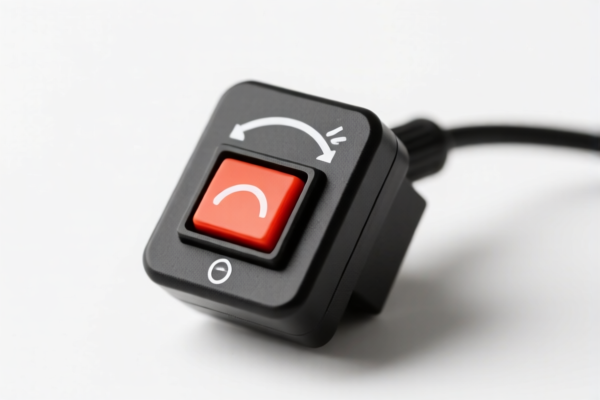
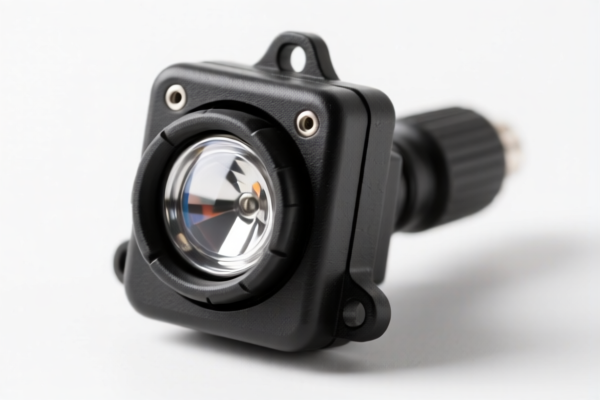
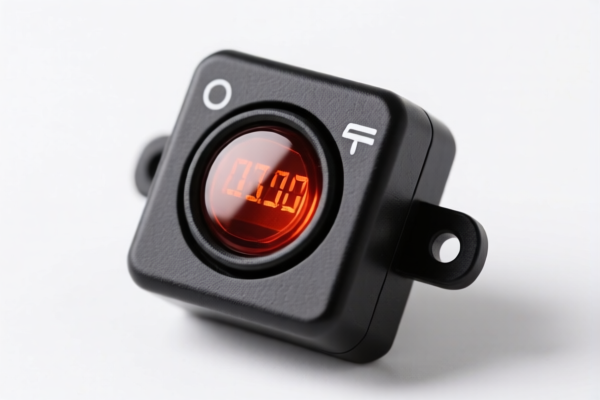
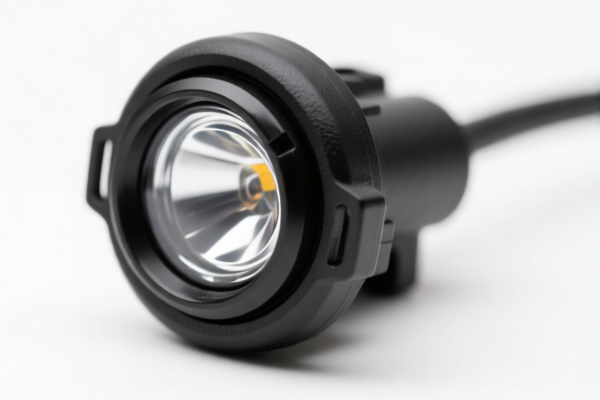
AI Analysis
🚗 Headlamp Control Module (Automotive Lighting Electronics)
🌐 HS Code Reference & Clearance Guide | 2026 Latest Tariff Analysis | Professional Clearance Strategy
📌 Part I: Product Definition & Classification: Do You Really Understand "Headlamp Control Modules"?
The Headlamp Control Module is the "brain" of modern automotive lighting systems. In international trade, it is not treated as a simple lamp or bulb, but as an electronic control component. Depending on the internal architecture (whether it contains dedicated processors/semiconductors or is a generic automotive accessory), it falls into two distinct HS Code categories with vastly different tariff implications.
⚠️ Key Distinction Point:
- If the module is classified broadly as an automotive part/accessory (general fallback), it falls under 8708.99.
- If the module is technically defined as a processor/controller unit with integrated circuits, it falls under 8542.31.
📦 Part II: HS Code Classification Details (2026 Latest Tariff Authority Mapping)
Based on the provided data, here are the specific classifications and their corresponding tax implications:
| HS Code | Product Description | Applicable Scenario | Tax Rate (Total) |
|---|---|---|---|
8708.99.81.80 |
Automotive Electronic Control Parts Falls under automotive parts/accessories, fits the "other items" fallback logic. |
General headlamp controllers, lighting switches, generic automotive electronic modules. | 12.5% |
8542.31.00.75 |
Electronic Control Module Categorized under processors and controllers, fits the "other items" fallback principle. |
Modules with basic processor logic, no specific high-value semiconductor content triggering higher penalties. | 10.0% |
8542.31.00.30 |
Control Module (Integrated Circuits) Internal integrated circuits fit the "other items" logic. |
High-tech control modules with specific integrated circuitry, triggering higher additional tariffs. | 60.0% |
8708.99.48.50 |
Vehicle Control Spares/Parts Fits the "other parts & accessories of tractors/vehicles" attribute. |
Mechanical-electronic hybrid controls, vehicle body control units, lighting relays with housing. | 35.0% |
8708.99.48.50 |
Vehicle Control Components (Material Attribute) Material attributes do not conflict with part classifications; fits fallback logic. |
Same as above; emphasizes material composition consistency with automotive parts. | 35.0% |
🔍 Critical Reminder:
-8542.31codes are for purely electronic/semiconductor-based controls. They are subject to Section 301 / IEEPA additional tariffs. -8708.99codes are for automotive parts. While still subject to some tariffs, the base rates are generally lower than the high-tech semiconductor controls. - Do not mix up: A "headlamp bulb" is 9405, but a "headlamp control module" is 8708 or 8542.
💰 Part III: 2026 Latest Tariff Rate Breakdown (Including Add-on Taxes & Policy Surcharges)
✅ Applicable Country: United States (US)
✅ Origin: China (CN)
✅ Effective Date: 2025/2026 Period (Current Enforcement)
🎯 1. 8708.99.81.80 —— Automotive Electronic Control Parts (General Fallback)
| Item | Content |
|---|---|
| Base Tariff | 2.5% (ad valorem) |
| Section 301 Add-on | 0.0% (Specific sub-code exemption or low bracket) |
| 122-Clause Tariff | 10.0% |
| Total Effective Rate | 12.5% |
| Tax Calculation | CIF Value × 12.5% |
| De Minimis Exemption | ❌ Not Applicable (Commercial shipment) |
| Legal Basis Path | USITC:8708.99.81.80 → 122-Clause:10% |
📌 Explanation:
- This code represents a "low-risk" electronic automotive part.
- It avoids the heavy Section 301 tariffs often applied to high-tech chips, but still carries the 122-Clause 10% tariff.
- Best for: Standard lighting control units without complex proprietary semiconductor architecture.
🎯 2. 8542.31.00.75 —— Electronic Control Module (Processor/Controller)
| Item | Content |
|---|---|
| Base Tariff | 0.0% |
| Section 301 Add-on | 0.0% |
| 122-Clause Tariff | 10.0% |
| Total Effective Rate | 10.0% |
| Tax Calculation | CIF Value × 10.0% |
| De Minimis Exemption | ❌ Not Applicable |
| Legal Basis Path | IEEPA:9903.01.25 → USITC:8542.31.00.75 → 122-Clause:10% |
📌 Explanation:
- Despite being an electronic component (8542), this specific sub-code does not trigger Section 301 (0% add-on).
- The total cost is only 10%, making it the most cost-effective option for electronic modules.
- Best for: Modules where the primary function is data processing/control, and hardware can be classified under this specific tariff line.
🎯 3. 8542.31.00.30 —— Control Module (High-Content Integrated Circuits)
| Item | Content |
|---|---|
| Base Tariff | 0.0% |
| Section 301 Add-on | 50.0% |
| 122-Clause Tariff | 10.0% |
| Total Effective Rate | 60.0% |
| Tax Calculation | CIF Value × 60.0% |
| De Minimis Exemption | ❌ Not Applicable |
| Legal Basis Path | USITC:8542.31.00.30 → Section 301:50% → 122-Clause:10% |
📌 Warning:
- This is the highest risk classification.
- If customs determine your module contains high-value integrated circuits or fits this specific sub-code, you face a 60% total tariff.
- Why? This code likely captures advanced semiconductor devices subject to the maximum Section 301 penalty.
🎯 4. 8708.99.48.50 —— Vehicle Control Parts (Other Parts/Accessories)
| Item | Content |
|---|---|
| Base Tariff | 0.0% |
| Section 301 Add-on | 25.0% |
| 122-Clause Tariff | 10.0% |
| Total Effective Rate | 35.0% |
| Tax Calculation | CIF Value × 35.0% |
| De Minimis Exemption | ❌ Not Applicable |
| Legal Basis Path | USITC:8708.99.48.50 → Section 301:25% → 122-Clause:10% |
📌 Explanation:
- This code treats the module as an automotive part rather than an electronic component.
- It incurs the 25% Section 301 tariff (lower than the 50% for high-tech chips, but higher than the 0% for8542.31.00.75).
- Best for: Modules with significant mechanical housing, relays, or mixed-material construction that customs view primarily as "car parts."
🛠️ Part IV: Clearance Practical Advice (Battle-Tested Pitfall Avoidance)
✅ 1. Preparation Checklist (Non-Negotiable)
| Document | Required? | Explanation |
|---|---|---|
| ✅ Product Specification Sheet | ✔️ | Must detail: Voltage, Current, Interface Type (CAN/LIN), Function (Dimming/Direction/On-Off). |
| ✅ Circuit Diagram / Block Diagram | ✔️ | Critical: Proves whether it’s a pure electronic controller (8542) or a part assembly (8708). |
| ✅ Product Photos (with Labels) | ✔️ | Clear view of model number, brand, and input/output ports. |
| ✅ Commercial Invoice | ✔️ | Must explicitly state "Headlamp Control Module for Automotive Use". |
| ✅ Origin Certificate (CO) | ✔️ | To verify China origin (subject to tariffs). |
✅ 2. Declaration Strategy (Key Mantras)
🔥 “Function Defines Code, Architecture Defines Tax! Don’t Guess, Verify!”
| Scenario | Correct Declaration | Incorrect Declaration | Consequence |
|---|---|---|---|
| Simple Relay/Controller | 8708.99.81.80 (12.5%) |
8542.31.00.30 |
Overpayment: Pay 60% instead of 12.5%! |
| Advanced CPU-Based Module | 8542.31.00.75 (10.0%) |
8708.99.48.50 |
Overpayment: Pay 35% instead of 10%! |
| High-End Semiconductor Module | 8542.31.00.30 (60.0%) |
8708.99.81.80 |
Under-Declaration Risk: Customs audit, penalties, seizure. |
| Mechanical-Electrical Hybrid | 8708.99.48.50 (35.0%) |
8542.31.00.75 |
Misclassification: Disputed by customs due to material composition. |
✅ 3. Special Handling Tips
| Situation | Recommendation |
|---|---|
| OEM Custom Modules | Provide client design specs to prove functionality. If it’s a generic replacement, 8708 is safer. |
| Smart/LED Control Units | If it has complex processing, lean towards 8542. But check if it fits 75 (10%) or 30 (60%). |
| Relay-Based Modules | Clearly state "Relay Module" not "Controller." Use 8708.99.48.50. |
| Pre-shipment Ruling | HIGHLY RECOMMENDED: Apply for an Advance Ruling from CBP. The difference between 10% and 60% is huge. |
🌍 Part V: Global Market Comparison (2026 Update)
| Country/Region | Recommended HS Code | Tariff Rate | Certification | Notes |
|---|---|---|---|---|
| 🇺🇸 USA | 8708.99.81.80 or 8542.31.00.75 |
10% - 12.5% | FCC, DOT | Avoid 8542.31.00.30 unless necessary. |
| 🇨🇳 China | 8542.31.00 or 8708.99 |
5% - 10% | CCC | No Section 301/122 penalties. |
| 🇪🇺 EU | 8542.31.00 or 8708.99 |
0% - 4.5% | CE, E-Mark | No retaliatory tariffs. |
| 🇨🇦 Canada | 8542.31.00 |
0% (CUSMA) | ICES | Check CUSMA eligibility. |
📌 Conclusion:
- USA is the most complex market due to layered tariffs (Base + Section 301 + 122-Clause).
- Strategy: Aim for8542.31.00.75(10%) or8708.99.81.80(12.5%).
- Avoid:8542.31.00.30(60%) unless your product strictly fits the high-value IC definition.
📌 Part VI: Common Mistakes & Pitfall Guide (Blood & Tears Lessons)
❌ Mistake 1: Declaring a complex smart headlamp controller as a "part" (8708) when it’s actually a processor (8542.31.00.30).
👉 Result: Customs reclassifies → 60% Tariff applied retroactively + penalties.
❌ Mistake 2: Using a generic "Electronic Part" code for a specific automotive module.
👉 Result: Customs rejects → Shipment detained, storage fees accumulate.
❌ Mistake 3: Ignoring the 122-Clause 10% Tariff.
👉 Result: Even if Section 301 is 0%, you still pay 10%. Your total cost model is wrong.
✅ Correct Declaration Format:
"Headlamp Control Module, Model XYZ, Automotive Use, Electronic Control Unit (ECU), 12V DC, CAN Bus Interface, FCC Certified, Origin: China"
🎯 Part VII: Conclusion: Precise Classification = Profit Protection
🎯 Remember the Mantra:
🔹 “Auto Part vs. Chip: The 50% Gap!”
🔹 “Check Sub-Code .75 vs .30: 10% vs 60%!”
🔹 “Don’t Guess, Get an Advance Ruling!”
📌 Pro Tip:
If your module is software-defined or general-purpose, argue for 8542.31.00.75 (10%) or 8708.99.81.80 (12.5%).
If it’s a specialized high-power IC module, you may be stuck with 8542.31.00.30 (60%) — consider supply chain restructuring (e.g., final assembly in a non-China country) to mitigate this.
📣 Immediate Action Required:
📞 Contact Your Customs Broker with the circuit diagram and spec sheet.
🚀 Apply for an Advance Ruling to lock in the 10% or 12.5% rate.
💼 Don’t let a 50% tariff difference erase your margin!
✨ Professional Clearance Starts with Precise Classification!
💼 Your Every Dollar Counts — Optimize Your Tariff Strategy Today!
Customer Reviews
About HS Code Classification
The Harmonized System (HS) is an internationally standardized nomenclature developed by the World Customs Organization (WCO) to classify traded products. Over 200 countries use the HS system as the basis for customs tariffs, trade statistics, and import/export regulations.
Each HS code follows a hierarchical structure:
- Chapter (2 digits) — Broad category of goods (e.g., Chapter 84: Machinery and Mechanical Appliances)
- Heading (4 digits) — More specific grouping within the chapter
- Subheading (6 digits) — Internationally standardized breakdown, used by all WCO member countries
- National subdivisions (8-10 digits) — Country-specific extensions for further classification, such as US HTSUS 10-digit codes
Correct HS code classification is essential for smooth customs clearance, accurate duty payment, and compliance with trade regulations. Misclassification can lead to customs delays, overpayment of duties, or penalties.
When importing from CN to US, the applicable tariff rates may include:
- Most-Favored-Nation (MFN) rate — The standard duty rate applied to WTO members
- General rate — Applied to countries without trade agreements
- Trade remedy duties — Additional tariffs such as Section 301 (anti-dumping), Section 232 (national security), or countervailing duties
The information provided on this page is for reference purposes only. For official classification, please consult with your local customs authority or a licensed customs broker.