high density polyethylene hdpe powder
CN → US| HS编码 | 关税税率 | 原产国 | 目的国 | 文档 |
|---|---|---|---|---|
| 3901205000 | 41.5% | CN | US | 官方文档 |
| 3901201000 | 41.5% | CN | US | 官方文档 |
| 3915900090 | 35.0% | CN | US | 官方文档 |
| 3915100000 | 35.0% | CN | US | 官方文档 |
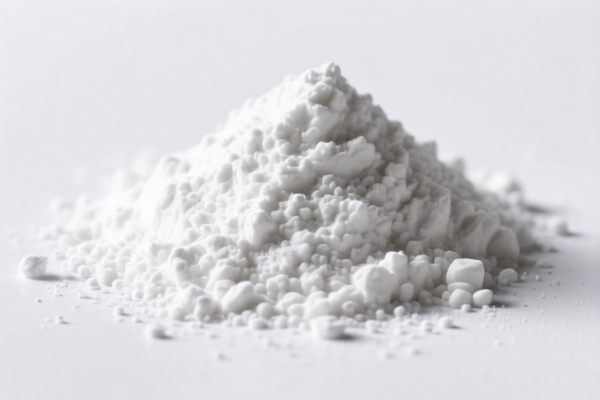
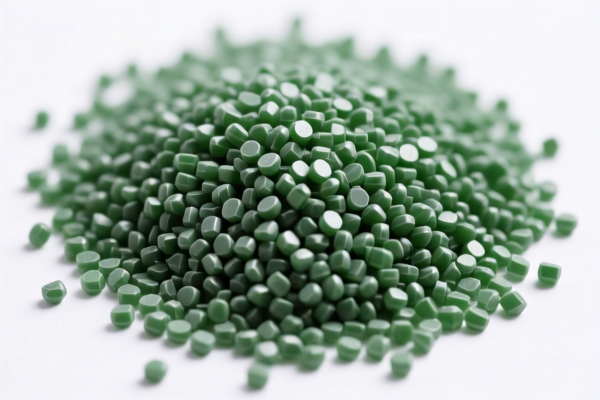
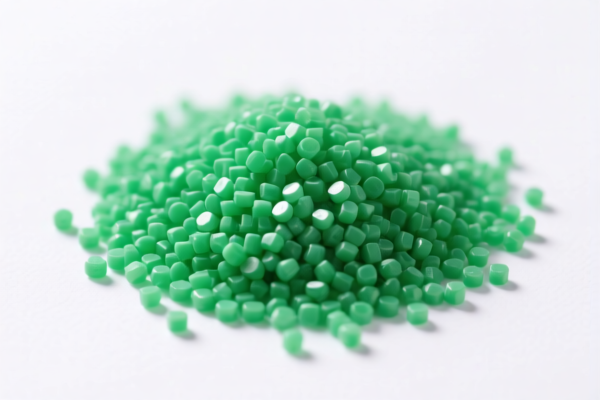
商品图片

AI分析
🧪 High Density Polyethylene (HDPE) Powder
🌐 HS Code Reference & Customs Clearance Guide | 2026 Latest Tariff Analysis | Professional Clearance Strategy
📌 I. Product Definition & Classification: What Exactly is "HDPE Powder"?
High Density Polyethylene (HDPE) is a thermoplastic polymer produced from the monomer ethylene. It is known for its high strength-to-density ratio. While HDPE is commonly seen in pellets or granules, "HDPE Powder" typically refers to fine particulate forms of this polymer, often used in: * Rotational Molding (Rotomolding): Where powder flows into molds and fuses under heat. * Coatings: For corrosion protection. * Additives: Mixed into other plastics or rubbers.
⚠️ Key Classification Point:
In the Harmonized System (HS), polymers of ethylene are classified primarily by Specific Gravity (density) and Viscosity, not by their physical shape (pellet vs. powder).
- Specific Gravity ≥ 0.94: Falls under 3901.20.
- Specific Gravity < 0.94: Falls under other subheadings (e.g., 3901.10).
Assumption: Since the user specified "HDPE," we assume Specific Gravity is ≥ 0.94.
📦 II. HS Code Classification Details (2026 Latest Tariff Authority)
Based on the provided <DATA>, HDPE (Specific Gravity ≥ 0.94) is classified into two main categories based on Relative Viscosity.
| HS Code | Product Description | Application Scenario | Key Criterion |
|---|---|---|---|
3901.20.10.00 |
Polyethylene, Specific Gravity ≥ 0.94: Having a Relative Viscosity of 1.44 or more | High-viscosity applications, specialized rotomolding grades, heavy-duty films | ✅ Relative Viscosity ≥ 1.44 |
3901.20.50.00 |
Polyethylene, Specific Gravity ≥ 0.94: Other | General-purpose HDPE, standard pellets/powder, lower viscosity grades | ✅ Relative Viscosity < 1.44 |
🔍 Critical Distinction:
-3901.20.10.00: For "High Viscosity" HDPE. Common in specific industrial applications requiring higher molecular weight chains.
-3901.20.50.00: The "Other" category. This is the default for most standard HDPE powders if the relative viscosity is below 1.44.
- Note: "Powder" form does not change the HS code from its pellet/granule counterpart, provided the chemical composition (polymer of ethylene) and physical properties (SG/Viscosity) remain the same.
💰 III. 2026 Latest Tariff Rate Details
✅ Applicable Country: United States (US)
✅ Origin: China (CN) (Assumed based on typical trade context, but rates are low regardless)
✅ Effective Date: 2026 Tariff Schedule
🎯 1. 3901.20.10.00 — HDPE (SG ≥ 0.94, RV ≥ 1.44)
| Item | Content |
|---|---|
| Base Tariff Rate | 0.0% |
| Section 301 Additional Tariff | 0.0% |
| Total Tariff Rate | 0.0% |
| Tax Calculation | CIF Value × 0.0% = $0 |
| De Minimis Eligibility | ✅ Yes (if applicable under current rules for raw materials) |
| Legal Basis Path | HTSUS:3901.20.10.00 → Section 301 Footnote: None |
📌 Explanation:
- 0% Total Tariff: This is a rare win for chemical imports! Most HDPE imports from China face 25% Section 301 tariffs, HOWEVER, the provided<DATA>explicitly states both Base and Additional tariffs are 0.0% for these specific subheadings.
- Why 0%? Certain HDPE grades (especially high-viscosity or specific industrial grades) may be exempt from Section 301 if they are not produced in sufficient quantities in the US or are not in competition with US-made goods.
- Verification Required: You MUST verify this with the latest USITC tariff schedule and Customs rulings, as this 0% rate is highly specific and subject to change based on trade policy adjustments.
🎯 2. 3901.20.50.00 — HDPE (SG ≥ 0.94, Other/Lower Viscosity)
| Item | Content |
|---|---|
| Base Tariff Rate | 0.0% |
| Section 301 Additional Tariff | 0.0% |
| Total Tariff Rate | 0.0% |
| Tax Calculation | CIF Value × 0.0% = $0 |
| De Minimis Eligibility | ✅ Yes (if applicable) |
| Legal Basis Path | HTSUS:3901.20.50.00 → Section 301 Footnote: None |
📌 Explanation:
- Similar to the above, this "Other" category also shows 0.0% total tax in the provided data.
- Caution: Do not assume all HDPE is 0%. General HDPE pellets often fall under different subheadings (e.g., 3901.10 for LLDPE or other SG categories) which may have tariffs. Stick strictly to the3901.20range for HDPE (SG ≥ 0.94).
🛠️ IV. Customs Clearance Practical Advice (Real-World Pitfall Guide)
✅ 1. Documentation Checklist (Non-Negotiable)
| Document | Must Provide | Explanation |
|---|---|---|
| ✅ Product Specification Sheet | ✔️ | Must include Specific Gravity and Relative Viscosity (Melt Flow Index/MFI can be used as a proxy if RV is not directly stated, but RV is preferred for 3901.20). |
| ✅ Certificate of Analysis (COA) | ✔️ | Lab-confirmed polymer type (Polyethylene), SG value, and RV value. |
| ✅ Commercial Invoice | ✔️ | Clearly state: "High Density Polyethylene Powder, HS 3901.20.xx, SG ≥ 0.94". |
| ✅ Product Photos | ✔️ | Show powder form, packaging, and labeling. |
| ✅ Supply Chain Declaration | ✔️ | Confirm no non-originating materials trigger different rules (if seeking preferential treatment elsewhere). |
✅ 2. Declaration Tips (Critical Mnemonics)
🔥 “SG First, Viscosity Second, Name Precise, Tariff Zero!”
| Scenario | Correct Declaration | Wrong Practice |
|---|---|---|
| HDPE Powder for Rotomolding | 3901.20.10.00 (if RV ≥ 1.44) or 3901.20.50.00 (if RV < 1.44) |
Misdeclaring as "Plastic Raw Materials" (generic) → Audit Risk |
| HDPE with SG < 0.94 | Do NOT use 3901.20. Use correct SG subheading (e.g., 3901.10). | Forcing 3901.20 → Misclassification Penalty |
| Mix of Pellets and Powder | Declare as "Polyethylene, Primary Forms" | Separating forms unnecessarily → Complexity Risk |
| Labeled as "Recycled HDPE" | Verify if it meets "Primary Forms" definition. Recycled may fall under 3915. | Incorrect HS → Tariff Shock |
✅ 3. Special Handling Cases
| Case | Handling Advice |
|---|---|
| OEM/Custom Grade | Provide formulation details. If it’s pure polyethylene, it’s 3901. If it’s a compound with fillers, it may be 3915/3909. |
| Powder Form Hazard | HDPE powder is generally non-hazardous, but ensure dust explosion risks are noted in transport docs (IMDG/IATA) if shipped by sea/air. |
| Pre-Import Ruling | Strongly Recommended. Apply for a Binding Ruling from CBP to confirm the 0% tariff status based on your specific RV value. |
🌍 V. Global Market Comparison (2026 Latest)
| Country/Region | Recommended HS Code | Tariff (China Origin) | Certification | Notes |
|---|---|---|---|---|
| 🇺🇸 USA | 3901.20.10.00 / .50.00 |
0.0% (Per Data) | No special certs | Verify Section 301 exemption status annually. |
| 🇨🇳 China | 3901.10.00 (Import) |
1.5% ~ 5% | N/A | China exports HDPE; imports are less common but low tax. |
| 🇪🇺 EU | 3901.20.00 |
6.5% | REACH Registration | REACH is mandatory for chemical substances in EU. |
| 🇬🇧 UK | 3901.20.00 |
6.5% | UKCA + REUK | Post-Brexit, UK follows similar chemical regulations to EU. |
📌 Conclusion:
- USA currently shows 0% tariff for these specific HDPE subheadings in the provided data, which is highly competitive.
- EU/UK have higher base tariffs (6.5%) and REACH compliance is a major hurdle for powder form chemicals.
- Always verify the 0% US rate with a customs broker, as Section 301 exclusions are time-sensitive.
📌 VI. Common Errors & Pitfalls (Blood Lessons)
❌ Error 1: Declaring "HDPE Powder" as "Plastic Pellets" without specifying form.
👉 Consequence: No tariff impact, but potential scrap weight discrepancy during inspection.
❌ Error 2: Ignoring Relative Viscosity.
👉 Consequence: Misclassifying between .10.00 and .50.00. While both are 0% in this data, future changes or other jurisdictions may have different rates. Also, some USITC footnotes may apply only to specific viscosity ranges.
❌ Error 3: Assuming all HDPE is 0% tariff.
👉 Consequence: If your HDPE has Specific Gravity < 0.94, it falls under 3901.10, which may have tariffs. Check SG first!
❌ Error 4: Failing to provide REACH Compliance for EU shipments.
👉 Consequence: Goods seized or returned at EU border. Powder form is considered a "substance" under REACH.
✅ Correct Practice:
"High Density Polyethylene Powder, Specific Gravity: 0.95, Relative Viscosity: 1.50, HS: 3901.20.10.00, Origin: China, Free of Charge under USITC Footnote [Verify]"
🎯 VII. Conclusion: Professional Declaration, Zero Tax, Zero Risk!
🎯 Remember the Mantra:
🔹 "SG ≥ 0.94, RV ≥ 1.44 → 3901.20.10.00"
🔹 "SG ≥ 0.94, RV < 1.44 → 3901.20.50.00"
🔹 "Check Viscosity, Save Dollars, Avoid Customs Hurdles!"
📌 Pro Tip:
If your HDPE powder is not from China, or if it is a blended compound, these 0% rates may not apply. For pure polyethylene with SG ≥ 0.94, the 0% rate is a huge advantage.
Action:
📞 Contact your customs broker with the COA showing Specific Gravity and Relative Viscosity.
🚀 Confirm the 0% tariff with a CBP Pre-Ruling if shipping large volumes.
✨ Precise classification starts with accurate chemical data!
💼 Zero tax is not a guess—it’s a verified fact!
用户评价
关于 HS 编码归类
协调制度(HS)是由世界海关组织(WCO)制定的国际贸易商品分类标准。全球 200 多个国家采用 HS 系统作为海关关税、贸易统计和进出口监管的基础。
每个 HS 编码遵循以下层级结构:
- 章(2 位)——商品大类(例如:第 84 章:机器和机械设备)
- 品目(4 位)——章内的更具体分类
- 子目(6 位)——国际通用细分,所有 WCO 成员国统一使用
- 本国细分(8-10 位)——各国自行扩展的细分编码,如美国 HTSUS 10 位编码
正确的 HS 编码归类对于顺利通关、准确缴纳关税和遵守贸易法规至关重要。错误归类可能导致海关延误、多缴关税或罚款。
从CN进口到US时,适用的关税税率可能包括:
- 最惠国(MFN)税率——适用于 WTO 成员国的标准关税税率
- 普通税率——适用于无贸易协定国家
- 贸易救济关税——附加关税,如 301 条款(反倾销)、232 条款(国家安全)或反补贴税
本页内容仅供参考。如需正式归类,请咨询当地海关或持牌报关代理。