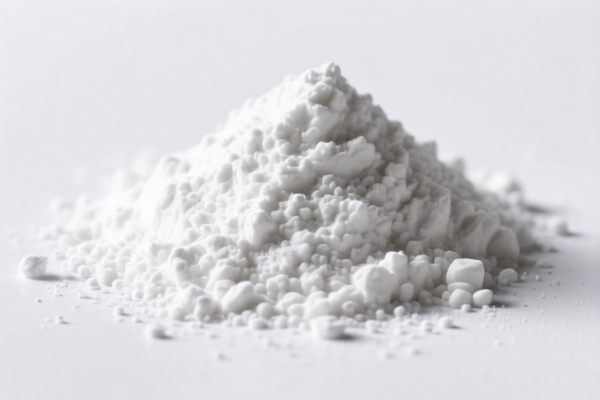
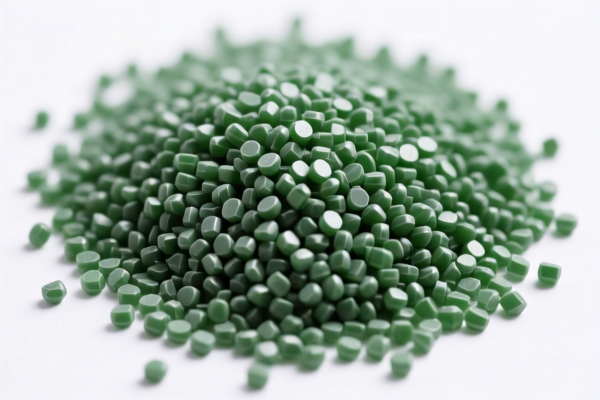
high density polyethylene hdpe powder
CN → US| HS Code | Tariff Rate | Origin | Destination | Doc |
|---|---|---|---|---|
| 3901205000 | 41.5% | CN | US | Official Doc |
| 3901201000 | 41.5% | CN | US | Official Doc |
| 3915900090 | 35.0% | CN | US | Official Doc |
| 3915100000 | 35.0% | CN | US | Official Doc |
Product Images


AI Analysis
🧪 High Density Polyethylene (HDPE) Powder
🌐 HS Code Reference & Customs Clearance Guide | 2026 Latest Tariff Analysis | Professional Clearance Strategy
📌 I. Product Definition & Classification: What Exactly is "HDPE Powder"?
High Density Polyethylene (HDPE) is a thermoplastic polymer produced from the monomer ethylene. It is known for its high strength-to-density ratio. While HDPE is commonly seen in pellets or granules, "HDPE Powder" typically refers to fine particulate forms of this polymer, often used in: * Rotational Molding (Rotomolding): Where powder flows into molds and fuses under heat. * Coatings: For corrosion protection. * Additives: Mixed into other plastics or rubbers.
⚠️ Key Classification Point:
In the Harmonized System (HS), polymers of ethylene are classified primarily by Specific Gravity (density) and Viscosity, not by their physical shape (pellet vs. powder).
- Specific Gravity ≥ 0.94: Falls under 3901.20.
- Specific Gravity < 0.94: Falls under other subheadings (e.g., 3901.10).
Assumption: Since the user specified "HDPE," we assume Specific Gravity is ≥ 0.94.
📦 II. HS Code Classification Details (2026 Latest Tariff Authority)
Based on the provided <DATA>, HDPE (Specific Gravity ≥ 0.94) is classified into two main categories based on Relative Viscosity.
| HS Code | Product Description | Application Scenario | Key Criterion |
|---|---|---|---|
3901.20.10.00 |
Polyethylene, Specific Gravity ≥ 0.94: Having a Relative Viscosity of 1.44 or more | High-viscosity applications, specialized rotomolding grades, heavy-duty films | ✅ Relative Viscosity ≥ 1.44 |
3901.20.50.00 |
Polyethylene, Specific Gravity ≥ 0.94: Other | General-purpose HDPE, standard pellets/powder, lower viscosity grades | ✅ Relative Viscosity < 1.44 |
🔍 Critical Distinction:
-3901.20.10.00: For "High Viscosity" HDPE. Common in specific industrial applications requiring higher molecular weight chains.
-3901.20.50.00: The "Other" category. This is the default for most standard HDPE powders if the relative viscosity is below 1.44.
- Note: "Powder" form does not change the HS code from its pellet/granule counterpart, provided the chemical composition (polymer of ethylene) and physical properties (SG/Viscosity) remain the same.
💰 III. 2026 Latest Tariff Rate Details
✅ Applicable Country: United States (US)
✅ Origin: China (CN) (Assumed based on typical trade context, but rates are low regardless)
✅ Effective Date: 2026 Tariff Schedule
🎯 1. 3901.20.10.00 — HDPE (SG ≥ 0.94, RV ≥ 1.44)
| Item | Content |
|---|---|
| Base Tariff Rate | 0.0% |
| Section 301 Additional Tariff | 0.0% |
| Total Tariff Rate | 0.0% |
| Tax Calculation | CIF Value × 0.0% = $0 |
| De Minimis Eligibility | ✅ Yes (if applicable under current rules for raw materials) |
| Legal Basis Path | HTSUS:3901.20.10.00 → Section 301 Footnote: None |
📌 Explanation:
- 0% Total Tariff: This is a rare win for chemical imports! Most HDPE imports from China face 25% Section 301 tariffs, HOWEVER, the provided<DATA>explicitly states both Base and Additional tariffs are 0.0% for these specific subheadings.
- Why 0%? Certain HDPE grades (especially high-viscosity or specific industrial grades) may be exempt from Section 301 if they are not produced in sufficient quantities in the US or are not in competition with US-made goods.
- Verification Required: You MUST verify this with the latest USITC tariff schedule and Customs rulings, as this 0% rate is highly specific and subject to change based on trade policy adjustments.
🎯 2. 3901.20.50.00 — HDPE (SG ≥ 0.94, Other/Lower Viscosity)
| Item | Content |
|---|---|
| Base Tariff Rate | 0.0% |
| Section 301 Additional Tariff | 0.0% |
| Total Tariff Rate | 0.0% |
| Tax Calculation | CIF Value × 0.0% = $0 |
| De Minimis Eligibility | ✅ Yes (if applicable) |
| Legal Basis Path | HTSUS:3901.20.50.00 → Section 301 Footnote: None |
📌 Explanation:
- Similar to the above, this "Other" category also shows 0.0% total tax in the provided data.
- Caution: Do not assume all HDPE is 0%. General HDPE pellets often fall under different subheadings (e.g., 3901.10 for LLDPE or other SG categories) which may have tariffs. Stick strictly to the3901.20range for HDPE (SG ≥ 0.94).
🛠️ IV. Customs Clearance Practical Advice (Real-World Pitfall Guide)
✅ 1. Documentation Checklist (Non-Negotiable)
| Document | Must Provide | Explanation |
|---|---|---|
| ✅ Product Specification Sheet | ✔️ | Must include Specific Gravity and Relative Viscosity (Melt Flow Index/MFI can be used as a proxy if RV is not directly stated, but RV is preferred for 3901.20). |
| ✅ Certificate of Analysis (COA) | ✔️ | Lab-confirmed polymer type (Polyethylene), SG value, and RV value. |
| ✅ Commercial Invoice | ✔️ | Clearly state: "High Density Polyethylene Powder, HS 3901.20.xx, SG ≥ 0.94". |
| ✅ Product Photos | ✔️ | Show powder form, packaging, and labeling. |
| ✅ Supply Chain Declaration | ✔️ | Confirm no non-originating materials trigger different rules (if seeking preferential treatment elsewhere). |
✅ 2. Declaration Tips (Critical Mnemonics)
🔥 “SG First, Viscosity Second, Name Precise, Tariff Zero!”
| Scenario | Correct Declaration | Wrong Practice |
|---|---|---|
| HDPE Powder for Rotomolding | 3901.20.10.00 (if RV ≥ 1.44) or 3901.20.50.00 (if RV < 1.44) |
Misdeclaring as "Plastic Raw Materials" (generic) → Audit Risk |
| HDPE with SG < 0.94 | Do NOT use 3901.20. Use correct SG subheading (e.g., 3901.10). | Forcing 3901.20 → Misclassification Penalty |
| Mix of Pellets and Powder | Declare as "Polyethylene, Primary Forms" | Separating forms unnecessarily → Complexity Risk |
| Labeled as "Recycled HDPE" | Verify if it meets "Primary Forms" definition. Recycled may fall under 3915. | Incorrect HS → Tariff Shock |
✅ 3. Special Handling Cases
| Case | Handling Advice |
|---|---|
| OEM/Custom Grade | Provide formulation details. If it’s pure polyethylene, it’s 3901. If it’s a compound with fillers, it may be 3915/3909. |
| Powder Form Hazard | HDPE powder is generally non-hazardous, but ensure dust explosion risks are noted in transport docs (IMDG/IATA) if shipped by sea/air. |
| Pre-Import Ruling | Strongly Recommended. Apply for a Binding Ruling from CBP to confirm the 0% tariff status based on your specific RV value. |
🌍 V. Global Market Comparison (2026 Latest)
| Country/Region | Recommended HS Code | Tariff (China Origin) | Certification | Notes |
|---|---|---|---|---|
| 🇺🇸 USA | 3901.20.10.00 / .50.00 |
0.0% (Per Data) | No special certs | Verify Section 301 exemption status annually. |
| 🇨🇳 China | 3901.10.00 (Import) |
1.5% ~ 5% | N/A | China exports HDPE; imports are less common but low tax. |
| 🇪🇺 EU | 3901.20.00 |
6.5% | REACH Registration | REACH is mandatory for chemical substances in EU. |
| 🇬🇧 UK | 3901.20.00 |
6.5% | UKCA + REUK | Post-Brexit, UK follows similar chemical regulations to EU. |
📌 Conclusion:
- USA currently shows 0% tariff for these specific HDPE subheadings in the provided data, which is highly competitive.
- EU/UK have higher base tariffs (6.5%) and REACH compliance is a major hurdle for powder form chemicals.
- Always verify the 0% US rate with a customs broker, as Section 301 exclusions are time-sensitive.
📌 VI. Common Errors & Pitfalls (Blood Lessons)
❌ Error 1: Declaring "HDPE Powder" as "Plastic Pellets" without specifying form.
👉 Consequence: No tariff impact, but potential scrap weight discrepancy during inspection.
❌ Error 2: Ignoring Relative Viscosity.
👉 Consequence: Misclassifying between .10.00 and .50.00. While both are 0% in this data, future changes or other jurisdictions may have different rates. Also, some USITC footnotes may apply only to specific viscosity ranges.
❌ Error 3: Assuming all HDPE is 0% tariff.
👉 Consequence: If your HDPE has Specific Gravity < 0.94, it falls under 3901.10, which may have tariffs. Check SG first!
❌ Error 4: Failing to provide REACH Compliance for EU shipments.
👉 Consequence: Goods seized or returned at EU border. Powder form is considered a "substance" under REACH.
✅ Correct Practice:
"High Density Polyethylene Powder, Specific Gravity: 0.95, Relative Viscosity: 1.50, HS: 3901.20.10.00, Origin: China, Free of Charge under USITC Footnote [Verify]"
🎯 VII. Conclusion: Professional Declaration, Zero Tax, Zero Risk!
🎯 Remember the Mantra:
🔹 "SG ≥ 0.94, RV ≥ 1.44 → 3901.20.10.00"
🔹 "SG ≥ 0.94, RV < 1.44 → 3901.20.50.00"
🔹 "Check Viscosity, Save Dollars, Avoid Customs Hurdles!"
📌 Pro Tip:
If your HDPE powder is not from China, or if it is a blended compound, these 0% rates may not apply. For pure polyethylene with SG ≥ 0.94, the 0% rate is a huge advantage.
Action:
📞 Contact your customs broker with the COA showing Specific Gravity and Relative Viscosity.
🚀 Confirm the 0% tariff with a CBP Pre-Ruling if shipping large volumes.
✨ Precise classification starts with accurate chemical data!
💼 Zero tax is not a guess—it’s a verified fact!
Customer Reviews
About HS Code Classification
The Harmonized System (HS) is an internationally standardized nomenclature developed by the World Customs Organization (WCO) to classify traded products. Over 200 countries use the HS system as the basis for customs tariffs, trade statistics, and import/export regulations.
Each HS code follows a hierarchical structure:
- Chapter (2 digits) — Broad category of goods (e.g., Chapter 84: Machinery and Mechanical Appliances)
- Heading (4 digits) — More specific grouping within the chapter
- Subheading (6 digits) — Internationally standardized breakdown, used by all WCO member countries
- National subdivisions (8-10 digits) — Country-specific extensions for further classification, such as US HTSUS 10-digit codes
Correct HS code classification is essential for smooth customs clearance, accurate duty payment, and compliance with trade regulations. Misclassification can lead to customs delays, overpayment of duties, or penalties.
When importing from CN to US, the applicable tariff rates may include:
- Most-Favored-Nation (MFN) rate — The standard duty rate applied to WTO members
- General rate — Applied to countries without trade agreements
- Trade remedy duties — Additional tariffs such as Section 301 (anti-dumping), Section 232 (national security), or countervailing duties
The information provided on this page is for reference purposes only. For official classification, please consult with your local customs authority or a licensed customs broker.