inductive pressure counter
CN → US| HS编码 | 关税税率 | 原产国 | 目的国 | 文档 |
|---|---|---|---|---|
| 9026204000 | 35.0% | CN | US | 官方文档 |
| 9026208000 | 17.5% | CN | US | 官方文档 |
| 9031808085 | 35.0% | CN | US | 官方文档 |
| 9031909195 | 85.0% | CN | US | 官方文档 |
商品图片
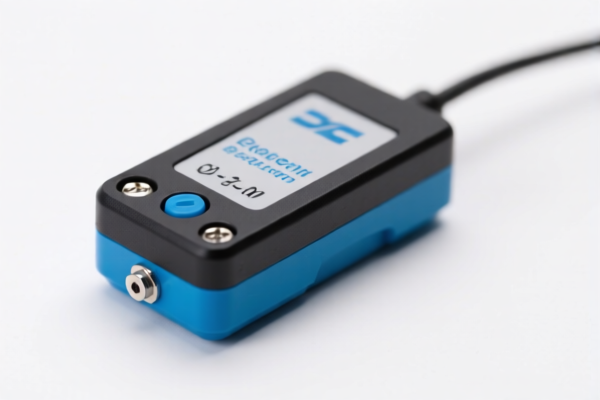
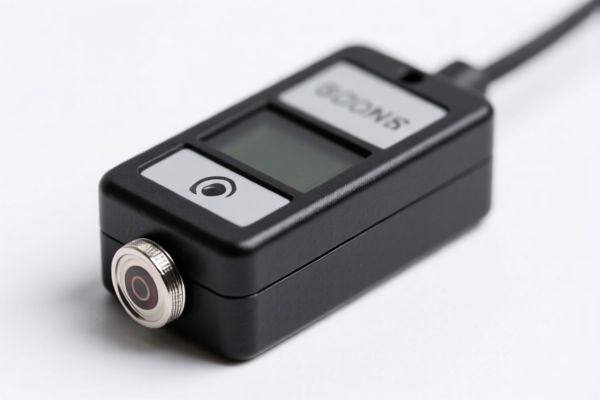
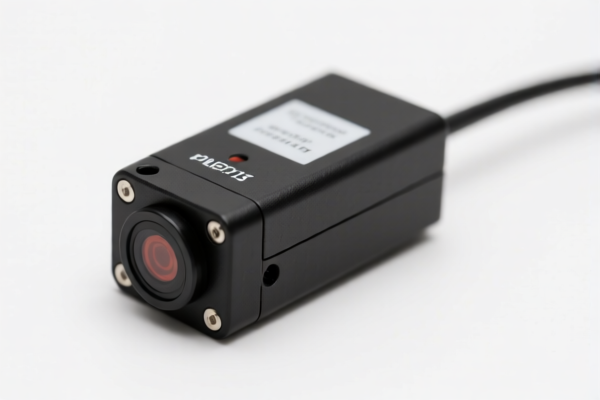
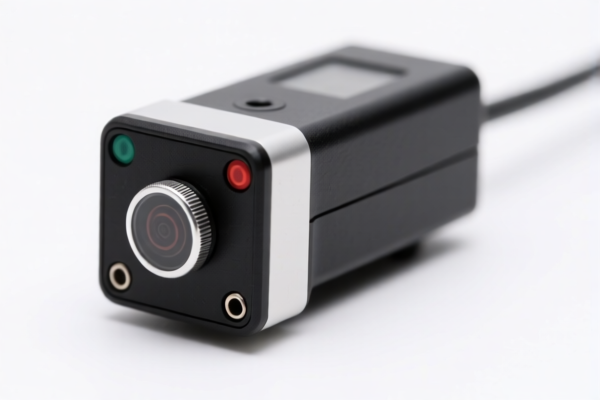
AI分析
⚡ Inductive Pressure Counter (Sensors & Meters)
🌐 HS Code Reference & Customs Clearance Guide | 2026 Latest Tariff Analysis | Professional Clearance Strategy
📌 I. Product Definition & Classification: Do You Really Understand "Inductive Pressure Counters"?
An Inductive Pressure Counter (often referring to Inductive Pressure Sensors or Pressure Transmitters based on inductive principles) is a precision instrument used to measure pressure and convert it into an electrical signal. In international trade, these devices are classified based on their functional role: are they standalone measuring instruments, or are they components/parts of a larger system?
The critical distinction lies in the classification logic: 1. As a Standalone Measuring Instrument: If the device is a complete unit capable of independent pressure measurement and output, it falls under Chapter 90 (Optical, photographic, cinematographic, measuring, checking, precision, medical or surgical instruments). 2. As a Component/Part: If the device is primarily a sensor element integrated into a larger machine or control system, it may be classified under Chapter 85 (Electrical machinery and equipment) or as parts/accessories under Chapter 90.
⚠️ Key Classification Point:
- If it is a complete sensor/transmitter with its own housing, output interface, and calibration → Often 9026 or 9031.
- If it is a sensor element or control device for pressure measurement → 9026.
- If it is an accessory/part of a measuring instrument → 9031.90.
📦 II. HS Code Classification Details (2026 Latest Tariff Authority Comparison)
Based on the provided data, here are the four most relevant HS Codes for Inductive Pressure Counters/Sensors, along with their specific applicability and tariff implications.
| HS Code | Product Description | Applicability Scenario | Key Classification Logic |
|---|---|---|---|
9026.20.40.00 |
Pressure Sensors (Electronic Sensing Elements) | Used for pressure measurement; fits the definition of electrical measuring devices. | Primary classification for electronic inductive pressure sensors. |
9026.20.80.00 |
Pressure Measuring Devices (Other) | Fits under "Other" equipment for pressure measurement. | For pressure instruments not specifically listed under 9026.20.40, often used for non-electronic or hybrid inductive devices. |
9031.80.80.85 |
Measuring/Checking Instruments (Other) | Classified as other measuring/inspection instruments not specified elsewhere. | If the device is viewed as a general precision instrument rather than a specific pressure sensor. |
9031.90.91.95 |
Parts/Accessories to Measuring Instruments | Classified as core components/parts of measuring or inspection instruments. | If the inductive counter is sold solely as a part for integration into a larger system. |
🔍 Critical Note:
-9026.20.40.00is the most common for electronic inductive pressure sensors.
-9031.90.91.95carries the highest tariff because it is classified as a part/accessory, attracting additional "Section 122" tariffs.
-9026.20.80.00has a lower total tax due to fewer additional tariffs.
💰 III. 2026 Latest Tariff Rate Details (Including Surcharges & Policy Add-ons)
✅ Applicable Country: United States (US)
✅ Origin: China (CN)
✅ Effective Date: 2025/2026 (Post-Section 301 & IEEPA Measures)
🎯 1. 9026.20.40.00 —— Pressure Sensors (Electronic)
| Item | Detail |
|---|---|
| Base Tariff | 0.0% (ad valorem) |
| Additional Tariff (Section 301) | +25.0% |
| Section 122 Tariff | +10.0% |
| Total Tariff Rate | 35.0% |
| Tax Calculation | CIF Value × 35% |
| De Minimis Eligibility | ❌ No (Denied under current trade policies) |
| Legal Path | USITC:9026.20.40.00 → Section 301: 25% → Section 122: 10% |
📌 Explanation:
- This is the standard classification for electronic pressure sensors.
- The 35% total rate includes both the Section 301 surcharge (25%) and the Section 122 surcharge (10%).
- Risk: High. Ensure the product is truly an "electronic sensing element" and not misclassified.
🎯 2. 9026.20.80.00 —— Other Pressure Measuring Devices
| Item | Detail |
|---|---|
| Base Tariff | 0.0% |
| Additional Tariff (Section 301) | +7.5% |
| Section 122 Tariff | +10.0% |
| Total Tariff Rate | 17.5% |
| Tax Calculation | CIF Value × 17.5% |
| De Minimis Eligibility | ❌ No |
| Legal Path | USITC:9026.20.80.00 → Section 301: 7.5% → Section 122: 10% |
📌 Explanation:
- This code is for pressure measuring devices not specified under9026.20.40.
- Advantage: Lower total tax (17.5%) compared to9026.20.40because the Section 301 rate is only 7.5% (not 25%).
- Strategy: If your inductive counter is not strictly "electronic" or can be argued as "other," this may be a cost-saving classification.
🎯 3. 9031.80.80.85 —— Other Measuring/Checking Instruments
| Item | Detail |
|---|---|
| Base Tariff | 0.0% |
| Additional Tariff (Section 301) | +25.0% |
| Section 122 Tariff | +10.0% |
| Total Tariff Rate | 35.0% |
| Tax Calculation | CIF Value × 35% |
| De Minimis Eligibility | ❌ No |
| Legal Path | USITC:9031.80.80.85 → Section 301: 25% → Section 122: 10% |
📌 Explanation:
- Used if the device is classified as a general precision instrument rather than a specific pressure sensor.
- Risk: Same as9026.20.40(35%). Use only if9026codes are inapplicable.
🎯 4. 9031.90.91.95 —— Parts/Accessories to Measuring Instruments
| Item | Detail |
|---|---|
| Base Tariff | 0.0% |
| Additional Tariff (Section 301) | +25.0% |
| Section 122 Tariff | +10.0% |
| Steel/Aluminum/Copper Surtax | +50.0% (If applicable) |
| Total Tariff Rate | 85.0% (or 135% with metals surtax) |
| Tax Calculation | CIF Value × 85% (or 135%) |
| De Minimis Eligibility | ❌ No |
| Legal Path | USITC:9031.90.91.95 → Section 301: 25% → Section 122: 10% → Section 232 (Metals): +50% |
📌 WARNING:
- This is the highest risk classification.
- If the inductive counter contains steel, aluminum, or copper components and is classified as a part, it may trigger the Section 232 metals tariff (+50%), leading to a total tax of 85% or even 135%.
- Avoid this classification unless absolutely necessary.
🛠️ IV. Customs Clearance Practical Advice (Avoiding Pitfalls)
✅ 1. Preparation Checklist (Mandatory)
| Document | Required | Description |
|---|---|---|
| ✅ Technical Specification Sheet | ✔️ | Must include working principle (inductive), pressure range, output signal (4-20mA, 0-10V, etc.), and housing material. |
| ✅ Circuit/Structure Diagram | ✔️ | To prove whether it is a complete sensor (9026) or a part/accessory (9031.90). |
| ✅ Product Photos | ✔️ | Clear images of the label, model number, and physical structure. |
| ✅ Commercial Invoice | ✔️ | Must clearly state "Inductive Pressure Sensor" or "Pressure Counter" and avoid vague terms like "Part" or "Accessory." |
| ✅ Origin Certificate | ✔️ | Proof of Chinese origin for tariff calculation. |
| ✅ Declaration Statement | ✔️ | Confirm if the product contains steel/aluminum/copper to assess Section 232 liability. |
✅ 2. Declaration Tips (Key Mnemonics)
🔥 “Sensor vs. Part: Name Matters, Tax Differs!”
| Scenario | Correct HS Code | Incorrect Code | Consequence |
|---|---|---|---|
| Complete Sensor (Housing + Output) | 9026.20.40.00 or 9026.20.80.00 |
9031.90.91.95 |
Avoid 85% tax; save ~50-65% |
| Non-Electronic Inductive Meter | 9026.20.80.00 |
9026.20.40.00 |
Save 17.5% vs 35% |
| Part for Integration | 9031.90.91.95 |
9026.20.40.00 |
High risk of 85% tax if metals involved |
📌 Key Strategy:
- Declare as "Sensor" or "Transmitter" if it is a standalone unit.
- Avoid "Part" or "Accessory" in the description unless it is genuinely a component.
- Check Material Composition: If classified as a part, verify if steel/aluminum/copper triggers Section 232.
✅ 3. Special Cases & Mitigation
| Scenario | Handling Advice |
|---|---|
| Inductive Counter with Metal Housing | If classified as 9031.90.91.95, prepare for 85% tax. Consider reclassifying as 9026 if it has independent functionality. |
| Hybrid Devices (Inductive + Electronic) | Use 9026.20.40.00 if the electronic output is primary. |
| OEM Custom Parts | Provide customer design docs to prove it is a part, but weigh the 85% tax against the need for reclassification. |
| Pre-Ruling | 🚀 Recommendation: Apply for a Binding Ruling from CBP to confirm the HS Code and avoid retroactive penalties. |
🌍 V. Global Market Comparison (2026 Latest)
| Country/Region | Recommended HS Code | Tariff | Certification | Notes |
|---|---|---|---|---|
| 🇺🇸 USA | 9026.20.40.00 or 9026.20.80.00 |
35% or 17.5% | None Specific | Avoid 9031.90 due to 85% tax. |
| 🇨🇳 China | 9026.20.40.00 |
0-5% | CNCA | No additional surcharges. |
| 🇪🇺 EU | 9026.80.00 |
0-4% | CE, RoHS | No Section 301/122 equivalents. |
| 🇬🇧 UK | 9026.80.00 |
0-4% | UKCA | Similar to EU. |
| 🇯🇵 Japan | 9026.80.00 |
0-3% | PSE | Low tariffs, no surcharges. |
📌 Conclusion:
- The US is the only market with significant additional tariffs (Section 301/122/232).
- Chinese-made inductive pressure counters face 17.5%-85% tariffs in the US.
- Recommendation: Prioritize9026.20.80.00(17.5%) if technically feasible, or9026.20.40.00(35%) as the standard. Avoid9031.90.91.95due to extreme tax liability.
📌 VI. Common Errors & Pitfalls (Lessons Learned)
❌ Error 1: Classifying a complete sensor as a part (9031.90.91.95)
👉 Consequence: 85% tax instead of 17.5%-35%. Loss of profit!
❌ Error 2: Ignoring Section 122 surcharge (+10%)
👉 Consequence: Underpaying taxes by 10%, leading to penalties and audits.
❌ Error 3: Not declaring material composition for parts
👉 Consequence: If classified as a part and contains metals, Section 232 (+50%) applies automatically. Total 135% tax!
❌ Error 4: Vague description ("Pressure Counter") without technical details
👉 Consequence: CBP may reclassify to the highest taxable code (9031.90.91.95).
✅ Correct Practice:
“Inductive Pressure Sensor, Model XYZ, 0-100 PSI, 4-20mA Output, Stainless Steel Housing, Standalone Unit”
Use HS Code:9026.20.40.00or9026.20.80.00
🎯 VII. Conclusion: Precision Classification Saves Money!
🎯 Remember the Mnemonics:
🔹 “Sensor vs. Part: Name it right, tax stays low!”
🔹 “9026 is king, 9031 is sting (85%)!”
🔹 “Section 122 + 10% is always on!”
🔹 “Parts with metals? 85%+ waits!”
📌 Pro Tip:
If your inductive pressure counter is standalone, argue for
9026.20.40.00(35%) or9026.20.80.00(17.5%).
If you must classify as a part, ensure you prepare for 85% tax or explore duty-free alternatives (e.g., assembly in third countries).
🚀 Apply for a CBP Binding Ruling to lock in your HS Code and avoid future disputes.
📣 Act Now:
📞 Consult a customs broker + Provide technical specs + Request HS Code Pre-Ruling
🚀 Ensure your Inductive Pressure Counters clear customs smoothly, minimize tax, and maximize profit!
✨ Professional Clearance Starts with Accurate Classification!
💼 Every percentage point saved is pure profit!
用户评价
关于 HS 编码归类
协调制度(HS)是由世界海关组织(WCO)制定的国际贸易商品分类标准。全球 200 多个国家采用 HS 系统作为海关关税、贸易统计和进出口监管的基础。
每个 HS 编码遵循以下层级结构:
- 章(2 位)——商品大类(例如:第 84 章:机器和机械设备)
- 品目(4 位)——章内的更具体分类
- 子目(6 位)——国际通用细分,所有 WCO 成员国统一使用
- 本国细分(8-10 位)——各国自行扩展的细分编码,如美国 HTSUS 10 位编码
正确的 HS 编码归类对于顺利通关、准确缴纳关税和遵守贸易法规至关重要。错误归类可能导致海关延误、多缴关税或罚款。
从CN进口到US时,适用的关税税率可能包括:
- 最惠国(MFN)税率——适用于 WTO 成员国的标准关税税率
- 普通税率——适用于无贸易协定国家
- 贸易救济关税——附加关税,如 301 条款(反倾销)、232 条款(国家安全)或反补贴税
本页内容仅供参考。如需正式归类,请咨询当地海关或持牌报关代理。