inductive pressure counter
CN → US| HS Code | Tariff Rate | Origin | Destination | Doc |
|---|---|---|---|---|
| 9026204000 | 35.0% | CN | US | Official Doc |
| 9026208000 | 17.5% | CN | US | Official Doc |
| 9031808085 | 35.0% | CN | US | Official Doc |
| 9031909195 | 85.0% | CN | US | Official Doc |
Product Images
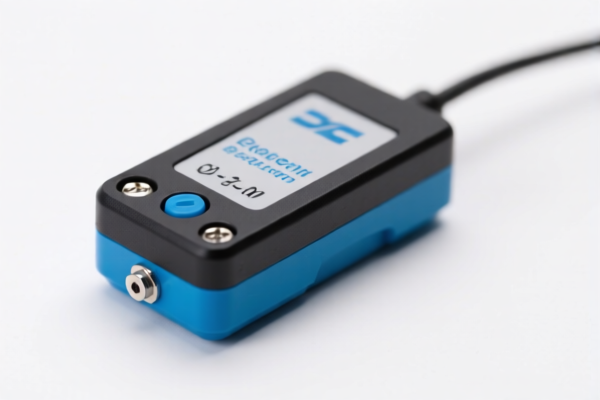
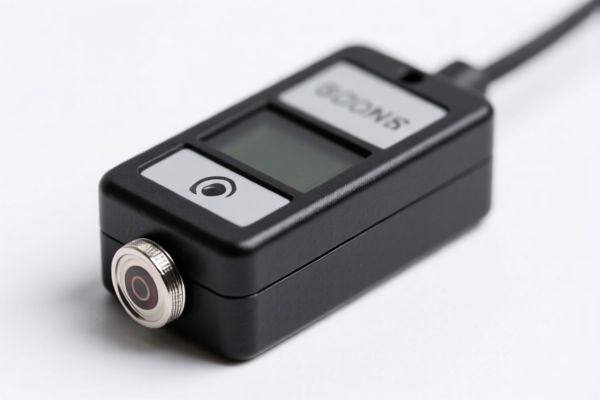
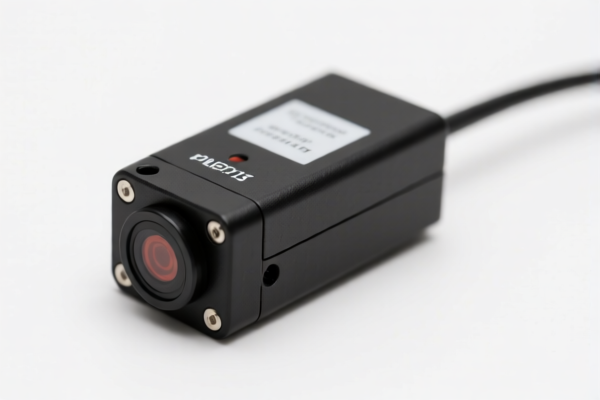
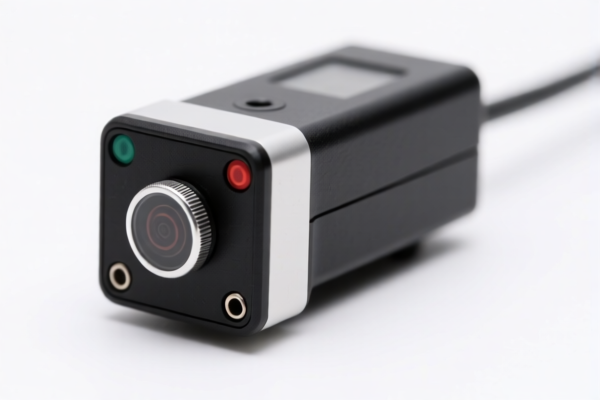
AI Analysis
⚡ Inductive Pressure Counter (Sensors & Meters)
🌐 HS Code Reference & Customs Clearance Guide | 2026 Latest Tariff Analysis | Professional Clearance Strategy
📌 I. Product Definition & Classification: Do You Really Understand "Inductive Pressure Counters"?
An Inductive Pressure Counter (often referring to Inductive Pressure Sensors or Pressure Transmitters based on inductive principles) is a precision instrument used to measure pressure and convert it into an electrical signal. In international trade, these devices are classified based on their functional role: are they standalone measuring instruments, or are they components/parts of a larger system?
The critical distinction lies in the classification logic: 1. As a Standalone Measuring Instrument: If the device is a complete unit capable of independent pressure measurement and output, it falls under Chapter 90 (Optical, photographic, cinematographic, measuring, checking, precision, medical or surgical instruments). 2. As a Component/Part: If the device is primarily a sensor element integrated into a larger machine or control system, it may be classified under Chapter 85 (Electrical machinery and equipment) or as parts/accessories under Chapter 90.
⚠️ Key Classification Point:
- If it is a complete sensor/transmitter with its own housing, output interface, and calibration → Often 9026 or 9031.
- If it is a sensor element or control device for pressure measurement → 9026.
- If it is an accessory/part of a measuring instrument → 9031.90.
📦 II. HS Code Classification Details (2026 Latest Tariff Authority Comparison)
Based on the provided data, here are the four most relevant HS Codes for Inductive Pressure Counters/Sensors, along with their specific applicability and tariff implications.
| HS Code | Product Description | Applicability Scenario | Key Classification Logic |
|---|---|---|---|
9026.20.40.00 |
Pressure Sensors (Electronic Sensing Elements) | Used for pressure measurement; fits the definition of electrical measuring devices. | Primary classification for electronic inductive pressure sensors. |
9026.20.80.00 |
Pressure Measuring Devices (Other) | Fits under "Other" equipment for pressure measurement. | For pressure instruments not specifically listed under 9026.20.40, often used for non-electronic or hybrid inductive devices. |
9031.80.80.85 |
Measuring/Checking Instruments (Other) | Classified as other measuring/inspection instruments not specified elsewhere. | If the device is viewed as a general precision instrument rather than a specific pressure sensor. |
9031.90.91.95 |
Parts/Accessories to Measuring Instruments | Classified as core components/parts of measuring or inspection instruments. | If the inductive counter is sold solely as a part for integration into a larger system. |
🔍 Critical Note:
-9026.20.40.00is the most common for electronic inductive pressure sensors.
-9031.90.91.95carries the highest tariff because it is classified as a part/accessory, attracting additional "Section 122" tariffs.
-9026.20.80.00has a lower total tax due to fewer additional tariffs.
💰 III. 2026 Latest Tariff Rate Details (Including Surcharges & Policy Add-ons)
✅ Applicable Country: United States (US)
✅ Origin: China (CN)
✅ Effective Date: 2025/2026 (Post-Section 301 & IEEPA Measures)
🎯 1. 9026.20.40.00 —— Pressure Sensors (Electronic)
| Item | Detail |
|---|---|
| Base Tariff | 0.0% (ad valorem) |
| Additional Tariff (Section 301) | +25.0% |
| Section 122 Tariff | +10.0% |
| Total Tariff Rate | 35.0% |
| Tax Calculation | CIF Value × 35% |
| De Minimis Eligibility | ❌ No (Denied under current trade policies) |
| Legal Path | USITC:9026.20.40.00 → Section 301: 25% → Section 122: 10% |
📌 Explanation:
- This is the standard classification for electronic pressure sensors.
- The 35% total rate includes both the Section 301 surcharge (25%) and the Section 122 surcharge (10%).
- Risk: High. Ensure the product is truly an "electronic sensing element" and not misclassified.
🎯 2. 9026.20.80.00 —— Other Pressure Measuring Devices
| Item | Detail |
|---|---|
| Base Tariff | 0.0% |
| Additional Tariff (Section 301) | +7.5% |
| Section 122 Tariff | +10.0% |
| Total Tariff Rate | 17.5% |
| Tax Calculation | CIF Value × 17.5% |
| De Minimis Eligibility | ❌ No |
| Legal Path | USITC:9026.20.80.00 → Section 301: 7.5% → Section 122: 10% |
📌 Explanation:
- This code is for pressure measuring devices not specified under9026.20.40.
- Advantage: Lower total tax (17.5%) compared to9026.20.40because the Section 301 rate is only 7.5% (not 25%).
- Strategy: If your inductive counter is not strictly "electronic" or can be argued as "other," this may be a cost-saving classification.
🎯 3. 9031.80.80.85 —— Other Measuring/Checking Instruments
| Item | Detail |
|---|---|
| Base Tariff | 0.0% |
| Additional Tariff (Section 301) | +25.0% |
| Section 122 Tariff | +10.0% |
| Total Tariff Rate | 35.0% |
| Tax Calculation | CIF Value × 35% |
| De Minimis Eligibility | ❌ No |
| Legal Path | USITC:9031.80.80.85 → Section 301: 25% → Section 122: 10% |
📌 Explanation:
- Used if the device is classified as a general precision instrument rather than a specific pressure sensor.
- Risk: Same as9026.20.40(35%). Use only if9026codes are inapplicable.
🎯 4. 9031.90.91.95 —— Parts/Accessories to Measuring Instruments
| Item | Detail |
|---|---|
| Base Tariff | 0.0% |
| Additional Tariff (Section 301) | +25.0% |
| Section 122 Tariff | +10.0% |
| Steel/Aluminum/Copper Surtax | +50.0% (If applicable) |
| Total Tariff Rate | 85.0% (or 135% with metals surtax) |
| Tax Calculation | CIF Value × 85% (or 135%) |
| De Minimis Eligibility | ❌ No |
| Legal Path | USITC:9031.90.91.95 → Section 301: 25% → Section 122: 10% → Section 232 (Metals): +50% |
📌 WARNING:
- This is the highest risk classification.
- If the inductive counter contains steel, aluminum, or copper components and is classified as a part, it may trigger the Section 232 metals tariff (+50%), leading to a total tax of 85% or even 135%.
- Avoid this classification unless absolutely necessary.
🛠️ IV. Customs Clearance Practical Advice (Avoiding Pitfalls)
✅ 1. Preparation Checklist (Mandatory)
| Document | Required | Description |
|---|---|---|
| ✅ Technical Specification Sheet | ✔️ | Must include working principle (inductive), pressure range, output signal (4-20mA, 0-10V, etc.), and housing material. |
| ✅ Circuit/Structure Diagram | ✔️ | To prove whether it is a complete sensor (9026) or a part/accessory (9031.90). |
| ✅ Product Photos | ✔️ | Clear images of the label, model number, and physical structure. |
| ✅ Commercial Invoice | ✔️ | Must clearly state "Inductive Pressure Sensor" or "Pressure Counter" and avoid vague terms like "Part" or "Accessory." |
| ✅ Origin Certificate | ✔️ | Proof of Chinese origin for tariff calculation. |
| ✅ Declaration Statement | ✔️ | Confirm if the product contains steel/aluminum/copper to assess Section 232 liability. |
✅ 2. Declaration Tips (Key Mnemonics)
🔥 “Sensor vs. Part: Name Matters, Tax Differs!”
| Scenario | Correct HS Code | Incorrect Code | Consequence |
|---|---|---|---|
| Complete Sensor (Housing + Output) | 9026.20.40.00 or 9026.20.80.00 |
9031.90.91.95 |
Avoid 85% tax; save ~50-65% |
| Non-Electronic Inductive Meter | 9026.20.80.00 |
9026.20.40.00 |
Save 17.5% vs 35% |
| Part for Integration | 9031.90.91.95 |
9026.20.40.00 |
High risk of 85% tax if metals involved |
📌 Key Strategy:
- Declare as "Sensor" or "Transmitter" if it is a standalone unit.
- Avoid "Part" or "Accessory" in the description unless it is genuinely a component.
- Check Material Composition: If classified as a part, verify if steel/aluminum/copper triggers Section 232.
✅ 3. Special Cases & Mitigation
| Scenario | Handling Advice |
|---|---|
| Inductive Counter with Metal Housing | If classified as 9031.90.91.95, prepare for 85% tax. Consider reclassifying as 9026 if it has independent functionality. |
| Hybrid Devices (Inductive + Electronic) | Use 9026.20.40.00 if the electronic output is primary. |
| OEM Custom Parts | Provide customer design docs to prove it is a part, but weigh the 85% tax against the need for reclassification. |
| Pre-Ruling | 🚀 Recommendation: Apply for a Binding Ruling from CBP to confirm the HS Code and avoid retroactive penalties. |
🌍 V. Global Market Comparison (2026 Latest)
| Country/Region | Recommended HS Code | Tariff | Certification | Notes |
|---|---|---|---|---|
| 🇺🇸 USA | 9026.20.40.00 or 9026.20.80.00 |
35% or 17.5% | None Specific | Avoid 9031.90 due to 85% tax. |
| 🇨🇳 China | 9026.20.40.00 |
0-5% | CNCA | No additional surcharges. |
| 🇪🇺 EU | 9026.80.00 |
0-4% | CE, RoHS | No Section 301/122 equivalents. |
| 🇬🇧 UK | 9026.80.00 |
0-4% | UKCA | Similar to EU. |
| 🇯🇵 Japan | 9026.80.00 |
0-3% | PSE | Low tariffs, no surcharges. |
📌 Conclusion:
- The US is the only market with significant additional tariffs (Section 301/122/232).
- Chinese-made inductive pressure counters face 17.5%-85% tariffs in the US.
- Recommendation: Prioritize9026.20.80.00(17.5%) if technically feasible, or9026.20.40.00(35%) as the standard. Avoid9031.90.91.95due to extreme tax liability.
📌 VI. Common Errors & Pitfalls (Lessons Learned)
❌ Error 1: Classifying a complete sensor as a part (9031.90.91.95)
👉 Consequence: 85% tax instead of 17.5%-35%. Loss of profit!
❌ Error 2: Ignoring Section 122 surcharge (+10%)
👉 Consequence: Underpaying taxes by 10%, leading to penalties and audits.
❌ Error 3: Not declaring material composition for parts
👉 Consequence: If classified as a part and contains metals, Section 232 (+50%) applies automatically. Total 135% tax!
❌ Error 4: Vague description ("Pressure Counter") without technical details
👉 Consequence: CBP may reclassify to the highest taxable code (9031.90.91.95).
✅ Correct Practice:
“Inductive Pressure Sensor, Model XYZ, 0-100 PSI, 4-20mA Output, Stainless Steel Housing, Standalone Unit”
Use HS Code:9026.20.40.00or9026.20.80.00
🎯 VII. Conclusion: Precision Classification Saves Money!
🎯 Remember the Mnemonics:
🔹 “Sensor vs. Part: Name it right, tax stays low!”
🔹 “9026 is king, 9031 is sting (85%)!”
🔹 “Section 122 + 10% is always on!”
🔹 “Parts with metals? 85%+ waits!”
📌 Pro Tip:
If your inductive pressure counter is standalone, argue for
9026.20.40.00(35%) or9026.20.80.00(17.5%).
If you must classify as a part, ensure you prepare for 85% tax or explore duty-free alternatives (e.g., assembly in third countries).
🚀 Apply for a CBP Binding Ruling to lock in your HS Code and avoid future disputes.
📣 Act Now:
📞 Consult a customs broker + Provide technical specs + Request HS Code Pre-Ruling
🚀 Ensure your Inductive Pressure Counters clear customs smoothly, minimize tax, and maximize profit!
✨ Professional Clearance Starts with Accurate Classification!
💼 Every percentage point saved is pure profit!
Customer Reviews
About HS Code Classification
The Harmonized System (HS) is an internationally standardized nomenclature developed by the World Customs Organization (WCO) to classify traded products. Over 200 countries use the HS system as the basis for customs tariffs, trade statistics, and import/export regulations.
Each HS code follows a hierarchical structure:
- Chapter (2 digits) — Broad category of goods (e.g., Chapter 84: Machinery and Mechanical Appliances)
- Heading (4 digits) — More specific grouping within the chapter
- Subheading (6 digits) — Internationally standardized breakdown, used by all WCO member countries
- National subdivisions (8-10 digits) — Country-specific extensions for further classification, such as US HTSUS 10-digit codes
Correct HS code classification is essential for smooth customs clearance, accurate duty payment, and compliance with trade regulations. Misclassification can lead to customs delays, overpayment of duties, or penalties.
When importing from CN to US, the applicable tariff rates may include:
- Most-Favored-Nation (MFN) rate — The standard duty rate applied to WTO members
- General rate — Applied to countries without trade agreements
- Trade remedy duties — Additional tariffs such as Section 301 (anti-dumping), Section 232 (national security), or countervailing duties
The information provided on this page is for reference purposes only. For official classification, please consult with your local customs authority or a licensed customs broker.