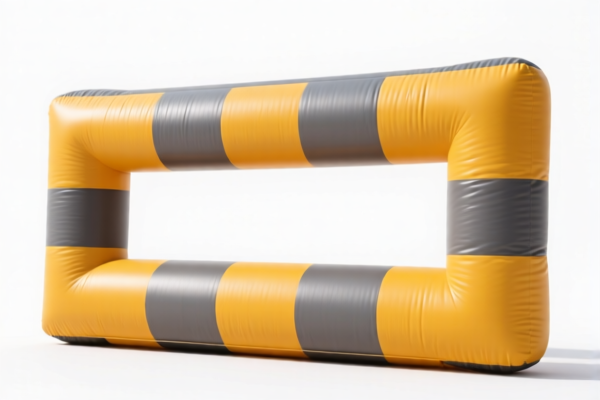
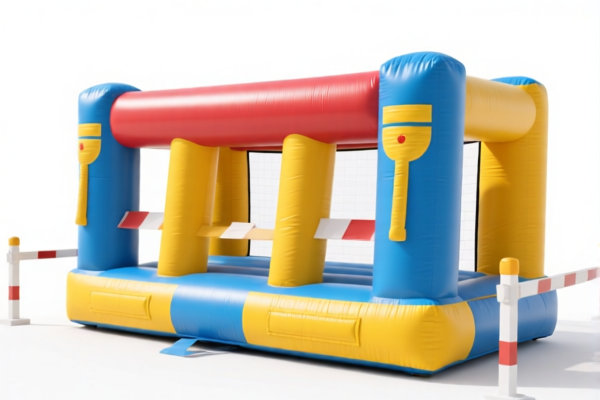
inflatable traffic barrier
CN → US| HS编码 | 关税税率 | 原产国 | 目的国 | 文档 |
|---|---|---|---|---|
| 4016940000 | 39.2% | CN | US | 官方文档 |
| 6306404100 | 21.2% | CN | US | 官方文档 |
| 4016950000 | 21.7% | CN | US | 官方文档 |
| 6306404900 | 13.7% | CN | US | 官方文档 |
| 3926907500 | 14.2% | CN | US | 官方文档 |
商品图片


AI分析
🚧 Inflatable Traffic Barrier (Inflatable Barrier)
🌐 HS Code Reference & Customs Clearance Guide | 2026 Latest Tariff Analysis | Professional Strategy for China-US Trade
📌 I. Product Definition: What is an "Inflatable Traffic Barrier"?
An Inflatable Traffic Barrier (also known as an air barrier, water-filled barrier alternative, or inflatable crash cushion) is a temporary or semi-permanent safety device used to channel traffic, protect work zones, or separate lanes.
Key Characteristics: - Form: Inflatable/Air-filled structure. - Function: Barrier/Shield (similar to fenders or crash cushions). - Material Ambiguity: The name does not specify the material. It could be: 1. Rubber/Elastomer: Heavy-duty, high-abrasion resistance (common for industrial/highway use). 2. Textile/Fabric: Lighter duty, often with PVC/PU coating (common for event management or light traffic). 3. Plastic/PVC: Hard shell or semi-rigid inflatable plastic (less common for heavy barriers, more for light delineation).
⚠️ Critical Classification Point:
The HS Code depends entirely on the material composition. Misclassification can lead to significant tariff differences (e.g., 39.2% vs. 13.7%).
- If made of Sulfurated Rubber → Chapter 40
- If made of Textile Fabric → Chapter 63
- If made of Plastic → Chapter 39
📦 II. HS Code Classification Matrix (2026 Latest Tariff Data)
Based on the provided data, here are the 5 most likely HS Codes for an "Inflatable Traffic Barrier," sorted by Material Logic and Tax Implication.
| HS Code | Material Basis | Product Description & Logic | Total Tax Rate (US/China) |
|---|---|---|---|
| 4016.94.00.00 | Sulfurated Rubber | "Fenders & Similar Articles" • Logic: "Barrier" is functionally similar to a "fender" (protection/shielding). • Material: Rubber is standard for durable traffic barriers. • Form: Inflatable matches "inflatable articles of vulcanized rubber." |
39.2% |
| 4016.95.00.00 | Sulfurated Rubber | "Other Inflatable Articles of Rubber" • Logic: Explicitly captures "Inflatable" form factor under rubber goods. • Material: Sulfurated rubber. • Note: Slightly lower tax than 4016.94 due to broader "Other" category. |
21.7% |
| 6306.40.41.00 | Cotton/Textile | "Cotton Tarpaulins, Sacks & Bags" • Logic: If the barrier is fabric-based (e.g., coated canvas), it may fall under textile tarpaulins. • Material: Cotton or cotton-blend. • Form: Inflatable nature is secondary to textile classification. |
21.2% |
| 3926.90.75.00 | Plastic/PVC | "Other Articles of Plastics" • Logic: If the barrier is made of PVC, TPU, or other plastic materials. • Material: Plastic. • Form: "Inflatable" is a key descriptor for plastic goods in this subheading. |
14.2% |
| 6306.40.49.00 | Other Textiles | "Other Tarpaulins, Sacks & Bags" • Logic: For textile barriers that are not cotton-based (e.g., polyester, nylon). • Material: Non-cotton textile. • Form: Inflatable textile structure. |
13.7% |
🔍 Key Insight:
- Cheapest Tariff:6306.40.49.00(13.7%) – IF it is a non-cotton textile barrier.
- Most Expensive Tariff:4016.94.00.00(39.2%) – IF it is rubber and classified as a "fender-like" protection device.
- Middle Ground:4016.95.00.00(21.7%) – Rubber, but classified strictly as "inflatable."
💰 III. Detailed Tariff Breakdown (US Market – China Origin)
✅ Applicable Country: United States (US)
✅ Origin: China (CN)
✅ Effective Date: 2025/2026 Tariff Schedule
🎯 1. Rubber-Based Barriers (Chapter 40)
A. 4016.94.00.00 – Fenders & Similar Articles of Rubber
| Item | Detail |
|---|---|
| Base Duty | 4.2% |
| Section 301 Duty | 25.0% (High Impact) |
| 122-Clause Duty | 10.0% |
| Total Rate | 39.2% |
| De Minimis Exemption | ❌ Denied |
| Legal Basis | USITC:4016.94.00.00 → Section 301 Footnote 9903.88.01 → IEEPA:9903.01.25 |
📌 Explanation:
- This code is often used for rubber safety equipment.
- The 25% Section 301 duty is the major cost driver.
- If your product is rubber, this is the worst-case scenario for cost.
B. 4016.95.00.00 – Other Inflatable Rubber Articles
| Item | Detail |
|---|---|
| Base Duty | 4.2% |
| Section 301 Duty | 7.5% (Lower than 301a) |
| 122-Clause Duty | 10.0% |
| Total Rate | 21.7% |
| De Minimis Exemption | ❌ Denied |
| Legal Basis | USITC:4016.95.00.00 → Section 301 Footnote 9903.88.01 → IEEPA:9903.01.25 |
📌 Explanation:
- This code explicitly targets "Inflatable" items.
- If the product is rubber, arguing for "Inflatable" (4016.95) instead of "Fender-like" (4016.94) saves 17.5% in tariffs.
🎯 2. Textile-Based Barriers (Chapter 63)
C. 6306.40.41.00 – Cotton Tarpaulins
| Item | Detail |
|---|---|
| Base Duty | 3.7% |
| Section 301 Duty | 7.5% |
| 122-Clause Duty | 10.0% |
| Total Rate | 21.2% |
| De Minimis Exemption | ❌ Denied |
| Legal Basis | USITC:6306.40.41.00 → Section 301 → IEEPA |
📌 Explanation:
- Only applies if the barrier is cotton-based. Rare for heavy-duty traffic barriers.
D. 6306.40.49.00 – Other Tarpaulins (Non-Cotton)
| Item | Detail |
|---|---|
| Base Duty | 3.7% |
| Section 301 Duty | 0.0% |
| 122-Clause Duty | 10.0% |
| Total Rate | 13.7% |
| De Minimis Exemption | ❌ Denied |
| Legal Basis | USITC:6306.40.49.00 → IEEPA |
📌 Explanation:
- Best Tax Rate if the barrier is made of polyester, nylon, or PVC-coated fabric.
- No Section 301 duty on textiles in this subheading!
🎯 3. Plastic-Based Barriers (Chapter 39)
E. 3926.90.75.00 – Other Plastic Articles
| Item | Detail |
|---|---|
| Base Duty | 4.2% |
| Section 301 Duty | 0.0% |
| 122-Clause Duty | 10.0% |
| Total Rate | 14.2% |
| De Minimis Exemption | ❌ Denied |
| Legal Basis | USITC:3926.90.75.00 → IEEPA |
📌 Explanation:
- If the barrier is made of PVC, TPU, or other plastics, this is a very competitive option.
- No Section 301 duty applies here, unlike rubber.
🛠️ IV. Customs Clearance Strategy & Recommendations
✅ 1. Material Documentation is Critical
Customs will inspect the material. You cannot simply declare "Inflatable Barrier" without specifying the material.
| Material | Recommended HS Code | Why? | Action |
|---|---|---|---|
| Rubber (Vulcanized) | 4016.95.00.00 |
Best for rubber (21.7% vs 39.2%) | Provide Material Test Report proving vulcanized rubber, not "fender-like" shape. |
| Plastic (PVC/TPU) | 3926.90.75.00 |
Lowest plastic tax (14.2%) | Provide MSDS and material composition certificate. |
| Fabric (Polyester/Nylon) | 6306.40.49.00 |
Lowest tax overall (13.7%) | Provide Weave Density and Coating Type (e.g., PVC-coated polyester). |
| Cotton | 6306.40.41.00 |
Higher tax (21.2%) | Avoid if possible; use synthetic blends instead. |
📌 Pro Tip:
If you are manufacturing barriers, consider using PVC-coated Polyester (Textile/Plastic hybrid) to qualify for 6306.40.49.00 (13.7%) or 3926.90.75.00 (14.2%) instead of Rubber (21.7%+). This can save ~10% in total landed cost.
✅ 2. Declaration Description Best Practices
❌ Poor Declaration:
"Inflatable Traffic Barrier"
Risk: Customs officer guesses the material. If they assume rubber, they may apply 4016.94.00.00 (39.2%).
✅ Optimized Declaration (Example for Fabric Barrier):
"Inflatable Traffic Safety Barrier, made of PVC-coated polyester fabric, air-filled, for temporary road separation, Model XYZ"
Code: 6306.40.49.00 | Rate: 13.7%
✅ Optimized Declaration (Example for Rubber Barrier):
"Vulcanized Rubber Inflatable Crash Cushion, Air-filled, for Highway Work Zones"
Code: 4016.95.00.00 | Rate: 21.7%
✅ 3. Special Customs Notes
- Section 301 Exemption?
- No. All the above HS Codes are subject to US Section 301 tariffs on Chinese goods.
-
Exception: If the product is substantially transformed in a third country (e.g., Vietnam, Malaysia) with sufficient value-add, it might qualify for exemption, but this is complex and risky.
-
122-Clause Tariff (10%)
-
This applies to all goods from China regardless of HS Code. It is a base surcharge. Factor this into all calculations.
-
De Minimis (Section 321)
- ❌ Not Applicable.
- Inflatable barriers are generally over $800 in value per shipment. Even if under $800, many rubber/textile items are excluded from de minimis if classified under these specific HS codes. Always assume full taxation.
🌍 V. Global Market Comparison (2026)
| Country | Recommended HS Code | Est. Total Duty | Notes |
|---|---|---|---|
| 🇺🇸 USA | 6306.40.49.00 or 4016.95.00.00 |
13.7% – 21.7% | Highest Risk: Section 301 + 122-Clause. |
| 🇨🇳 China (Export) | Same | 0% (Export Duty) | China does not tax exports. |
| 🇪🇺 EU | 9404.90.90 or 3926.90 |
4.0% – 6.5% | No Section 301. No 122-Clause. Much Lower Cost. |
| 🇬🇧 UK | Same as EU | 4.0% – 6.5% | Post-Brexit tariffs apply. |
📌 Strategic Advice:
- USA Market: High tariff burden. Optimize material to Textile (6306.40.49.00) or Plastic (3926.90.75.00) to minimize costs.
- EU/Global Market: Lower tariffs. Rubber barriers (4016.94) are more competitive here due to absence of punitive tariffs.
📌 VI. Common Pitfalls & Avoidance
❌ Pitfall 1: Declaring "Plastic Barrier" when it is actually Rubber.
👉 Consequence: Customs reclassifies to 4016.94.00.00 → 39.2% duty + penalties.
✅ Fix: Provide material test reports from accredited labs.
❌ Pitfall 2: Claiming it is a "Fender" (4016.94) when it is clearly an "Inflatable Cushion" (4016.95).
👉 Consequence: Higher tax (39.2% vs 21.7%).
✅ Fix: Emphasize "Inflatable" in the description and provide photos showing air valves/bladders.
❌ Pitfall 3: Ignoring the 122-Clause 10% tariff.
👉 Consequence: Under-quoting landed cost, leading to budget overruns.
✅ Fix: Add 10% to every HS Code calculation in your profit model.
🎯 VII. Conclusion & Action Plan
🎯 Final Recommendation:
For Inflatable Traffic Barriers imported into the USA from China:
- Best Cost Option: Use PVC-coated Polyester Fabric → Declare under
6306.40.49.00→ 13.7% Total Duty. - Safe Rubber Option: If rubber is mandatory, declare as Inflatable Article (
4016.95.00.00) → 21.7% Total Duty. Avoid4016.94.00.00(39.2%). - Plastic Option: If rigid/plastic inflatable → Declare under
3926.90.75.00→ 14.2% Total Duty.
💡 Remember:
Material = Money.
A 10% difference in duty rate on a $100,000 shipment = $10,000 savings.
Always verify material composition before shipping!
📣 Next Steps:
1. Confirm Material: Get lab test results for your barrier.
2. Select HS Code: Match material to the lowest-tariff HS Code above.
3. Prepare Docs: Invoice, Packing List, Bill of Lading, and Material Certificate.
4. Pre-Ruling: If unsure, file an Advance Ruling with US CBP to lock in the HS Code.
🚀 Clear Customs. Save Costs. Scale Your Business!
📊 Your Landed Cost Starts with Precision.
用户评价
关于 HS 编码归类
协调制度(HS)是由世界海关组织(WCO)制定的国际贸易商品分类标准。全球 200 多个国家采用 HS 系统作为海关关税、贸易统计和进出口监管的基础。
每个 HS 编码遵循以下层级结构:
- 章(2 位)——商品大类(例如:第 84 章:机器和机械设备)
- 品目(4 位)——章内的更具体分类
- 子目(6 位)——国际通用细分,所有 WCO 成员国统一使用
- 本国细分(8-10 位)——各国自行扩展的细分编码,如美国 HTSUS 10 位编码
正确的 HS 编码归类对于顺利通关、准确缴纳关税和遵守贸易法规至关重要。错误归类可能导致海关延误、多缴关税或罚款。
从CN进口到US时,适用的关税税率可能包括:
- 最惠国(MFN)税率——适用于 WTO 成员国的标准关税税率
- 普通税率——适用于无贸易协定国家
- 贸易救济关税——附加关税,如 301 条款(反倾销)、232 条款(国家安全)或反补贴税
本页内容仅供参考。如需正式归类,请咨询当地海关或持牌报关代理。