inflatable traffic barrier
CN → US| HS Code | Tariff Rate | Origin | Destination | Doc |
|---|---|---|---|---|
| 4016940000 | 39.2% | CN | US | Official Doc |
| 6306404100 | 21.2% | CN | US | Official Doc |
| 4016950000 | 21.7% | CN | US | Official Doc |
| 6306404900 | 13.7% | CN | US | Official Doc |
| 3926907500 | 14.2% | CN | US | Official Doc |
Product Images
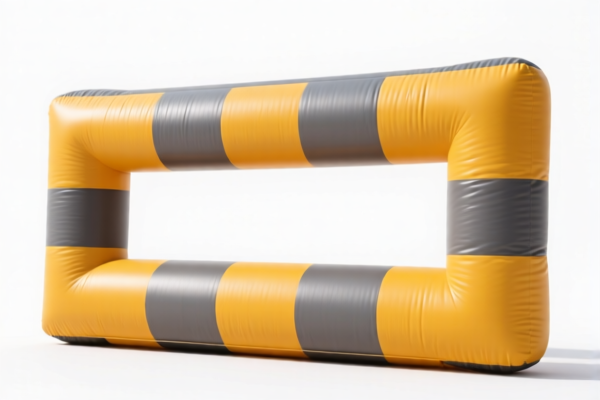


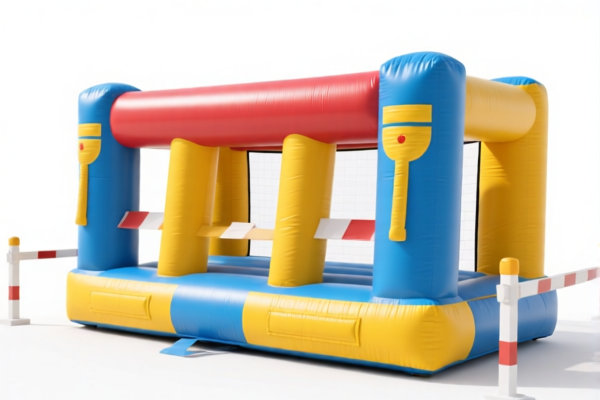
AI Analysis
🚧 Inflatable Traffic Barrier (Inflatable Barrier)
🌐 HS Code Reference & Customs Clearance Guide | 2026 Latest Tariff Analysis | Professional Strategy for China-US Trade
📌 I. Product Definition: What is an "Inflatable Traffic Barrier"?
An Inflatable Traffic Barrier (also known as an air barrier, water-filled barrier alternative, or inflatable crash cushion) is a temporary or semi-permanent safety device used to channel traffic, protect work zones, or separate lanes.
Key Characteristics: - Form: Inflatable/Air-filled structure. - Function: Barrier/Shield (similar to fenders or crash cushions). - Material Ambiguity: The name does not specify the material. It could be: 1. Rubber/Elastomer: Heavy-duty, high-abrasion resistance (common for industrial/highway use). 2. Textile/Fabric: Lighter duty, often with PVC/PU coating (common for event management or light traffic). 3. Plastic/PVC: Hard shell or semi-rigid inflatable plastic (less common for heavy barriers, more for light delineation).
⚠️ Critical Classification Point:
The HS Code depends entirely on the material composition. Misclassification can lead to significant tariff differences (e.g., 39.2% vs. 13.7%).
- If made of Sulfurated Rubber → Chapter 40
- If made of Textile Fabric → Chapter 63
- If made of Plastic → Chapter 39
📦 II. HS Code Classification Matrix (2026 Latest Tariff Data)
Based on the provided data, here are the 5 most likely HS Codes for an "Inflatable Traffic Barrier," sorted by Material Logic and Tax Implication.
| HS Code | Material Basis | Product Description & Logic | Total Tax Rate (US/China) |
|---|---|---|---|
| 4016.94.00.00 | Sulfurated Rubber | "Fenders & Similar Articles" • Logic: "Barrier" is functionally similar to a "fender" (protection/shielding). • Material: Rubber is standard for durable traffic barriers. • Form: Inflatable matches "inflatable articles of vulcanized rubber." |
39.2% |
| 4016.95.00.00 | Sulfurated Rubber | "Other Inflatable Articles of Rubber" • Logic: Explicitly captures "Inflatable" form factor under rubber goods. • Material: Sulfurated rubber. • Note: Slightly lower tax than 4016.94 due to broader "Other" category. |
21.7% |
| 6306.40.41.00 | Cotton/Textile | "Cotton Tarpaulins, Sacks & Bags" • Logic: If the barrier is fabric-based (e.g., coated canvas), it may fall under textile tarpaulins. • Material: Cotton or cotton-blend. • Form: Inflatable nature is secondary to textile classification. |
21.2% |
| 3926.90.75.00 | Plastic/PVC | "Other Articles of Plastics" • Logic: If the barrier is made of PVC, TPU, or other plastic materials. • Material: Plastic. • Form: "Inflatable" is a key descriptor for plastic goods in this subheading. |
14.2% |
| 6306.40.49.00 | Other Textiles | "Other Tarpaulins, Sacks & Bags" • Logic: For textile barriers that are not cotton-based (e.g., polyester, nylon). • Material: Non-cotton textile. • Form: Inflatable textile structure. |
13.7% |
🔍 Key Insight:
- Cheapest Tariff:6306.40.49.00(13.7%) – IF it is a non-cotton textile barrier.
- Most Expensive Tariff:4016.94.00.00(39.2%) – IF it is rubber and classified as a "fender-like" protection device.
- Middle Ground:4016.95.00.00(21.7%) – Rubber, but classified strictly as "inflatable."
💰 III. Detailed Tariff Breakdown (US Market – China Origin)
✅ Applicable Country: United States (US)
✅ Origin: China (CN)
✅ Effective Date: 2025/2026 Tariff Schedule
🎯 1. Rubber-Based Barriers (Chapter 40)
A. 4016.94.00.00 – Fenders & Similar Articles of Rubber
| Item | Detail |
|---|---|
| Base Duty | 4.2% |
| Section 301 Duty | 25.0% (High Impact) |
| 122-Clause Duty | 10.0% |
| Total Rate | 39.2% |
| De Minimis Exemption | ❌ Denied |
| Legal Basis | USITC:4016.94.00.00 → Section 301 Footnote 9903.88.01 → IEEPA:9903.01.25 |
📌 Explanation:
- This code is often used for rubber safety equipment.
- The 25% Section 301 duty is the major cost driver.
- If your product is rubber, this is the worst-case scenario for cost.
B. 4016.95.00.00 – Other Inflatable Rubber Articles
| Item | Detail |
|---|---|
| Base Duty | 4.2% |
| Section 301 Duty | 7.5% (Lower than 301a) |
| 122-Clause Duty | 10.0% |
| Total Rate | 21.7% |
| De Minimis Exemption | ❌ Denied |
| Legal Basis | USITC:4016.95.00.00 → Section 301 Footnote 9903.88.01 → IEEPA:9903.01.25 |
📌 Explanation:
- This code explicitly targets "Inflatable" items.
- If the product is rubber, arguing for "Inflatable" (4016.95) instead of "Fender-like" (4016.94) saves 17.5% in tariffs.
🎯 2. Textile-Based Barriers (Chapter 63)
C. 6306.40.41.00 – Cotton Tarpaulins
| Item | Detail |
|---|---|
| Base Duty | 3.7% |
| Section 301 Duty | 7.5% |
| 122-Clause Duty | 10.0% |
| Total Rate | 21.2% |
| De Minimis Exemption | ❌ Denied |
| Legal Basis | USITC:6306.40.41.00 → Section 301 → IEEPA |
📌 Explanation:
- Only applies if the barrier is cotton-based. Rare for heavy-duty traffic barriers.
D. 6306.40.49.00 – Other Tarpaulins (Non-Cotton)
| Item | Detail |
|---|---|
| Base Duty | 3.7% |
| Section 301 Duty | 0.0% |
| 122-Clause Duty | 10.0% |
| Total Rate | 13.7% |
| De Minimis Exemption | ❌ Denied |
| Legal Basis | USITC:6306.40.49.00 → IEEPA |
📌 Explanation:
- Best Tax Rate if the barrier is made of polyester, nylon, or PVC-coated fabric.
- No Section 301 duty on textiles in this subheading!
🎯 3. Plastic-Based Barriers (Chapter 39)
E. 3926.90.75.00 – Other Plastic Articles
| Item | Detail |
|---|---|
| Base Duty | 4.2% |
| Section 301 Duty | 0.0% |
| 122-Clause Duty | 10.0% |
| Total Rate | 14.2% |
| De Minimis Exemption | ❌ Denied |
| Legal Basis | USITC:3926.90.75.00 → IEEPA |
📌 Explanation:
- If the barrier is made of PVC, TPU, or other plastics, this is a very competitive option.
- No Section 301 duty applies here, unlike rubber.
🛠️ IV. Customs Clearance Strategy & Recommendations
✅ 1. Material Documentation is Critical
Customs will inspect the material. You cannot simply declare "Inflatable Barrier" without specifying the material.
| Material | Recommended HS Code | Why? | Action |
|---|---|---|---|
| Rubber (Vulcanized) | 4016.95.00.00 |
Best for rubber (21.7% vs 39.2%) | Provide Material Test Report proving vulcanized rubber, not "fender-like" shape. |
| Plastic (PVC/TPU) | 3926.90.75.00 |
Lowest plastic tax (14.2%) | Provide MSDS and material composition certificate. |
| Fabric (Polyester/Nylon) | 6306.40.49.00 |
Lowest tax overall (13.7%) | Provide Weave Density and Coating Type (e.g., PVC-coated polyester). |
| Cotton | 6306.40.41.00 |
Higher tax (21.2%) | Avoid if possible; use synthetic blends instead. |
📌 Pro Tip:
If you are manufacturing barriers, consider using PVC-coated Polyester (Textile/Plastic hybrid) to qualify for 6306.40.49.00 (13.7%) or 3926.90.75.00 (14.2%) instead of Rubber (21.7%+). This can save ~10% in total landed cost.
✅ 2. Declaration Description Best Practices
❌ Poor Declaration:
"Inflatable Traffic Barrier"
Risk: Customs officer guesses the material. If they assume rubber, they may apply 4016.94.00.00 (39.2%).
✅ Optimized Declaration (Example for Fabric Barrier):
"Inflatable Traffic Safety Barrier, made of PVC-coated polyester fabric, air-filled, for temporary road separation, Model XYZ"
Code: 6306.40.49.00 | Rate: 13.7%
✅ Optimized Declaration (Example for Rubber Barrier):
"Vulcanized Rubber Inflatable Crash Cushion, Air-filled, for Highway Work Zones"
Code: 4016.95.00.00 | Rate: 21.7%
✅ 3. Special Customs Notes
- Section 301 Exemption?
- No. All the above HS Codes are subject to US Section 301 tariffs on Chinese goods.
-
Exception: If the product is substantially transformed in a third country (e.g., Vietnam, Malaysia) with sufficient value-add, it might qualify for exemption, but this is complex and risky.
-
122-Clause Tariff (10%)
-
This applies to all goods from China regardless of HS Code. It is a base surcharge. Factor this into all calculations.
-
De Minimis (Section 321)
- ❌ Not Applicable.
- Inflatable barriers are generally over $800 in value per shipment. Even if under $800, many rubber/textile items are excluded from de minimis if classified under these specific HS codes. Always assume full taxation.
🌍 V. Global Market Comparison (2026)
| Country | Recommended HS Code | Est. Total Duty | Notes |
|---|---|---|---|
| 🇺🇸 USA | 6306.40.49.00 or 4016.95.00.00 |
13.7% – 21.7% | Highest Risk: Section 301 + 122-Clause. |
| 🇨🇳 China (Export) | Same | 0% (Export Duty) | China does not tax exports. |
| 🇪🇺 EU | 9404.90.90 or 3926.90 |
4.0% – 6.5% | No Section 301. No 122-Clause. Much Lower Cost. |
| 🇬🇧 UK | Same as EU | 4.0% – 6.5% | Post-Brexit tariffs apply. |
📌 Strategic Advice:
- USA Market: High tariff burden. Optimize material to Textile (6306.40.49.00) or Plastic (3926.90.75.00) to minimize costs.
- EU/Global Market: Lower tariffs. Rubber barriers (4016.94) are more competitive here due to absence of punitive tariffs.
📌 VI. Common Pitfalls & Avoidance
❌ Pitfall 1: Declaring "Plastic Barrier" when it is actually Rubber.
👉 Consequence: Customs reclassifies to 4016.94.00.00 → 39.2% duty + penalties.
✅ Fix: Provide material test reports from accredited labs.
❌ Pitfall 2: Claiming it is a "Fender" (4016.94) when it is clearly an "Inflatable Cushion" (4016.95).
👉 Consequence: Higher tax (39.2% vs 21.7%).
✅ Fix: Emphasize "Inflatable" in the description and provide photos showing air valves/bladders.
❌ Pitfall 3: Ignoring the 122-Clause 10% tariff.
👉 Consequence: Under-quoting landed cost, leading to budget overruns.
✅ Fix: Add 10% to every HS Code calculation in your profit model.
🎯 VII. Conclusion & Action Plan
🎯 Final Recommendation:
For Inflatable Traffic Barriers imported into the USA from China:
- Best Cost Option: Use PVC-coated Polyester Fabric → Declare under
6306.40.49.00→ 13.7% Total Duty. - Safe Rubber Option: If rubber is mandatory, declare as Inflatable Article (
4016.95.00.00) → 21.7% Total Duty. Avoid4016.94.00.00(39.2%). - Plastic Option: If rigid/plastic inflatable → Declare under
3926.90.75.00→ 14.2% Total Duty.
💡 Remember:
Material = Money.
A 10% difference in duty rate on a $100,000 shipment = $10,000 savings.
Always verify material composition before shipping!
📣 Next Steps:
1. Confirm Material: Get lab test results for your barrier.
2. Select HS Code: Match material to the lowest-tariff HS Code above.
3. Prepare Docs: Invoice, Packing List, Bill of Lading, and Material Certificate.
4. Pre-Ruling: If unsure, file an Advance Ruling with US CBP to lock in the HS Code.
🚀 Clear Customs. Save Costs. Scale Your Business!
📊 Your Landed Cost Starts with Precision.
Customer Reviews
About HS Code Classification
The Harmonized System (HS) is an internationally standardized nomenclature developed by the World Customs Organization (WCO) to classify traded products. Over 200 countries use the HS system as the basis for customs tariffs, trade statistics, and import/export regulations.
Each HS code follows a hierarchical structure:
- Chapter (2 digits) — Broad category of goods (e.g., Chapter 84: Machinery and Mechanical Appliances)
- Heading (4 digits) — More specific grouping within the chapter
- Subheading (6 digits) — Internationally standardized breakdown, used by all WCO member countries
- National subdivisions (8-10 digits) — Country-specific extensions for further classification, such as US HTSUS 10-digit codes
Correct HS code classification is essential for smooth customs clearance, accurate duty payment, and compliance with trade regulations. Misclassification can lead to customs delays, overpayment of duties, or penalties.
When importing from CN to US, the applicable tariff rates may include:
- Most-Favored-Nation (MFN) rate — The standard duty rate applied to WTO members
- General rate — Applied to countries without trade agreements
- Trade remedy duties — Additional tariffs such as Section 301 (anti-dumping), Section 232 (national security), or countervailing duties
The information provided on this page is for reference purposes only. For official classification, please consult with your local customs authority or a licensed customs broker.