ironing board cover
CN → US| HS编码 | 关税税率 | 原产国 | 目的国 | 文档 |
|---|---|---|---|---|
| 9403200011 | 85.0% | CN | US | 官方文档 |
| 7326908676 | 87.9% | CN | US | 官方文档 |
| 7326908688 | 87.9% | CN | US | 官方文档 |
| 9403200050 | 85.0% | CN | US | 官方文档 |
| 9403200011 | 85.0% | CN | US | 官方文档 |
商品图片
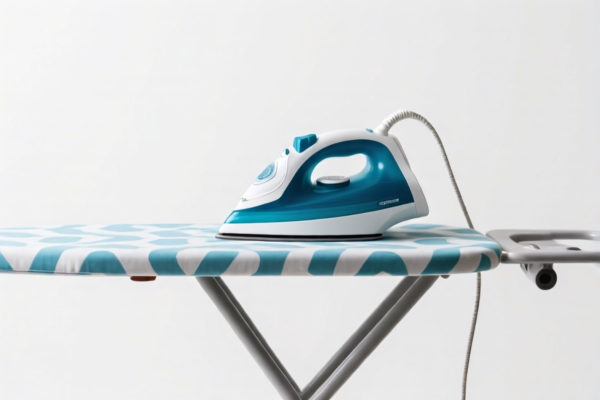
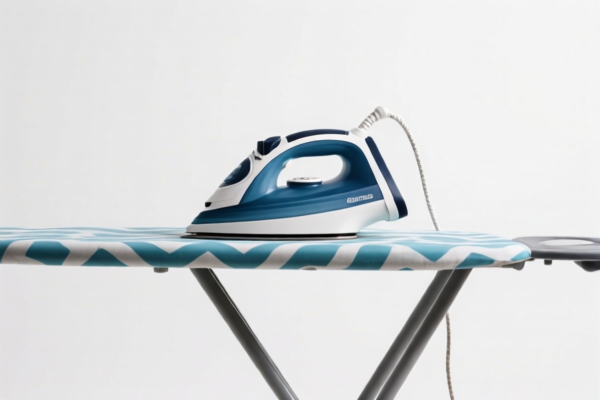
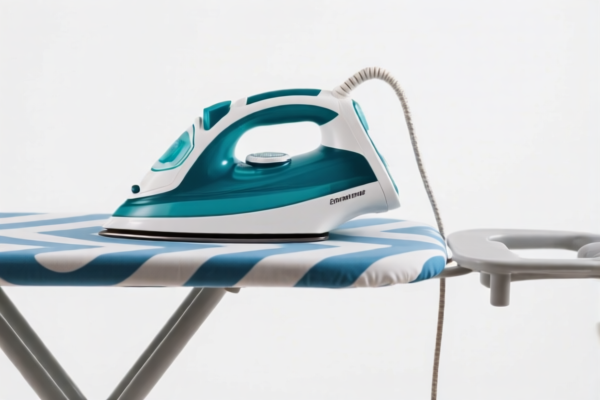
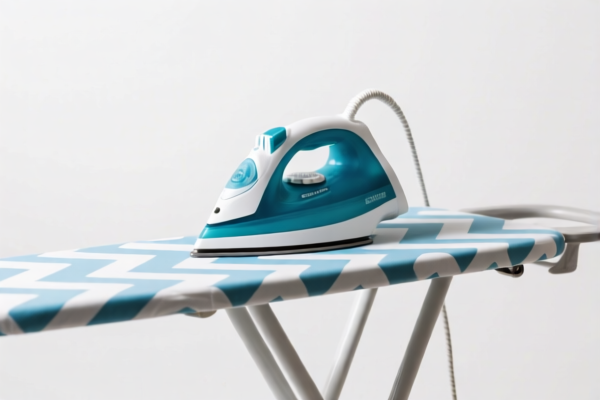
AI分析
🛍️ Ironing Board Cover (Ironing Board)
🌐 HS Code Reference & Customs Clearance Guide | 2026 Latest Tariff Analysis | Professional Clearance Strategy
📌 I. Product Definition & Classification: Is Your "Ironing Board" Truly Home Furniture?
In international trade, an Ironing Board is a specialized household aid. Its classification depends heavily on whether it is considered a standalone piece of home furniture or a mere accessory/component made of steel. The key distinction lies in the structural integrity and intended use logic.
⚠️ Key Classification Logic:
- If it is a standalone unit with legs/support, designed for household use as furniture →归入 Chapter 94 (Furniture).
- If it is viewed strictly as a metal article/accessory without full furniture characteristics →归入 Chapter 73 (Articles of Iron/Steel).
📦 II. HS Code Classification Details (2026 Latest Tariff Authority对照)
Based on the provided data, here are the two primary classification paths for Ironing Boards:
| HS Code | Product Description | Classification Logic | Tax Category |
|---|---|---|---|
9403.20.00.11 |
Ironing Board classified as Floor-standing Home Furniture | Treated as metal furniture for household use. | Home Furniture |
9403.20.00.50 |
Ironing Board classified as Other Metal Furniture | Specifically categorized under "Instruments/Devices" within metal furniture. | Home Furniture |
7326.90.86.76 |
Ironing Board classified as Other Articles of Steel Products | Viewed as a general steel manufacturing product, not furniture. | Steel Products |
7326.90.86.88 |
Ironing Board classified as Other Articles of Iron | Viewed as a general iron manufacturing product. | Iron Products |
🔍 Critical Distinction:
- Chapter 94 (9403): Applies if the board is structurally complete as a furniture item. Lower Base Tariff (0%).
- Chapter 73 (7326): Applies if the customs authority views it as a simple metal good. Higher Base Tariff (2.9%).
💰 III. 2026 Latest Tariff Rate Breakdown (Including Additional Taxes & Policy Add-ons)
✅ Applicable Country: United States (US)
✅ Origin: China (CN)
✅ Effective Time: 2025 onwards (Including subsequent imports)
🎯 1. 9403.20.00.11 & 9403.20.00.50 —— Classified as Home Furniture
| Item | Content |
|---|---|
| Base Tariff | 0.0% (Ad valorem) |
| Section 301 Additional Tariff | +25.0% |
| Section 122 Additional Tariff | +10.0% |
| Section 232 (Steel/Aluminum/Copper) Additional Tariff | +50.0% |
| Total Tariff Rate | 85.0% |
| Tax Calculation | CIF Value × 85.0% |
| De Minimis Eligibility | ❌ Not Eligible (High tariff rate excludes it) |
| Legal Basis Path | Section 301 + Section 122 + Section 232 → USITC:9403.20.00.11/50 |
📌 Explanation:
- Although the Base Tariff is 0%, the Additional Taxes are massive.
- Section 301 (25%): Retaliatory tariffs on Chinese goods.
- Section 122 (10%): Additional tariff under the Trade Expansion Act for specific Chinese imports.
- Section 232 (50%): National security-based tariffs on steel/aluminum/copper products. Since ironing boards are metal, they fall under this strict scrutiny.
- Total: 85% is a very high barrier to entry.
🎯 2. 7326.90.86.76 & 7326.90.86.88 —— Classified as Steel/Iron Articles
| Item | Content |
|---|---|
| Base Tariff | 2.9% (Ad valorem) |
| Section 301 Additional Tariff | +25.0% |
| Section 122 Additional Tariff | +10.0% |
| Section 232 (Steel/Aluminum/Copper) Additional Tariff | +50.0% |
| Total Tariff Rate | 87.9% |
| Tax Calculation | CIF Value × 87.9% |
| De Minimis Eligibility | ❌ Not Eligible |
| Legal Basis Path | Section 301 + Section 122 + Section 232 → USITC:7326.90.86.76/88 |
📌 Note:
- If classified under Chapter 73, the Base Tariff is higher (2.9%).
- The Additional Taxes remain identical (25% + 10% + 50%).
- Total: 87.9% is even higher than the furniture classification.
- Recommendation: Always strive for Chapter 94 (Furniture) classification if structurally feasible, as it saves 2.9% on the base rate.
🛠️ IV. Customs Clearance Practical Advice (Battle-Tested Pitfall Avoidance)
✅ 1. Required Documentation Checklist (Missing Items = Delays)
| Document | Must Provide | Description |
|---|---|---|
| ✅ Product Specifications | ✔️ | Dimensions, material composition (iron/steel), weight, folding mechanism details. |
| ✅ Product Photos | ✔️ | Clear images of the board, legs, cover (if included), and any branding. |
| ✅ Commercial Invoice | ✔️ | Must clearly state "Ironing Board" and specify "Metal Furniture" or "Steel Article". |
| ✅ Packing List | ✔️ | Details of inner/outer packaging, gross/net weight. |
| ✅ Origin Certificate | ✔️ | Proof of Origin (China). |
| ✅ Material Declaration | ✔️ | Explicitly state the type of metal (Iron vs. Steel) to avoid misclassification under Section 232. |
✅ 2. Declaration Strategy (Key Mnemonic)
🔥 “Furniture First, Steel Second; Name Precision, Tax Reduction!”
| Scenario | Correct Declaration | Incorrect Practice |
|---|---|---|
| Complete Board with Legs | 9403.20.00.11 (Furniture) |
Declare as "Steel Sheet" → 87.9% |
| Board + Cover Set | Declare as "Ironing Board Set" under 9403 |
Separate cover as textile → Complex valuation |
| Disassembled Parts | Declare as "Parts of Ironing Board" under 9403 |
Declare as "Iron Wire" → Higher risk |
| Cover Only (Fabric) | 6307.90.98 (Other Textile) |
Declare as "Ironing Board" → Wrong HS |
⚠️ Note on "Ironing Board Cover" (Fabric Only):
If the user is importing only the fabric cover (without the board), the HS Code changes significantly to Chapter 63 (Other Made-Up Textile Articles), typically 6307.90.98. This code generally has no Section 232 tariff (since it's not steel/iron), but may still face Section 301 (25%) and Section 122 (10%).
- Base Tariff: ~5-7% (varies by textile type).
- Total Tariff: ~40-42%.
- Strategy: If importing only covers, declare as Textile Article to avoid the 50% Section 232 steel tariff.
✅ 3. Special Case Handling
| Scenario | Handling Advice |
|---|---|
| Ironing Board + Cover Sold Together | Declare as the Main Item (Ironing Board). The cover is considered an accessory. Use HS Code for the Board (9403 or 7326). |
| OEM Custom Boards | Provide design drawings to prove it is a "furniture" structure, not a raw steel product. |
| Mixed Containers | If mixing Ironing Boards with other goods, ensure separate invoicing to apply correct HS codes per item. |
🌍 V. Global Market Customs Comparison (2026 Latest)
| Country/Region | Recommended HS Code (Board) | Base Tariff | Total Tariff (China Origin) | Notes |
|---|---|---|---|---|
| 🇺🇸 USA | 9403.20.00.11 |
0.0% | 85.0% | High due to Sec 301/122/232 |
| 🇨🇳 China | 9403.20.00.11 |
0.0% | 0.0% | No additional tariffs for import |
| 🇪🇺 EU | 9403.20.00 |
0.0% | 0.0% | No Section 301/232 equivalents |
| 🇨🇦 Canada | 9403.20.00.00 |
0.0% | 0.0% | No additional tariffs |
| 🇬🇧 UK | 9403.20.00.00 |
0.0% | 0.0% | Post-Brexit independent rates |
📌 Conclusion:
- The US market is the most challenging due to overlapping additional tariffs (Section 301 + 122 + 232).
- Total cost burden is ~85-88%, making US imports of ironing boards from China extremely expensive.
- Alternative: Import only fabric covers (Textile) to reduce total tariff to ~40-42%, or source from non-China countries (Vietnam, Mexico) to avoid Section 301/122.
📌 VI. Common Mistakes & Pitfall Guide (Blood & Tears Lessons)
❌ Mistake 1: Declaring a complete Ironing Board as "Steel Wire" or "Steel Plate"
👉 Consequence: Misclassification penalty + Potential higher tariff if base rate is higher (though Section 232 applies to both).
❌ Mistake 2: Ignoring Section 232 (50%) for Metal Goods
👉 Consequence: The 50% tariff is non-negotiable for steel/iron articles. Failure to declare leads to seizure or heavy fines.
❌ Mistake 3: Separating the Board and Cover in the Same Shipment with Wrong HS Codes
👉 Consequence: If the cover is declared as textile but the board as metal, ensure the invoice clearly separates values. Mixing them causes customs delays.
❌ Mistake 4: Assuming "Home Furniture" means no tariffs
👉 Consequence: 85% Total Tariff is still applicable. Base 0% does not mean tax-free.
✅ Correct Action:
"Ironing Board, Metal, Floor-Standing, for Household Use, Model XYZ, Origin: China"
🎯 VII. Conclusion: Professional Declaration, Cost Control
🎯 Remember the Mnemonic:
🔹 "Furniture Logic, 0% Base; Steel Logic, 2.9% Base."
🔹 "Sec 301 + 122 + 232 = 85% Total; Tax-Free is a Myth for China Origin."
🔹 "Cover Only? Textile Code! Save 40% on Steel Tariffs."
📌 Pro Tip:
If your supplier is in China, the total tariff is 85% (Board) or 87.9% (Steel).
If you can import only the fabric cover (Textile), the tariff drops to ~40-42%.
If you source from Vietnam/Mexico, you may avoid Section 301/122, reducing the total to ~50-55% (Sec 232 may still apply to metal).
Recommendation: Conduct a Pre-Classification Ruling with US Customs (CBP) to confirm the "Furniture" vs. "Steel" status for your specific product design.
📣 Immediate Action:
📞 Consult a licensed Customs Broker.
📄 Submit Product Photos & Specifications.
🚀 Optimize Your Supply Chain to Mitigate the 85% Tariff Burden!
✨ Professional Customs Clearance Starts with Accurate Classification!
💼 Every Percent Saved is Profit Gained!
用户评价
关于 HS 编码归类
协调制度(HS)是由世界海关组织(WCO)制定的国际贸易商品分类标准。全球 200 多个国家采用 HS 系统作为海关关税、贸易统计和进出口监管的基础。
每个 HS 编码遵循以下层级结构:
- 章(2 位)——商品大类(例如:第 84 章:机器和机械设备)
- 品目(4 位)——章内的更具体分类
- 子目(6 位)——国际通用细分,所有 WCO 成员国统一使用
- 本国细分(8-10 位)——各国自行扩展的细分编码,如美国 HTSUS 10 位编码
正确的 HS 编码归类对于顺利通关、准确缴纳关税和遵守贸易法规至关重要。错误归类可能导致海关延误、多缴关税或罚款。
从CN进口到US时,适用的关税税率可能包括:
- 最惠国(MFN)税率——适用于 WTO 成员国的标准关税税率
- 普通税率——适用于无贸易协定国家
- 贸易救济关税——附加关税,如 301 条款(反倾销)、232 条款(国家安全)或反补贴税
本页内容仅供参考。如需正式归类,请咨询当地海关或持牌报关代理。