ironing board cover
CN → US| HS Code | Tariff Rate | Origin | Destination | Doc |
|---|---|---|---|---|
| 9403200011 | 85.0% | CN | US | Official Doc |
| 7326908676 | 87.9% | CN | US | Official Doc |
| 7326908688 | 87.9% | CN | US | Official Doc |
| 9403200050 | 85.0% | CN | US | Official Doc |
| 9403200011 | 85.0% | CN | US | Official Doc |
Product Images
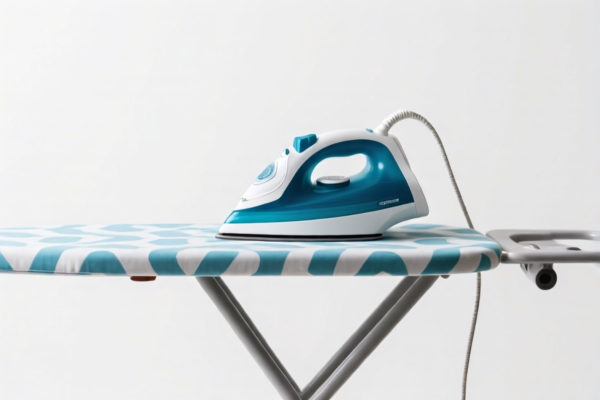
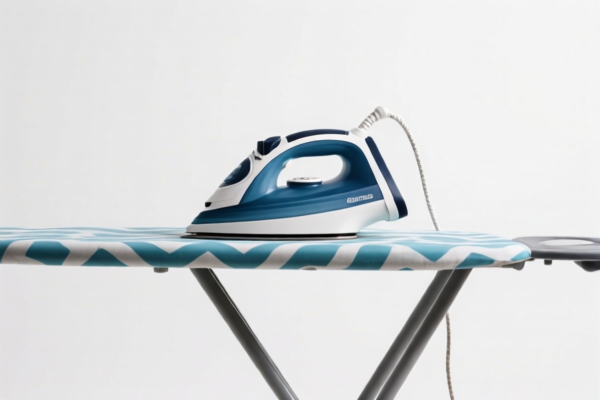
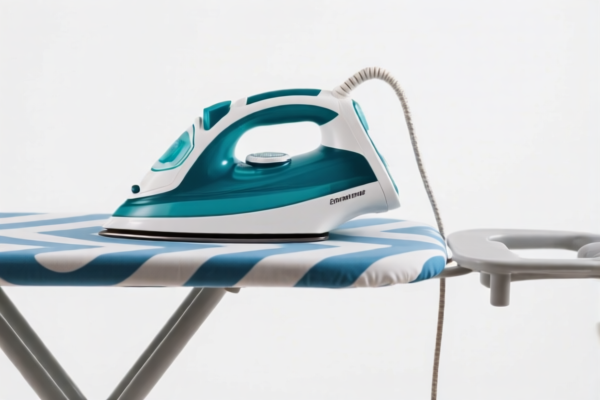
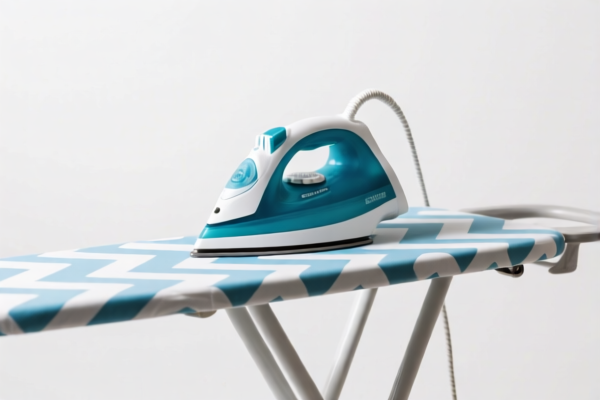
AI Analysis
🛍️ Ironing Board Cover (Ironing Board)
🌐 HS Code Reference & Customs Clearance Guide | 2026 Latest Tariff Analysis | Professional Clearance Strategy
📌 I. Product Definition & Classification: Is Your "Ironing Board" Truly Home Furniture?
In international trade, an Ironing Board is a specialized household aid. Its classification depends heavily on whether it is considered a standalone piece of home furniture or a mere accessory/component made of steel. The key distinction lies in the structural integrity and intended use logic.
⚠️ Key Classification Logic:
- If it is a standalone unit with legs/support, designed for household use as furniture →归入 Chapter 94 (Furniture).
- If it is viewed strictly as a metal article/accessory without full furniture characteristics →归入 Chapter 73 (Articles of Iron/Steel).
📦 II. HS Code Classification Details (2026 Latest Tariff Authority对照)
Based on the provided data, here are the two primary classification paths for Ironing Boards:
| HS Code | Product Description | Classification Logic | Tax Category |
|---|---|---|---|
9403.20.00.11 |
Ironing Board classified as Floor-standing Home Furniture | Treated as metal furniture for household use. | Home Furniture |
9403.20.00.50 |
Ironing Board classified as Other Metal Furniture | Specifically categorized under "Instruments/Devices" within metal furniture. | Home Furniture |
7326.90.86.76 |
Ironing Board classified as Other Articles of Steel Products | Viewed as a general steel manufacturing product, not furniture. | Steel Products |
7326.90.86.88 |
Ironing Board classified as Other Articles of Iron | Viewed as a general iron manufacturing product. | Iron Products |
🔍 Critical Distinction:
- Chapter 94 (9403): Applies if the board is structurally complete as a furniture item. Lower Base Tariff (0%).
- Chapter 73 (7326): Applies if the customs authority views it as a simple metal good. Higher Base Tariff (2.9%).
💰 III. 2026 Latest Tariff Rate Breakdown (Including Additional Taxes & Policy Add-ons)
✅ Applicable Country: United States (US)
✅ Origin: China (CN)
✅ Effective Time: 2025 onwards (Including subsequent imports)
🎯 1. 9403.20.00.11 & 9403.20.00.50 —— Classified as Home Furniture
| Item | Content |
|---|---|
| Base Tariff | 0.0% (Ad valorem) |
| Section 301 Additional Tariff | +25.0% |
| Section 122 Additional Tariff | +10.0% |
| Section 232 (Steel/Aluminum/Copper) Additional Tariff | +50.0% |
| Total Tariff Rate | 85.0% |
| Tax Calculation | CIF Value × 85.0% |
| De Minimis Eligibility | ❌ Not Eligible (High tariff rate excludes it) |
| Legal Basis Path | Section 301 + Section 122 + Section 232 → USITC:9403.20.00.11/50 |
📌 Explanation:
- Although the Base Tariff is 0%, the Additional Taxes are massive.
- Section 301 (25%): Retaliatory tariffs on Chinese goods.
- Section 122 (10%): Additional tariff under the Trade Expansion Act for specific Chinese imports.
- Section 232 (50%): National security-based tariffs on steel/aluminum/copper products. Since ironing boards are metal, they fall under this strict scrutiny.
- Total: 85% is a very high barrier to entry.
🎯 2. 7326.90.86.76 & 7326.90.86.88 —— Classified as Steel/Iron Articles
| Item | Content |
|---|---|
| Base Tariff | 2.9% (Ad valorem) |
| Section 301 Additional Tariff | +25.0% |
| Section 122 Additional Tariff | +10.0% |
| Section 232 (Steel/Aluminum/Copper) Additional Tariff | +50.0% |
| Total Tariff Rate | 87.9% |
| Tax Calculation | CIF Value × 87.9% |
| De Minimis Eligibility | ❌ Not Eligible |
| Legal Basis Path | Section 301 + Section 122 + Section 232 → USITC:7326.90.86.76/88 |
📌 Note:
- If classified under Chapter 73, the Base Tariff is higher (2.9%).
- The Additional Taxes remain identical (25% + 10% + 50%).
- Total: 87.9% is even higher than the furniture classification.
- Recommendation: Always strive for Chapter 94 (Furniture) classification if structurally feasible, as it saves 2.9% on the base rate.
🛠️ IV. Customs Clearance Practical Advice (Battle-Tested Pitfall Avoidance)
✅ 1. Required Documentation Checklist (Missing Items = Delays)
| Document | Must Provide | Description |
|---|---|---|
| ✅ Product Specifications | ✔️ | Dimensions, material composition (iron/steel), weight, folding mechanism details. |
| ✅ Product Photos | ✔️ | Clear images of the board, legs, cover (if included), and any branding. |
| ✅ Commercial Invoice | ✔️ | Must clearly state "Ironing Board" and specify "Metal Furniture" or "Steel Article". |
| ✅ Packing List | ✔️ | Details of inner/outer packaging, gross/net weight. |
| ✅ Origin Certificate | ✔️ | Proof of Origin (China). |
| ✅ Material Declaration | ✔️ | Explicitly state the type of metal (Iron vs. Steel) to avoid misclassification under Section 232. |
✅ 2. Declaration Strategy (Key Mnemonic)
🔥 “Furniture First, Steel Second; Name Precision, Tax Reduction!”
| Scenario | Correct Declaration | Incorrect Practice |
|---|---|---|
| Complete Board with Legs | 9403.20.00.11 (Furniture) |
Declare as "Steel Sheet" → 87.9% |
| Board + Cover Set | Declare as "Ironing Board Set" under 9403 |
Separate cover as textile → Complex valuation |
| Disassembled Parts | Declare as "Parts of Ironing Board" under 9403 |
Declare as "Iron Wire" → Higher risk |
| Cover Only (Fabric) | 6307.90.98 (Other Textile) |
Declare as "Ironing Board" → Wrong HS |
⚠️ Note on "Ironing Board Cover" (Fabric Only):
If the user is importing only the fabric cover (without the board), the HS Code changes significantly to Chapter 63 (Other Made-Up Textile Articles), typically 6307.90.98. This code generally has no Section 232 tariff (since it's not steel/iron), but may still face Section 301 (25%) and Section 122 (10%).
- Base Tariff: ~5-7% (varies by textile type).
- Total Tariff: ~40-42%.
- Strategy: If importing only covers, declare as Textile Article to avoid the 50% Section 232 steel tariff.
✅ 3. Special Case Handling
| Scenario | Handling Advice |
|---|---|
| Ironing Board + Cover Sold Together | Declare as the Main Item (Ironing Board). The cover is considered an accessory. Use HS Code for the Board (9403 or 7326). |
| OEM Custom Boards | Provide design drawings to prove it is a "furniture" structure, not a raw steel product. |
| Mixed Containers | If mixing Ironing Boards with other goods, ensure separate invoicing to apply correct HS codes per item. |
🌍 V. Global Market Customs Comparison (2026 Latest)
| Country/Region | Recommended HS Code (Board) | Base Tariff | Total Tariff (China Origin) | Notes |
|---|---|---|---|---|
| 🇺🇸 USA | 9403.20.00.11 |
0.0% | 85.0% | High due to Sec 301/122/232 |
| 🇨🇳 China | 9403.20.00.11 |
0.0% | 0.0% | No additional tariffs for import |
| 🇪🇺 EU | 9403.20.00 |
0.0% | 0.0% | No Section 301/232 equivalents |
| 🇨🇦 Canada | 9403.20.00.00 |
0.0% | 0.0% | No additional tariffs |
| 🇬🇧 UK | 9403.20.00.00 |
0.0% | 0.0% | Post-Brexit independent rates |
📌 Conclusion:
- The US market is the most challenging due to overlapping additional tariffs (Section 301 + 122 + 232).
- Total cost burden is ~85-88%, making US imports of ironing boards from China extremely expensive.
- Alternative: Import only fabric covers (Textile) to reduce total tariff to ~40-42%, or source from non-China countries (Vietnam, Mexico) to avoid Section 301/122.
📌 VI. Common Mistakes & Pitfall Guide (Blood & Tears Lessons)
❌ Mistake 1: Declaring a complete Ironing Board as "Steel Wire" or "Steel Plate"
👉 Consequence: Misclassification penalty + Potential higher tariff if base rate is higher (though Section 232 applies to both).
❌ Mistake 2: Ignoring Section 232 (50%) for Metal Goods
👉 Consequence: The 50% tariff is non-negotiable for steel/iron articles. Failure to declare leads to seizure or heavy fines.
❌ Mistake 3: Separating the Board and Cover in the Same Shipment with Wrong HS Codes
👉 Consequence: If the cover is declared as textile but the board as metal, ensure the invoice clearly separates values. Mixing them causes customs delays.
❌ Mistake 4: Assuming "Home Furniture" means no tariffs
👉 Consequence: 85% Total Tariff is still applicable. Base 0% does not mean tax-free.
✅ Correct Action:
"Ironing Board, Metal, Floor-Standing, for Household Use, Model XYZ, Origin: China"
🎯 VII. Conclusion: Professional Declaration, Cost Control
🎯 Remember the Mnemonic:
🔹 "Furniture Logic, 0% Base; Steel Logic, 2.9% Base."
🔹 "Sec 301 + 122 + 232 = 85% Total; Tax-Free is a Myth for China Origin."
🔹 "Cover Only? Textile Code! Save 40% on Steel Tariffs."
📌 Pro Tip:
If your supplier is in China, the total tariff is 85% (Board) or 87.9% (Steel).
If you can import only the fabric cover (Textile), the tariff drops to ~40-42%.
If you source from Vietnam/Mexico, you may avoid Section 301/122, reducing the total to ~50-55% (Sec 232 may still apply to metal).
Recommendation: Conduct a Pre-Classification Ruling with US Customs (CBP) to confirm the "Furniture" vs. "Steel" status for your specific product design.
📣 Immediate Action:
📞 Consult a licensed Customs Broker.
📄 Submit Product Photos & Specifications.
🚀 Optimize Your Supply Chain to Mitigate the 85% Tariff Burden!
✨ Professional Customs Clearance Starts with Accurate Classification!
💼 Every Percent Saved is Profit Gained!
Customer Reviews
About HS Code Classification
The Harmonized System (HS) is an internationally standardized nomenclature developed by the World Customs Organization (WCO) to classify traded products. Over 200 countries use the HS system as the basis for customs tariffs, trade statistics, and import/export regulations.
Each HS code follows a hierarchical structure:
- Chapter (2 digits) — Broad category of goods (e.g., Chapter 84: Machinery and Mechanical Appliances)
- Heading (4 digits) — More specific grouping within the chapter
- Subheading (6 digits) — Internationally standardized breakdown, used by all WCO member countries
- National subdivisions (8-10 digits) — Country-specific extensions for further classification, such as US HTSUS 10-digit codes
Correct HS code classification is essential for smooth customs clearance, accurate duty payment, and compliance with trade regulations. Misclassification can lead to customs delays, overpayment of duties, or penalties.
When importing from CN to US, the applicable tariff rates may include:
- Most-Favored-Nation (MFN) rate — The standard duty rate applied to WTO members
- General rate — Applied to countries without trade agreements
- Trade remedy duties — Additional tariffs such as Section 301 (anti-dumping), Section 232 (national security), or countervailing duties
The information provided on this page is for reference purposes only. For official classification, please consult with your local customs authority or a licensed customs broker.